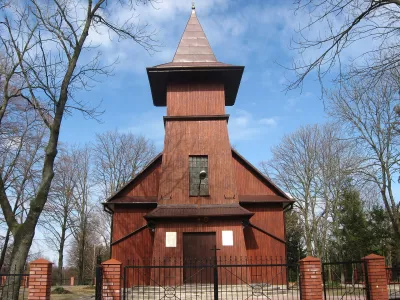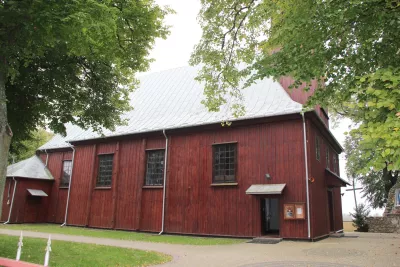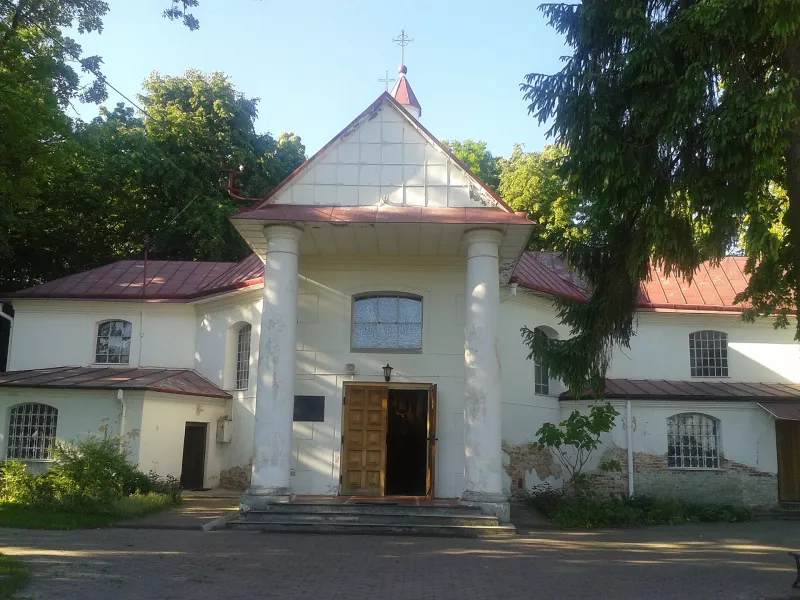
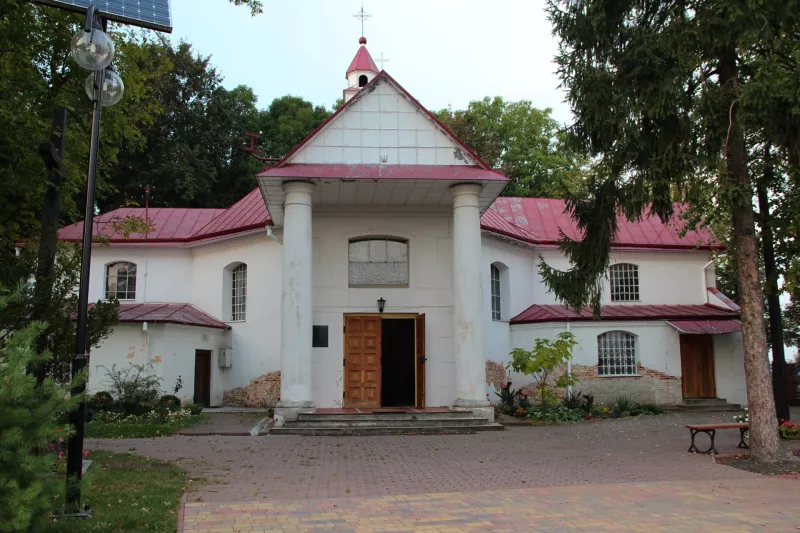
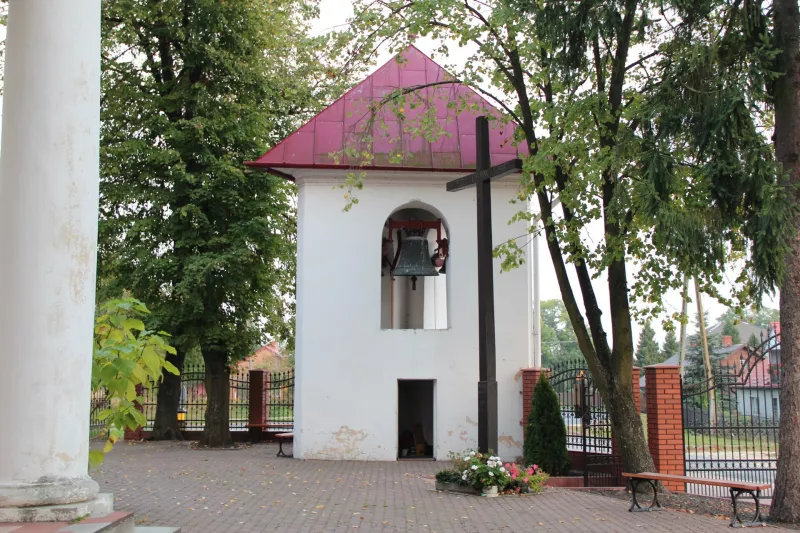

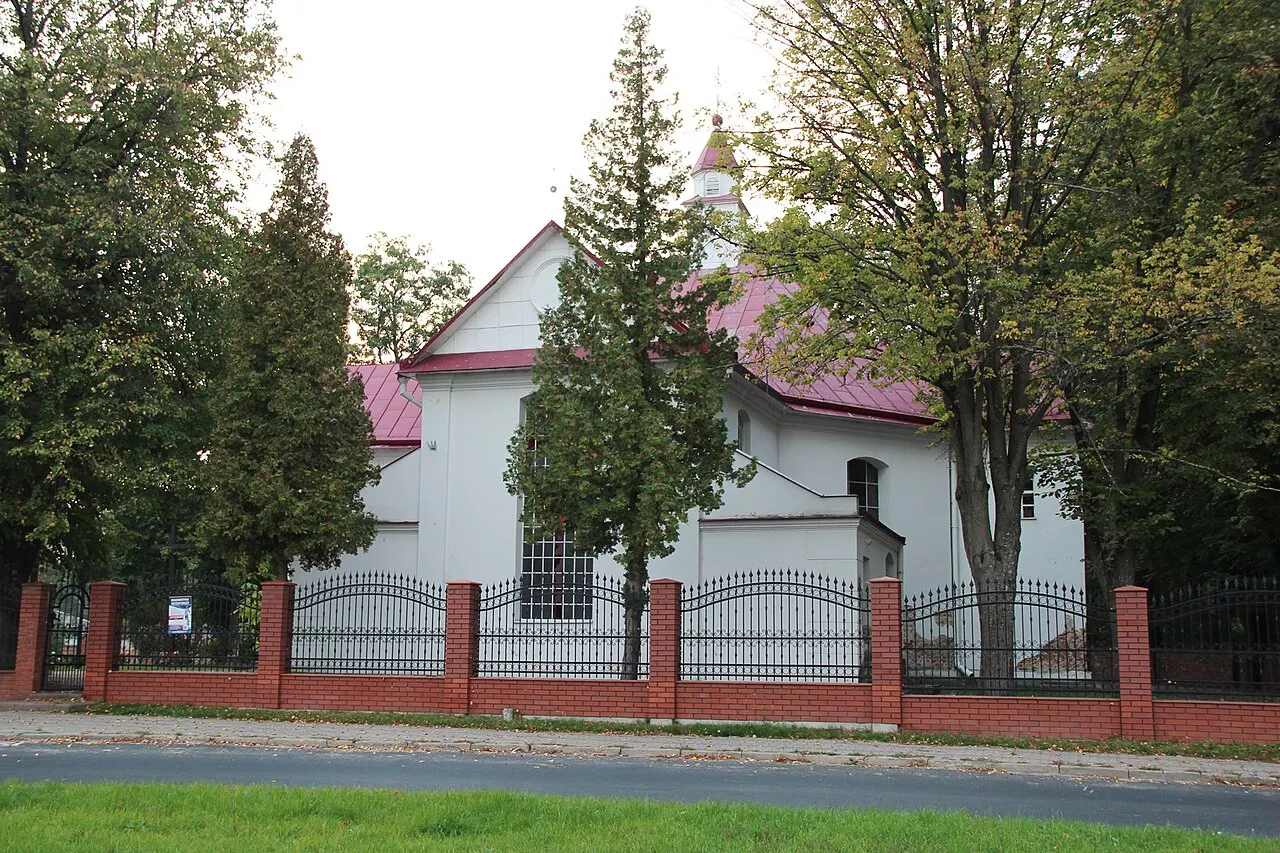
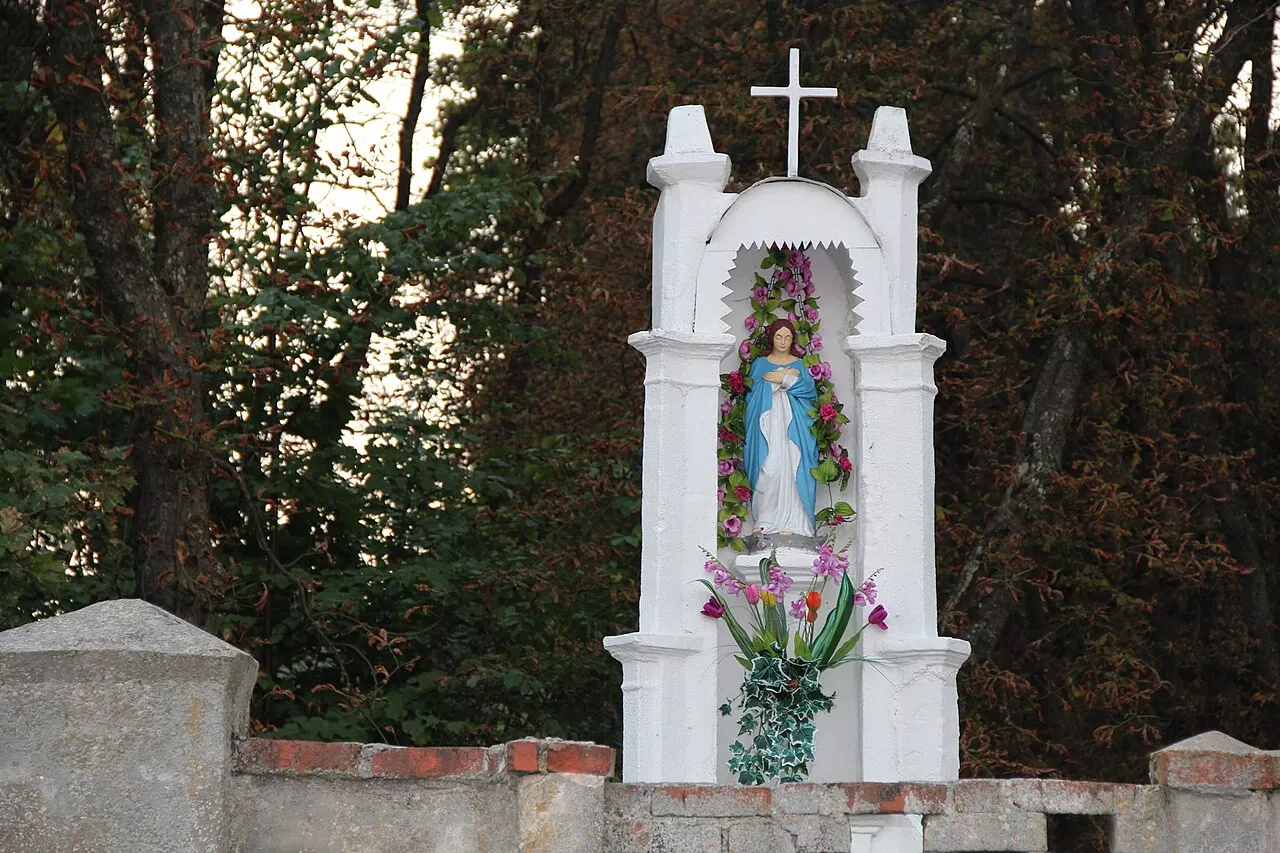
The Church of Our Lady of Częstochowa in Stary Brus is a masonry church built at the beginning of the 19th century as a Uniate, that is, Greek Catholic, church. It stands in the center of the village, which is the seat of Gmina Stary Brus in Włodawa County, along provincial road No. 819. Over two centuries, the church changed its denomination twice, and in this lies the entire history of Chełm Land. Together with the cemetery, bell tower, and chapel, it is entered in the register of monuments.
The Church of Mr. Dobecki
Brus was first mentioned in 1485 in the Chełm records. The name is explained by the old word "brus" — a whetstone. In the 16th century, it was a noble folwark divided among seven owners, later owned by the Horoch and Chajęcki families, and in 1803 the estate was bought by Karol Grzymała-Dobecki. He built a manor, established a park, and in 1805–1807 erected a Uniate church in the village; he also wanted to establish a parish here, but the church authorities did not agree.
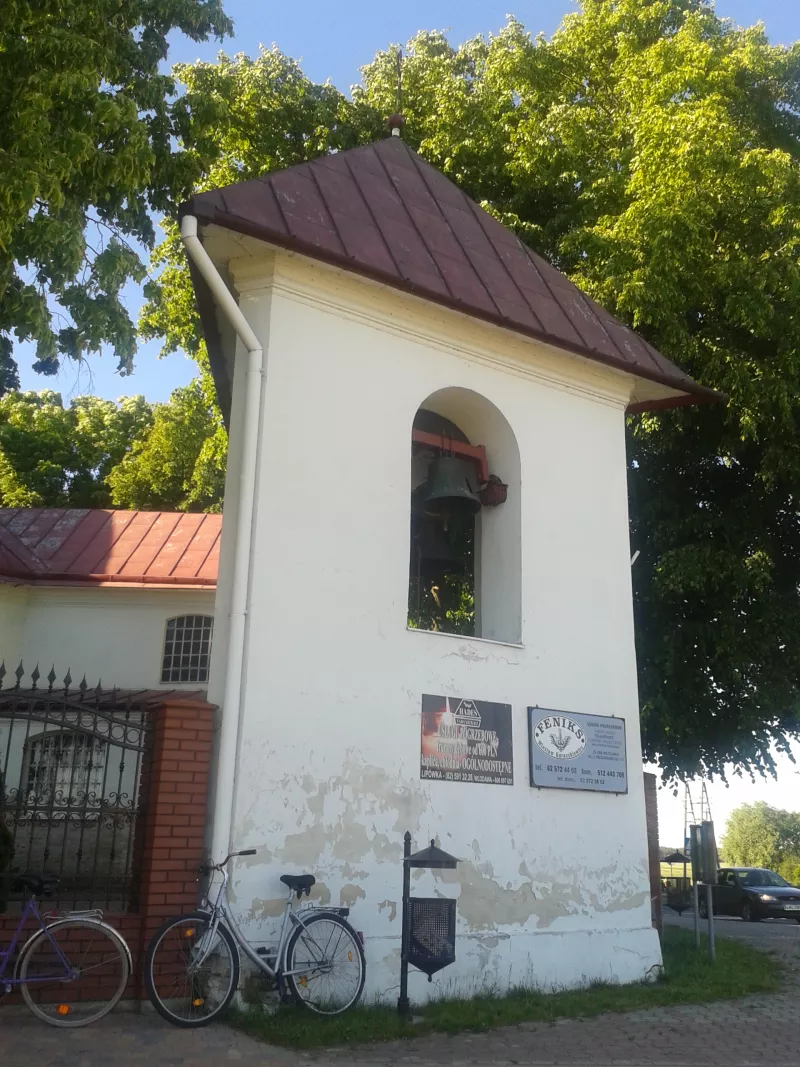
Around 1836, Brus was bought by Roch Jasieński. He repaired the church after a fire and made it a private manorial chapel, inhabited by Uniate monks; it was likely he who erected the bell tower near the cemetery.
Uniate, Orthodox, Catholic
In 1867, the tsarist authorities took the church into the treasury, and in 1875, when the Union was liquidated in Chełm Land, turned it into an Orthodox church. At that time, 940 people lived in Brus: 620 Orthodox (former Uniates), 180 Catholics, 130 Lutherans, and 10 Jews. In 1918, in restored Poland, the church was re-reconciled, that is, reconsecrated, as the Roman Catholic Church of Our Lady of Częstochowa. In the interwar years, a new presbytery was added, and the axis of the church was turned by 90 degrees.
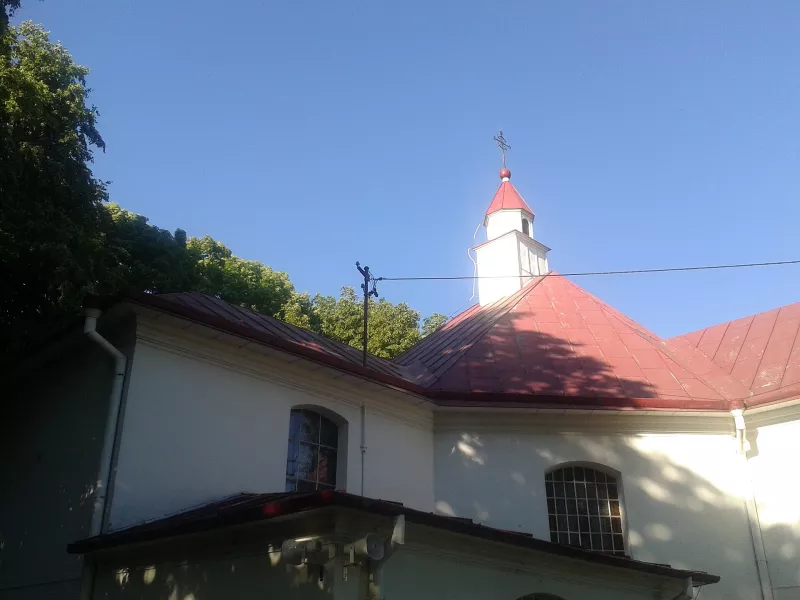
The building is eclectic, on a Greek cross plan. Inside, the most valuable items are a classicist sandstone baptismal font from around 1807, coeval with the church, and a late Baroque sculpture of Saint John of Nepomuk from the early 19th century. Near the church are a bell tower and a chapel from the same period. In the village, a wooden *czworak* (housing for manor workers) from the early 19th century at No. 77 has also survived, while the manor itself burned down in 1944.
How to get there
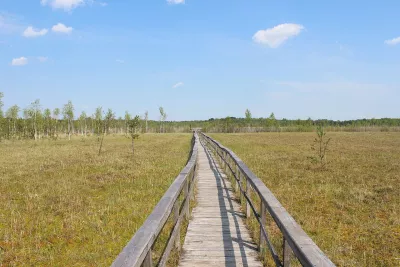
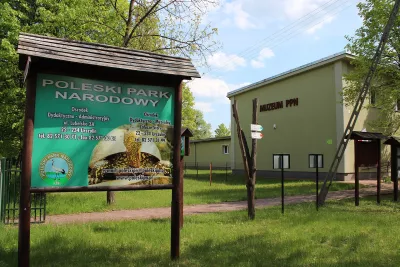
Stary Brus lies approximately 20 km west of Włodawa, along road No. 819 to Sosnowica. About 10 km to the west, in Pieszowola, begins the "Perehod" ornithological trail along the ponds of the Polesie National Park. Nearby, it is worth seeing the church in Wytyczno with a monument to the 1939 battle and the wooden church in Weresczyn. More about the region can be found in the article "Polish Polissia: what to see beyond the Bug". The church is a parish church, so it is best to get inside before a service. This is Poland: Ukrainian citizens need a foreign passport; the border with Belarus is about 20 km away from here.