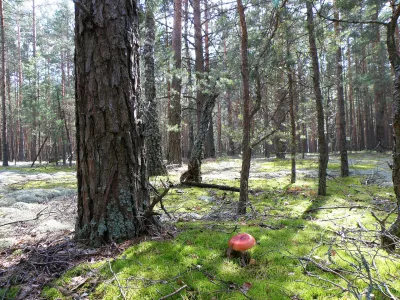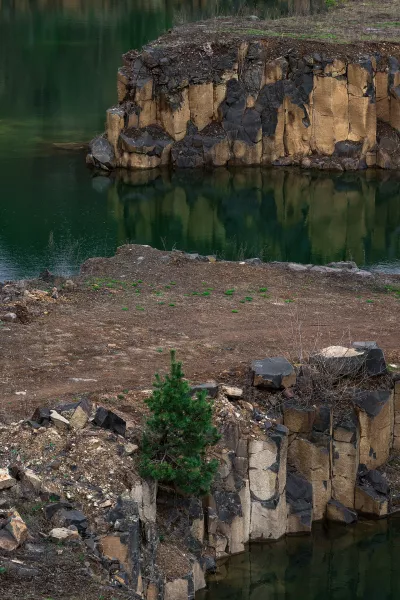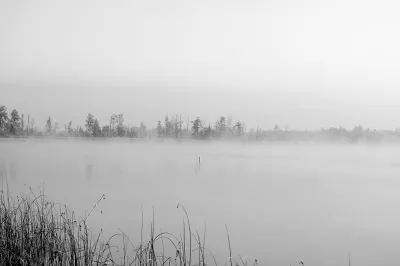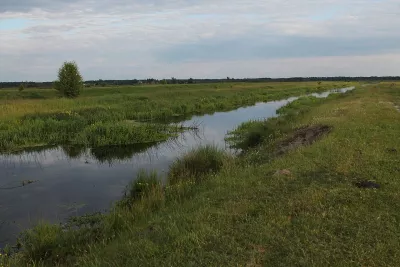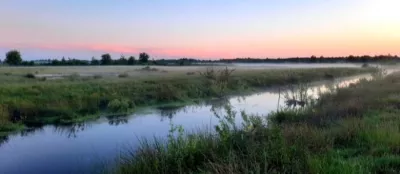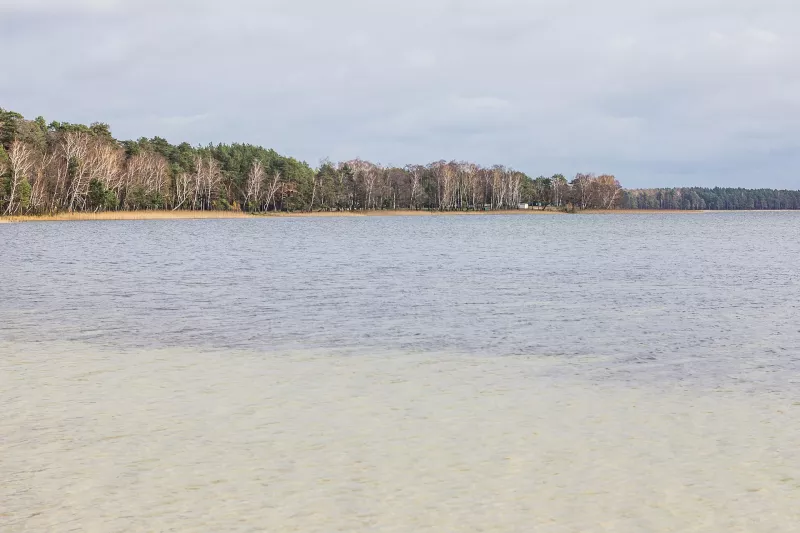
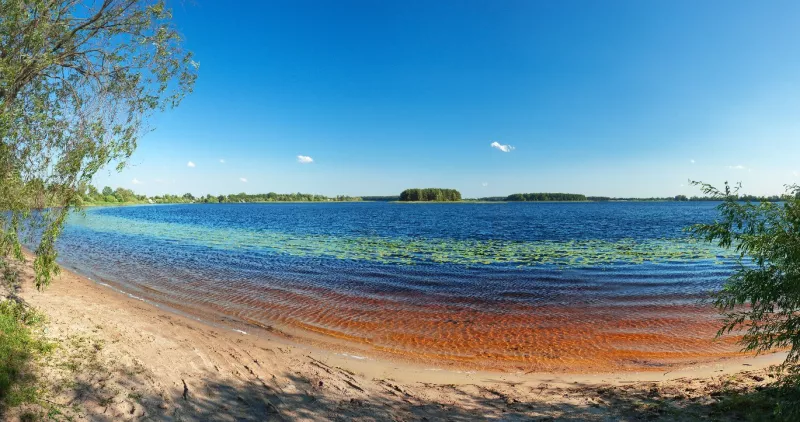

The north of Rivne region is a land of lakes. Karst lakes with clear water among pine forests; floodplain lakes through which the Prypiat flows; dark peat lakes in the swamps. The south of the region has almost no lakes, but there are reservoirs on the Styr, Ikva, and Ustia rivers. Below are the main bodies of water with brief information: what kind of water, where people swim, and what fish are caught. More details about each are available via the links.
Many lakes lie within reserves, nature preserves, or parks, so cars are not parked near the water, fires are not lit outside designated areas, and visitors take their trash with them.
Karst Lakes of the North
Bile Lake
Bile Lake near the village of Rudka in Varash district is the second largest lake in the region, about 453 hectares. The water is clear and soft, often called “glycerin-like,” the bottom near the shores is sandy and shallow, and in the sinkholes the depth reaches over twenty meters. The lake is part of the Rivne Nature Reserve and a Ramsar site, and near Rudka there are arranged places for recreation.
Fishing. More than two dozen species of fish live here: tench, crucian carp, roach, perch, rudd, pike, and less often eel. Perch and roach are caught from the shore with a float, pike with a spinning rod along the thickets; it is calmer to fish in the morning and outside the swimming season, and only where the protection regime allows.
Ostrivske Lake
Ostrivske Lake, or Ostrovya, near the village of Ostrivsk, is a karst lake of over one hundred hectares with an island in the middle. The average depth is seven meters, it is fed only by underground waters, so the water is clean. The western and southern shores are solid sandy, the northern and eastern are swampy.
Fishing. Bream, pike, perch; the red-listed eel is also found here and is released. Fishing is done from the sandy shore or from a boat.
Velyke Pochaivske
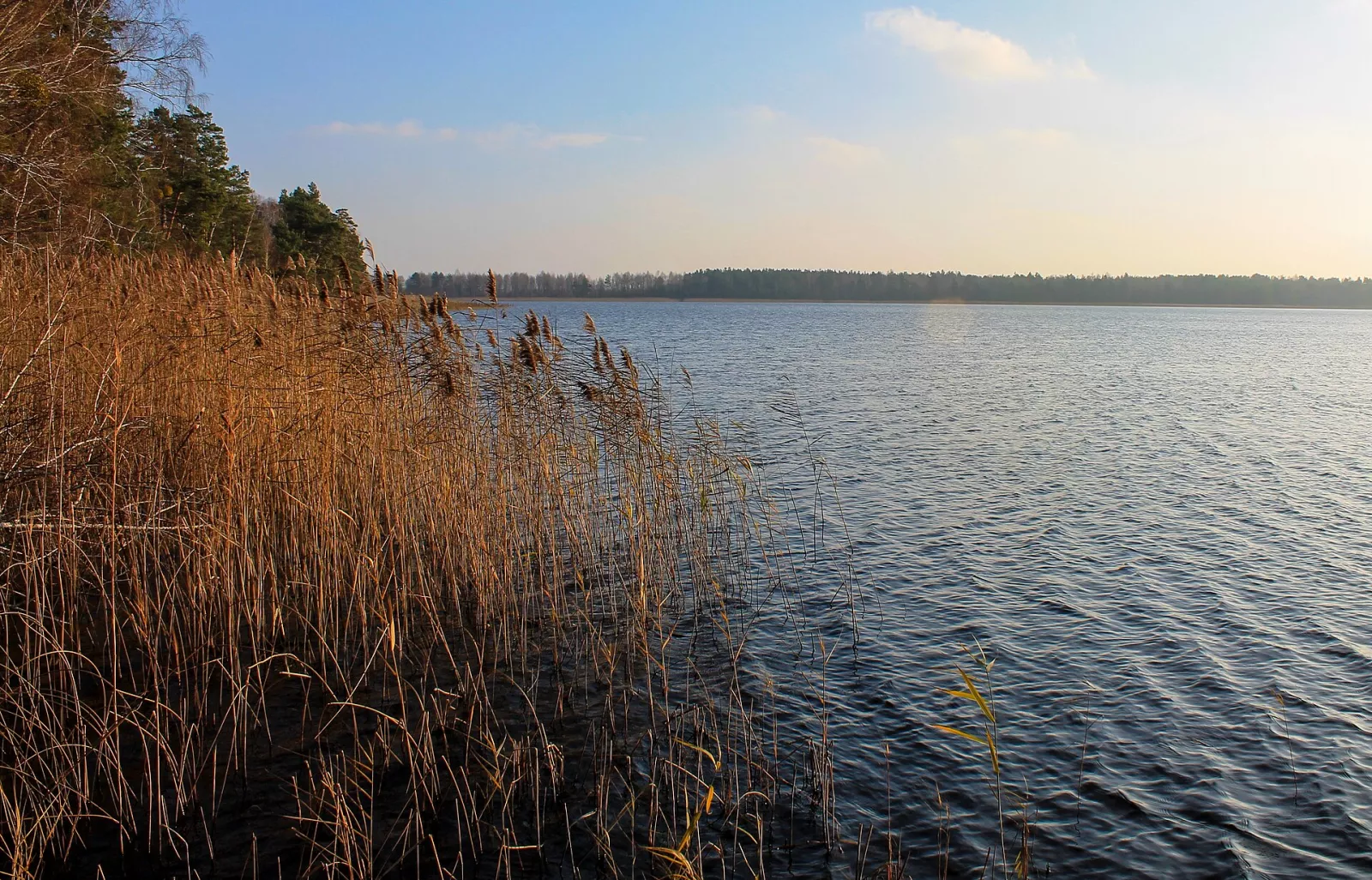
Velyke Pochaivske Lake near Verbivka not far from Vysotsk is a karst forest lake with dark peat water and a sandy beach. The name is not connected to Pochaiv in Ternopil region. The average depth is about four meters, the shores are mostly swampy.
Fishing. Pike, perch, tench, crucian carp, roach, rudd, bream. Pike is sought near grass and water lilies, in winter caught through the ice, but the ice on peat lakes is uneven.
Lakes of the Prypiat and Styr
Nobel
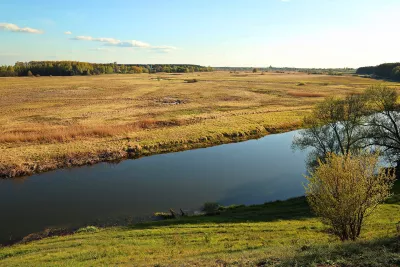
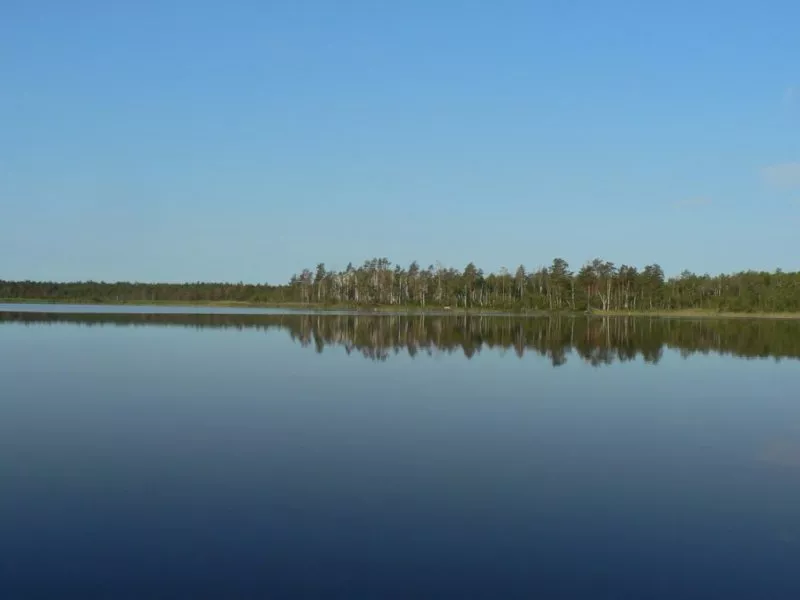
Nobel is the largest lake in Rivne region, about five square kilometers, in the floodplain of the Prypiat in the very north of the region. In the middle of it on a peninsula stands the old village of Nobel, and there are four islands on the water. The Prypiat flows into and out of the lake, so the water here is flowing.
Fishing. Nobel is famous for catfish, also pike, perch, tench, and crucian carp are caught. Locals fish from wooden flat-bottom boats near the islands and in the channels.
Omyt
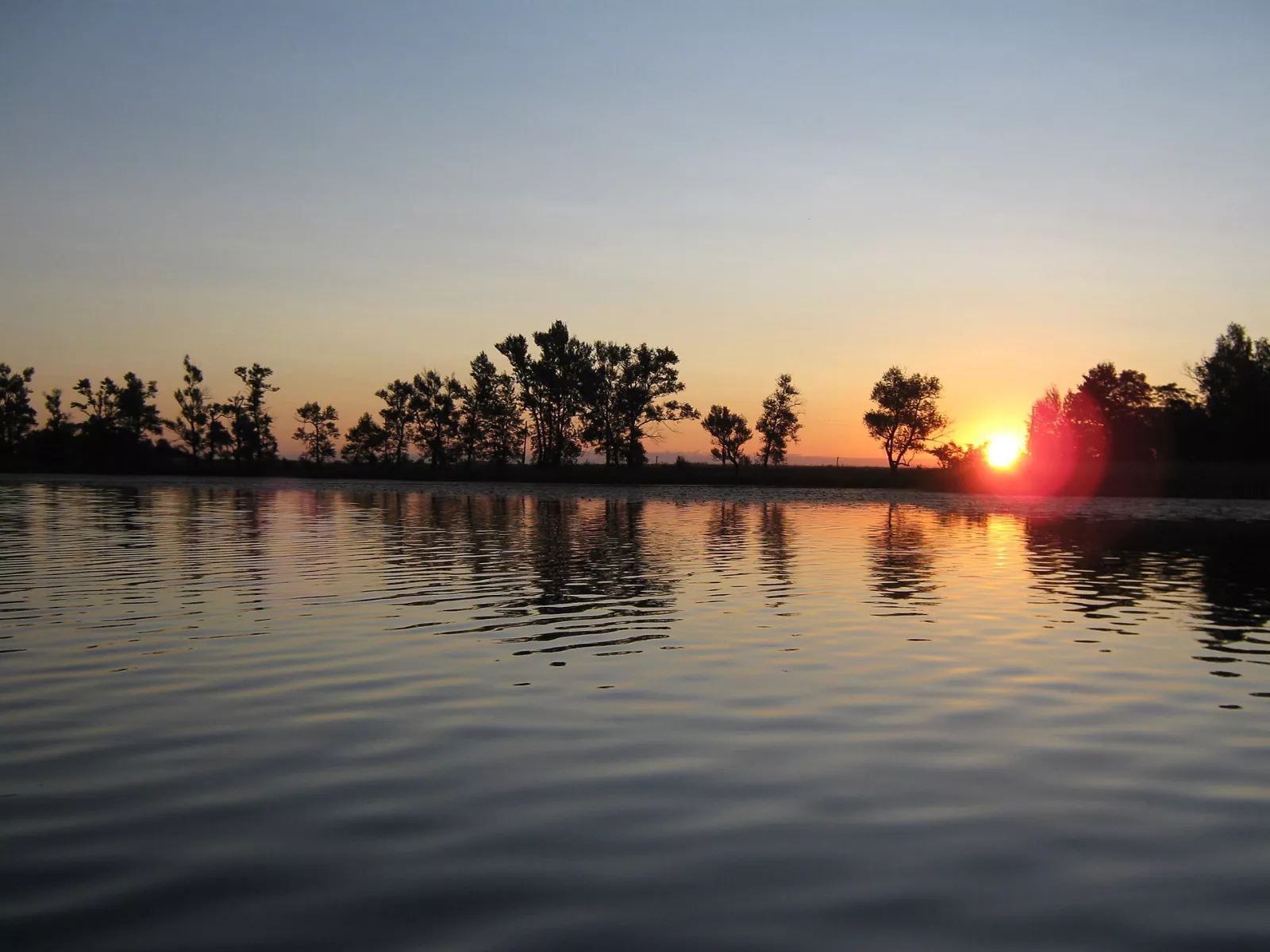
Omyt near the village of the same name in the Zarichne community is a small floodplain lake through which a branch of the Prypiat flows. Botanists know it for its growths of the rare carnivorous Aldrovanda vesiculosa.
Fishing. Carp, crucian carp, pike; fish come in from the Prypiat. The western shore is swampy, so it is more convenient to fish from a boat or from the solid shore near the village.
Chorne and Bile near Vovchytsia
Chorne Lake lies in the floodplain of the Styr near Vovchytsia, about eight kilometers from Zarichne, and one kilometer from it is its pair, another Bile Lake. Both are the pride of the Dibrivskyi Hydrological Reserve: the water in Bile is clear, while in Chorne it is brown from peat.
Fishing. Typical for Polissia forest lakes: crucian carp, perch, pike, tench, and rudd; the shores are swampy, fishing is only allowed where the reserve regime is not disturbed.
Somyne
Somyne Lake, about 56 hectares in area and up to 13 meters deep, lies amid the swamps on the massif of the same name in the Rivne Nature Reserve. Mute swans live there. This is a strict reserve zone, so free access is not allowed, and fishing is prohibited.
Reservoirs of the South
Khrinnytske Reservoir
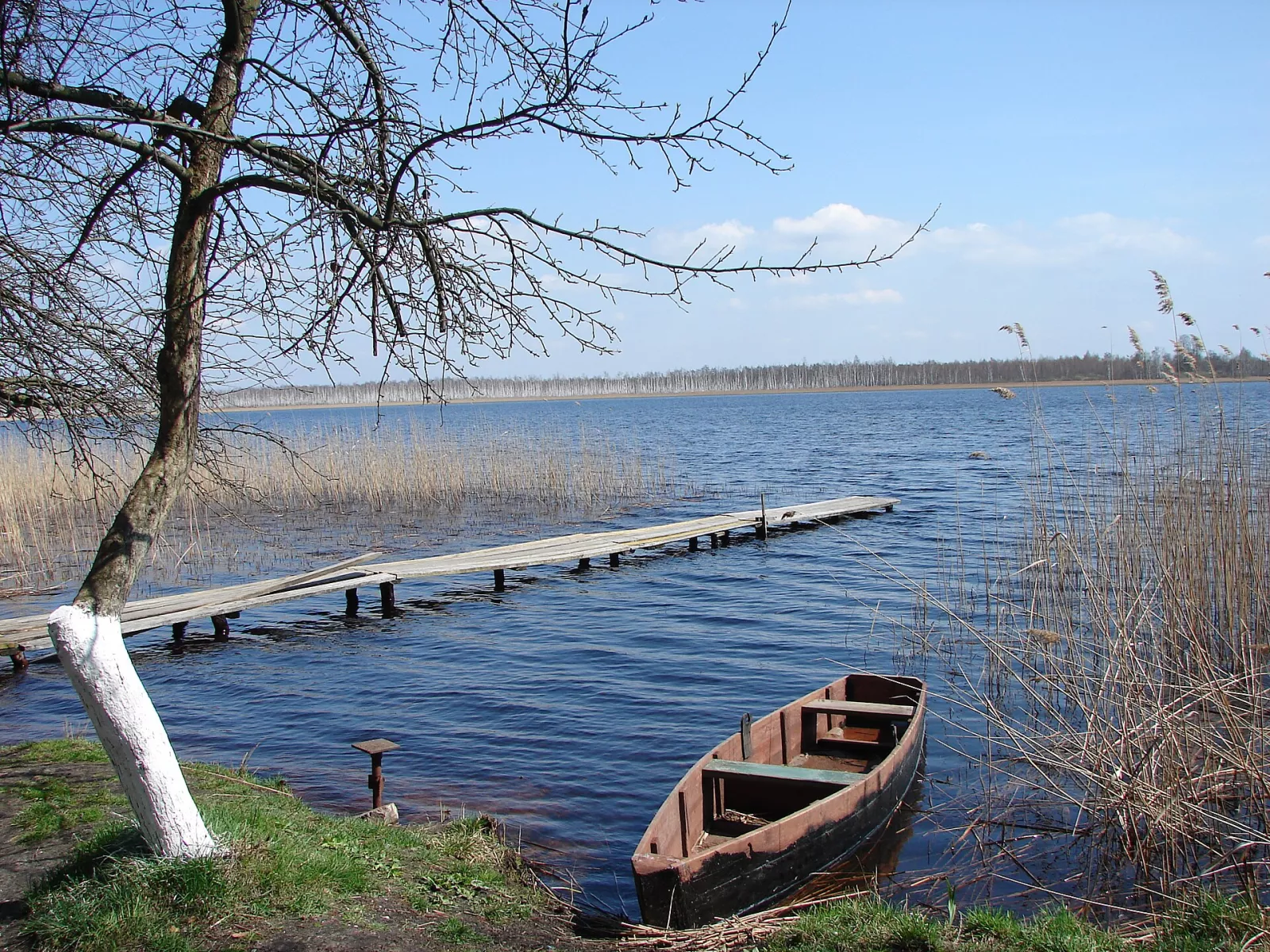
Khrinnytske Reservoir on the Styr near Khrinnyky is the largest artificial water body in Rivne region and Volyn, over 18 square kilometers. The water surface among hills with steep shores and sunsets is a favorite recreation spot in the south of the region.
Fishing. Pike, perch, bream, roach, rudd, catfish, common carp, crucian carp, tench. Predators stay in the old riverbed of the Styr and in the holes; fishing is done from the shore and from boats.
Mlynivske Reservoir
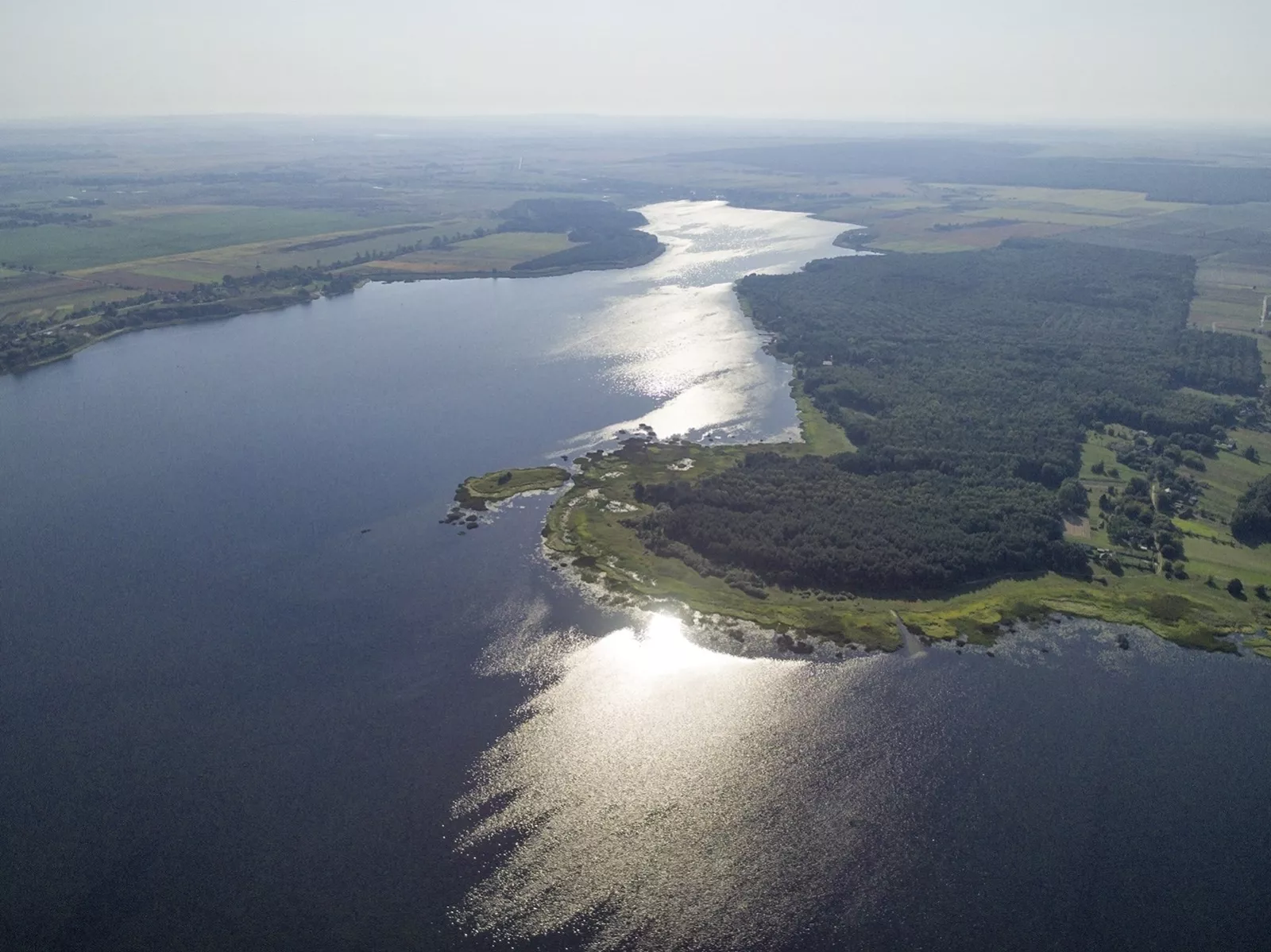
Mlynivske Reservoir on the Ikva near Mlyniv is about seven kilometers long. In summer, fish suffocation sometimes occurs, and the reservoir gradually overgrows.
Fishing. Mostly roach and bleak, also bream, tench, crucian carp, perch, rudd, less often pike; bleak and chub come in from the Ikva. Fishing with float and feeder from the shore, predators with spinning rods.
Basiv Kut
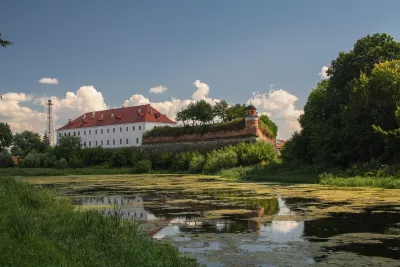
Basiv Kut is an artificial lake on the Ustia in the southern part of Rivne, about 104 hectares, shallow — on average up to two meters. Near Basivkutska Street there is a city beach, but the water quality has been questionable for years, so check the conclusions of the regional laboratory center before swimming. Above the lake is the Ostvytsia Hillfort.
Fishing. Zander, perch, pike, bream, crucian carp, carp, tench. Zander is sought with jigging along the old riverbed, bream and crucian carp are caught with feeder rods; in winter — perch and roach through the ice.
Boberske Reservoir
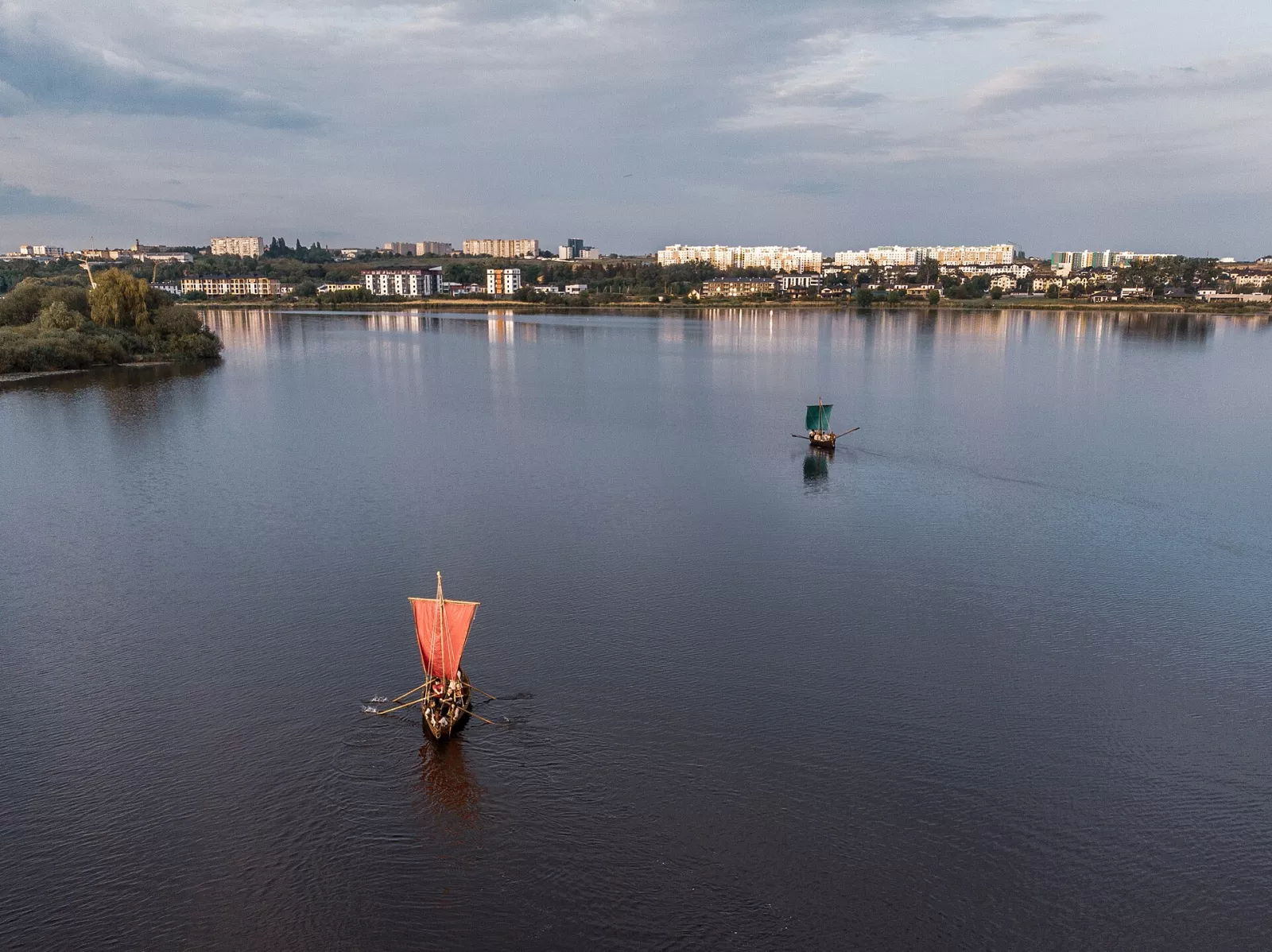
On the forest river Bober — the Boberske Reservoir in the nature reserve. According to Rivnefish, there are many pike, tench, and roach here, while carp are sought in the middle of the waterbody.
Swamps instead of Lakes
Some “lakes” on maps have long since become swamps. Yatsenkove Lake near Khotyn in Dubno district is a protected tract, where nine-tenths of the area is lowland swamp amid birch forest. People come here for silence and rare plants, not for fishing. The same can be said about the Koza-Berezyna swamp near Bile Lake — one of the largest natural swamps in Ukraine.
Fishing
The best fishing spots in the north are Nobel with catfish, Ostrivske and Bile with tench and pike, and in the south — Khrinnytske Reservoir with bream and zander, and Basiv Kut right in Rivne. A full overview of the region’s rivers and waterbodies is in the article Fishing in Rivne Region. General fishing rules apply, and from November 1st fishing in wintering holes is prohibited — list and map of holes.
When to Go
The swimming season on Polissia lakes is from late June to late August, with the cleanest water in the karst lakes — Bile and Ostrivske. Spring and autumn are times for fishing and quiet, while in April–May there are floods and migratory birds on Nobel and Pripyat. The northern part of the region borders Belarus, so check the State Border Guard Service announcements about restrictions in border communities before traveling. More about the area is in the article Rivne Polissia: where to go and what to see.