
The shrines of Rivne region are primarily the heritage of the Ostrogski and Koretski princes: they built monasteries so that they could withstand a siege, so several of these monasteries still resemble fortresses more than monasteries. Added to them are memorial churches on the Cossack Graves, wooden churches of the 18th century, Baroque Catholic churches, and synagogues of former towns. We have gathered the main ones with links to detailed articles.
Most monasteries are active. Please behave quietly in the courtyards; women usually cover their heads and wear skirts, men should avoid shorts and headwear, and photography during services is not recommended. Check the service times and access to the churches locally.
Monastery Fortresses
Mezhyritskyi Monastery
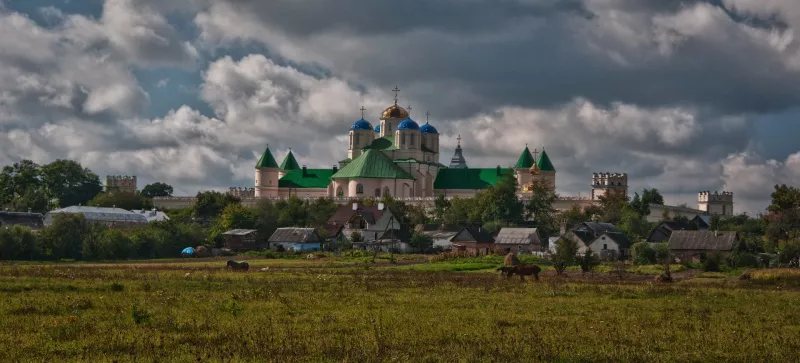
Mezhyritskyi Monastery in the village of Mezhyrich near Ostroh is the grandest of the preserved foundations of the Ostrogski family. The courtyard is surrounded by walls with four corner towers, and in the center stands the Trinity Church, likely built before the 1530s: five-domed, with buttresses and pointed windows—a rare combination of Old Rus’ tradition with late Gothic. In 1606–1610, Prince Janusz Ostrogski founded a Franciscan monastery here. Mezhyrich is conveniently combined with Ostroh in one day.
Dermanskyi Monastery
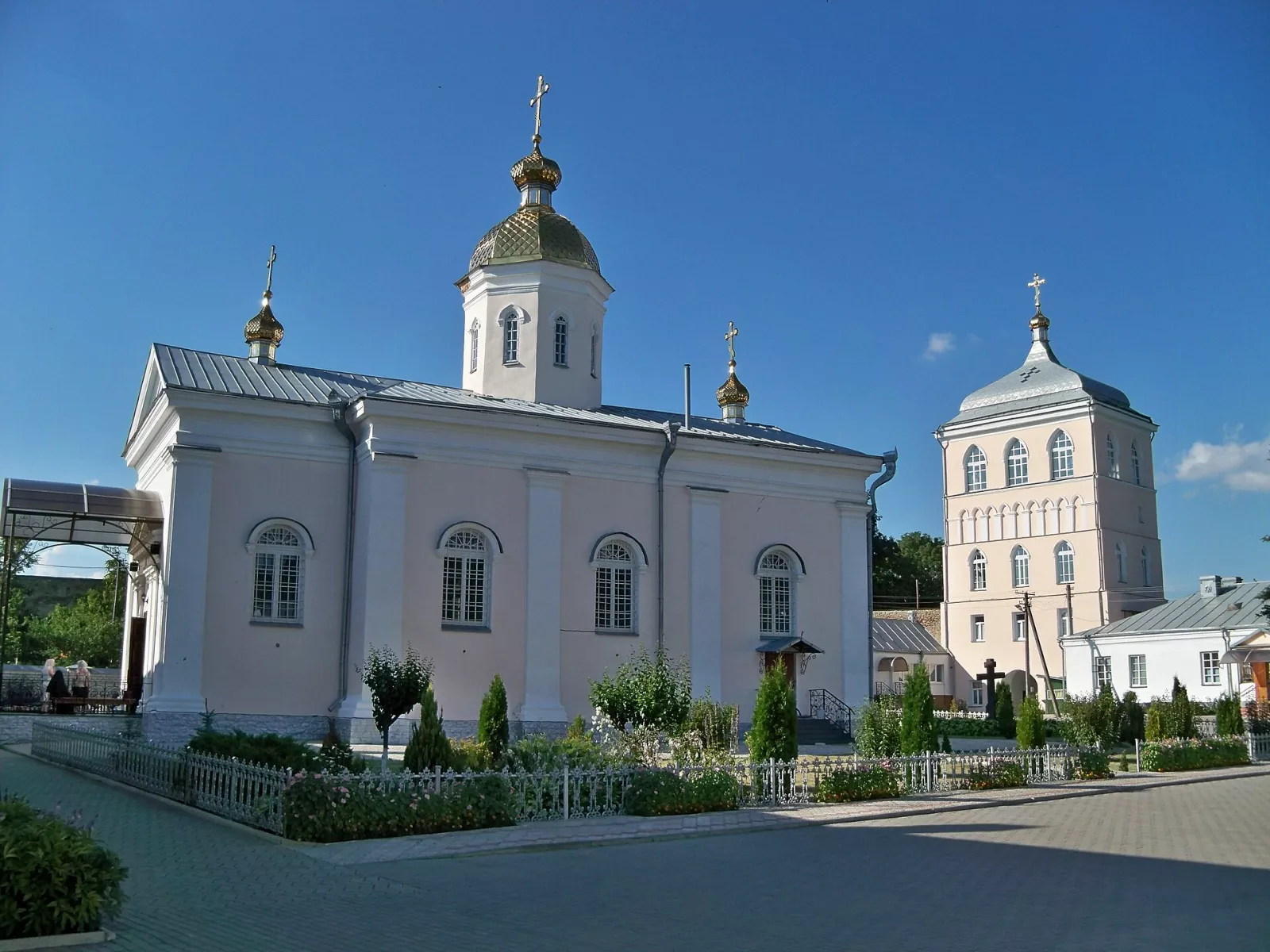
Dermanskyi Holy Trinity Monastery was founded by the Ostrogski at the end of the 15th century. The first printer Ivan Fedorov worked here, there was a printing house, and the archimandrite was Meletius Smotrytskyi. Above the village, a thirty-meter gate bell tower is visible; in the courtyard stands the Trinity Church of 1602 and the old defensive wall. About the village itself — see the article Derman — the village of Samchuk, the monastery, and the first printers.
Koretskyi Holy Trinity Monastery
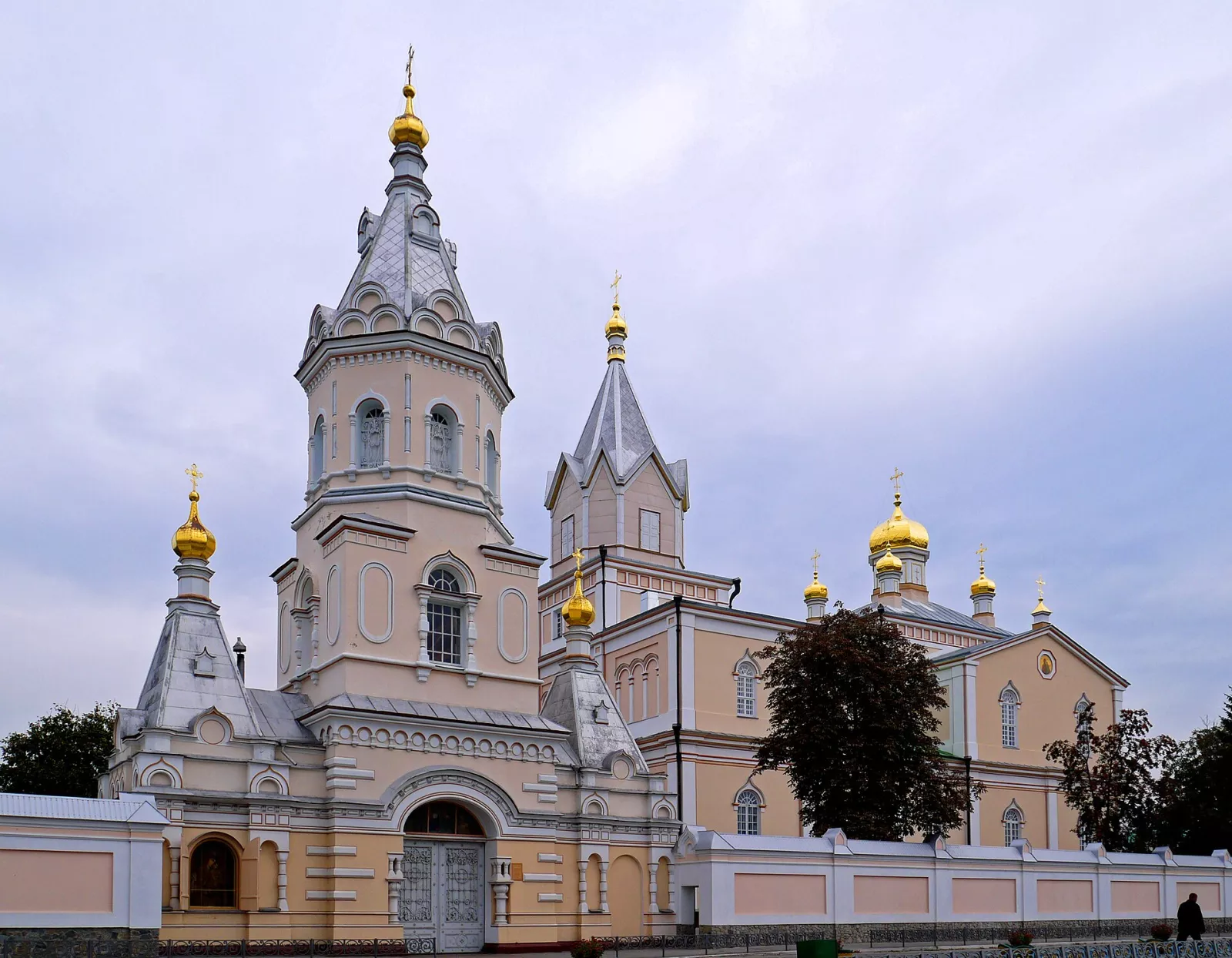
The monastery in Korets was founded around 1571 by Prince Bohush Koretskyi. In 1620–1633, the monastery was rebuilt as a Franciscan one with a Baroque Catholic church; at the end of the 18th century, it was again made Orthodox, and after the 1831 fire, the Catholic church was reconsecrated as the Trinity Church. The ensemble stands near the ruins of the Koretskyi Castle.
Monasteries near Rivne
Horodok
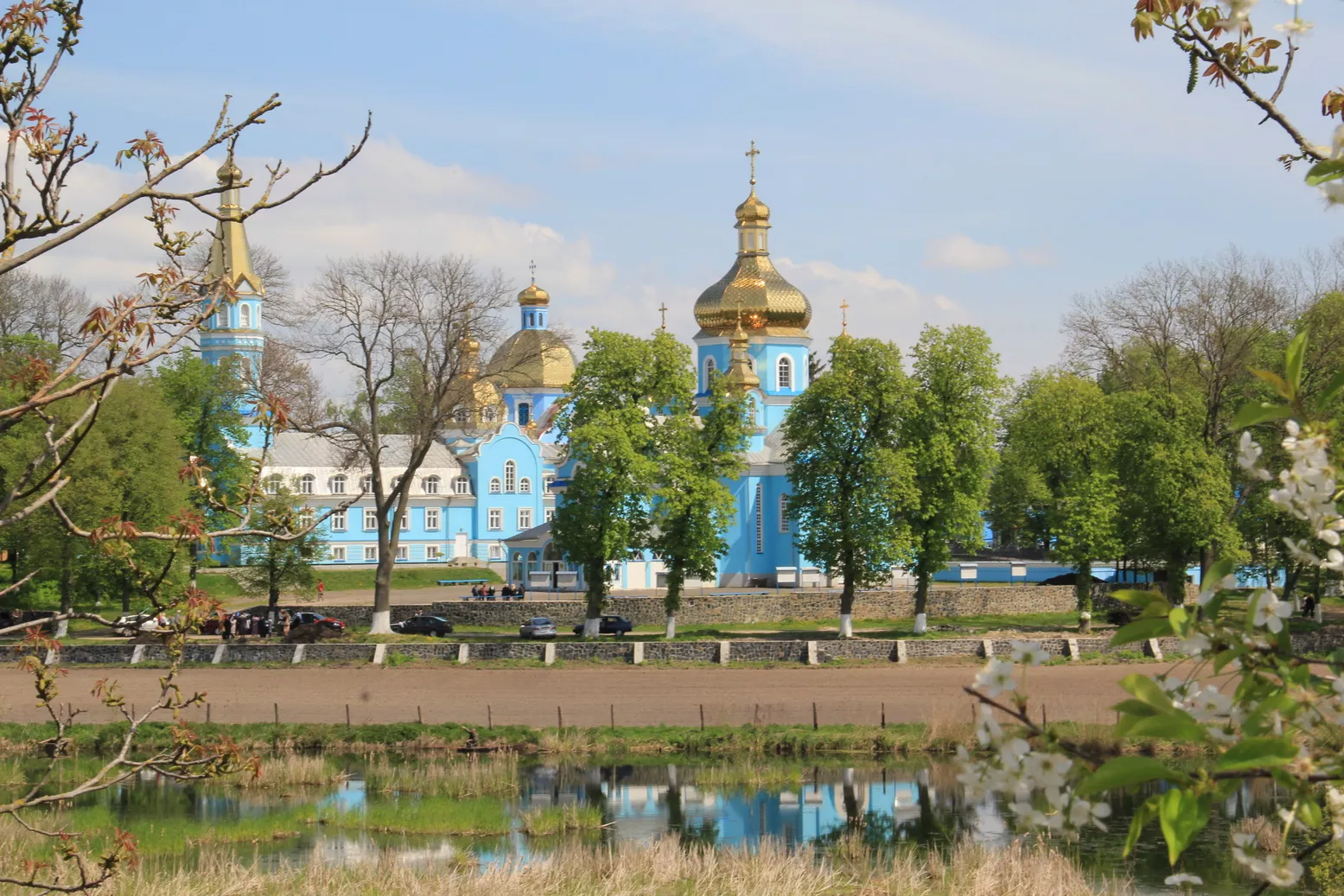
St. Nicholas Monastery in Horodok, a few kilometers from Rivne, was first mentioned in 1516 when the village was donated to the Kyiv Pechersk Lavra. In 1628, a church council was held here, attended by Petro Mohyla, Metropolitan Yov Boretskyi, and Meletius Smotrytskyi. The monastery stands on an island among ponds; nearby is the “Vyshneva Hora” reserve. More in the article Horodok — monastery on the island and Vyshneva Hora.
Peresopnytsia
The Nativity of the Theotokos Monastery in Peresopnytsia, where in 1561 the Peresopnytsia Gospel was completed, has not been preserved. Its appearance is recreated by a model in the Cultural and Archaeological Center “Peresopnytsia”.
Kozatski Mohyly
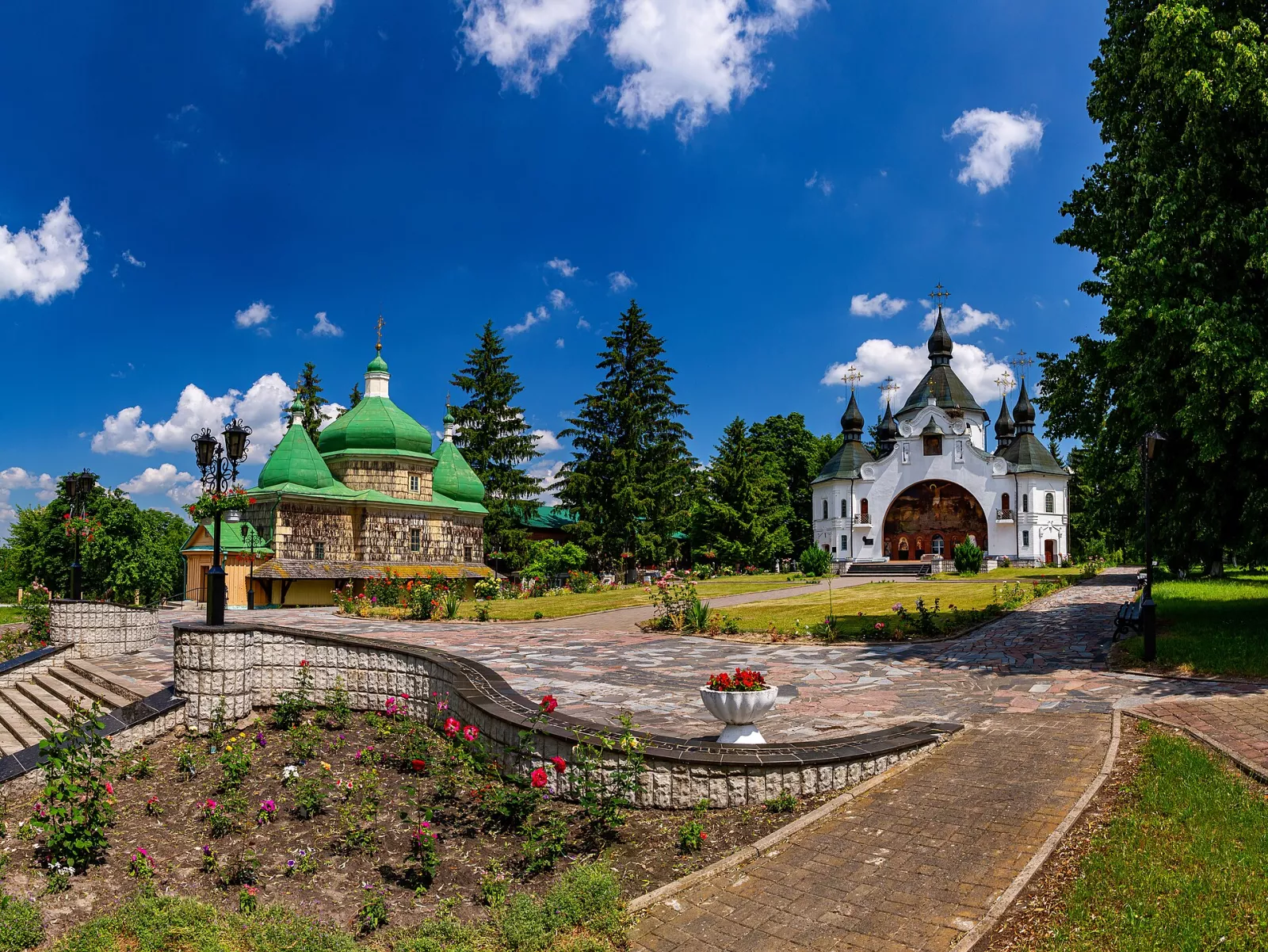
In the village of Pliasheva in Dubno district, on the island of Zhuravlykha, there is the St. George’s Monastery and a memorial on the field of the Battle of Berestechko of 1651. Here lie Cossacks and peasants who died retreating through the Pliasivka swamps. The first official commemoration took place in 1908, and at that time the idea of a memorial church arose. On the island stand the Church of St. George and the wooden Church of St. Michael, which was relocated here; a museum operates as well. About the reserve — see the article Field of the Battle of Berestechko — Kozatski Mohyly.
City Churches
Epiphany Cathedral in Ostroh
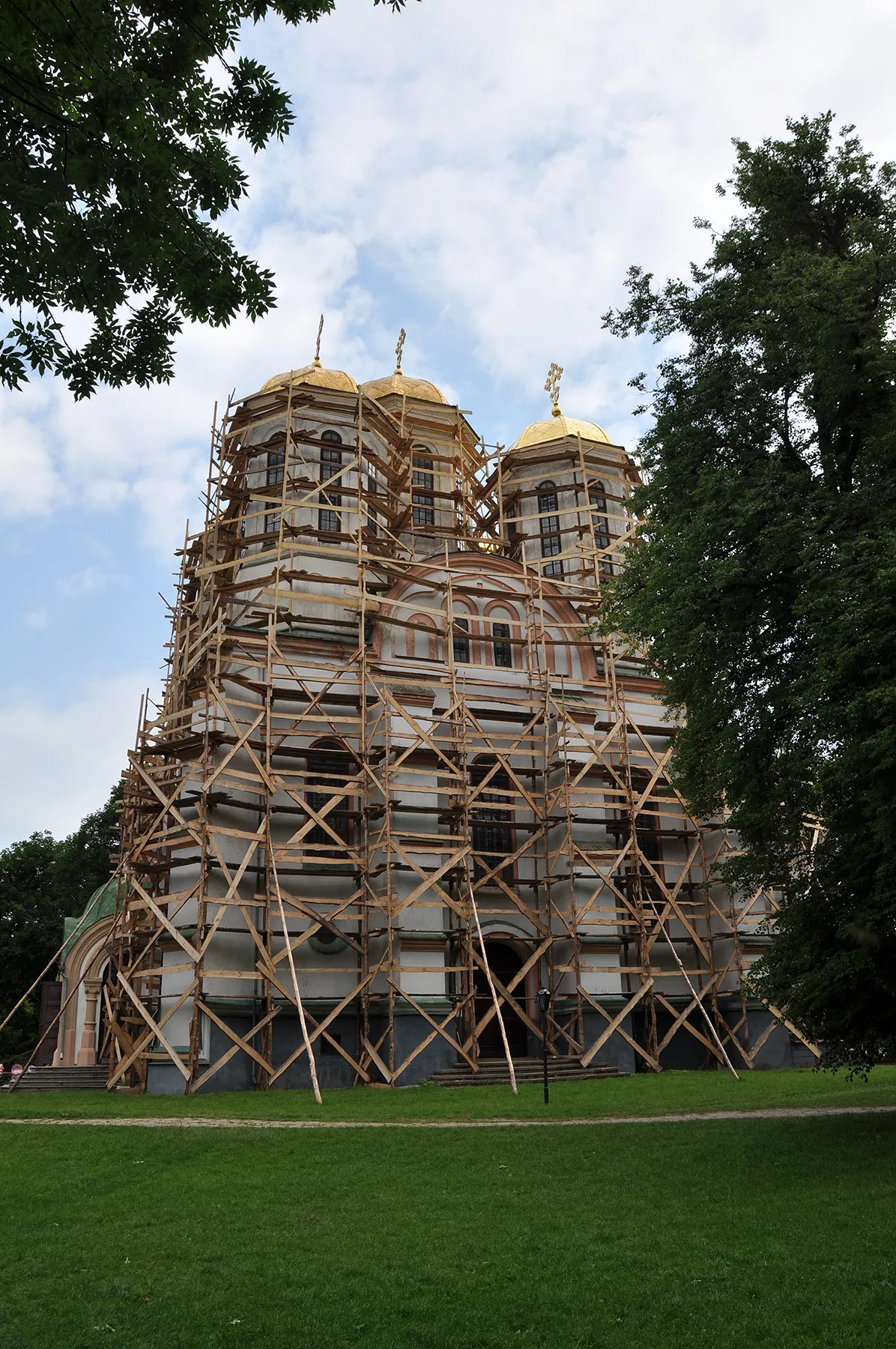
The cathedral in the castle complex of Ostroh was built as part of the fortifications: its walls are sometimes about three meters thick. It is more of a fortress with the function of a church than an ordinary church. Nearby is the Ostroh Academy.
Assumption Church in Rivne
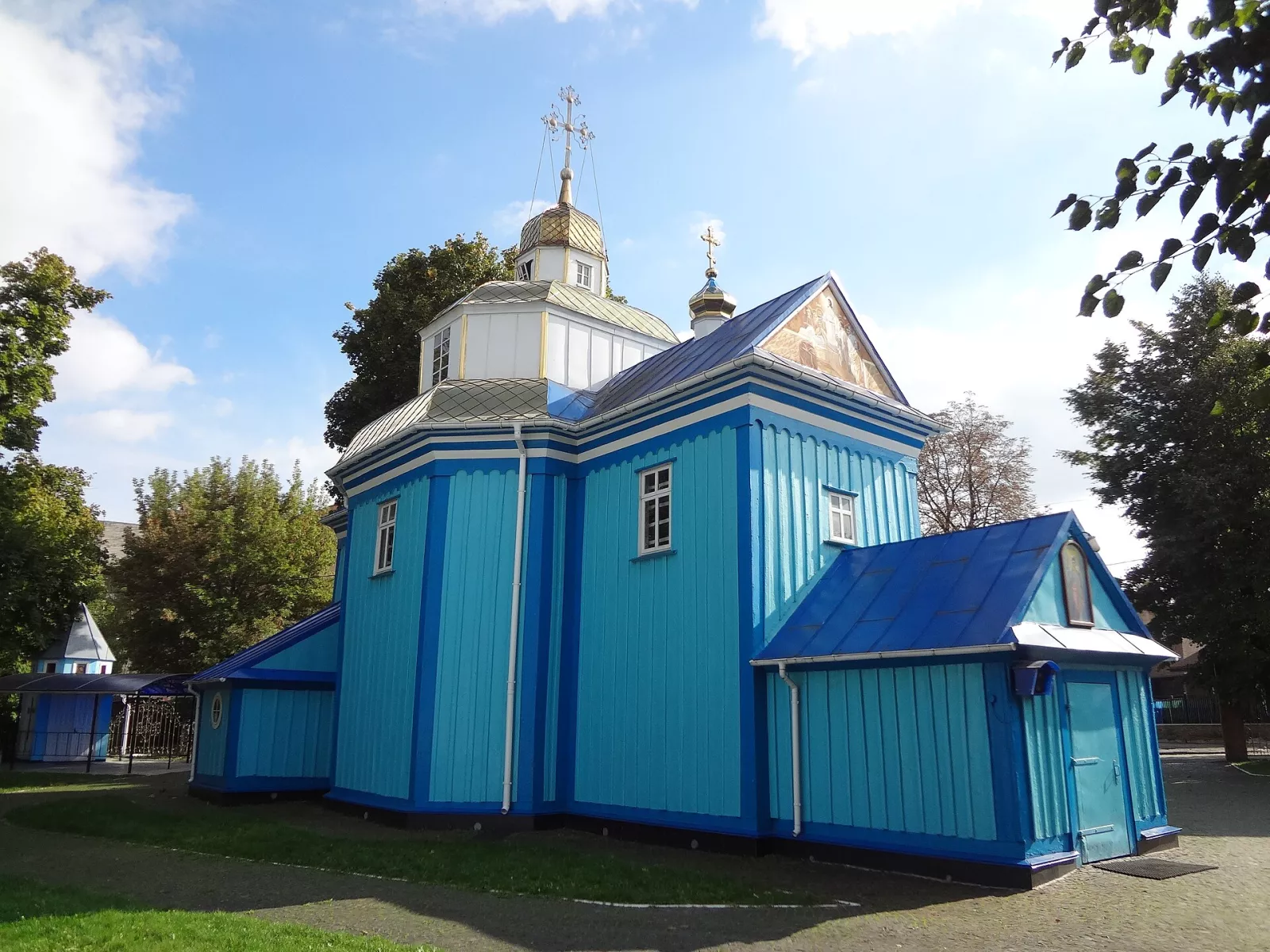
The wooden church, consecrated in 1756, is one of the oldest buildings in the regional center. Legend says that Ivan Honta prayed here. About other city churches, including the neo-Gothic Church of St. Anthony, now the organ music hall — see the article Rivne — what to see in the city and nearby.
Roman Catholic Churches
- Bernardine Church in Dubno — one of the oldest brick churches in the city, founded by Janusz Ostrogski; the monastery wall was part of the city fortifications.
- Church of Saint Anthony in Korets — a pink Baroque church on the left bank of the Korchyk River, a monument of national significance.
- Church of Saint Anthony in Velyki Mezhyrichi — an abandoned Baroque church of the Piarist college.
- Church of Saint Lawrence in Taikury — ruins at the foot of the castle hill.
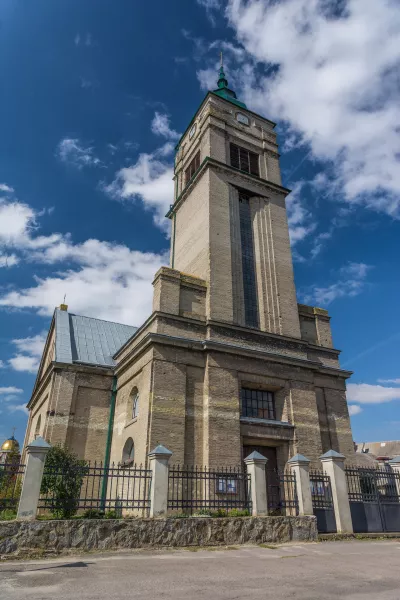
- Church of Peter and Paul in Zdolbuniv — a 1908 church with a tall bell tower.
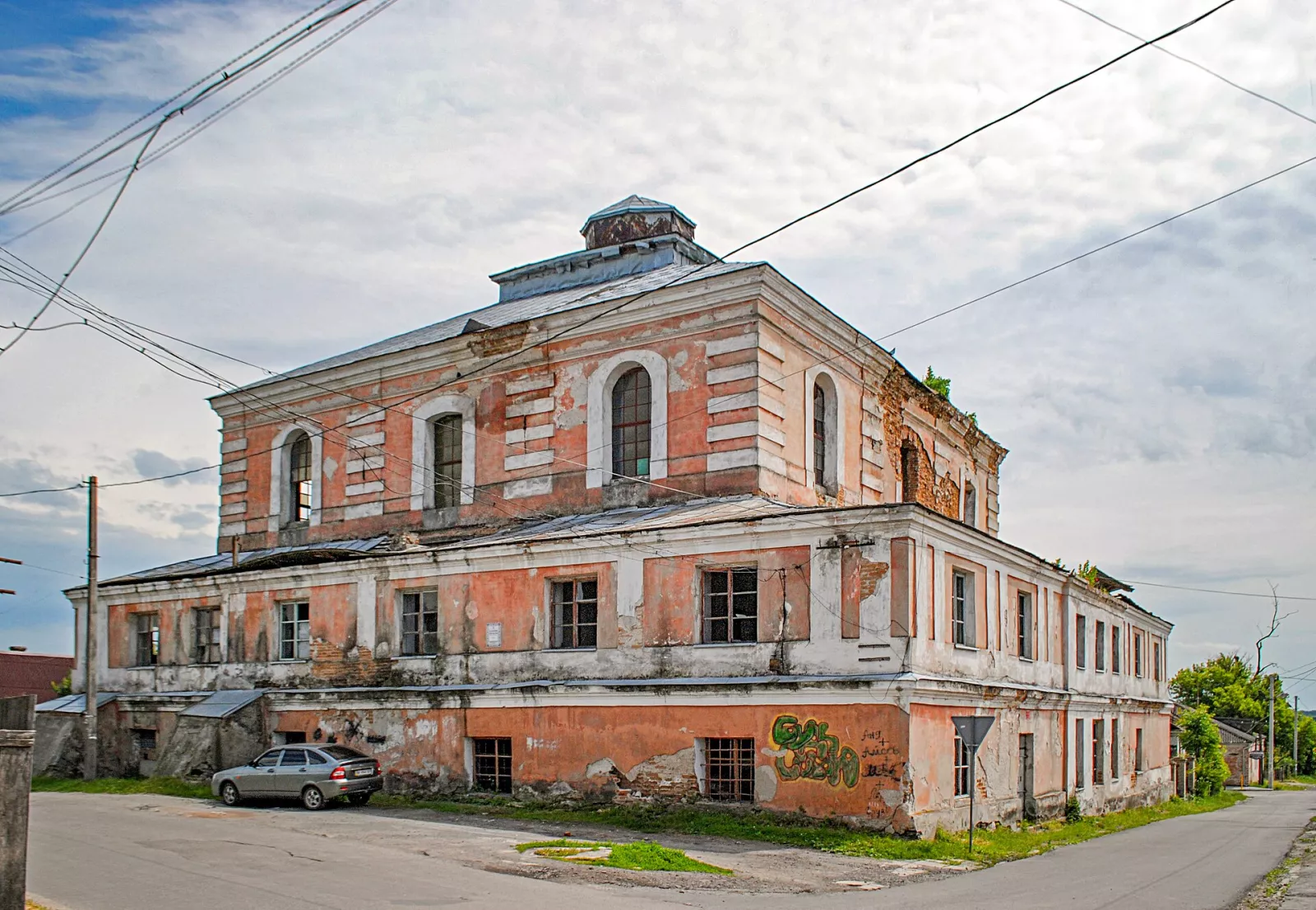
Great Synagogue in Dubno
The Great Synagogue in the center of Dubno, a few hundred meters from the castle, is a massive brick building from the late 18th century on the site of an earlier 16th-century synagogue. It is part of the city’s historical and cultural reserve.
Wooden Churches
Many wooden churches from the 18th–19th centuries have been preserved in Rivne Oblast, especially in Polissia. Among the most beautiful are the Trinity Church of 1759 in Stepan and the Transfiguration Church of 1801 in Marynyn on the Sluch River, near the Falcon Hills. On Polissian cemeteries, pay attention to the crosses adorned with embroidered towels — a tradition included in the National List of Intangible Cultural Heritage.
How to Combine in Trips
- Ostroh, Mezhyrich, and Derman — three Ostrogski foundations within half an hour’s drive from each other.
- Rivne, Horodok, and Peresopnytsia — shrines around the regional center in one day.
- Dubno and Kozatski Mohyly — the synagogue and churches of Dubno, and further west — Pliasheva.
- Korets and Velyki Mezhyrichi — monastery, churches, and the Stetskyi palace.
About the region’s castles — in the selection Castles and Palaces of Rivne Oblast.