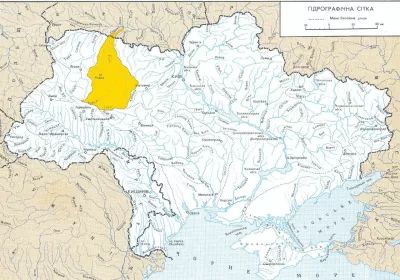

The Ethnocenter “Polissia” was opened on November 1, 2024, in Sarny on the basis of the Sarny Historical and Ethnographic Museum. It is the first ethnocenter of this type in Rivne region. It was created for the museum’s 50th anniversary with the support of the Ukrainian Cultural Foundation and funded by the Sarny City Council.
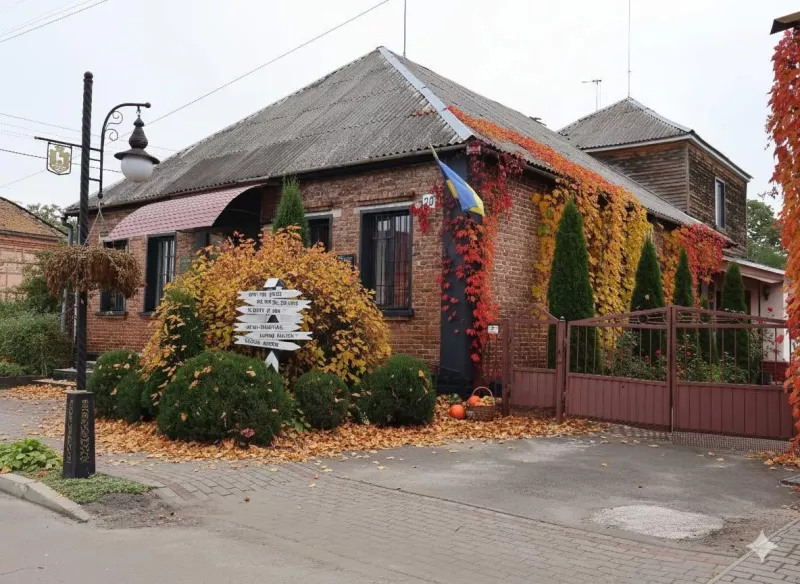
A separate building from the early 20th century was renovated for the new space. At different times, it served as a refrigeration chamber for storing meat, an NKVD office, a prosecutor’s office, and an artists’ cooperative. After renovation, the building received a new purpose — to introduce visitors to the traditional clothing, crafts, and everyday life of Polissia.
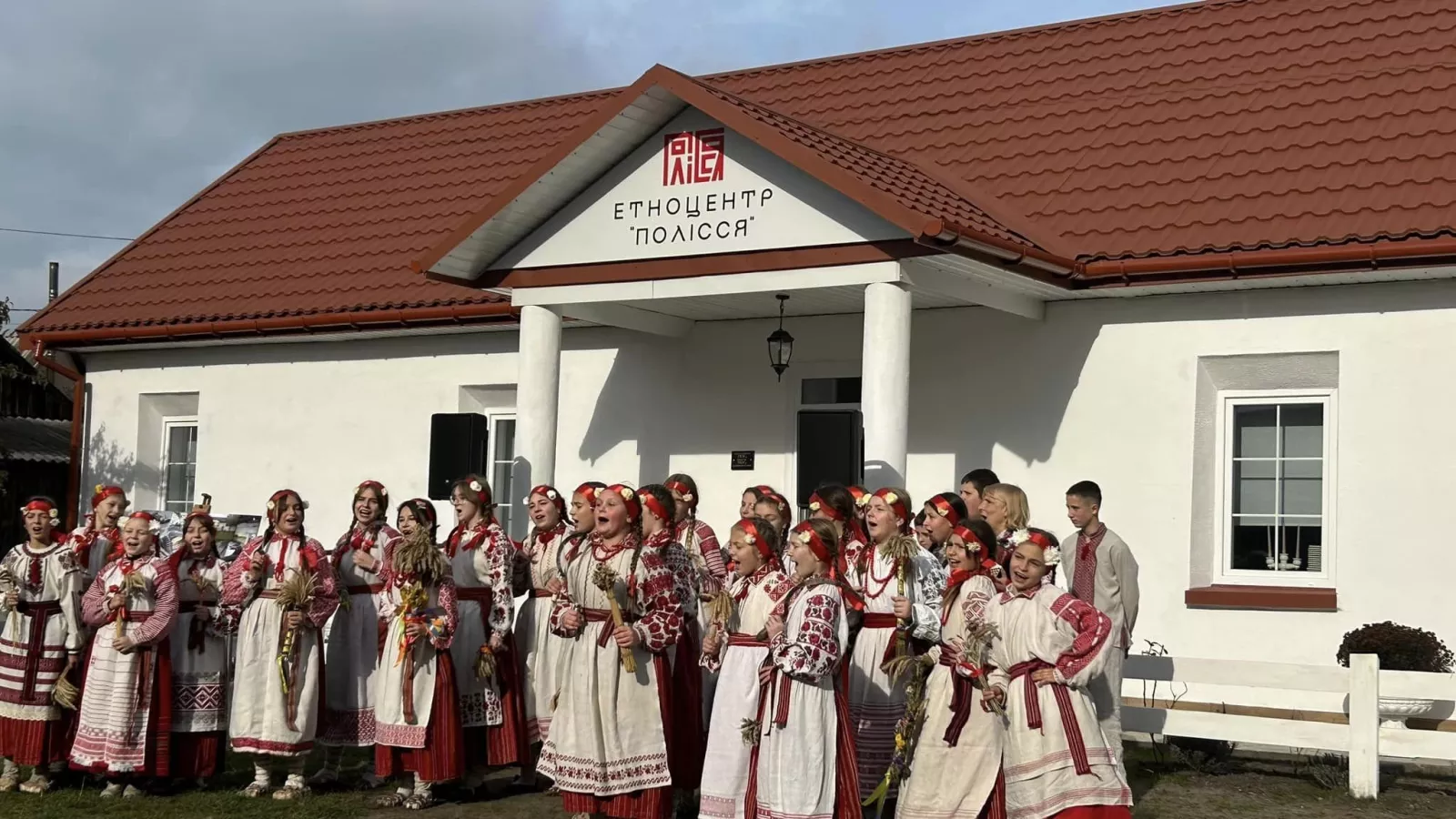
Photo: Sarny Historical and Ethnographic Museum, Sarny City Council
Halls and Exhibits
The ethnocenter has three halls. Two of them are dedicated to ethnographic exhibitions, and the third is intended for master classes, lectures, and other cultural events.
One of the halls features traditional women’s attire of Polissia. Here you can see shirts and other clothing elements decorated with various embroidery techniques. Among the exhibits is wedding attire woven using the “serpanok” technique, which is part of the intangible cultural heritage of Rivne region.
A separate hall is devoted to weaving. It houses antique looms that have been preserved in working condition. Visitors can see how fabric is made on them. During the opening of the ethnocenter, the loom was demonstrated by the weaver Halyna Lohoshchuk from Berezne.
The exhibitions are supplemented by an audio guide, video materials, and digitized objects. A 3D tour of the ethnocenter with informational points and folk music accompaniment was also created for visitors. Thanks to this, the museum halls can be viewed remotely.
At the opening, the art book “Sarny Women’s Attire of the Early to Mid-20th Century” was presented. It features women’s clothing from private collections of villages in the Sarny district.
Master Classes and Traditional Crafts
The third hall of the ethnocenter is intended for practical classes, training, lectures, and cultural meetings. During the opening, master classes in traditional crafts were held here with the participation of craftswomen from various cities of Rivne region.
In particular, the weaver Halyna Lohoshchuk from Berezne introduced visitors to weaving, Tetiana Kostiuchyk from Sarny district to basket weaving, Tetiana Halakh from Sarny to straw weaving, and Liubov Pasichnyk from Varash conducted embroidery lessons.
These events show that the ethnocenter is designed not only as an exhibition space. Here, one can learn about crafts not only through finished products but also through the process of their creation. At the same time, it is advisable to check the current schedule of master classes at the museum.
Open-Air Museum on the Museum Grounds
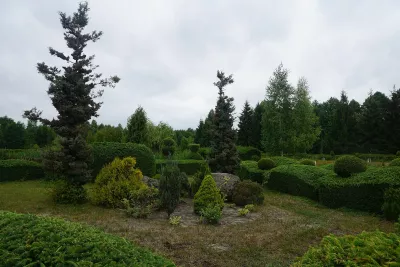
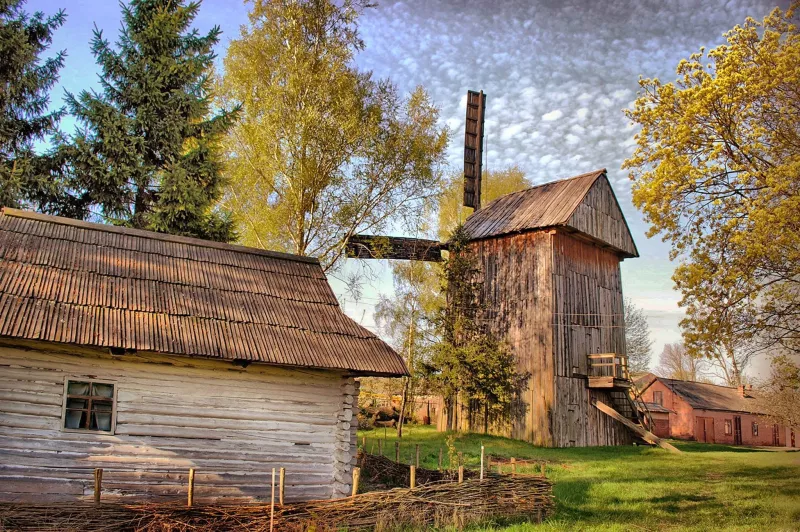
After visiting the ethnocenter, it is worth exploring the open-air museum — a museum under the open sky on the grounds of the Sarny Historical and Ethnographic Museum. It recreates a fragment of a Polissian village from the late 19th to early 20th century.
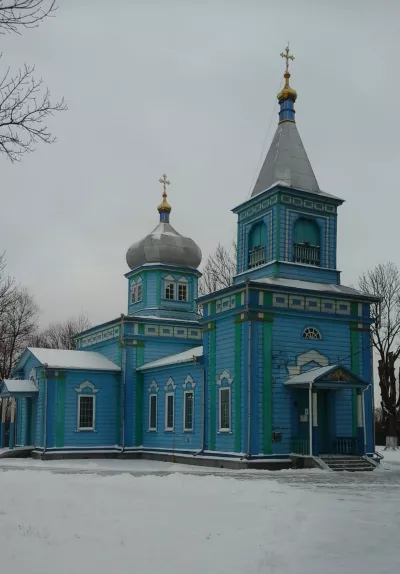
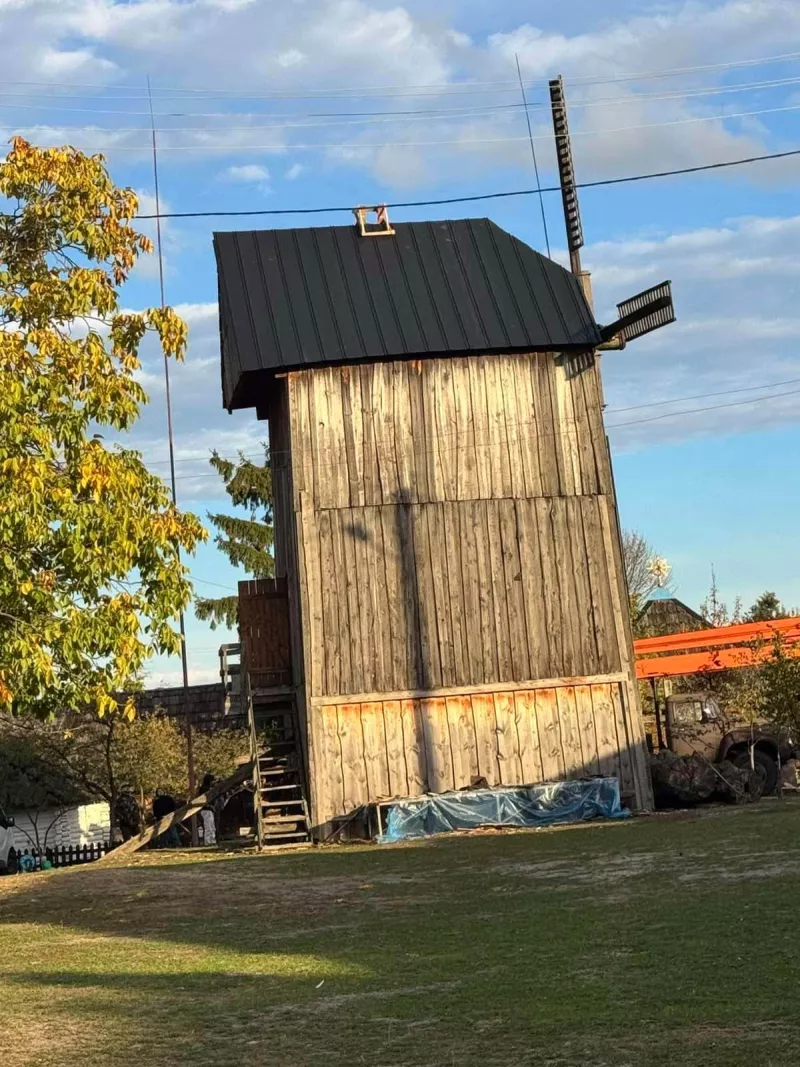
Here traditional peasant buildings and farm structures are gathered: a smoke hut, homesteads, a smithy, a village tavern, and a windmill. A separate landmark is a wooden chapel from the mid-18th century, transported to the museum from Stepani.
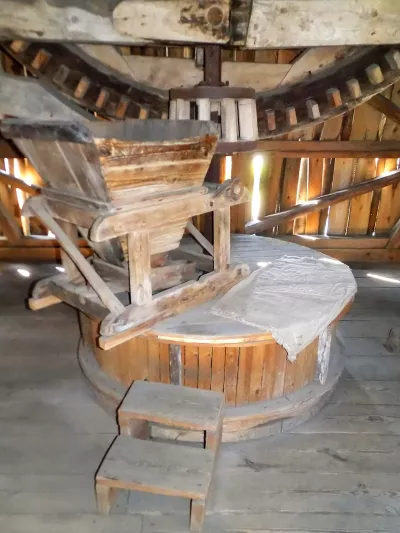
Special attention deserves the windmill of 1898. It is one of the most famous objects of the open-air museum and a kind of symbol of the Sarny museum. On the grounds, you can also see a reconstruction of a UPA hideout.
The open-air museum allows you to see not only individual household items but also the environment in which Polissians lived: their homes, farms, and traditional architecture.
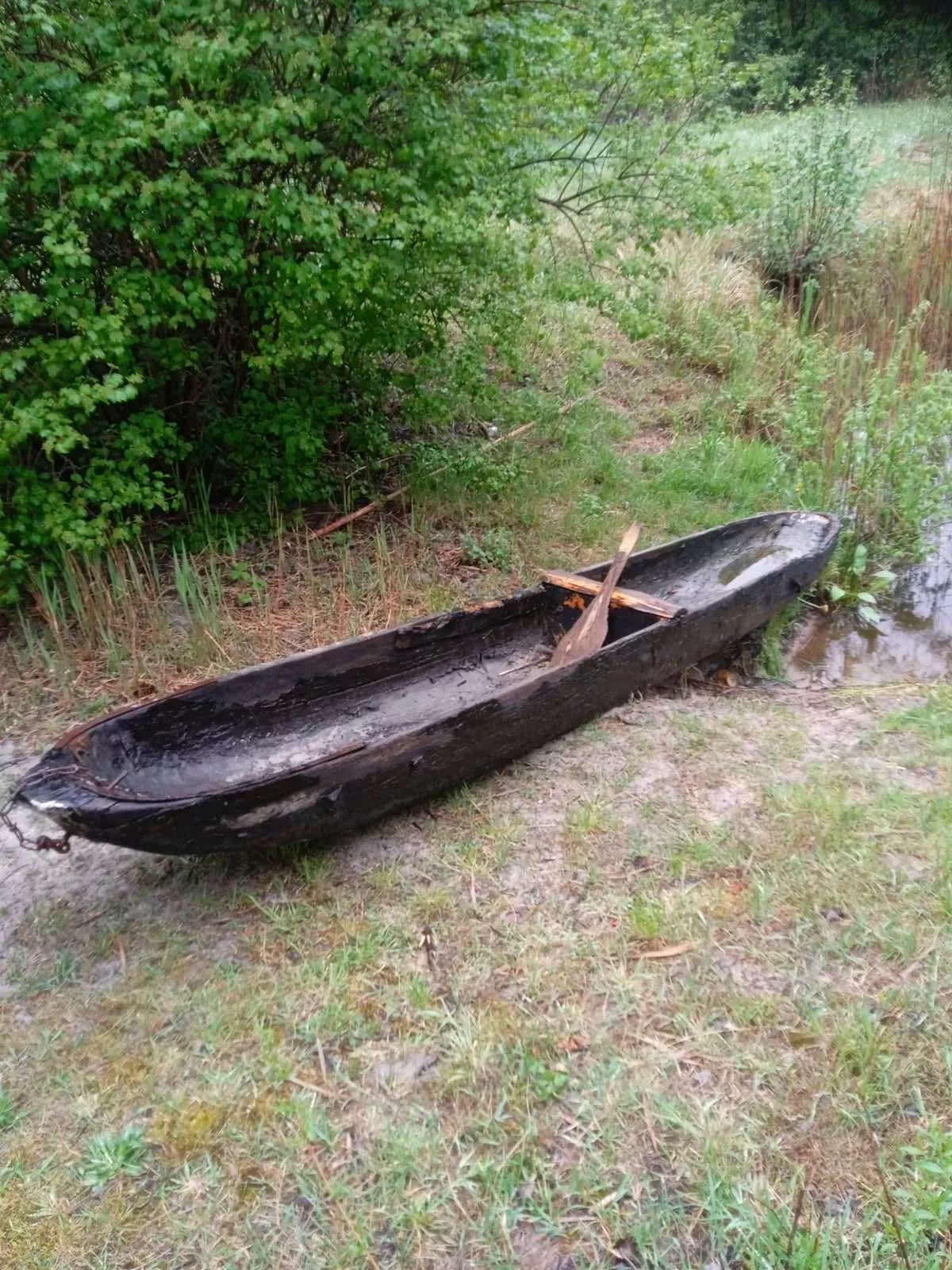
Photo: Sarny Historical and Ethnographic Museum, Sarny City Council
Location and Visiting Hours
The ethno-centre and open-air museum are located on the grounds of the Sarny Historical and Ethnographic Museum at: 20 Prosvity Street, Sarny, Rivne Oblast.
According to the Rivne region tourist portal, the museum is open Tuesday to Friday from 09:00 to 18:00, and on Saturday from 09:00 to 17:00. Sunday and Monday are closed. It is best to confirm the schedule and the possibility of viewing the exhibitions in advance by calling 03655 35 397.