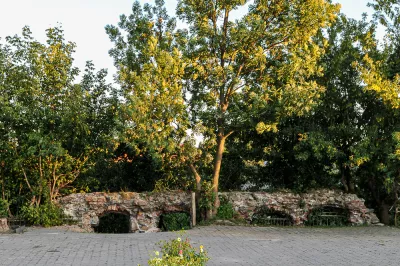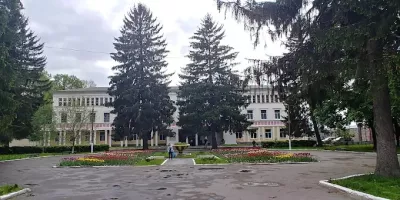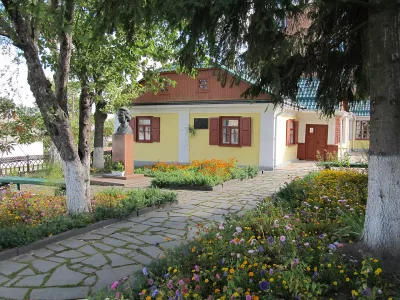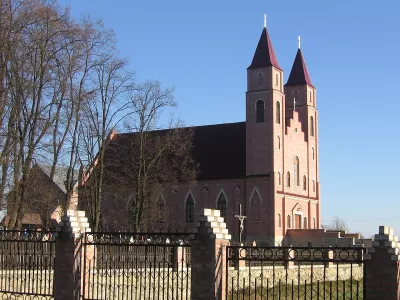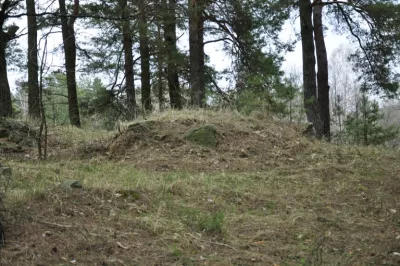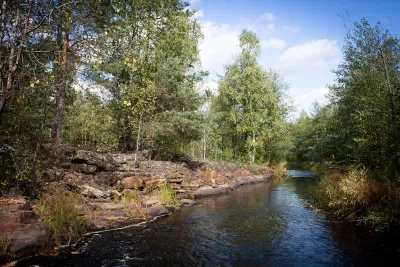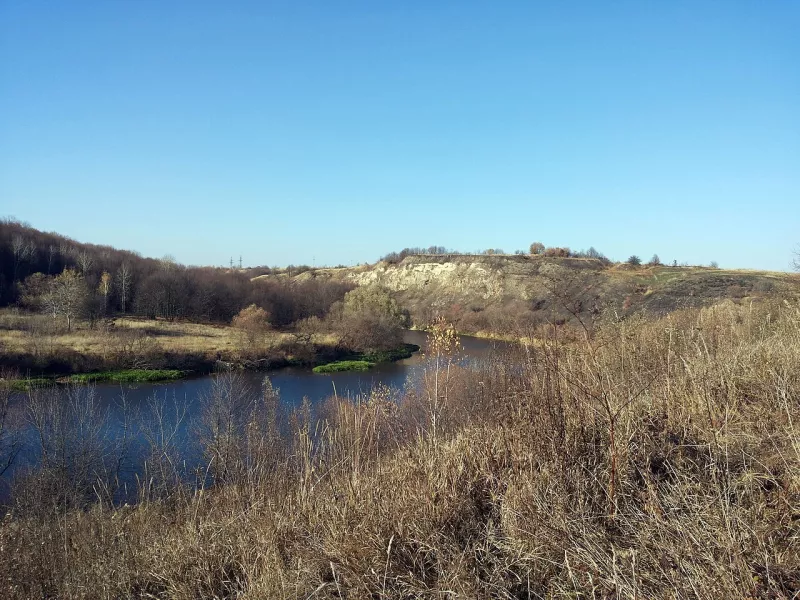

Vozvyahl, or Zvyahel, is an Old Rus city of the Bolokhiv land, from which the modern Zvyahel traces its history. Two hillforts remain from it on the right bank of the Sluch River, on the northeastern outskirts of the city. Today it is an archaeological monument: high promontory banks with ramparts and ditches, offering a view of the river valley.
The city burned by King Danylo
Vozvyahl was first mentioned in the Galician-Volhynian Chronicle in 1256: King Danylo Romanovych sent his tyvun there. The Bolokhiv cities tried to remain independent from princes, and Vozvyahl did not submit. In 1257, Danylo’s army stormed the city and burned it down.
Two hillforts
The first hillfort occupies a promontory-like projection of the right bank of the Sluch, covering about one hectare. It is separated from the plateau by a strong rampart and ditch. Archaeologists found three layers here: a Milograd culture settlement from the 1st millennium BC, Slavic from the 9th–10th centuries, and Old Rus from the 12th–13th centuries, which included dwellings, workshops, utility, and defensive structures. In 1993, a unique treasure of jewelry was found at the hillfort.
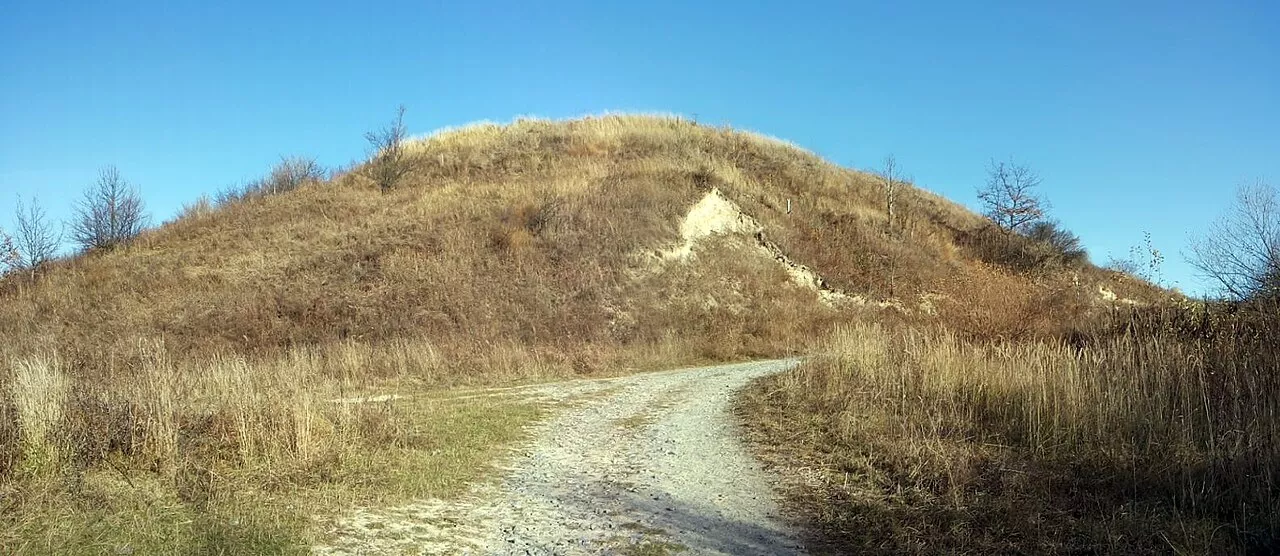
The second hillfort lies 200 meters downstream on a promontory 40 meters high. It is larger—up to 2.5 hectares—and is separated from the plateau by three rows of ramparts and ditches. No excavations have been conducted here, but surface finds date it to the 9th–12th centuries. To the east of the hillfort was an unfortified posad covering about 20 hectares.
Excavations
The remains of the hillfort were noticed as early as the 19th century, but were thoroughly surveyed in the 1970s by an expedition from the Institute of Archaeology consisting of M. P. Kuchera, V. A. Kruts, and O. P. Mots. The identification of the chronicle city with these hillforts was finalized by M. P. Kuchera and B. A. Zvizdecki after surveys in 1988.
In 2007, on the 750th anniversary of the city, an expedition led by Andriy Petrauskas excavated 100 square meters near the entrance to the detinets. They found bracelets, a buckle, a fire striker, a whetstone, as well as 82 items of Old Rus warriors: knives, arrowheads, rings of chain mail. In 2017, a conference was held in Zvyahel to mark the 760th anniversary of the first mention of Vozvyahl.
Advice
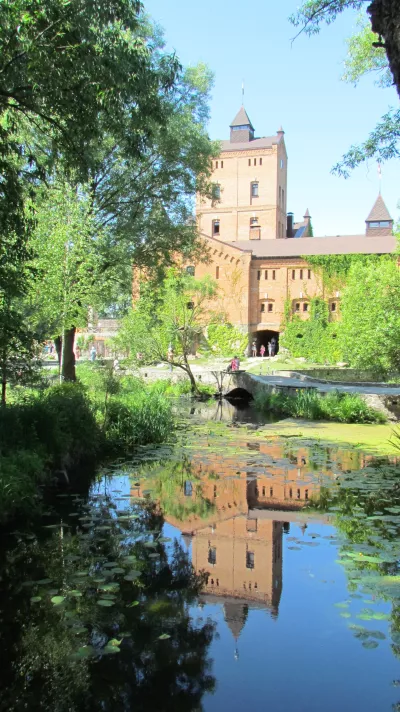
The hillforts are not an open-air museum: there are no fences or signs, only ramparts, ditches, and a steep bank. Wear comfortable shoes and be careful on the slopes. Visiting the hillforts is best combined with the ruins of Zvyahel Castle and the Lesya Ukrainka Museum in the city center.
How to get there
The hillforts lie on the northeastern outskirts of Zvyahel, on the right bank of the Sluch. Trains and buses run to Zvyahel from Zhytomyr, Rivne, and Kyiv. More about the city can be found in the articles about Zvyahel, Zvyahel Castle, and Zvyahel district.