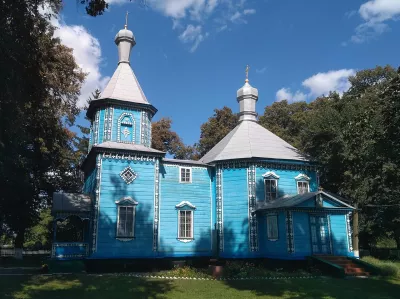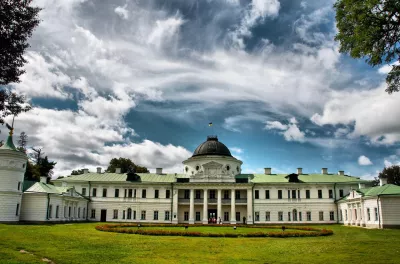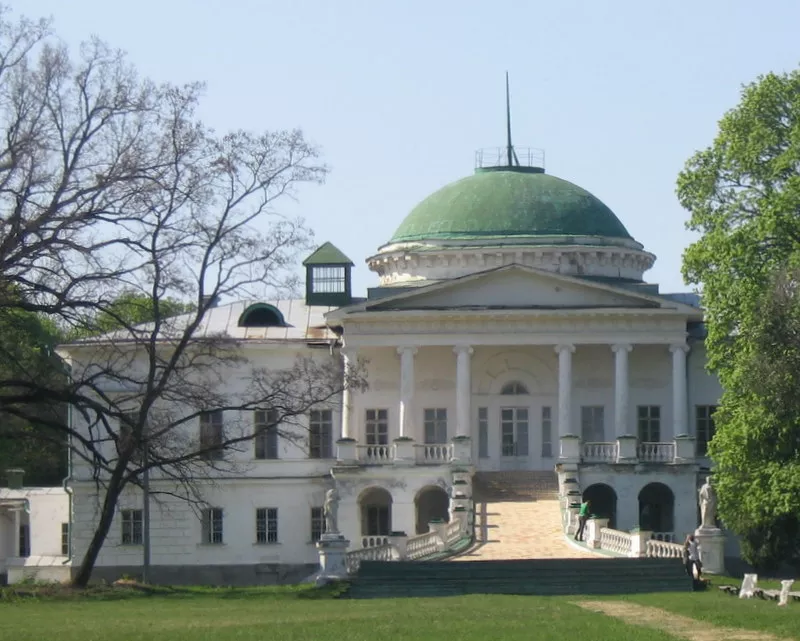
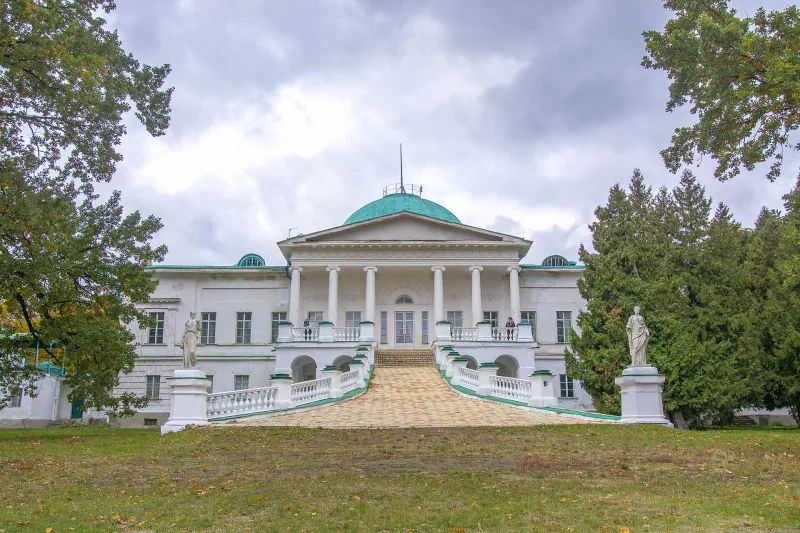
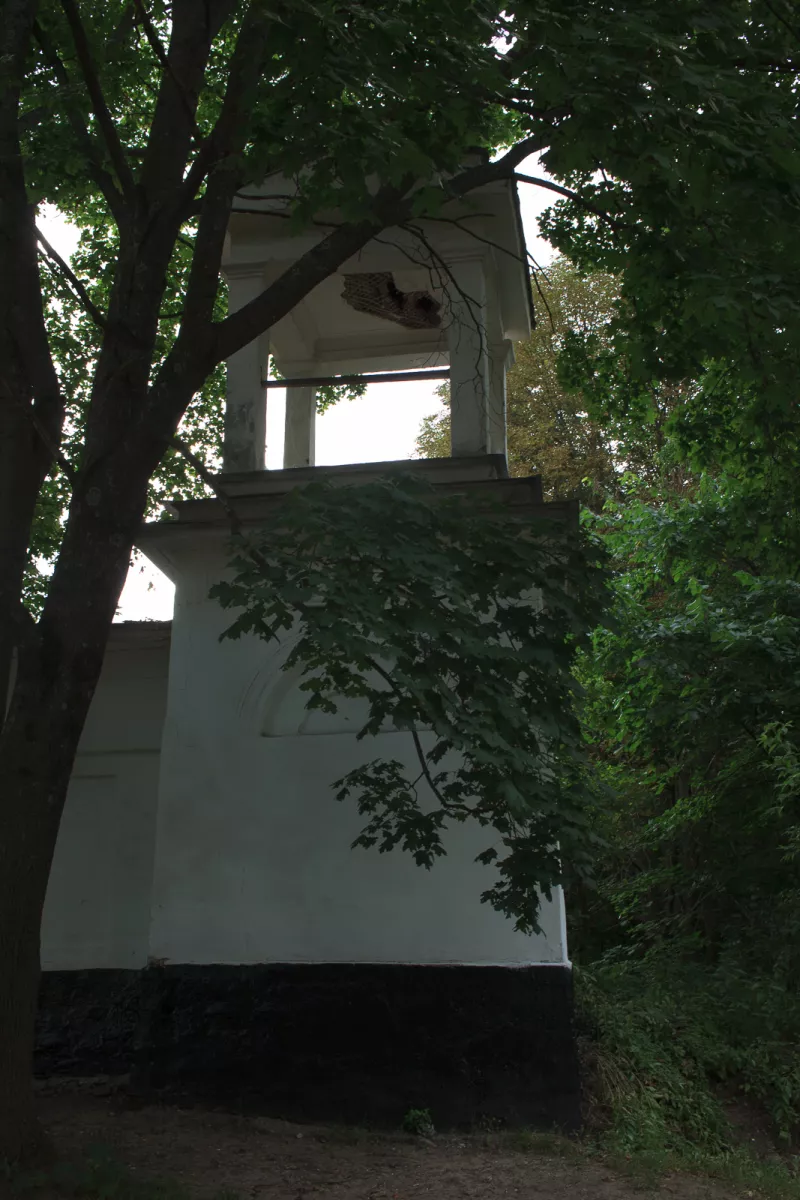

The Sokyryntsi Palace and Park Complex is one of the finest Empire-style estates in Ukraine. It stands in the village of Sokyryntsi in the Sribne region, not far from Sribne and Pryluky. With its 60-room palace featuring a high dome, large landscape park, serf theatre, and choir, Sokyryntsi was once called the "Ukrainian Parnassus".
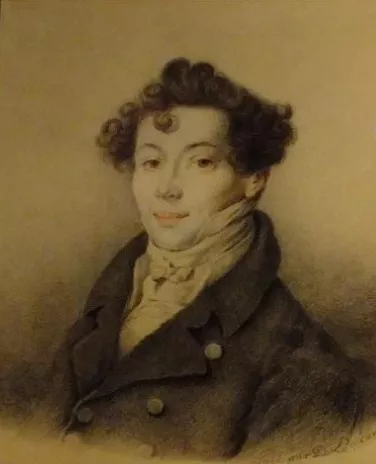
In the village of Sokyryntsi in the Chernihiv region, one of the most interesting palace and park ensembles of Left-Bank Ukraine has been preserved: the former residence of the Galagan family. The Classicist palace, rotunda, Gothic bridge, and centuries-old trees evoke the heyday of 19th-century estate construction.
History and Architecture of the Palace
Sokyryntsi belonged to the Galagans from 1716. At the beginning of the 19th century, Pavlo Galagan decided to establish a new country residence here. Design began in 1823 with the participation of architect Pavlo Dubrovskyi and gardener Ivan Bisterfeld. The palace itself was built in 1825–1829, and the formation of the entire complex lasted until the mid-1830s.
The two-storey brick structure features elements of Classicism and Empire style. The main facade is decorated with an eight-column Ionic portico raised above an arcade. On the opposite side is a six-column portico, approached by a ramp from the formal rooms of the second floor.
The interiors had an enfilade layout, with rooms arranged sequentially one after another. Works of art, collections of porcelain, tableware, and weapons were kept here. A special place was held by the picture gallery, the collection of which later became one of the foundations for the formation of the Chernihiv Art Museum.
Landscape Park
The landscape park began to be formed in the 1820s on the basis of a natural forest area. Pavlo Dubrovskyi and Ivan Bisterfeld participated in its layout, and later work was continued by other gardeners.
Among the most famous park structures is an eight-column rotunda located on a terrace near the pond. Its classical architecture harmoniously combines with the surrounding landscape. The Gothic bridge with its arches and towers creates a different mood. It is also worth visiting the "Holy Valley", a picturesque glade whose outlines were shaped by the natural relief.
Oaks, lindens, hornbeams, maples, larches, pines, chestnuts, and other trees grow here. Among them are old specimens that preserve the atmosphere of the historic landscape.
Famous Guests
In the 19th century, a serf theatre and choir operated in Sokyryntsi. Among the famous guests were Taras Shevchenko, who visited the village in 1845, and the artist Lev Zhemchuzhnykov, connected to these places through his creative work.
A special place in the history of the village belongs to the kobzar Ostap Veresai, a native of Sokyryntsi and a prominent performer of Ukrainian folk dumas and songs. A monument to the kobzar has been erected in the park.
Later Fate
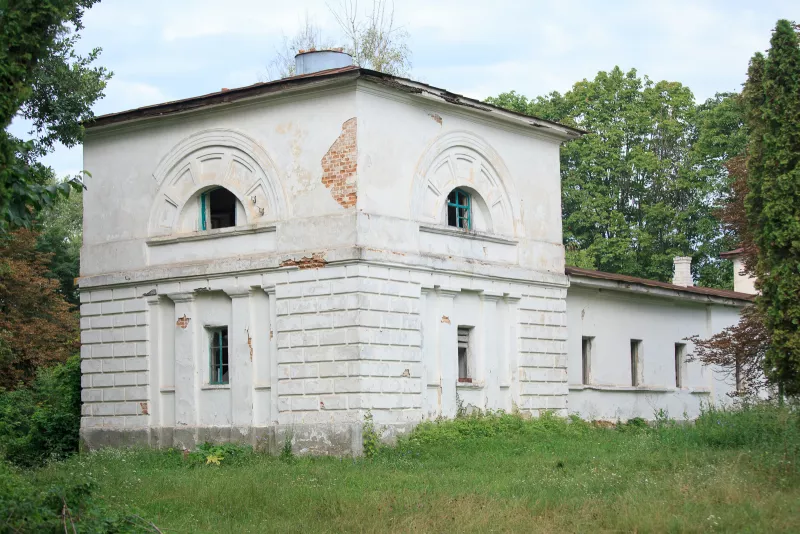
Following the revolutionary events, the palace changed its purpose. An agronomic school was opened here in 1920, and agricultural educational institutions operated subsequently. An art and historical museum also functioned in the 1920s. Some of the historic structures have not survived, but the main building remains intact.
Today, the former palace houses the Sokyryntsi Vocational Agricultural Lyceum. Sokyryntsi itself remains an important monument of 19th-century Ukrainian estate architecture.
How to get there
Sokyryntsi lies a few kilometres from Sribne, about 45 km from Pryluky. It is most convenient to travel by car. The palace operates as a lyceum, so it is best to arrange a tour of the interiors in advance, while the park is open for walks.