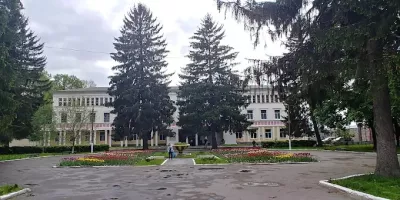
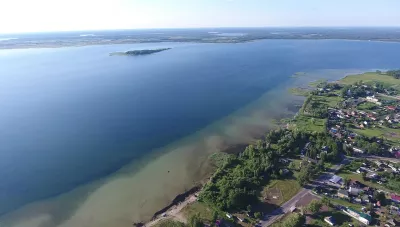
In the west of Zhytomyr Oblast, not far from Horodnytsia, on the right bank of the Sluch River lies the little-known village of Khodurky. At first glance, it is an ordinary settlement with remnants of a collective farm past and a small number of residents: according to the 2001 census, 211 people lived here, and now there are even fewer.
Yet it is this very village that unexpectedly became an important location for archaeologists. In the late 1980s, something was found here that seemed impossible to be here.
An archaeological find that surprised scientists
In 1988, an expedition of the Institute of Archaeology of the Academy of Sciences of the Ukrainian SSR, led by archaeologist Borys Zviedetskyi, discovered barrow burials on the right bank of the Sluch.
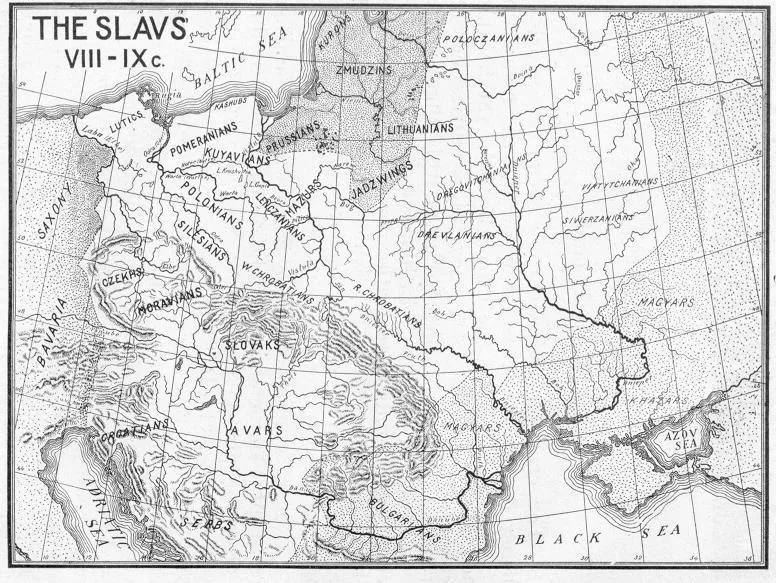
After the excavations, it became clear: this is a burial ground that researchers associate with the Yatvingians, an ancient Baltic tribe. This was the main surprise, because traditionally the territory where the Yatvingians lived is considered to be the lands of modern Poland, Lithuania, and Belarus.
The find in Zhytomyr region actually expands the understanding of the boundaries of their settlement.
Who the Yatvingians were and where they disappeared
The Yatvingians were an ancient Baltic tribe, close to the Prussians, known from the first centuries of our era. They lived between the Narew and Neman rivers, in hard-to-reach marshy areas.
The chronicle mentions Volodymyr the Great's campaign against the Yatvingians, and overall they appear as warlike neighbors who regularly conflicted with Rus. Later, various princes tried to subdue them, but this was only partially successful.
An important role in their history was played by Danylo Halytskyi. In the 13th century, he led a series of campaigns against the Yatvingians, acting in alliance with neighbors, including the Teutonic Order. After this, the tribe lost its independence and fell into dependence on the Halych-Volhynia Principality.
Subsequently, the Yatvingians gradually assimilated. By the 17th century, they had almost completely disappeared as a separate ethnos, dissolving among Lithuanians, Belarusians, and Poles.
Barrows in Khodurky: what exactly was found
In Khodurky, archaeologists recorded a barrow burial ground from the 9th to 13th centuries — a complex of 12 mounds in an area of approximately 60 by 25 meters.
The barrows are low — from half a meter to slightly more than a meter, lined with stones. During the excavations, pit burials were discovered where the deceased were placed with their heads to the west — a characteristic feature for that time.
Today, the burial ground is under state protection. Near it stands a new obelisk, installed in the 2000s, which warns of liability for damaging the monument.
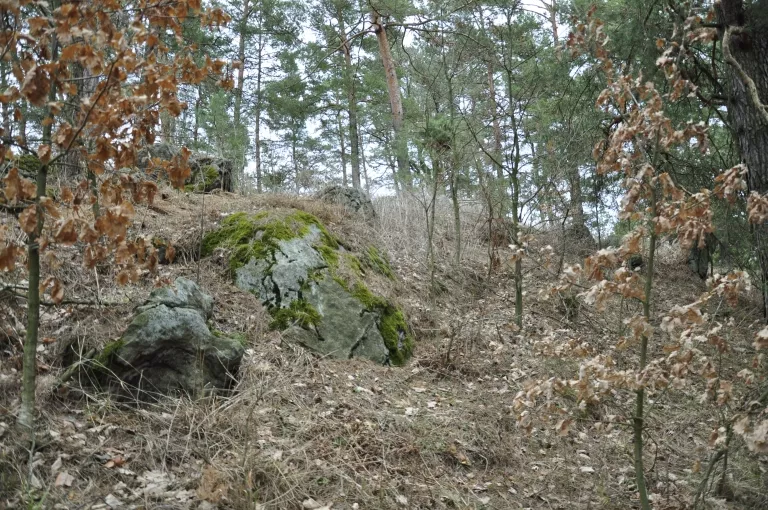
In appearance, the barrows are small hills that are easy to miss. Only by coming closer can one discern the stones and the structure of the mounds.
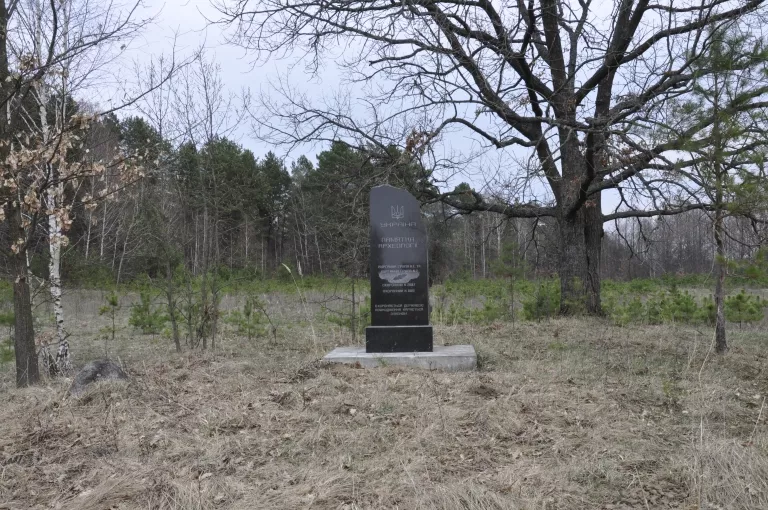
This is what the barrows look like from a distance — not at all like ancient burials are usually imagined.
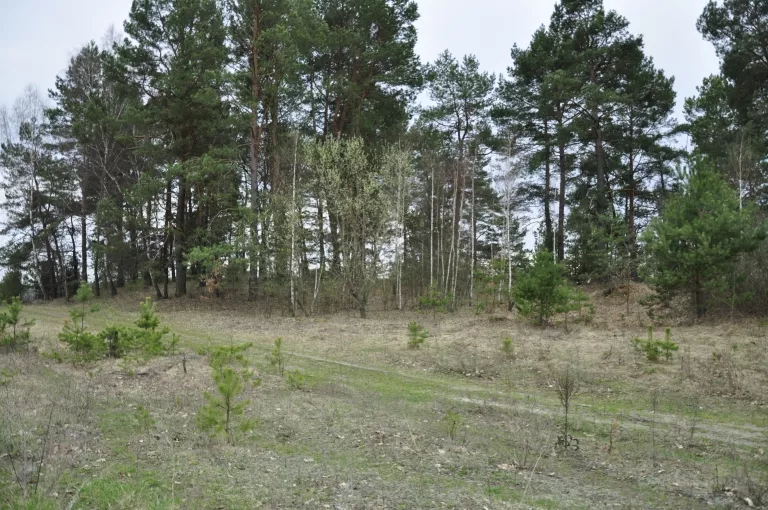
Upon approaching, one can indeed see low hills, with stones protruding here and there — there are quite a few of them here.
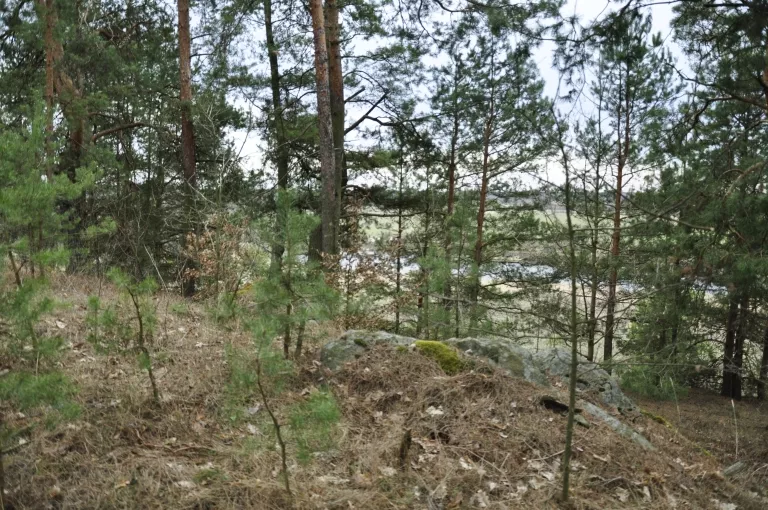
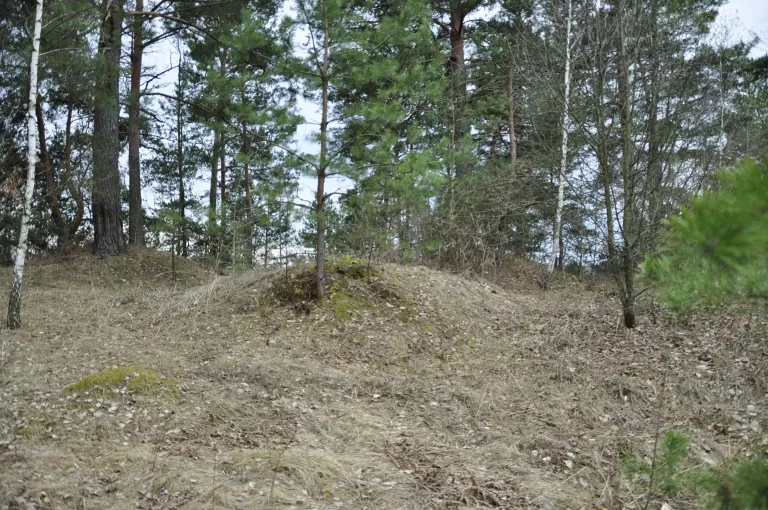
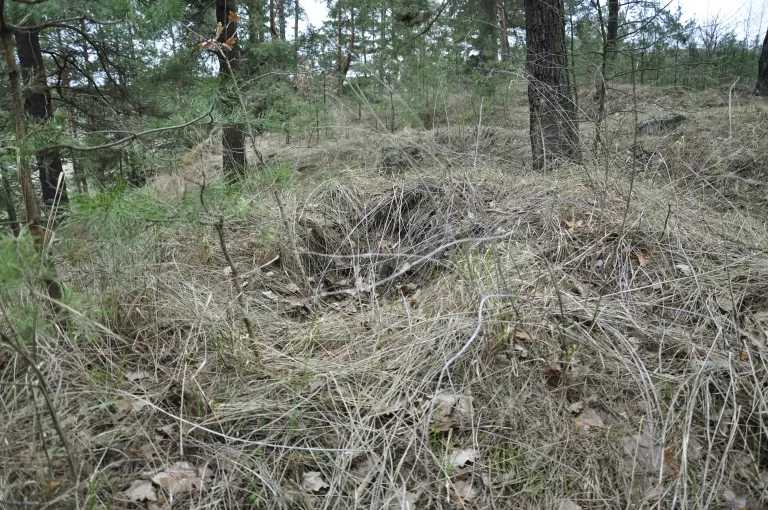
The barrows have already been excavated, but the pits look quite fresh — clearly not from the 1980s. Therefore, nothing is left inside. The materials discovered by the Soviet-era expedition are kept in the funds of the Academy of Sciences.
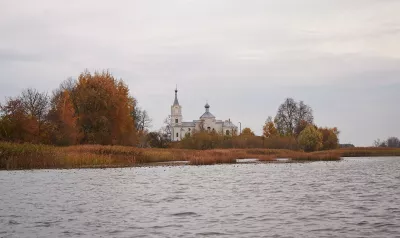
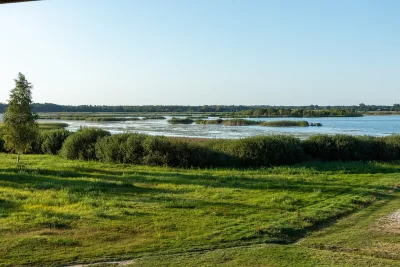
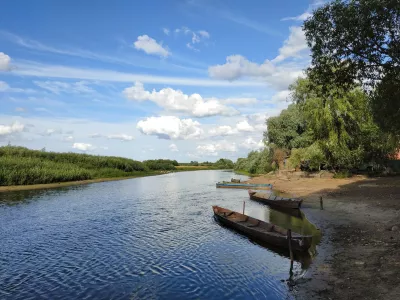
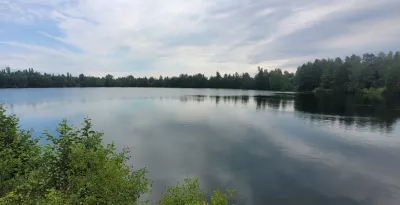
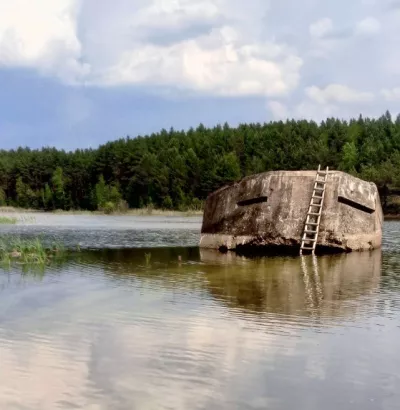
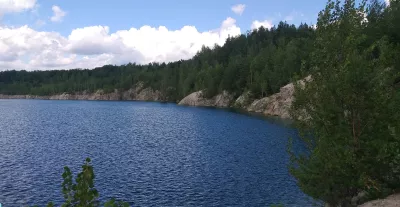
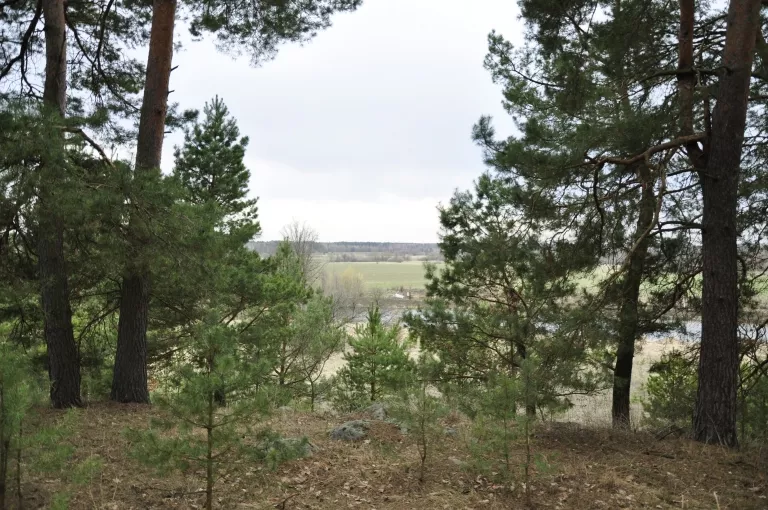
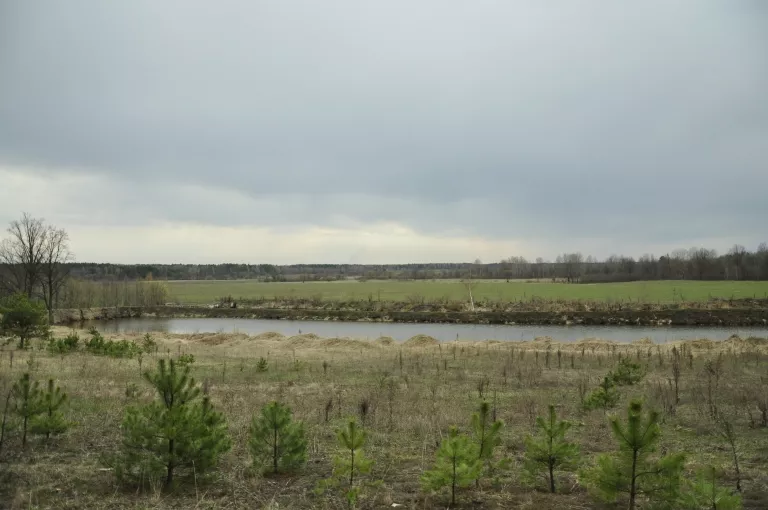
The place is beautiful: it offers a view of the Sluch River and the surrounding expanses.
Why the Yatvings ended up in the Zhytomyr region
The appearance of Yatvingian burials on the territory of the modern Zhytomyr region still sparks debates among historians.
One of the most likely versions is the resettlement of part of the tribe after military campaigns. These were probably already partially Slavicized Yatvings who had lost their autonomy and moved to new territories.
Such finds confirm that the settlement boundaries of ancient peoples were much broader than previously thought.
How to get there
Khodurky lies in the Zviahel district, not far from Horodnytsia. It is most convenient to travel by car; the barrows are located on the outskirts of the village, on the high right bank of the Sluch River.
A place where history is close by
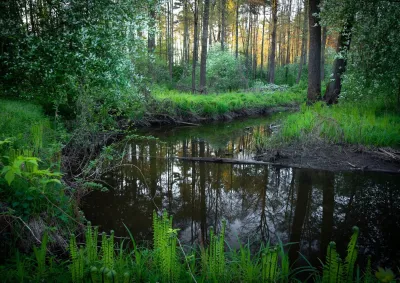
Today, Khodurky is a quiet Polissian village with beautiful scenery above the river. There are no tourist flows or developed infrastructure here. But it is precisely in such places that genuine historical discoveries sometimes hide.
The Yatvingian barrows are a reminder of the people who lived here over a thousand years ago, and at the same time proof that even the smallest villages can have unexpectedly deep historical roots.
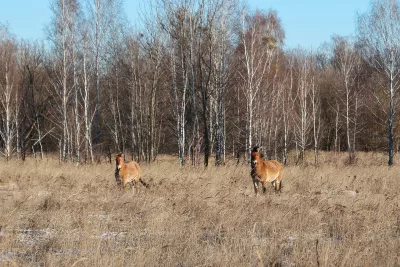
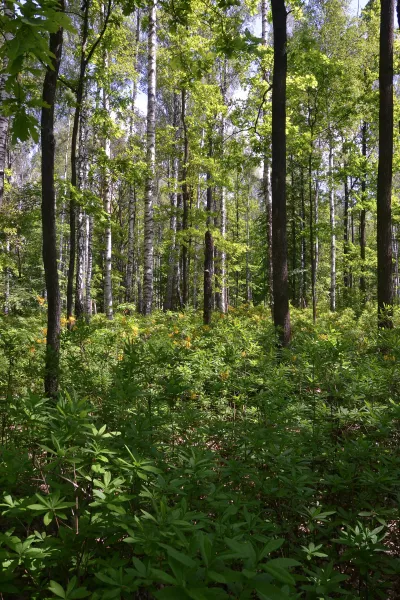
It is precisely for such discoveries that Polissia is valued — a land where the histories of entire peoples can hide beneath ordinary forests and fields.