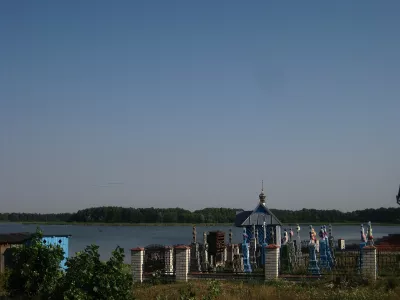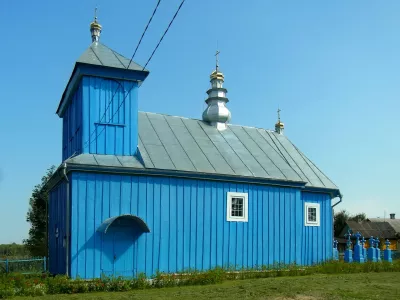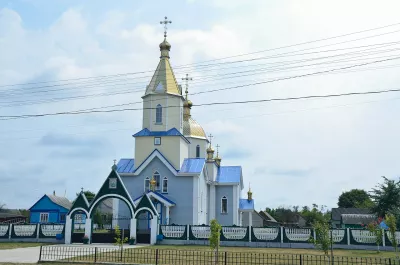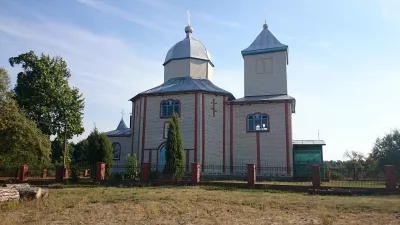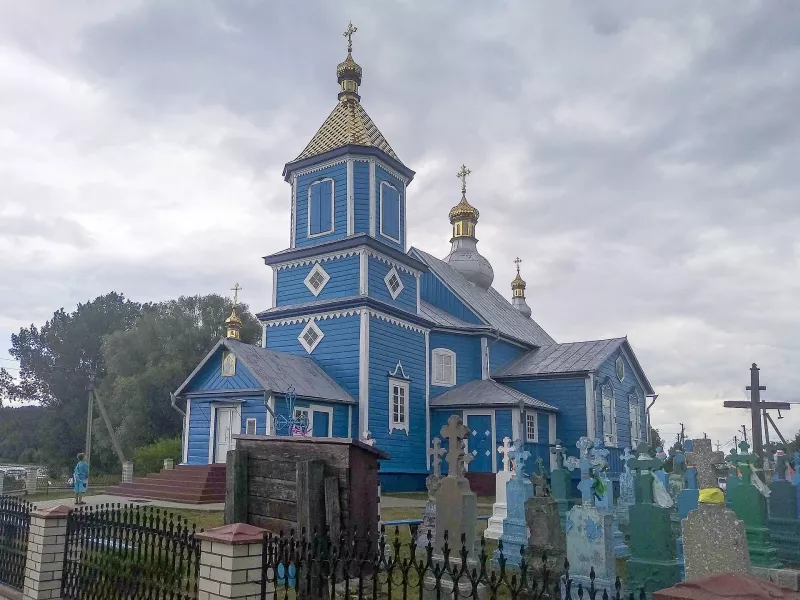
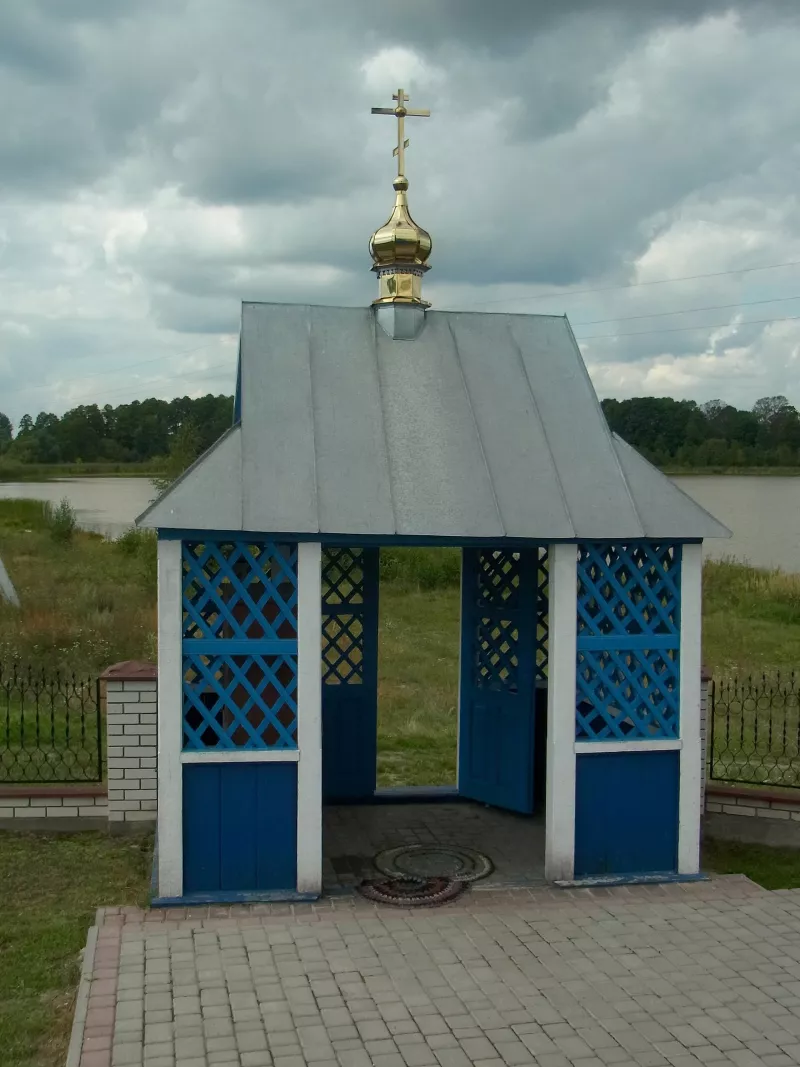
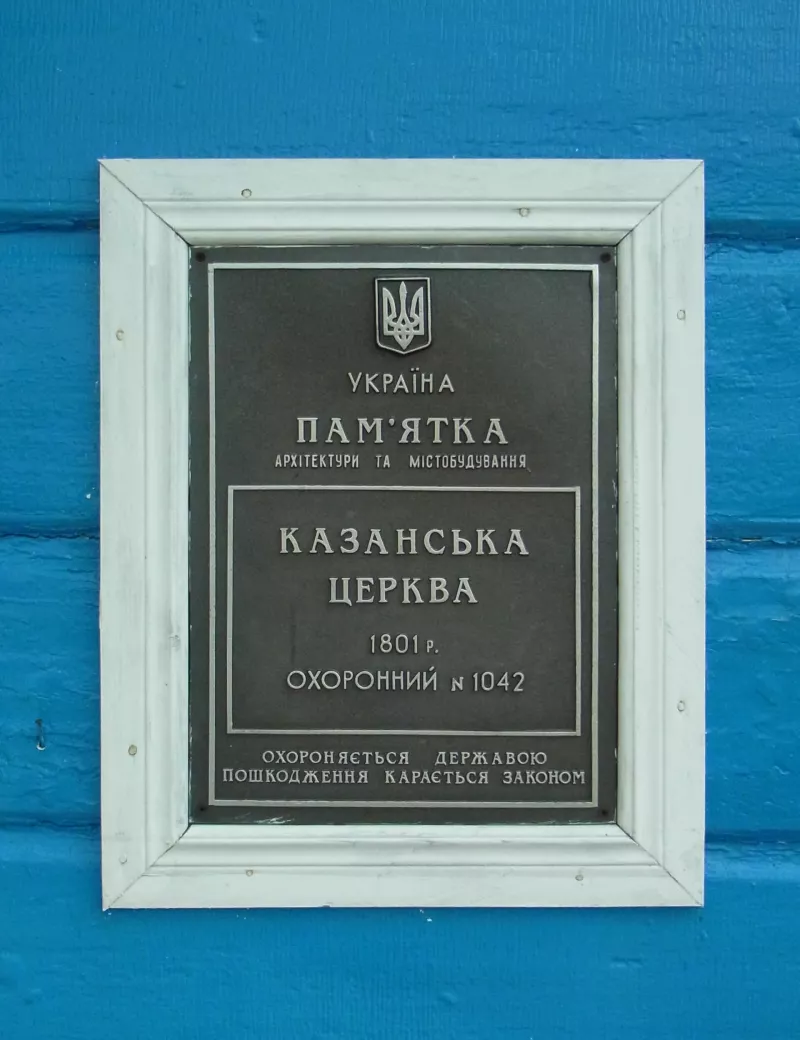
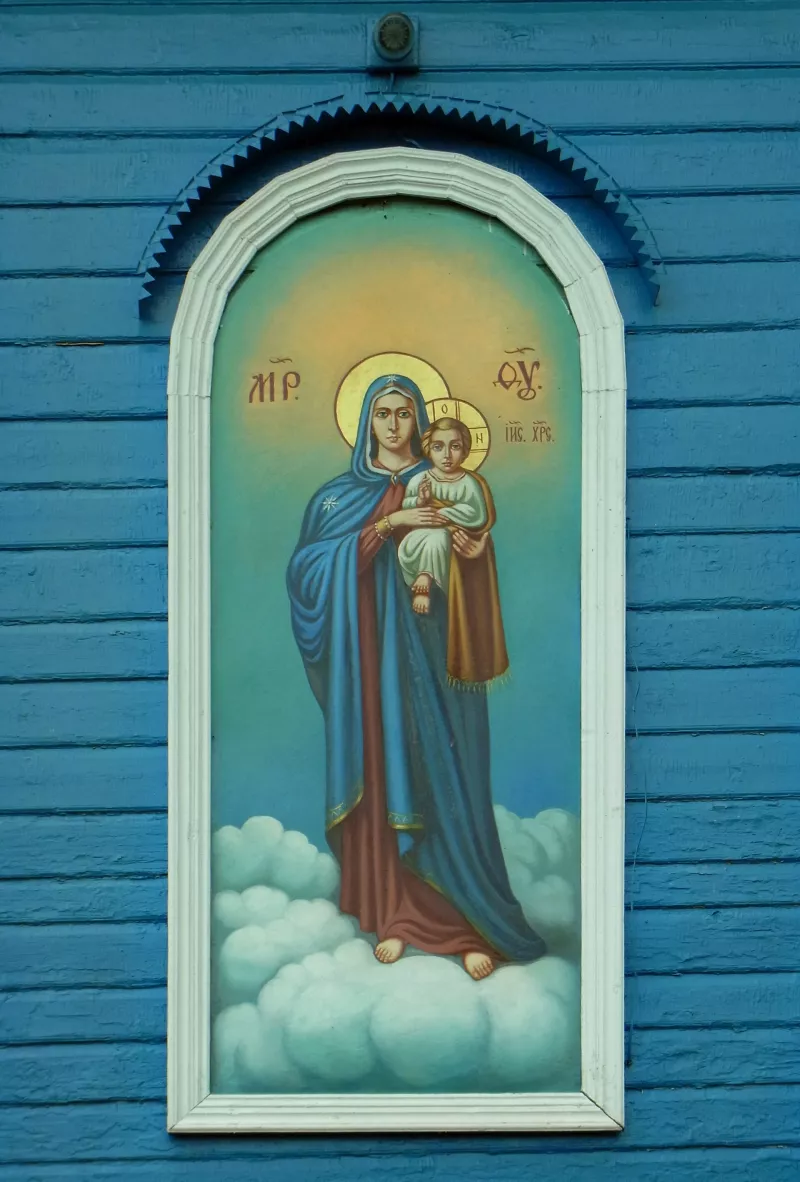
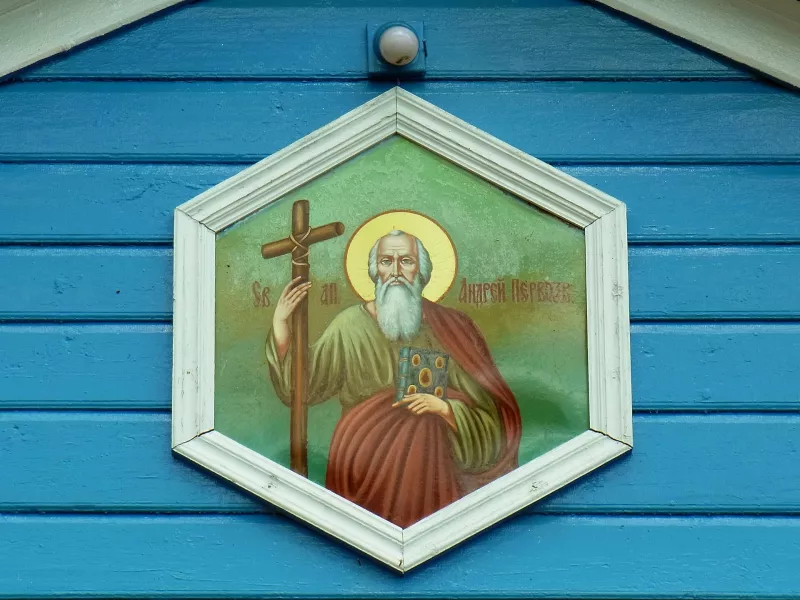
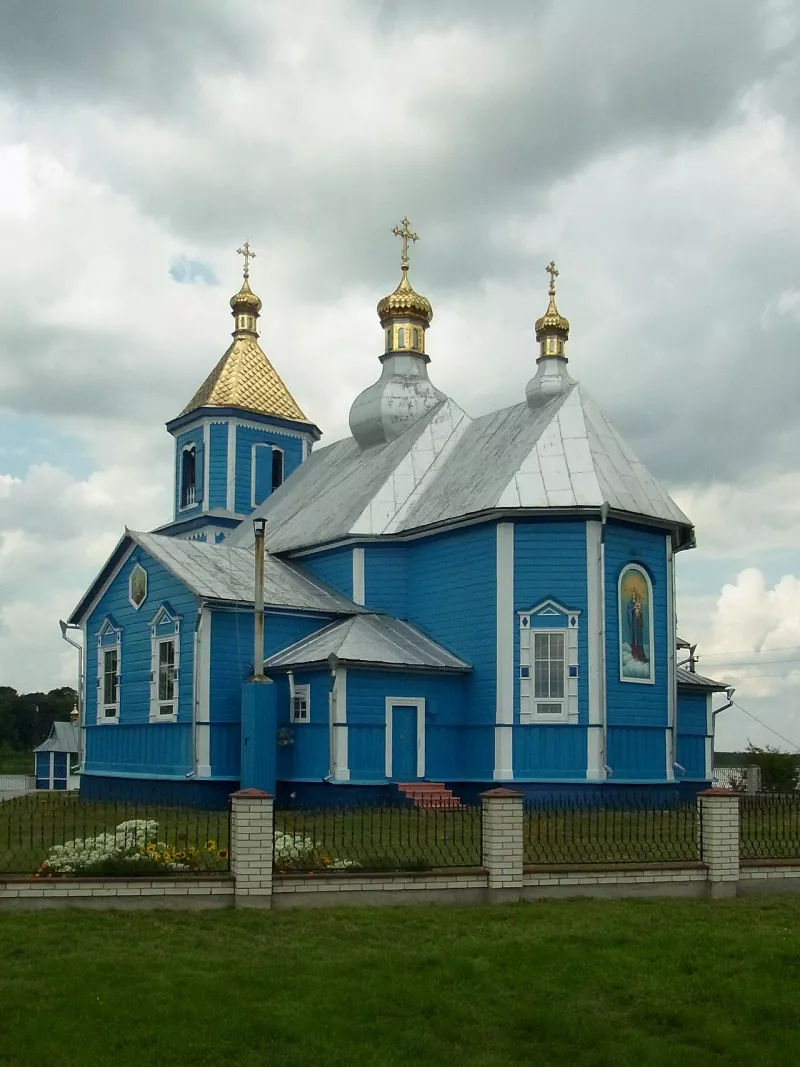
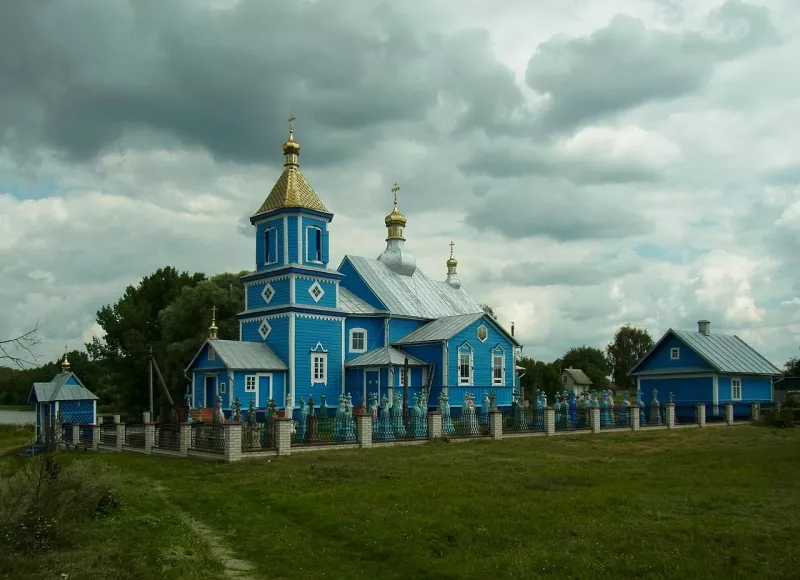
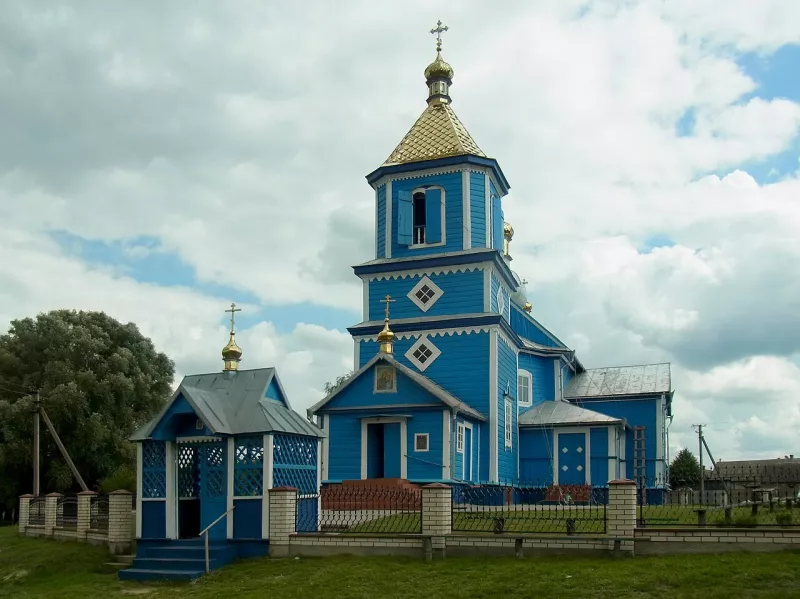
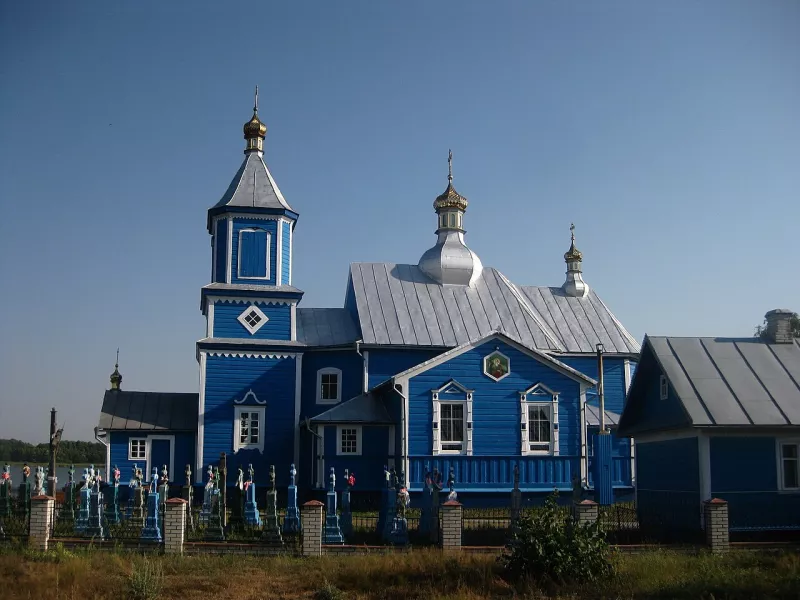
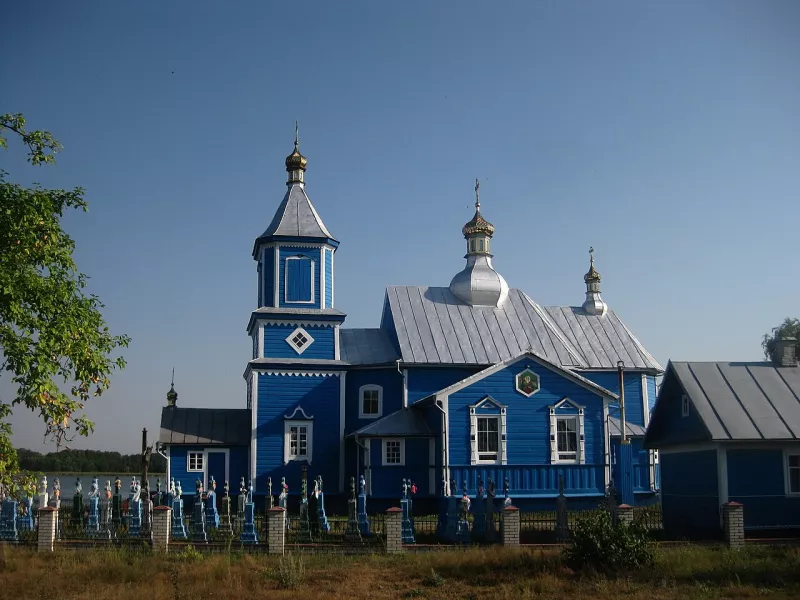
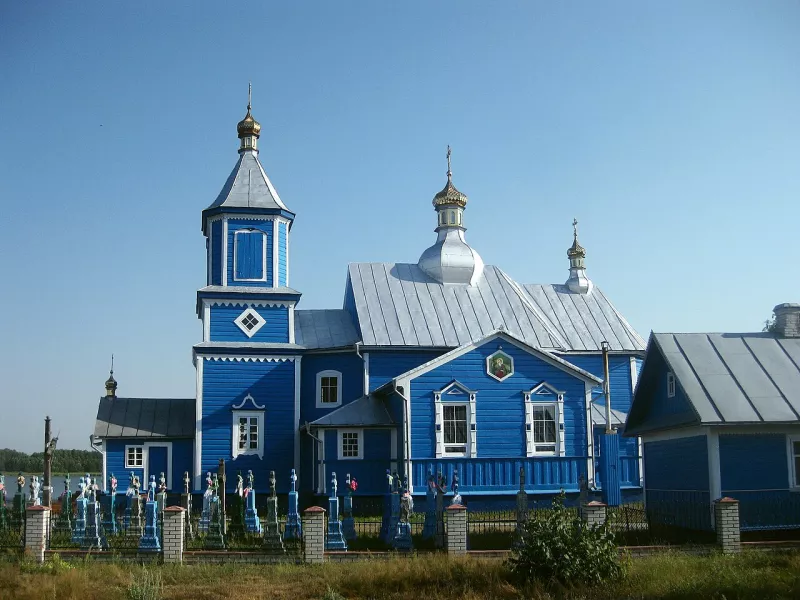
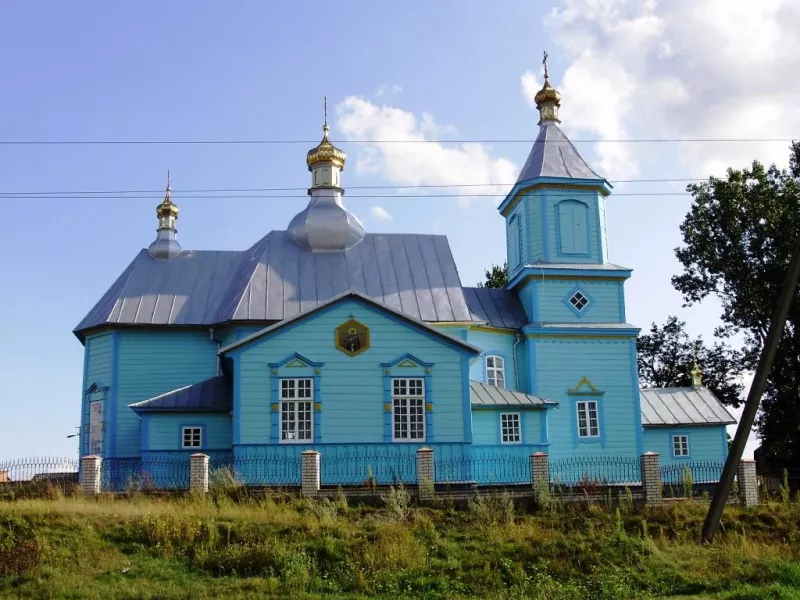
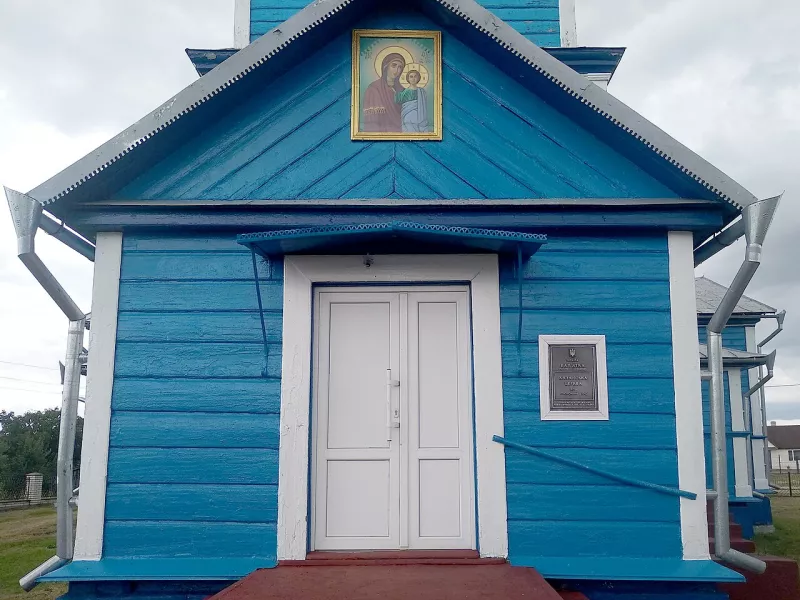
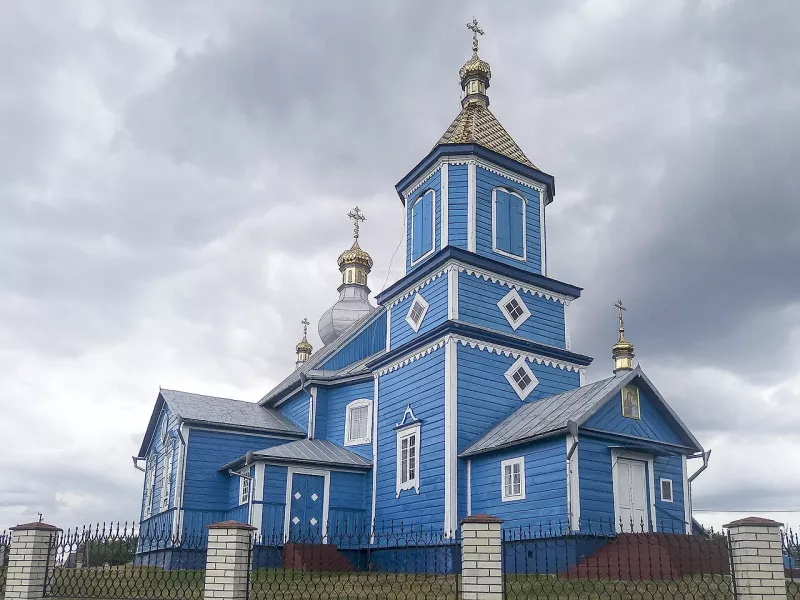
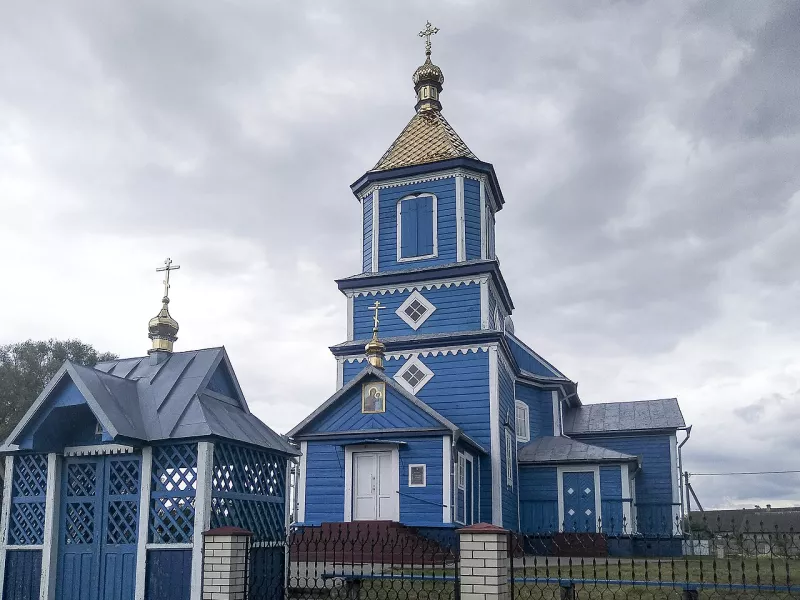

The Church of the Kazan Icon of the Mother of God in the village of Pishcha, Kovel Raion, is a wooden church built in 1801 and a national architectural landmark. The village lies near the Shatsk Lakes, so the church is easy to visit while vacationing on Svitiaz. Nearby in the cemetery stands another rare monument, a chapel dating from 1802.
History
The church in Pishcha is first mentioned between 1510 and 1531 as abandoned, possibly due to Tatar raids. In 1619–1620, the church was already Uniate, and in 1796 it returned to Orthodoxy. The clergy record of 1796 describes a wooden church of Saint Simeon Stylites; at that time, the village had 70 households and 479 residents.
The current church was built in 1801 at the expense of the parishioners, and in 1878 it was named in honor of the Kazan Icon of the Mother of God. At the same time, the church underwent a major overhaul, its foundation was reinforced, and a three-tiered bell tower was added. In 1912, the church was expanded with side log sections. Inscriptions detailing repairs in 1866, 1899, 1901, 1926, and later years have been preserved on the walls.
Architecture
The church is wooden, with five log sections and a cross-shaped plan: a hexagonal central log section, a pentagonal apse, a small narthex, and side log sections. Due to the addition of the bell tower, the emphasis shifted from the central dome to the tower, giving this Volyn church features of the late 19th-century synodal style. There are five bells in the bell tower, with the largest bearing a gift inscription from local landowner Michał Gutowski.
The 1802 Chapel
In 1802, a chapel was built in the village cemetery—a unique example of an archaic single-chamber house-type church characteristic of Volyn vernacular architecture. Very few such chapels have survived, making it well worth seeing on its own.
How to Get There
Pishcha is in the Shatsk hromada, near Shatsk and Svitiaz. More details can be found in the article Kovel Raion.