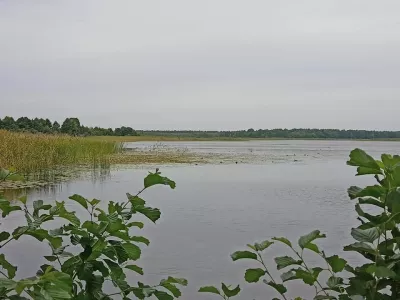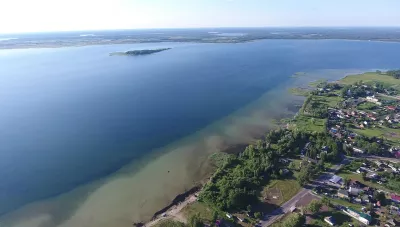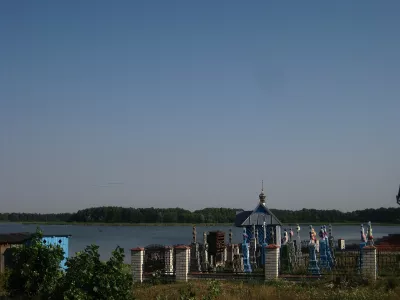
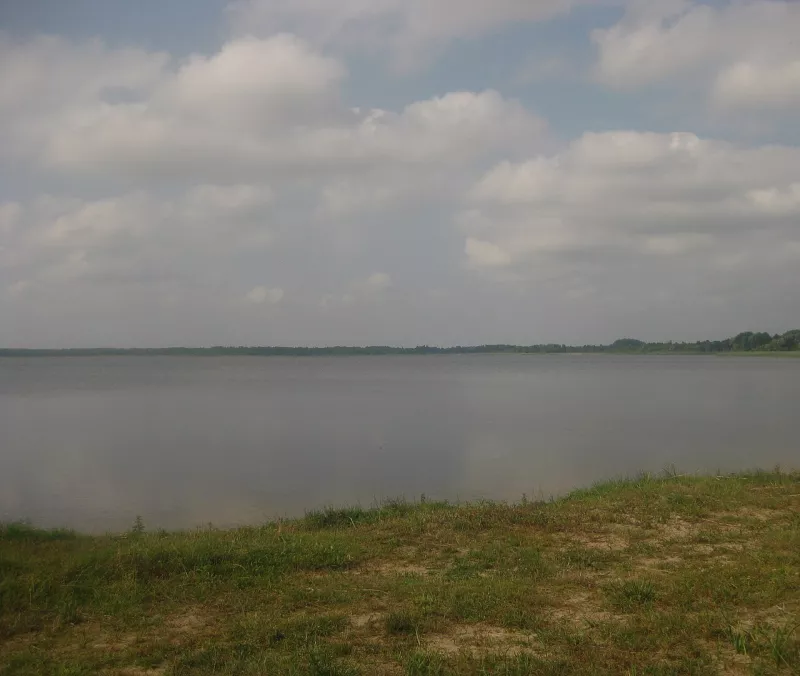
Lake Pulemetske is the second largest among the Shatsk Lakes after Lake Svitiaz. It lies to the northwest of Lake Svitiaz, between the villages of Pulmo and Pulemets, right next to the border with Poland and Belarus. There are fewer people here than on Lake Svitiaz, and the water is just as clean. The lake is part of the Shatsk National Nature Park.
Size and Depth
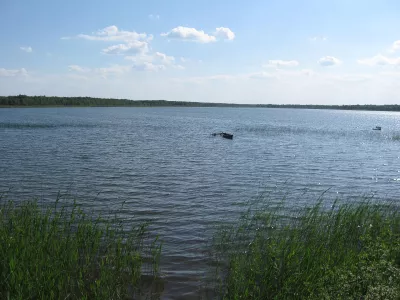
The area of Lake Pulemetske is over 16 square kilometres, its length is 6.1 kilometres, and its width is 3.5. The maximum depth reaches 19.2 metres, with an average of about four metres. The shores are almost even, without deep bays, and the coastline is about 16 kilometres long.
The lake is of karst origin. It is fed by groundwater, rains, and surface runoff. The bottom is sandy and even, with two elongated depressions separated by an underwater hill at the bottom. Through channels, Lake Pulemetske is connected to Lake Ostrovianske and Lake Luky.
Shores
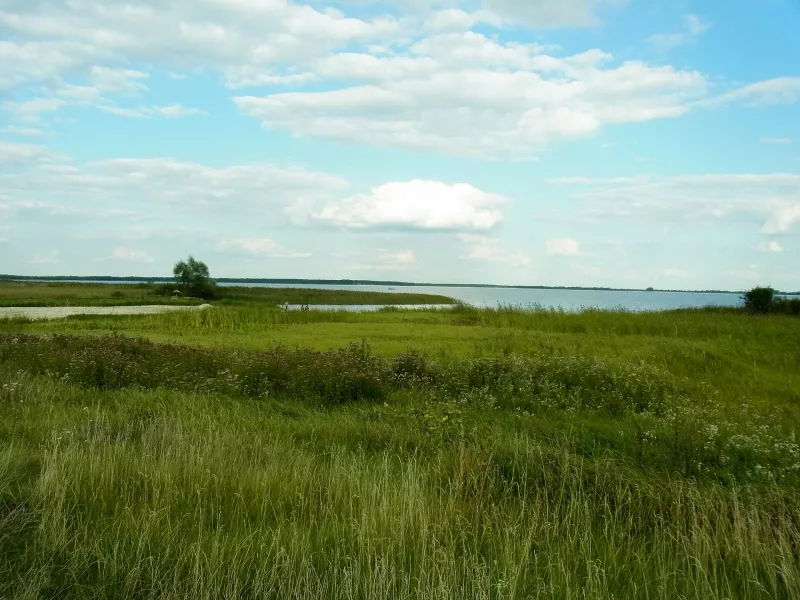
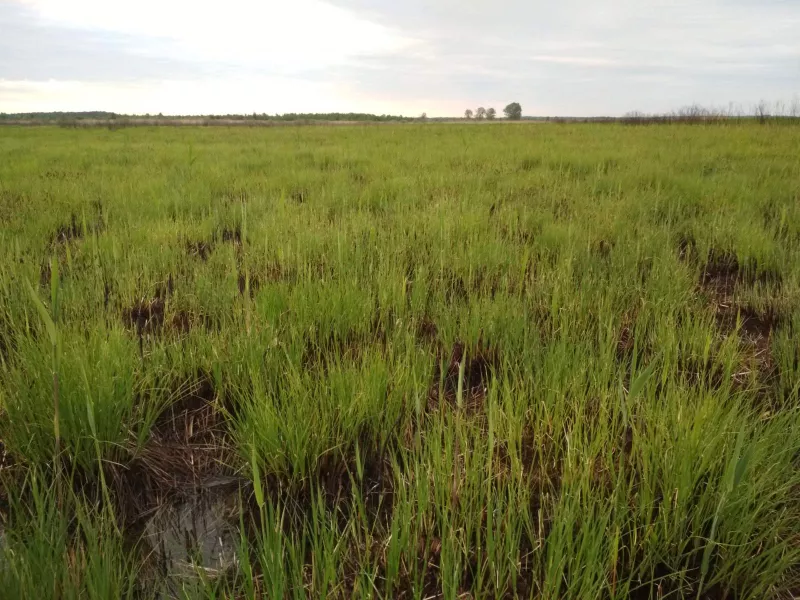
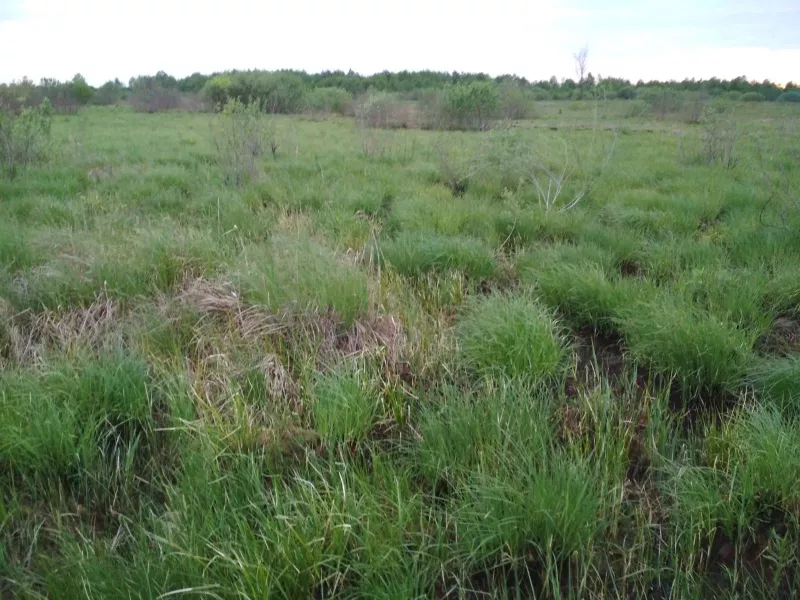
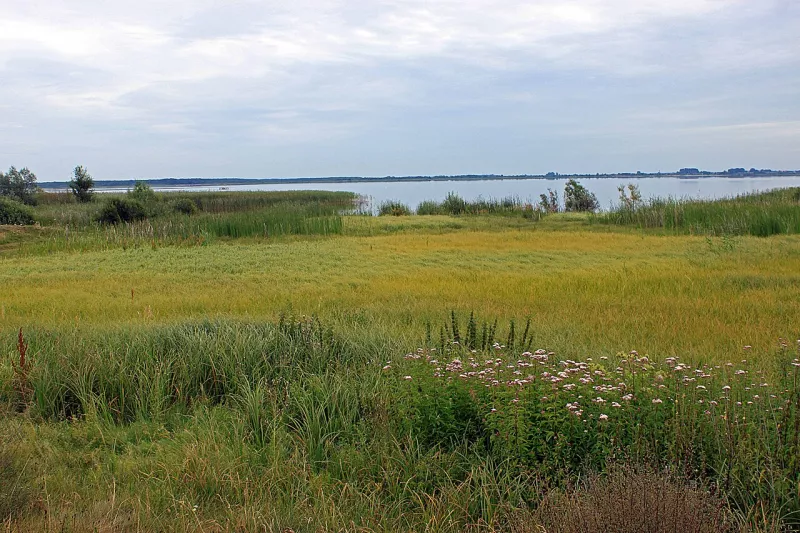
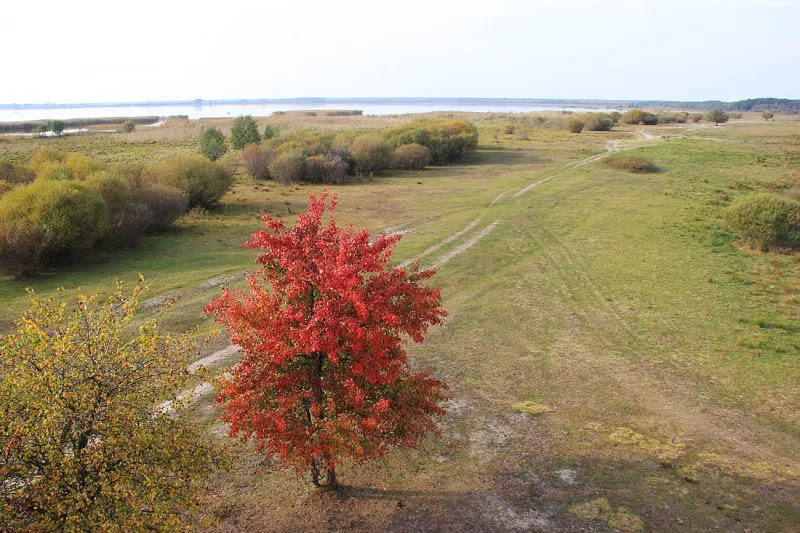
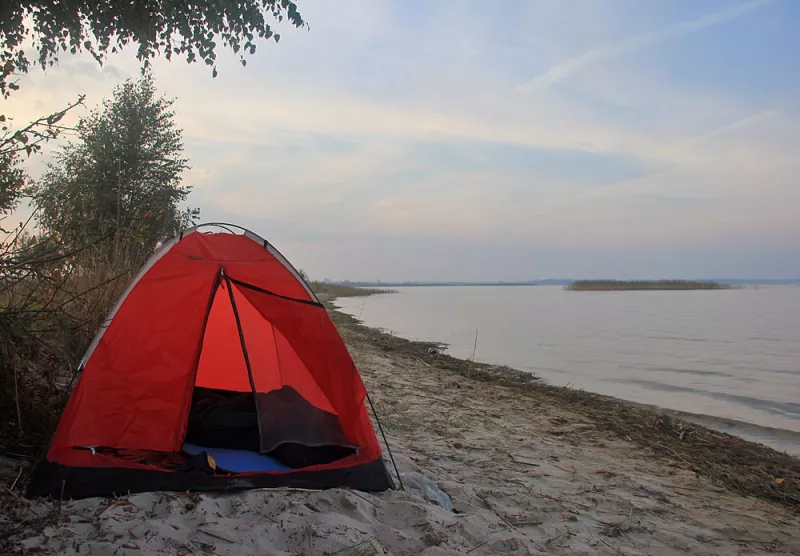
The southern and northwestern shores are sandy, rising five to six metres above the water — this is the most convenient place for swimming and pitching tents. From the north and northeast, the lake is surrounded by peat bogs that turn into damp meadows and further into dry ones. On the shore, there is an ancient hillfort that offers a wide view of the water.
Birds and Fish
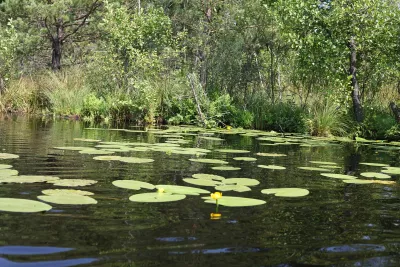
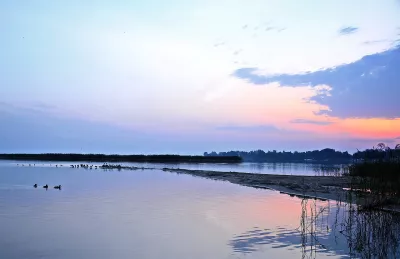
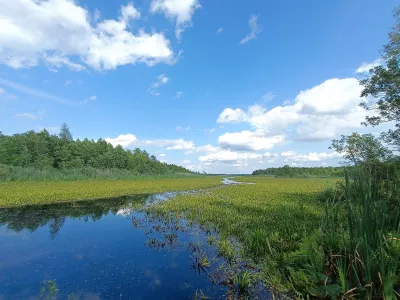
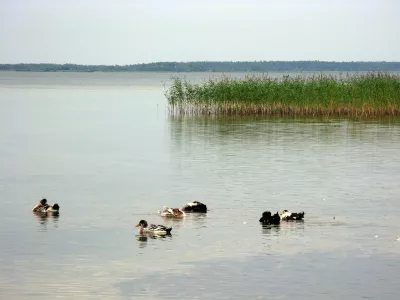
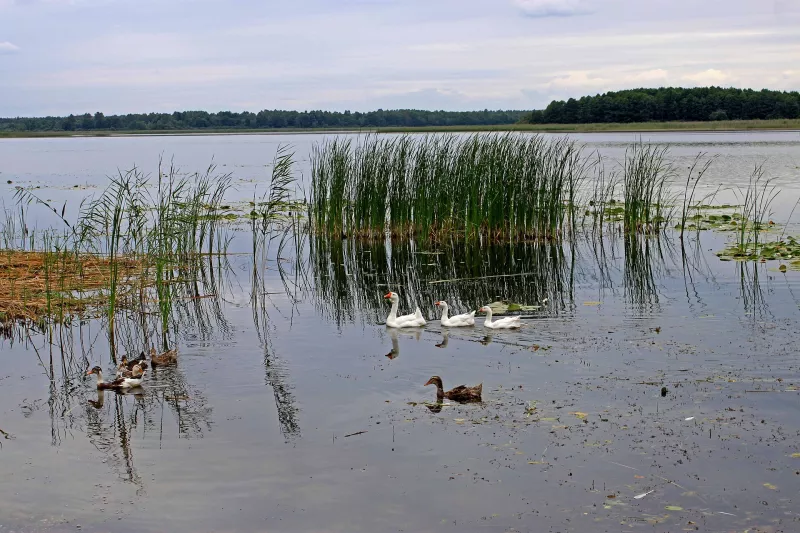
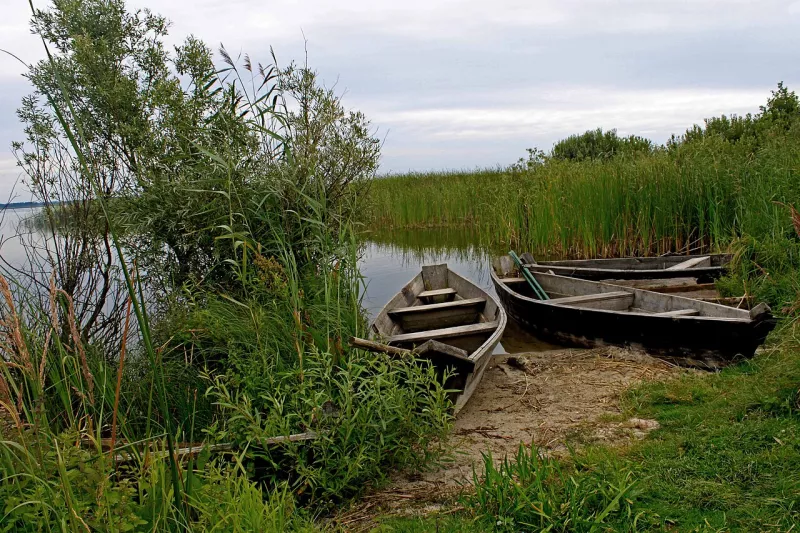
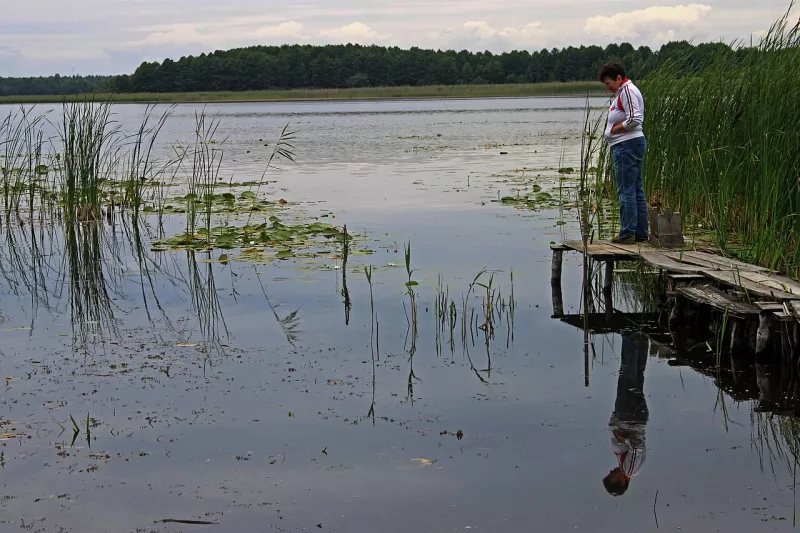
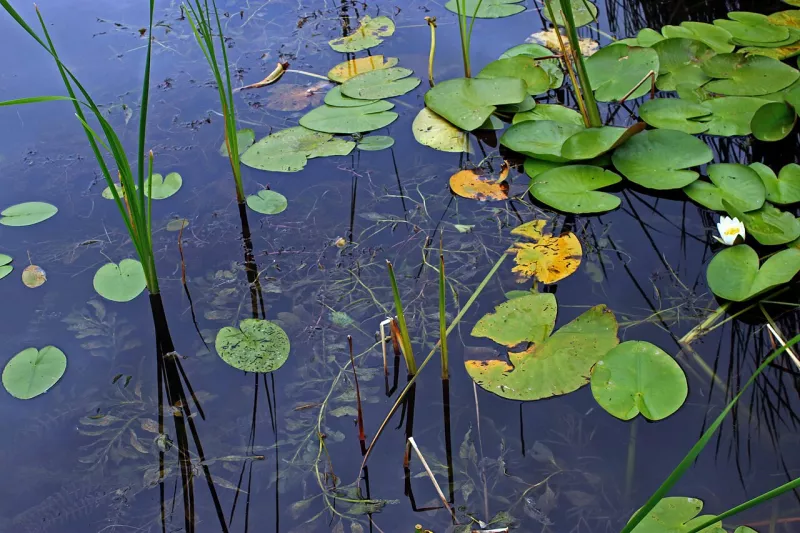
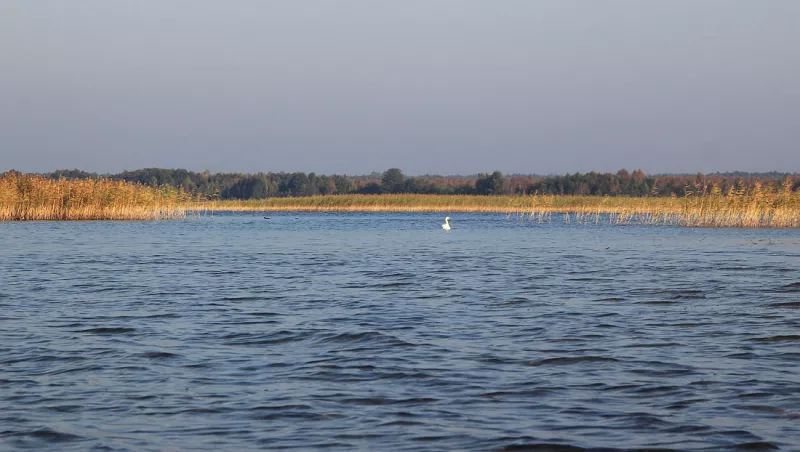
Lake Pulemetske is rich in waterfowl. During migrations, the great crested grebe, mute swan, greylag goose, mallard, common pochard, common goldeneye, Eurasian coot, and black-throated diver stop here. The water is well oxygenated, so it has plenty of underwater and emergent vegetation: cattail, reed, and white water lily.
About twenty species of fish live in the lake: northern pike, roach, rudd, Prussian carp, tench, and more rarely European catfish. Peled, locally known as vendace, as well as European eel and zander, have also been introduced here.
Recreation
Lake Pulemetske has long been loved by locals and guests from surrounding villages and towns. It is quieter here than on Lake Svitiaz, while the sandy beaches and transparent water are just the same. The shores are partly part of the Pulemetsky Hydrological Reserve, so one should behave carefully here: do not leave litter and do not make fires wherever you like.
Fishing
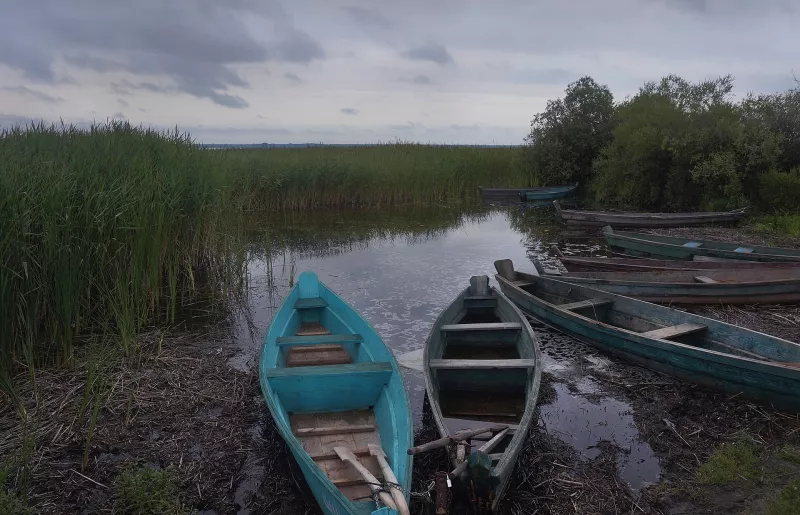
Lake Pulemetske is one of the most fish-abundant Shatsk Lakes, with about twenty species of fish. The most frequently caught are northern pike, common bream, roach, rudd, tench, and Prussian carp; European catfish, zander, and European eel are less common, along with peled, locally known as vendace. The sandy southern and northwestern shores are convenient for shore fishing, while at depths of up to 19 metres, it is better to fish from a boat. General fishing regulations apply.
Lake Pulemetske on Video
When to Visit
The best time is from June to mid-September, when the water is warm. In spring and autumn, it is a great place for birdwatching migratory birds.
Nearby
Svitiaz is the largest lake of the Shatsk group, and Shatsk is the centre of the hromada. Find out more in the article Kovel Raion.
How to Get There
Buses run from Shatsk to Pulmo and Pulemets. By car from Shatsk, it takes about 20 minutes. Remember that this is a border zone: have your documents with you.