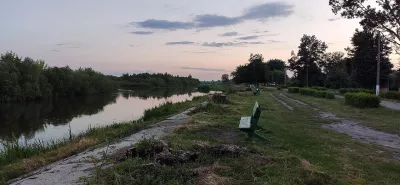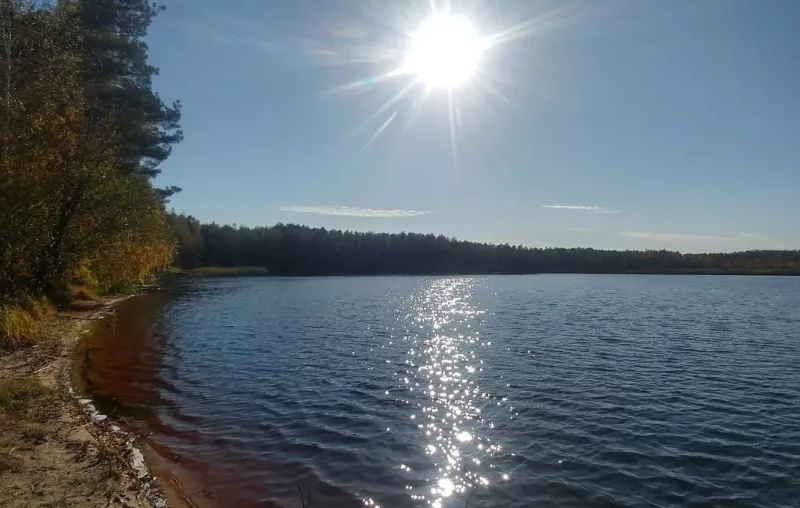

Chorne is a small forest lake near the village of Vovchytsi in the Zarichne community in northern Rivne region. It lies in the floodplain of the Styr River amid swampy forests, about eight kilometres southwest of the urban-type settlement of Zarichne. Just over a kilometre to the east is its pair, Lake Bile.
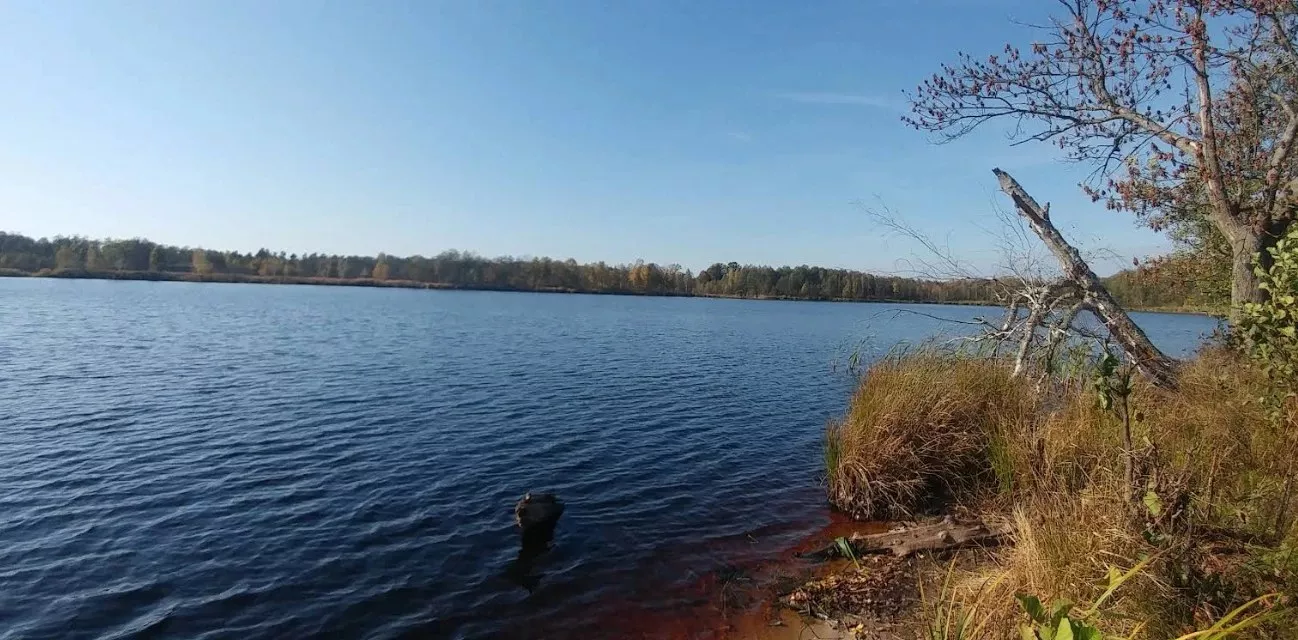
Bile and Chorne
Both lakes are described in guides as the highlight of the Dibrivskyi Hydrological Reserve. Bile covers about 27 hectares, while Chorne is half that size. The names are explained by the water itself: in Bile it is clear and clean, while in Chorne it is brown from peat, so the water surface in the forest appears dark. Such water is typical for lakes fed by peat bogs.
Near Vovchytsi there is a third lake — Lisove. All of them lie close to the Styr River channel, which here, in its lower course, slowly meanders through the floodplain before flowing into the Pripyat.
Dibrivskyi Reserve
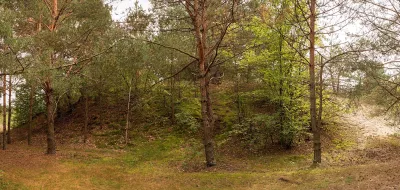
The Dibrivskyi Hydrological Reserve of national importance, covering about 880 hectares, was established in 1980 northwest of the village of Dibrivsk, near Vovchytsi. It protects a section of the Styr floodplain with typical Polissia meadow and swamp vegetation. The area is dominated by swampy forests and forested bogs, alder stands, and pine forests with buckthorn and bilberry.
In the northern part of the reserve grows the Kotula birch — a rare birch with dark bark. The intermediate sundew from the Red Book of Ukraine and the rare relict Scheuchzeria palustris occur here. Among the alder stands grows tall hemlock with white umbels — a very poisonous plant, so nothing should be picked here. The lakes and adjacent swamps are nesting sites for waterfowl and marsh birds.
Vovchytsi
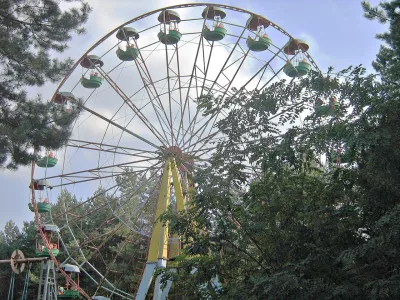
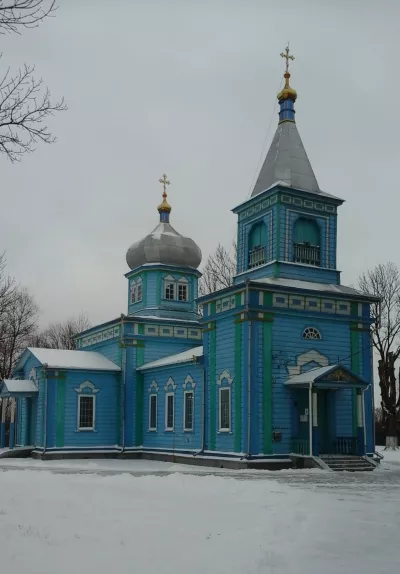
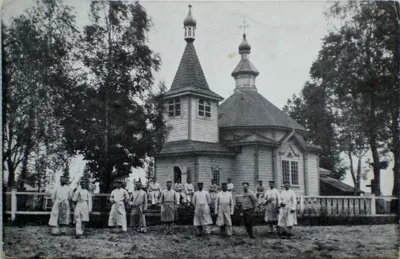
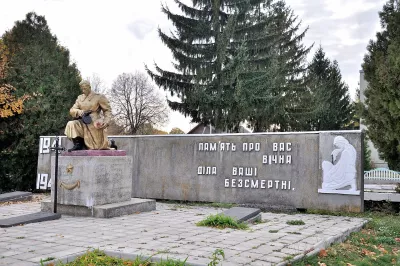
The village of Vovchytsi stands on the bank of the Styr and is first mentioned in documents from 1561. During World War II, in 1943, the Nazis completely burned the village down for aiding partisans. Today it has several hundred residents, a school, a club, and a library, surrounded by forests, meadows, and lakes.
Fishing
The shores of Chorne are swampy and overgrown with forest, so it is better to approach the water where the ground is firm or to fish from a boat. The lake lies within the reserve, so fishing is allowed only where it does not contradict the reserve’s regulations, and no litter should be left behind. General fishing rules apply.
How to get there
The regional road Solomyr — Vovchytsi — Dibrivsk — Svarytsevychi passes through Vovchytsi. The nearest large settlement is the urban-type settlement Zarichne with a railway station. To reach the lake from the village, you will have to walk along forest roads and the floodplain, so rubber boots and an offline map are necessary. Northern Rivne region borders Belarus, so carry your documents with you.
Nearby
Zarichne — an ancient settlement on the Styr, Lake Nobel and Ostrivske Lake — other lakes of Western Polissia in Rivne region. More about the area — in the article Varash district.