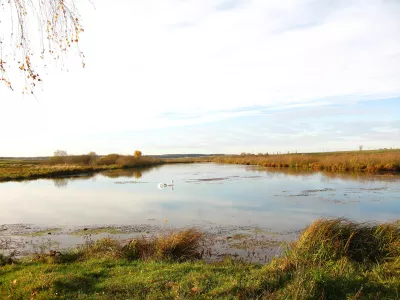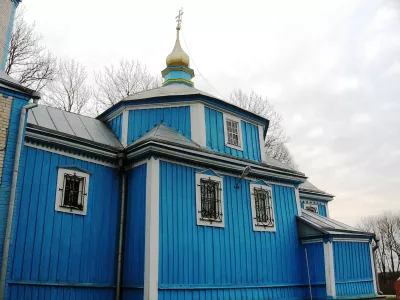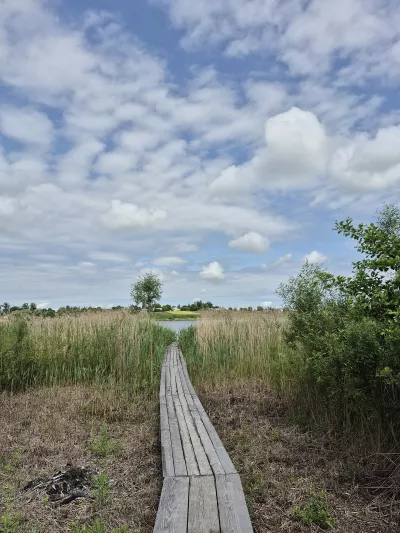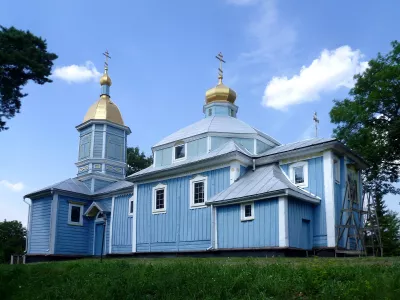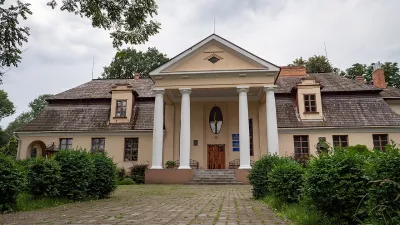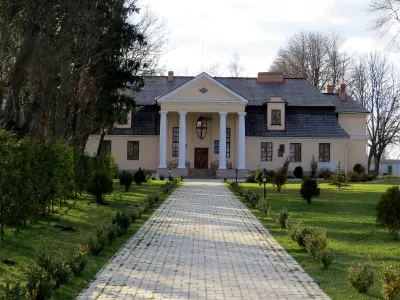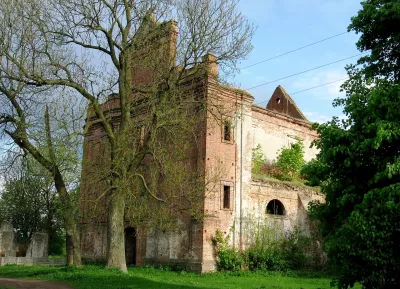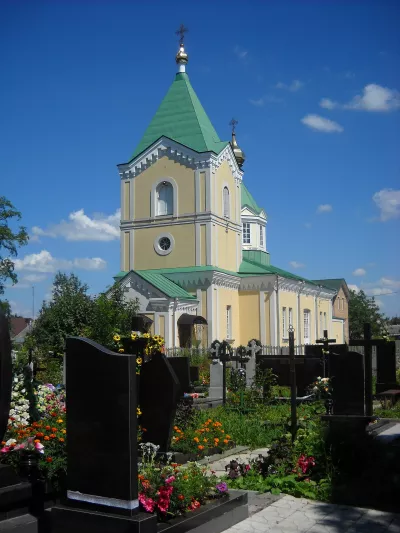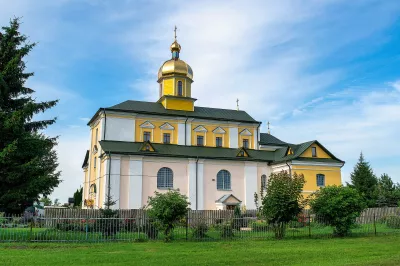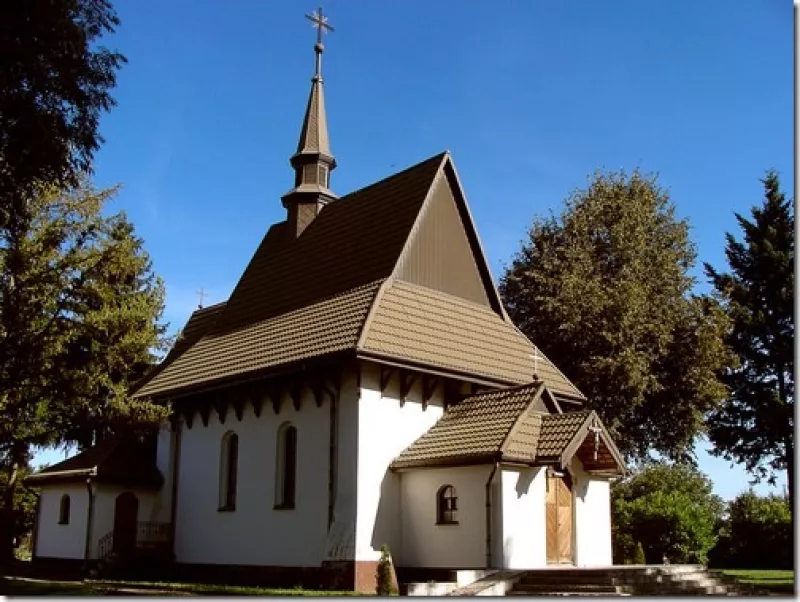
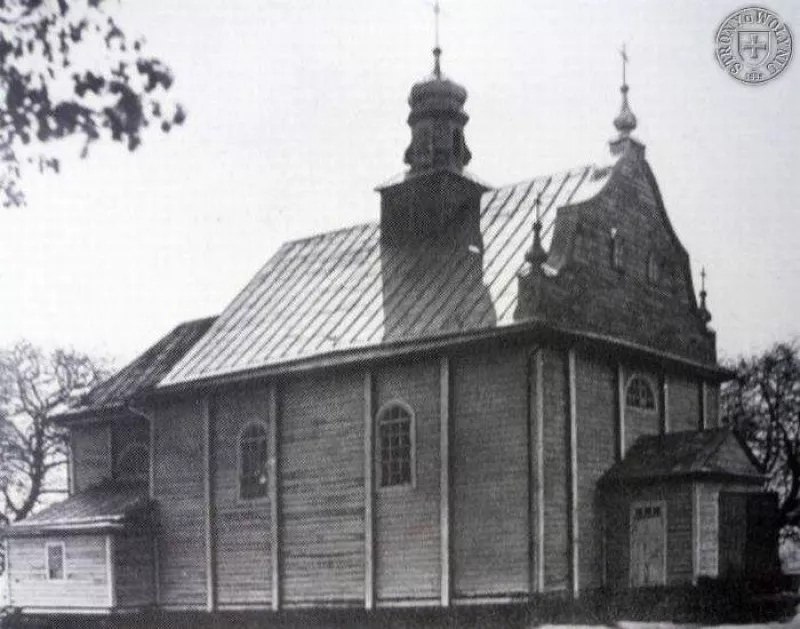

The parish of the Holy Trinity and Saint John the Baptist in Torchyn has a history of almost five centuries: it was founded in 1548, and the first wooden church stood here as early as 1540. The current brick church was built between 1995 and 1998. It stands not where the historical churches were located: only the name of the area—Kostelna Hora—remains from the wooden church of 1778, which burned down in 1944.
Parish in the bishops’ summer residence
Since 1480, Torchyn belonged to the Catholic bishops of Lutsk, who had their summer residence here. The first wooden parish church was founded in 1540 by the Lutsk bishop Yurii Falchevskyi (his surname is spelled variously in Polish sources). The parish was officially established in 1548. That same year, King Sigismund I granted the town Magdeburg rights, as well as the right to hold weekly markets and three annual fairs.
Wooden churches and Kostelna Hora
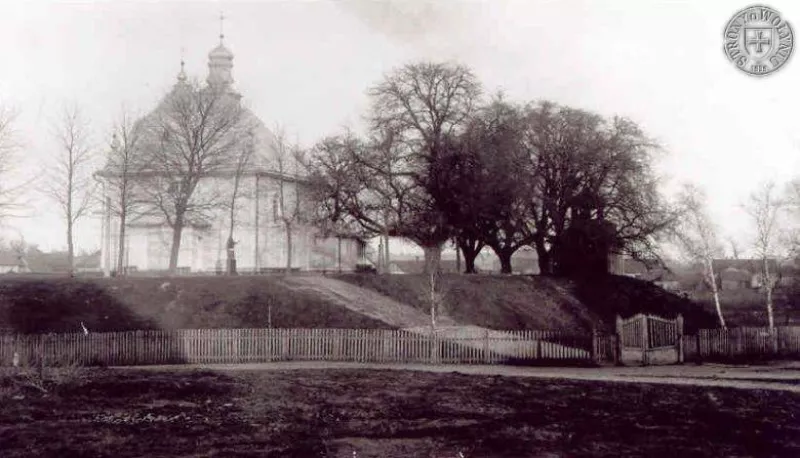
In 1710, Bishop Oleksandr Vyhovskyi began the construction of a new church. The work was continued by Bishops Franciszek Antoni Kobielski and Antoni Erazm Wołłowicz, but the building fell into disrepair unfinished. In 1778, Bishop Feliks Turski built a new wooden church, which served the local Catholics until World War II.
It stood on Kostelna Hora. According to local legend, the hill was artificially raised by peasants, and earlier there was probably a wooden castle on this site. The church had a bell tower with three bells: large, medium, and a small siganturka bell used to summon people to May services. The church contained old organs and a parish choir. Around it lay a square cemetery, surrounded by a mound, and since the 18th century it held the family crypt of the Buzhalskyi family.
The wooden church burned down in 1944. Few photographs remain, and none of the interior: only images of the altar area and the bell tower are known. Today, Kostelna Hora is a field.
The modern church
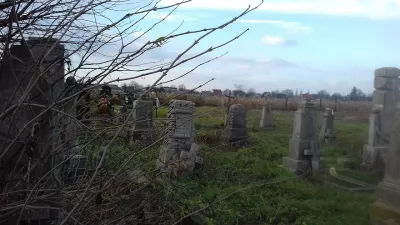
The new parish church was built between 1995 and 1998 on the initiative of Father Marek Hmitruk. It was consecrated on 14 September 1998 by the Lutsk bishop Markiyan Trofimiak. The church stands on the territory of the former Catholic cemetery: in 2007, Canon Augustyn Mednis was laid to rest here.
A town with an ancient history
Torchyn is much older than the parish. Chronicles and historians mention the town on the island of Zastrizhzhia with wooden fortifications as early as 1093, and in 1230 the Hypatian Chronicle calls it a significant fortress of the Halych-Volyn Principality. The town withstood the Tatar sieges of 1601 and 1687 and the Swedes in 1708. In 1714, Bishop Oleksandr Vyhovskyi, who began the construction of the church, died in Torchyn of the plague. In 1767, the “Torchyn Manifesto,” which preceded the Koliivshchyna uprising, was discovered here. Torchyn was granted town status on 26 January 2024.