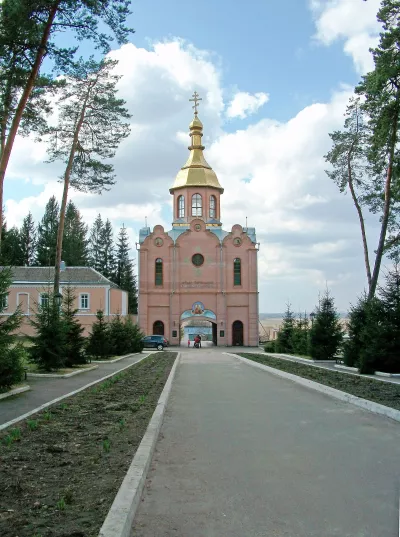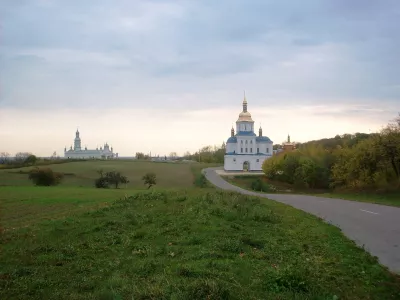

The Polissian north of Sumy Oblast — the Hlukhiv, Shostka and Krolevechchyna regions — is rich in springs gushing from chalk deposits. The most revered among them are associated with the apparitions of icons: on a pine tree, in the grass, or at the bottom of a well. Some hold the status of hydrological natural monuments, others have monasteries standing beside them, and a few have been revived by local residents themselves already in the 21st century.
Monastic Springs in Hlukhiv
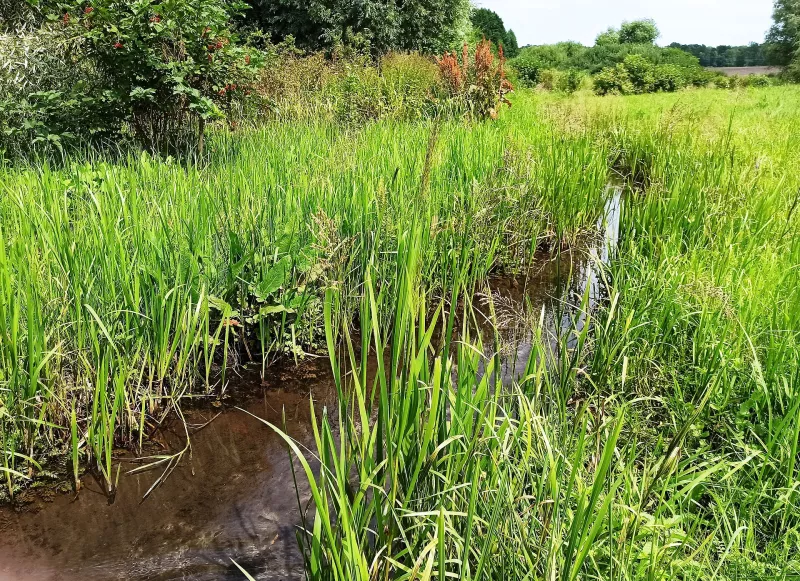
On the northwestern outskirts of Hlukhiv, on the way out toward Shostka, two self-flowing springs emerge from beneath the ground — rounded basins 8 and 10 meters in diameter that feed the Berizka River. Since 2004, this has been a hydrological natural monument covering 5.22 hectares. The healing power of the water in Hlukhiv is associated with the Smolensk Icon of the Mother of God: according to legend, when cholera was decimating the city, the priests walked around it three times with the icon, and the illness receded. Bathhouses, stairs and bridges were arranged near the springs, and a cross and a chapel-church in honor of the Glyńsk Icon of the Nativity of the Mother of God were erected; it was consecrated in 2012, and it was the first church built in Hlukhiv in over a century. Anatolii Boiko's book "Monastic Springs of the Hlukhiv Region" (2021) is dedicated to the history of these springs.
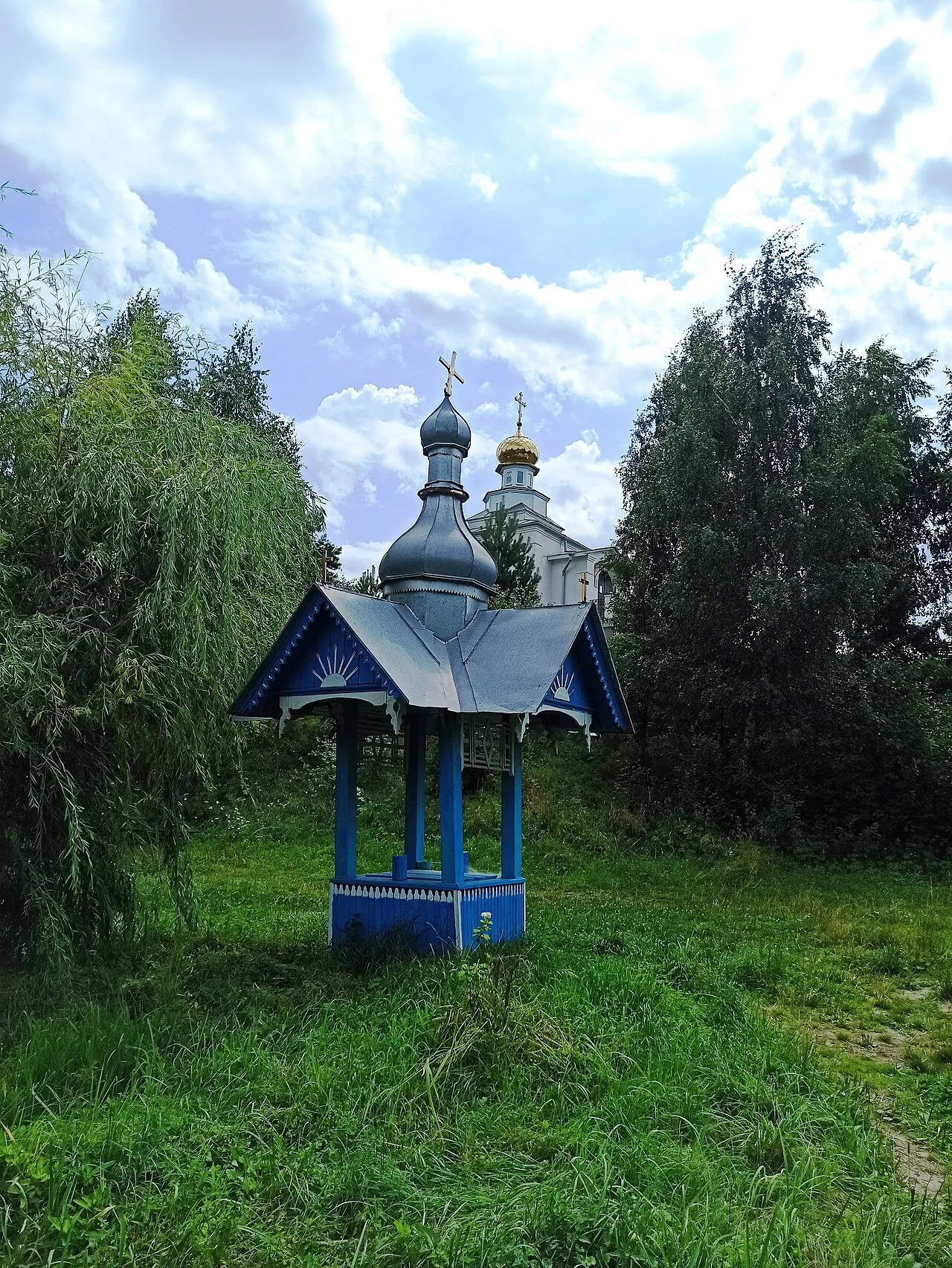
Dubovychi Well
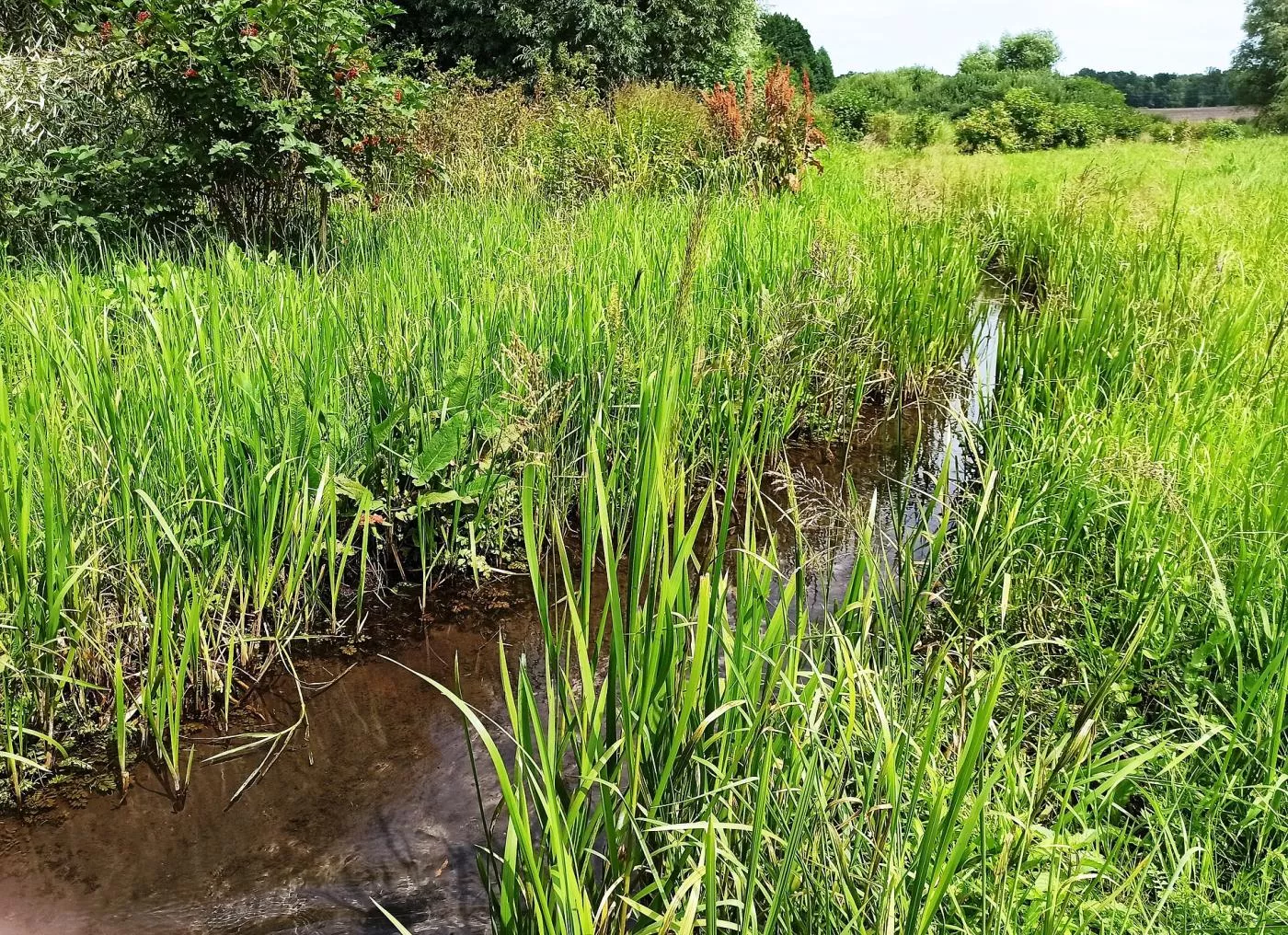
In the forest near the E101 highway, between Dubovychi and Bystryk in the Krolevets hromada, the Dubovychi Well gushes forth — a hydrological natural monument since 1982. Tradition attributes its appearance to the 16th century: a shepherd found an icon of the Mother of God on the bank of the Ret River, a light flashed from the icon, and the shepherd went blind, recovering only after a priest's prayer. According to another version, he saw the image while bending down to the spring, which gushed from beneath a large pine tree slightly above the current well. In the Soviet years, the well was leveled with the ground and filled with garbage, but people dug it out again. In 2000, a wooden frame and a roof were placed over it, and in 2002, a chapel was erected on the rise nearby. Every year on the tenth Friday after Easter, a liturgy is served here, and thousands of pilgrims gather water, which is considered to be at its strongest on this day. Nearby is the Kochubei Park in Dubovychi.
Vorgol and Bear Well
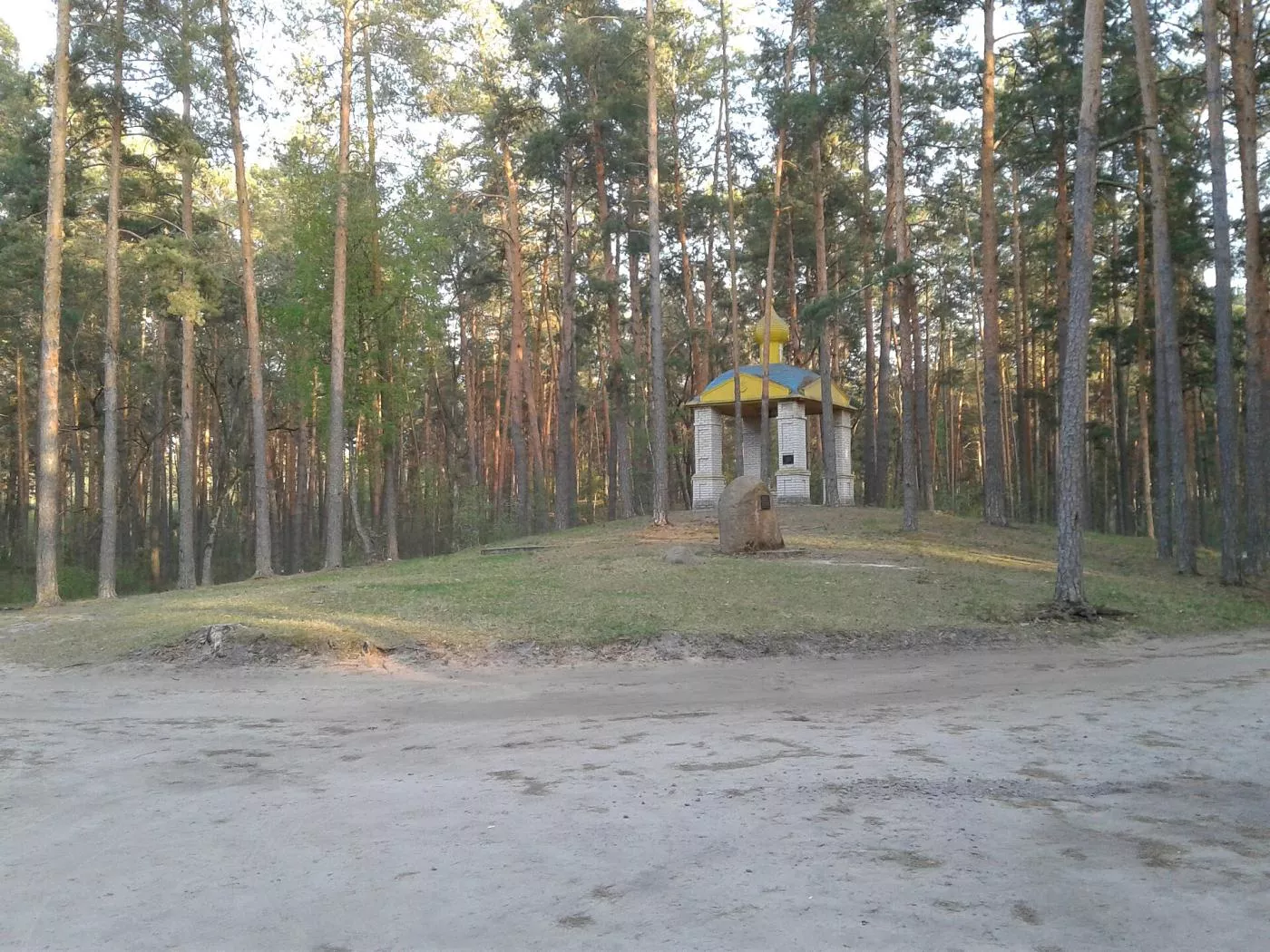
Two more revered wells of the Krolevets region lie near Dubovychi. In the forest near Vorhol, there is a well at the site where, according to legend, the Vorhol Icon of the Mother of God appeared. The icon had been in the village church of the Nativity of the Theotokos since ancient times; on its silver crown stood an inscription about a donation in 1751, and in 1850 the Synod, after investigating miracles, allowed it to be revered as a local shrine. After 1917 the church was destroyed, the icon disappeared, and its copies remained — one of them is now in the Ascension Cathedral of Konotop. Every year on August 11–12, a liturgy is served near the well and water is consecrated.
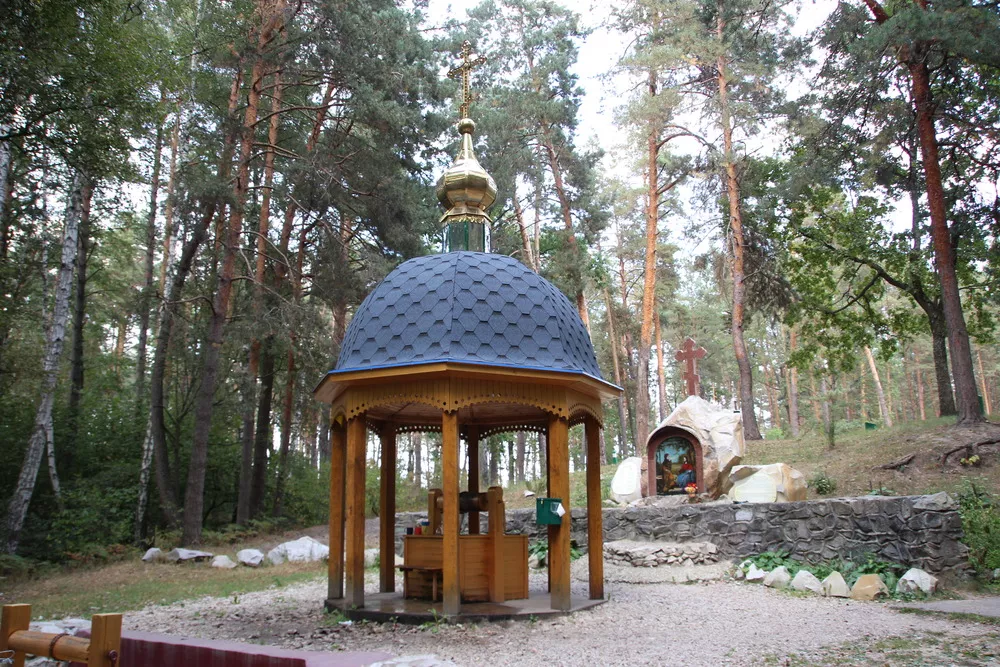
On the eastern outskirts of Pokrovske, in the floodplain of the Vedmedivka River, the Vedmezha Krynytsia gushes — a self-flowing spring with a large yield. Since 2006, it has been a hydrological nature monument with an area of 7.6 ha, where the Red Book-listed early marsh orchids are protected. On May 10, 2017, the well was consecrated by the Bishop of Konotop and Hlukhiv.
Hlynska Pustyn
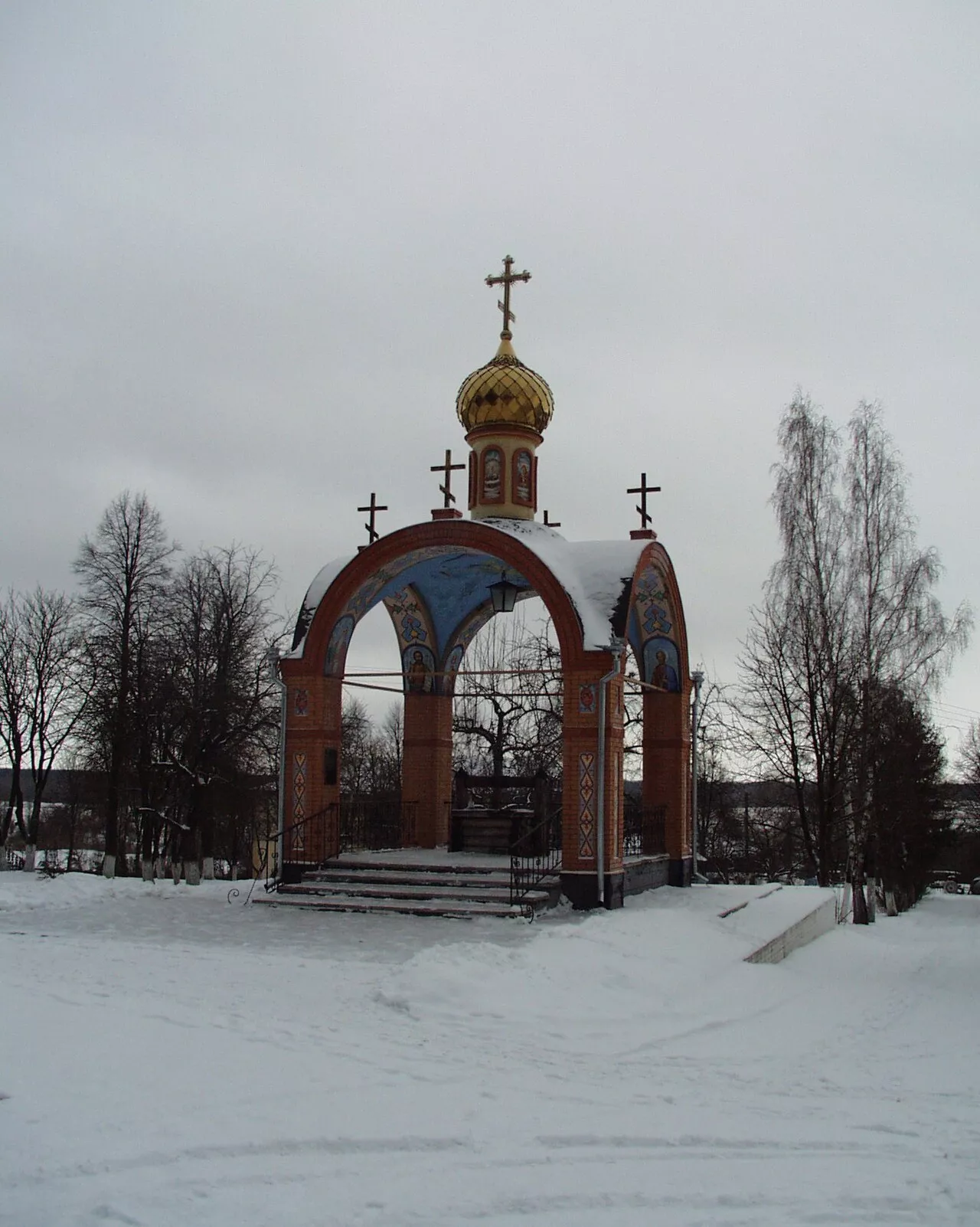
The Hlynska Pustyn Monastery in the forest near Sosnivka of the Shalyhyne hromada arose where, according to legend, beekeepers found an icon of the Nativity of the Theotokos on a pine tree at the beginning of the 16th century. A spring beat from under the root of the pine, from which people drank. When the pine was cut down, the spring dried up, but two kilometers to the west a new one gushed. The first documentary mention of this place dates back to 1648. The monastery was closed in 1922 and 1961, and it was revived in 1994; the holy spring on the territory of the cloister is open to pilgrims again.
Seven Springs in Shalyhyne
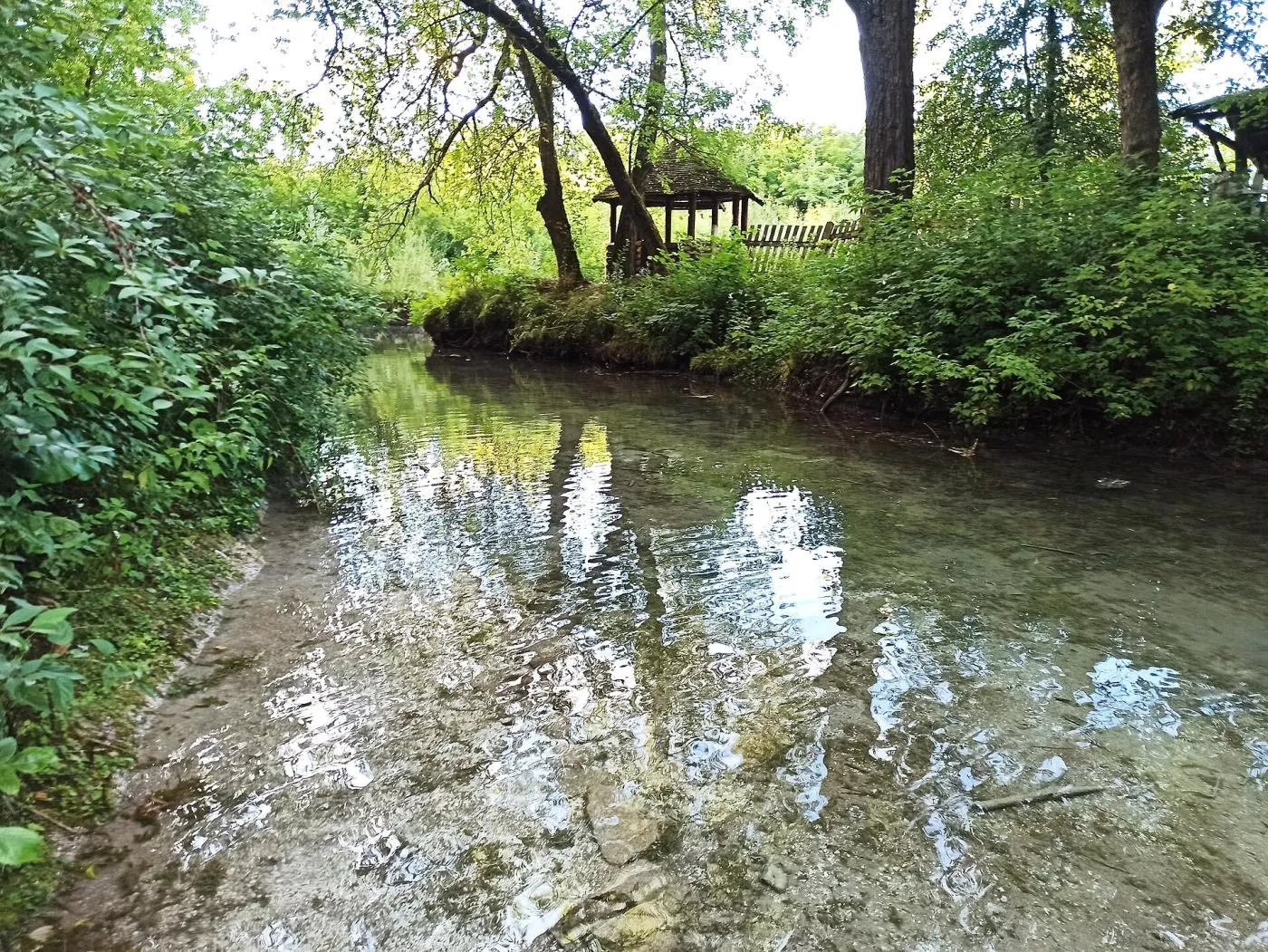
A few kilometers from Hlynska Pustyn, on the southeastern outskirts of Shalyhyne, seven springs fountain in a natural basin among chalk and feed the Lapuha River. The water here is no warmer than 4–5 °C even in summer, and steam stands over it. The Seven Springs became a nature monument in 1973. They were not consecrated as a church spring, but pilgrims from Hlynska Pustyn often drop by here to take a dip.
Turanivska Krynytsia
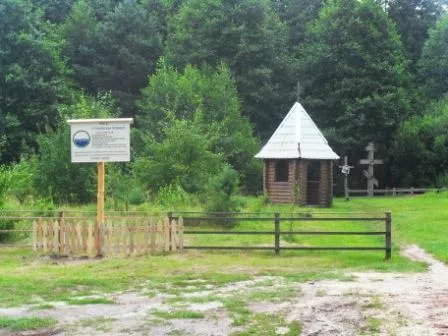
In the pine forest between Turanivka and Hremiachka of the Yampil hromada, near the Yampil — Hlukhiv road, a spring flows that has been known for over three centuries. Legend tells that the landowner Turanskyi had a blind daughter; an angel appeared to the father in a dream, and the girl, having washed with water from the spring on Ascension, regained her sight. Other legends are about a healed man who could not walk, and about a peasant who buried the spring in his vegetable garden and went blind, but his sight returned when his sons dug the well back out. Since then, on Ascension, a religious procession goes from the church of the Archangel Michael in Hremiachka to the spring, and a water-blessing prayer service is held here.
In Soviet years, the church from Hremiachka was moved to Olyne and turned into a club, but people continued to go for water. In 1999 the well became a hydrological nature monument, in 2010 a new log cabin, a bathhouse and a worship cross were erected over it, and in 2013 a road was laid. The spring breaks through several layers of clay, the upper one being blue clay.
Spring near Zemlyanka
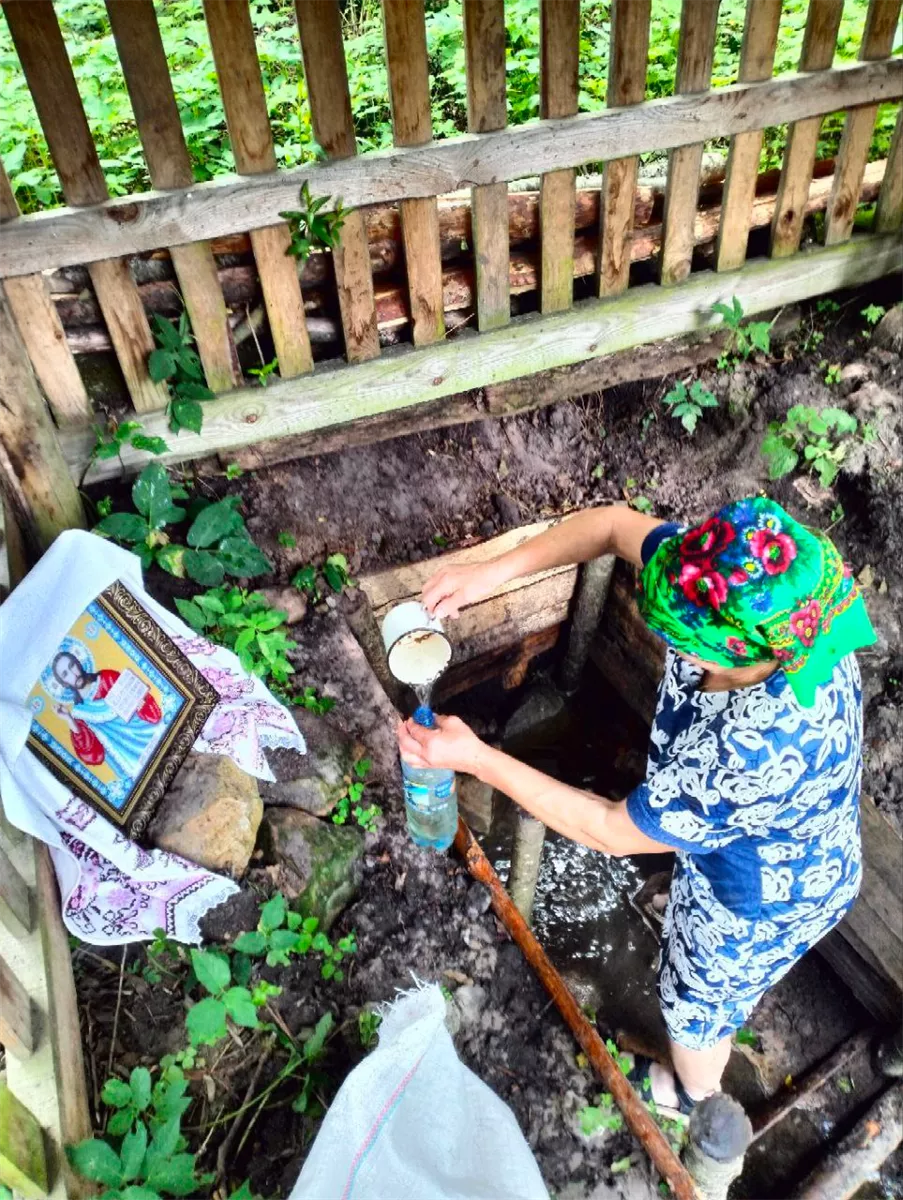
Near the bridge over the Esman between Zemlyanka and Huta in the Hlukhiv region, a spring was known over ninety years ago that later silted up. In the spring of 2024, the residents of Zemlyanka cleared it on their own, reinforced the banks, made steps, handrails, and bridges, and the forestry department helped build a superstructure. In early May, the spring was blessed.
Sofroniyivskyi Monastery
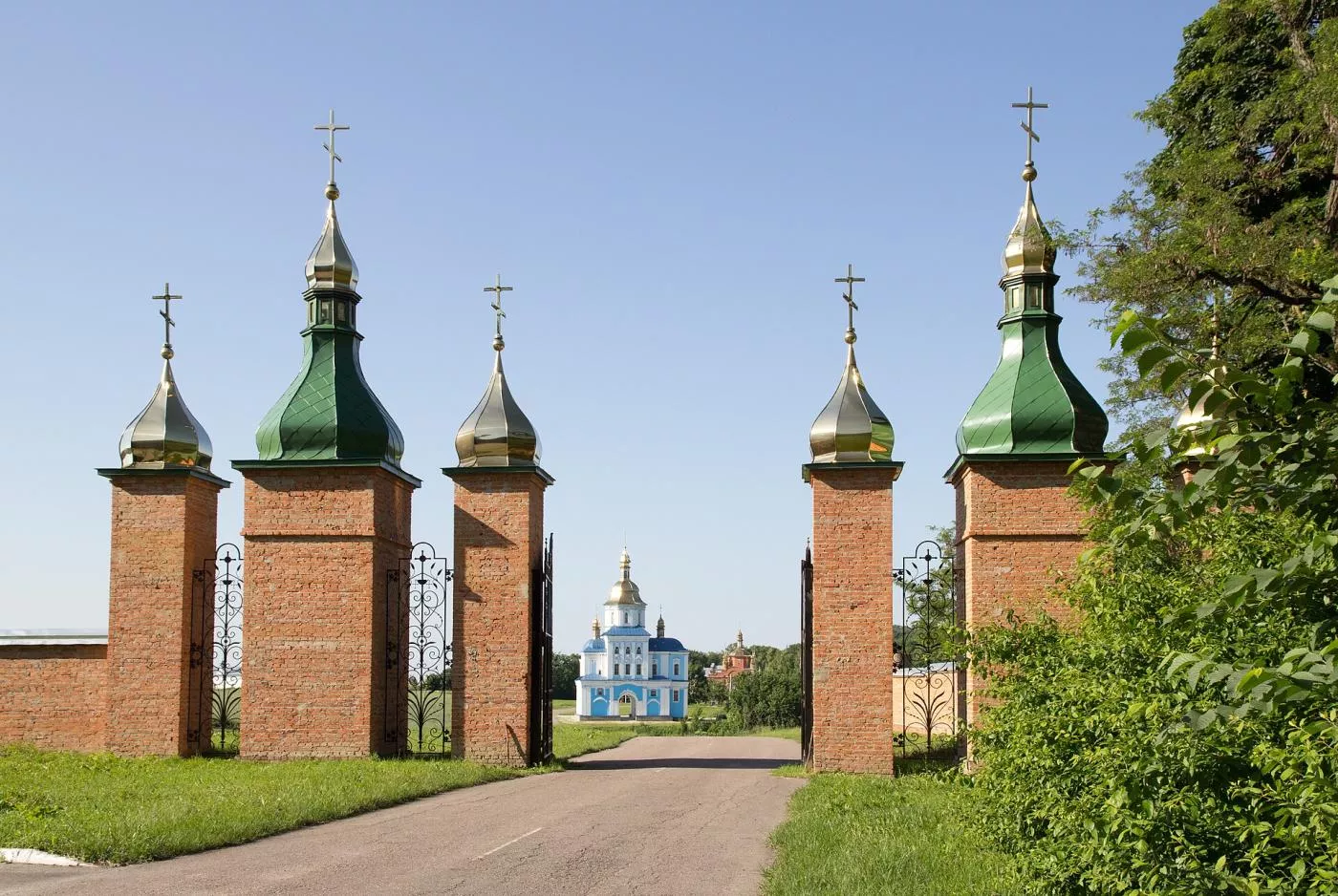
Sofroniyivskyi Monastery stands on Chudna Mountain above the former Molche marsh, 2 km from Nova Sloboda in the Putyvl region. According to legend, on September 18, 1405, a beekeeper saw an icon of the Mother of God in a tree, which was named Molchanska. The first masonry church here was built in 1630, and the monastery received its name after the death of Abbot Sofronii in 1692. The cloister was closed in the early 1920s and revived in 1999. A healing spring on the monastery grounds was blessed in 2002. Nearby is the Movchanskyi Monastery in Putyvl.
In the south of the oblast
Obraz Tract
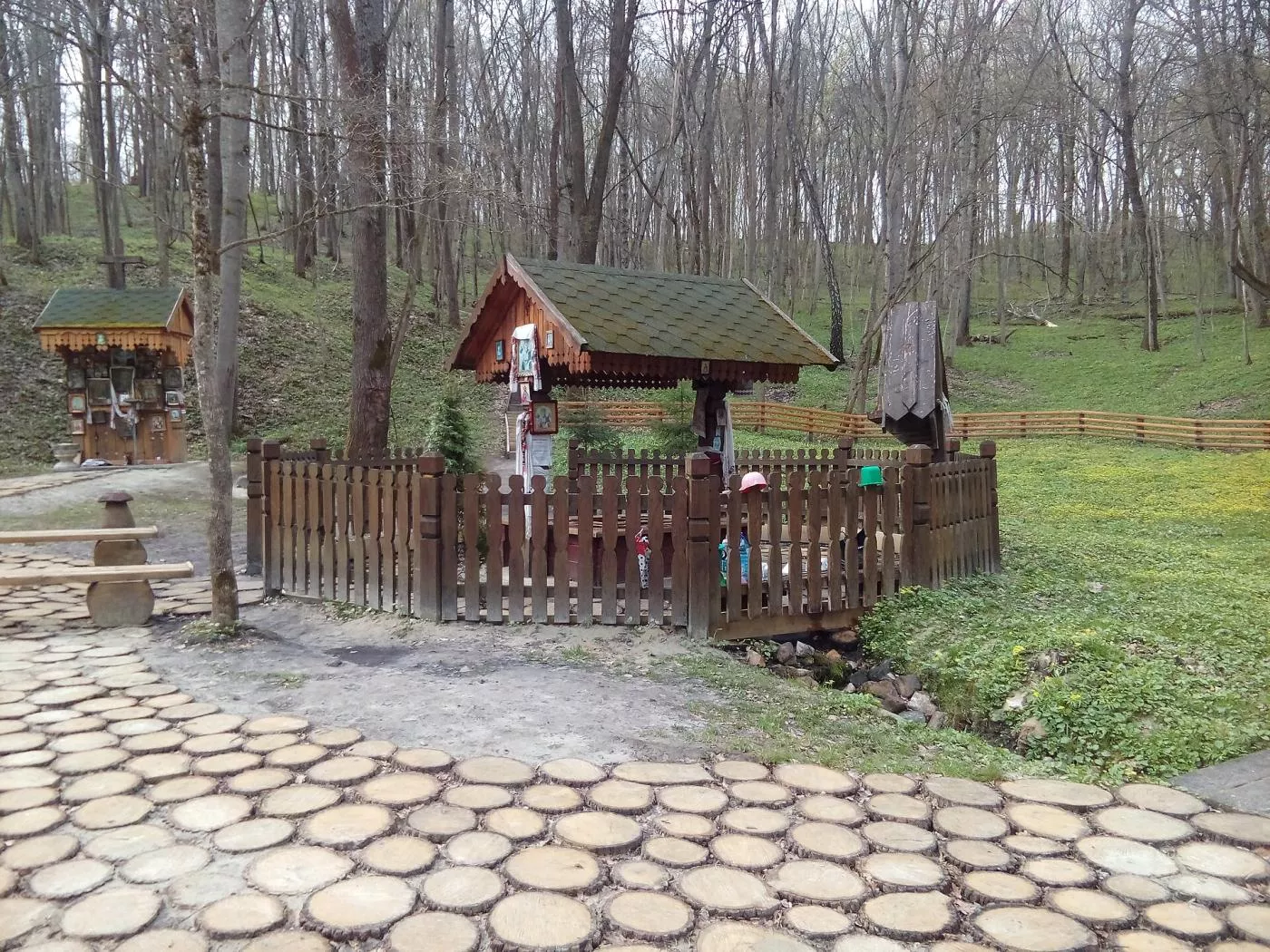
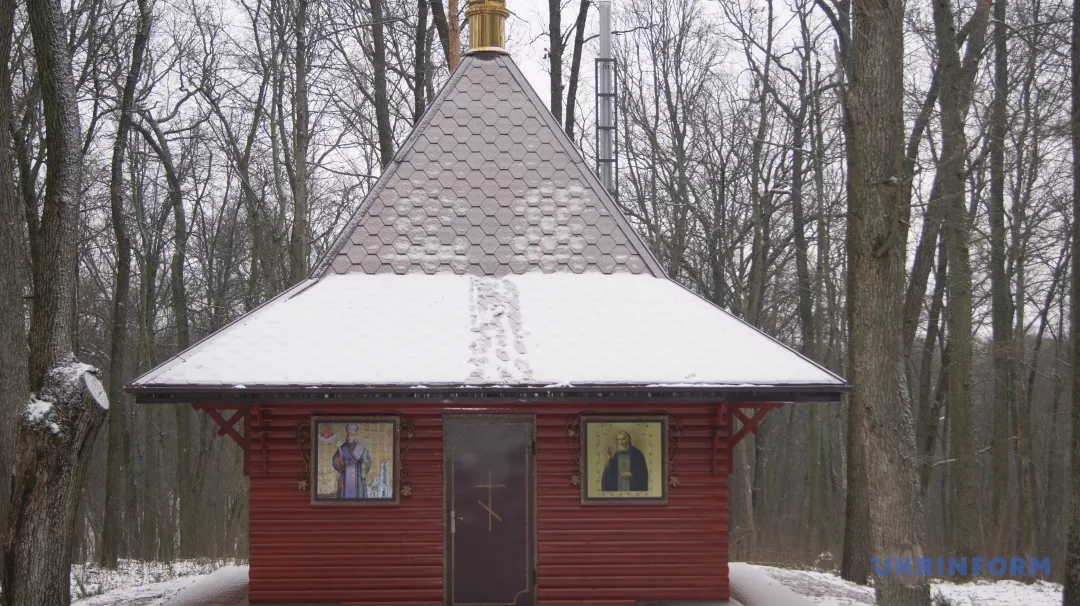
The largest number of people on Epiphany — up to eight thousand — gathers at Obraz Tract in the forest 6 km from Velykyi Bobryk in the Krasnopillia hromada. The well here is at the bottom of a deep gully. Legend recounts that peasants found an icon of Saint Nicholas at the bottom of the spring; it was carried to the village church three times, but it kept returning, so the people promised to carry it in a procession to the well every year. Hence the name of the tract. Orest Somov first wrote about it in the novella "Haidamaka" (1830). In 1808, the Ascension Church was built in Velykyi Bobryk, where the icon was moved. It was last carried to the spring in 1943; after the war, it disappeared, and the chapel over the well was destroyed.
In 2004, the well was cleared and well-preserved oak beams were found at the bottom. In 2011, the Obraz Tract landscape reserve with an area of 97 ha was created around it, and on September 15, 2016, a new chapel, recreated according to Somov's description, was blessed. Now there is a well behind a wattle fence, a bathhouse, two small chapels, and worship crosses here. The water is rich in magnesium and in summer is no warmer than 10 °C.
Krynytsia Sviata near Velyki Bubny
In a gully 2 km west of Velyki Bubny in Romny hromada, near the border with Chernihiv region, lies Krynytsia Sviata. Since 2017, it has been a hydrological nature landmark with an area of 13.7 ha, whose values include cultural significance; meadow-steppe vegetation with the blackish pasque flower is protected around the spring.
Vakalivske Spring
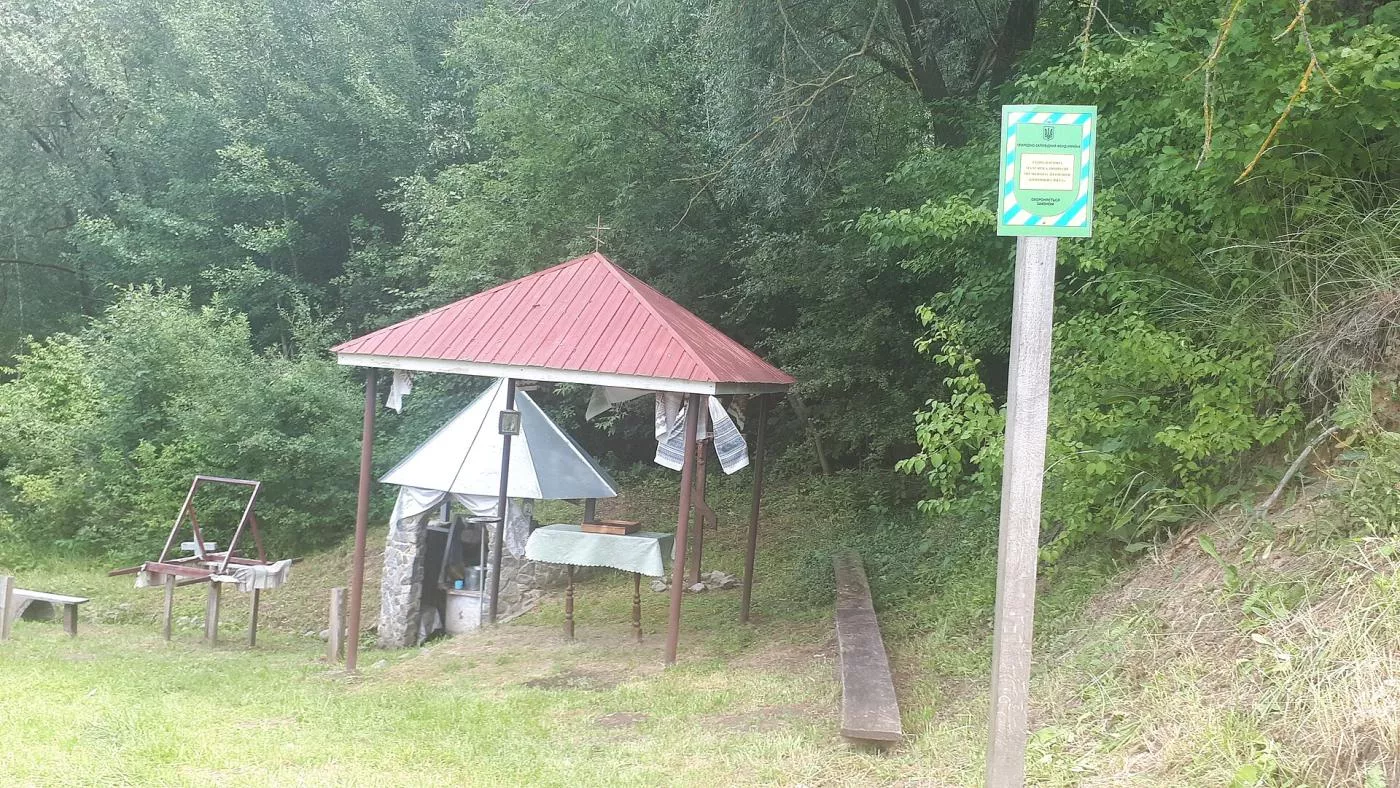
North of Vakalivshchyna in Sumy hromada, a mineral spring gushes forth. An analysis from 1966 showed hydrocarbonate-calcium-magnesium ferruginous water with a temperature of 7.2 °C and a flow rate of 7–8 m³ per hour; it was recommended for digestive diseases and anemia. Locals have long considered the water healing: an icon hangs by the spring, a oil lamp burns, and prayer services are held here.
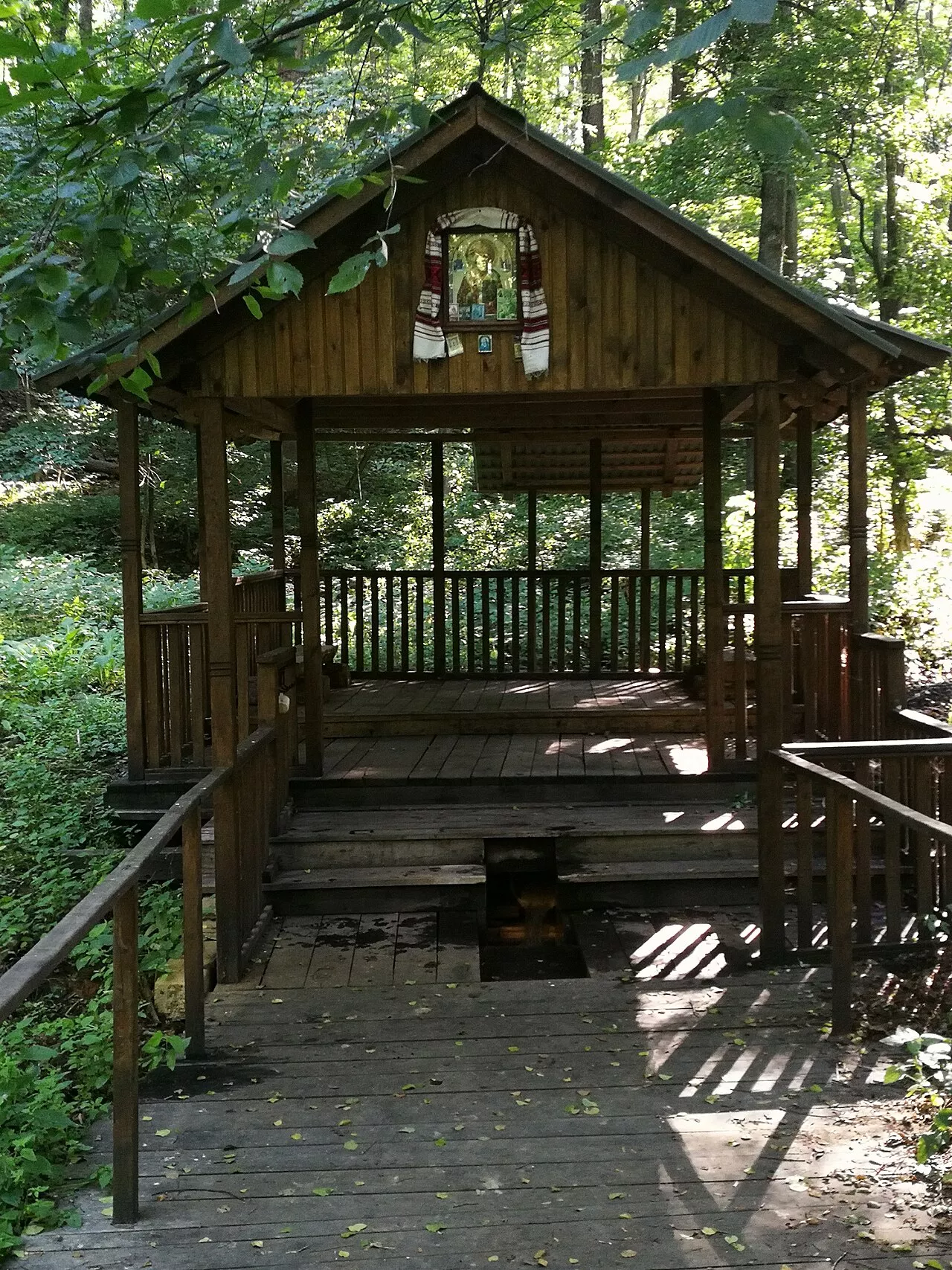
Smaller springs are also consecrated. In Myronivka of Shostka hromada, a healing spring in the bed of the Borshavets River is considered holy and is consecrated annually on the Feast of the Maccabees. In Trostianets, water is consecrated on Mid-Pentecost near the spring with the chapel of the Great Martyr Panteleimon, and in Romny, in the Lozova microdistrict, residents in 2017 repaired an old spring-well that had long supplied the surrounding area, and it was consecrated.
Another legendary well in the north of the region is Synia Krynytsia in Svesa: a pond with over a hundred springs that does not freeze even in severe frosts. All known springs and wells of Sumy region are marked on the map of Polissia springs, and the most famous holy springs of the region are in the article "Holy Springs of Polissia".
Holy springs of other regions of Polissia: Volyn, Rivne region, Zhytomyr region, Kyiv region, Chernihiv region.