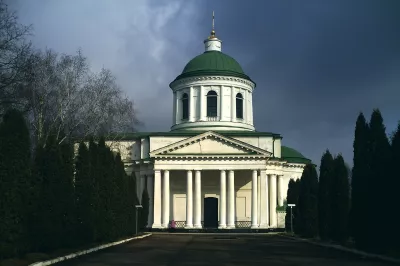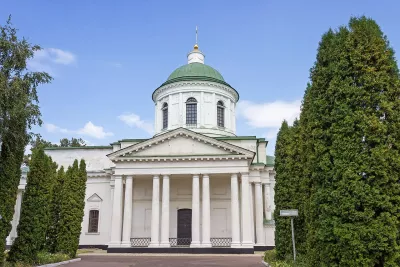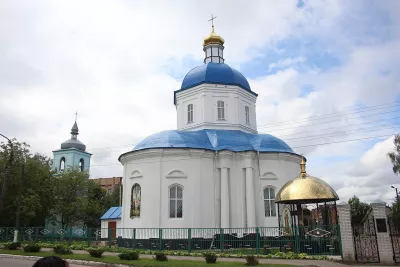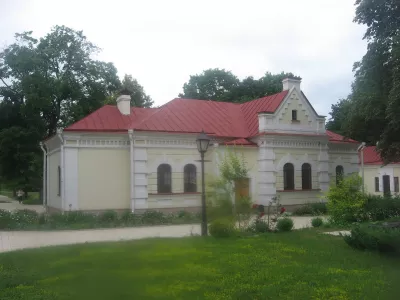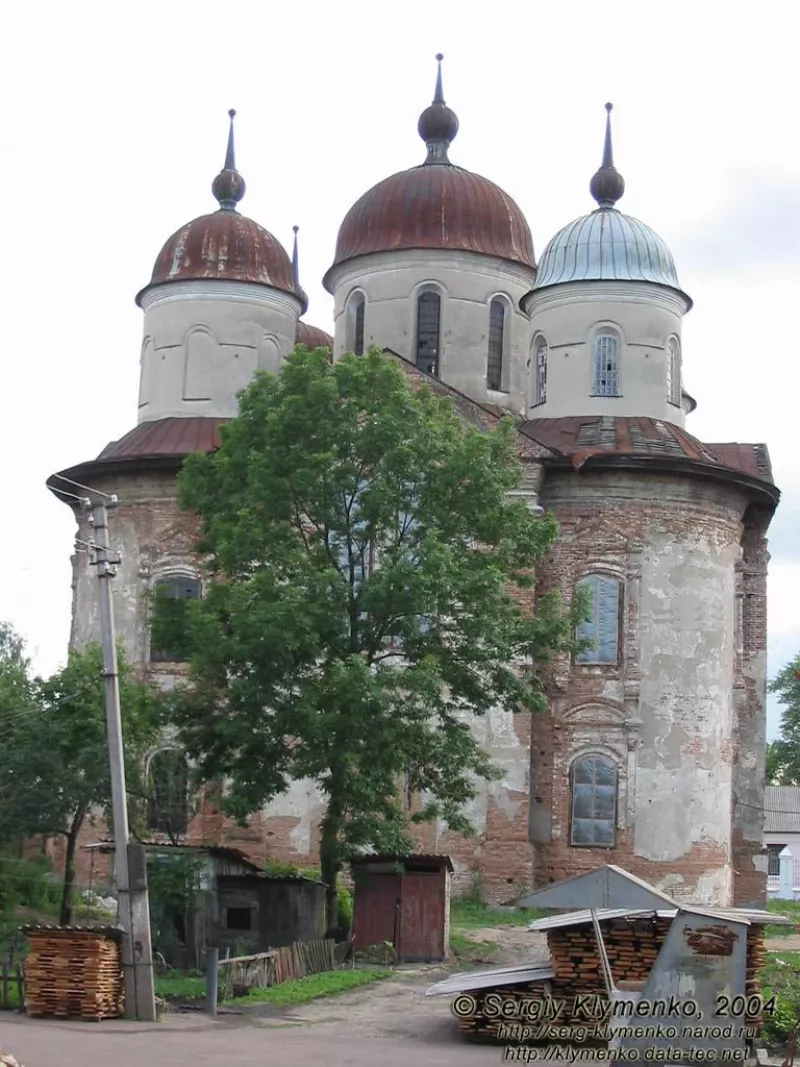
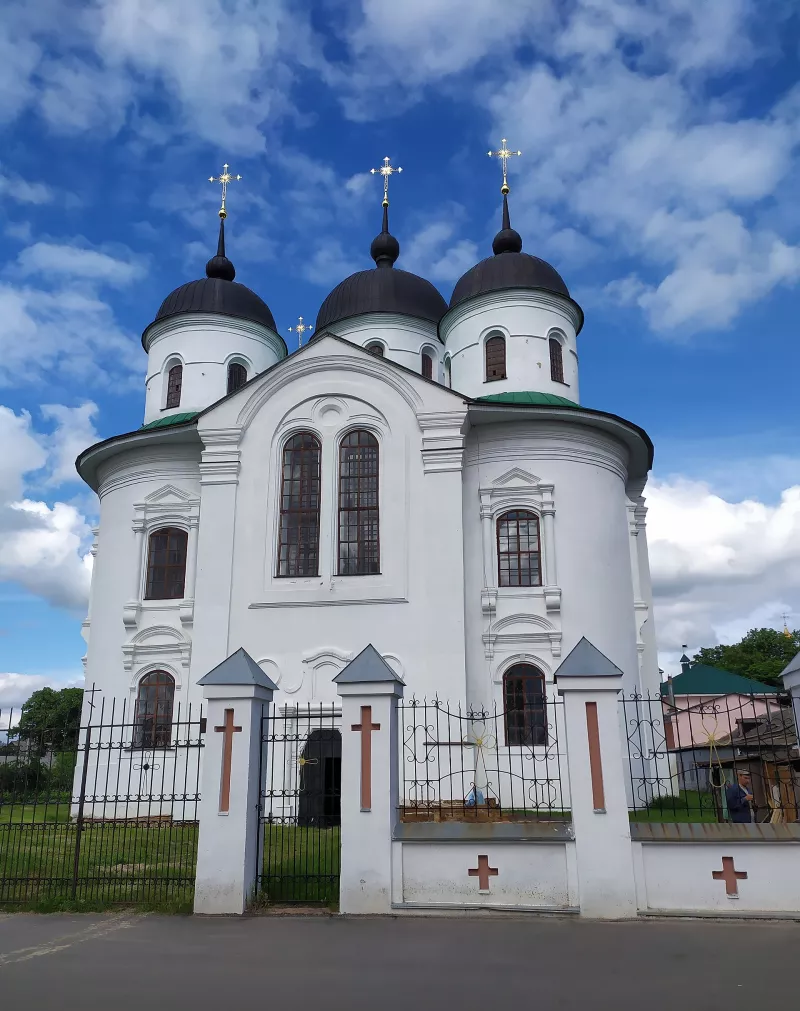
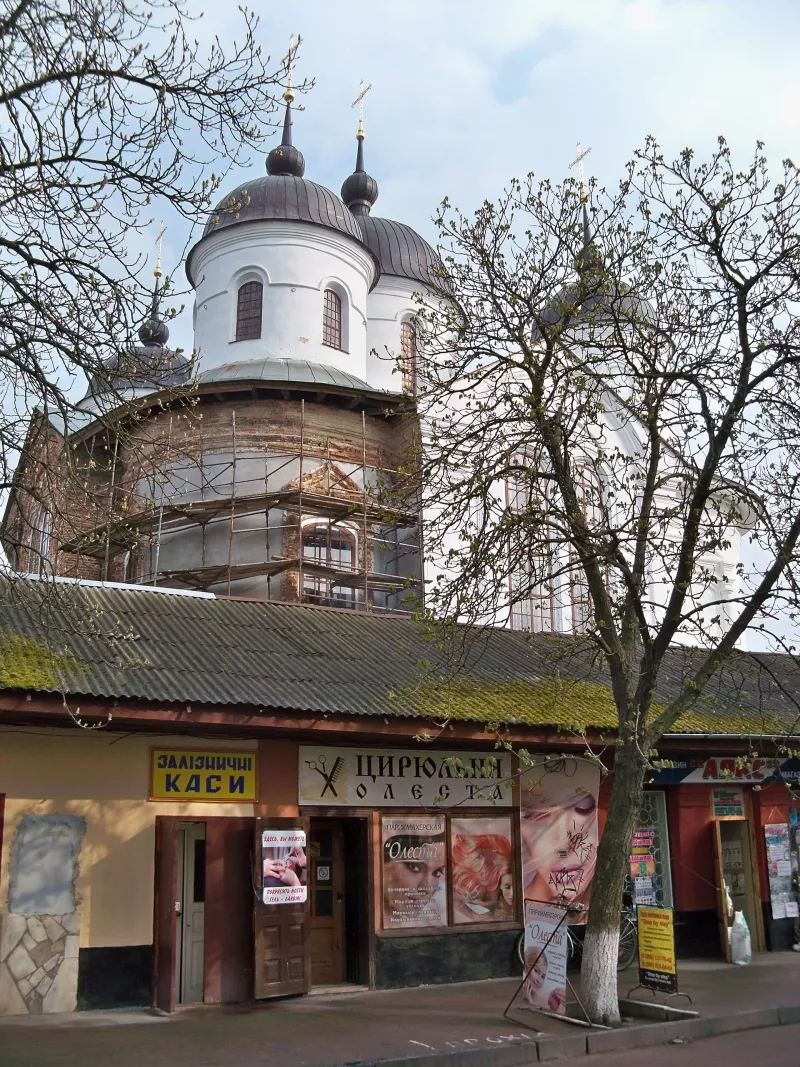

The Annunciation Monastery stands in the very center of Nizhyn, on Sobor Square, next to St. Nicholas Cathedral. Its main church—the Annunciation Cathedral from 1702–1716—is one of the most prominent Baroque buildings in Ukraine and the second largest church in the city. It was built by Metropolitan Stefan Yavorsky, a native of Galicia, who became one of the most influential church figures of his era.
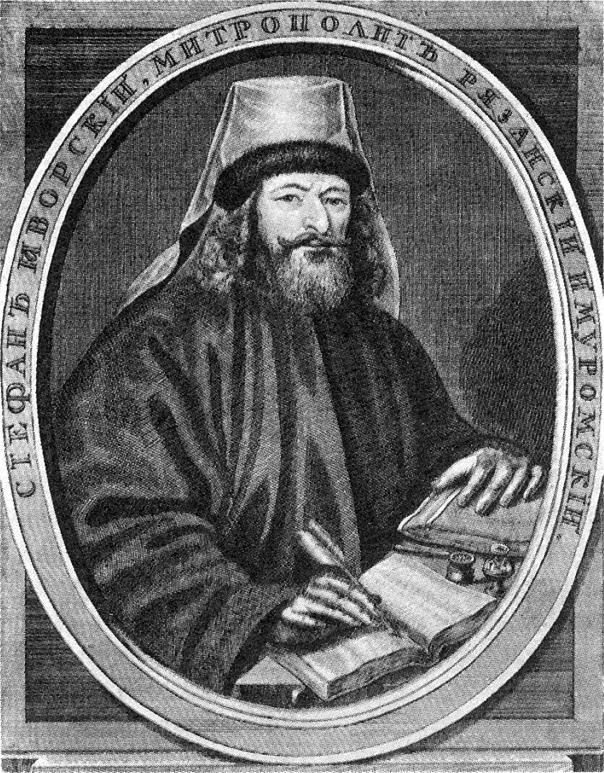
A Gift to His Brother and the City
In 1702, Stefan Yavorsky used his own funds to buy the homesteads of Nizhyn townspeople near Sobor Square for 1,300 karbovantsi and began construction of a church in honor of the Annunciation of the Blessed Virgin Mary. He invited the Moscow architect Hryhoriy Ustynov for the work. The master was to receive 7,000 silver karbovantsi for the construction.
Hetman Ivan Mazepa also helped. Yavorsky's correspondence with his brother mentions his assistance in obtaining stone for the foundation and the promised provision of food supplies for the builders. Supervision of the works was entrusted to Pavlo Yavorsky, who was the protopope of Nizhyn.
Unusual Architecture
The architect faced a difficult task: to combine Moscow building traditions with local architecture. In Nizhyn, wooden churches were mostly built in the Ukrainian tradition, while masonry ones were in the Baroque style. As a result, a church with an unusual composition emerged, combining features of Ukrainian Baroque and Old Rus architecture.
The plan of the cathedral is based on a cross with equal arms. However, the usual semi-circular altar apses are absent here. Four rounded corner volumes are located between the arms and are not separated from the interior space by walls.
A special feature of the structure is the arrangement of five domes. Four smaller ones crown the corner parts of the church rather than the main arms of the cross. The vaults rest on four internal pillars. In the western and eastern parts, the architect arranged niche-loggias, making the interior resemble a peculiar auditorium.
The height of the cathedral together with the cross is 55 arshins—approximately 39 meters. The unusual layout, symmetry, and arrangement of the domes distinguish it among the churches of that time.
Consecration and Murals
Construction lasted for fourteen years. In 1716, the cathedral was consecrated, and a monastery was officially founded alongside it, which was named the Nazareth of the Mother of God.
Stefan Yavorsky donated his own library, numbering over 600 books, to the cloister. Before his death, he also took care of the artistic decoration of the church. In his 1722 will, the metropolitan ordered the completion of the painting, which had already begun in the altar area. Thus, the artwork was not created all at once, but over a certain period of time. Later, large-scale murals executed by local masters covered the walls and vaults.
The history of the Battle of Poltava is also connected with the cathedral. In 1709, Yavorsky sent a note to Nizhyn about immortalizing the victory of Peter I over the Swedes. Researchers interpret its meaning in different ways: according to one version, the monument was to be an icon featuring the tsar in the image of Saint George the Victorious; according to another, the cloister itself could have had memorial significance. Therefore, this story should be viewed as part of the complex history of the church's construction.
Fires, Decline, and Revival
In the second half of the 18th century, the monastery suffered from fires three times—in 1750, 1757, and 1797. After the last devastating fire, the question of its closure arose, but the residents of Nizhyn managed to preserve the cloister.
In 1803–1823, its restoration was directed by Archimandrite Viktor Cherniaiev. During his abbacy, the old structures were repaired, the cathedral's wall paintings were restored, and the refectory Church of Saints Peter and Paul, a bell tower with a clock, cells, and monastic shops were built.
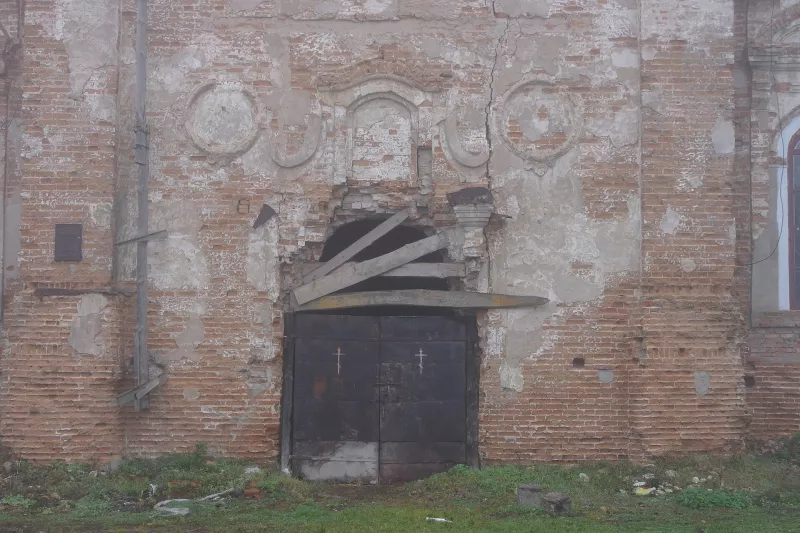
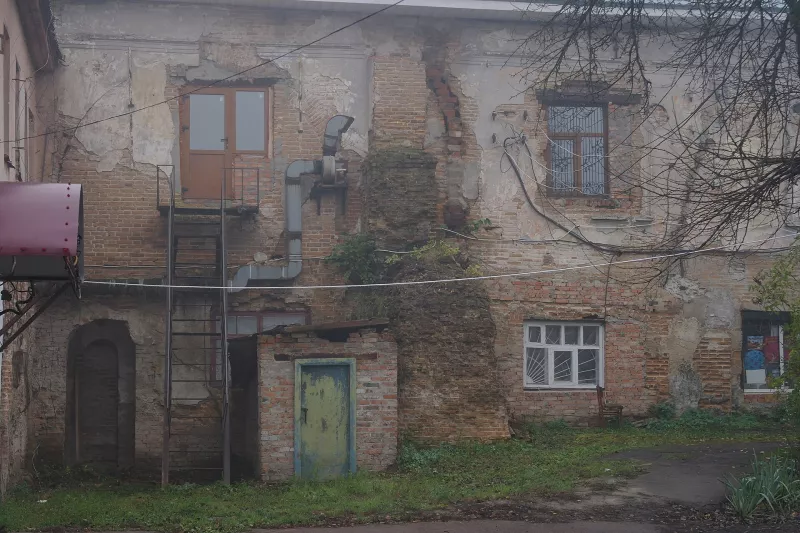
Under Soviet rule, the monastery was closed, and the Annunciation Cathedral was converted into a machinery repair shop. During this use, all internal murals with a total area of about 2,500 square metres were destroyed, as well as the seven-tiered iconostasis and other church relics.
The revival of the monastery began in 1999. Today it is active again, and the Annunciation Cathedral remains one of the most prominent architectural landmarks of Nizhyn.
How to get there
The monastery stands at the corner of Hoholia Street and Sobornyi Square in the centre of Nizhyn, a few minutes' walk from Saint Nicholas Cathedral and the Church of All Saints.