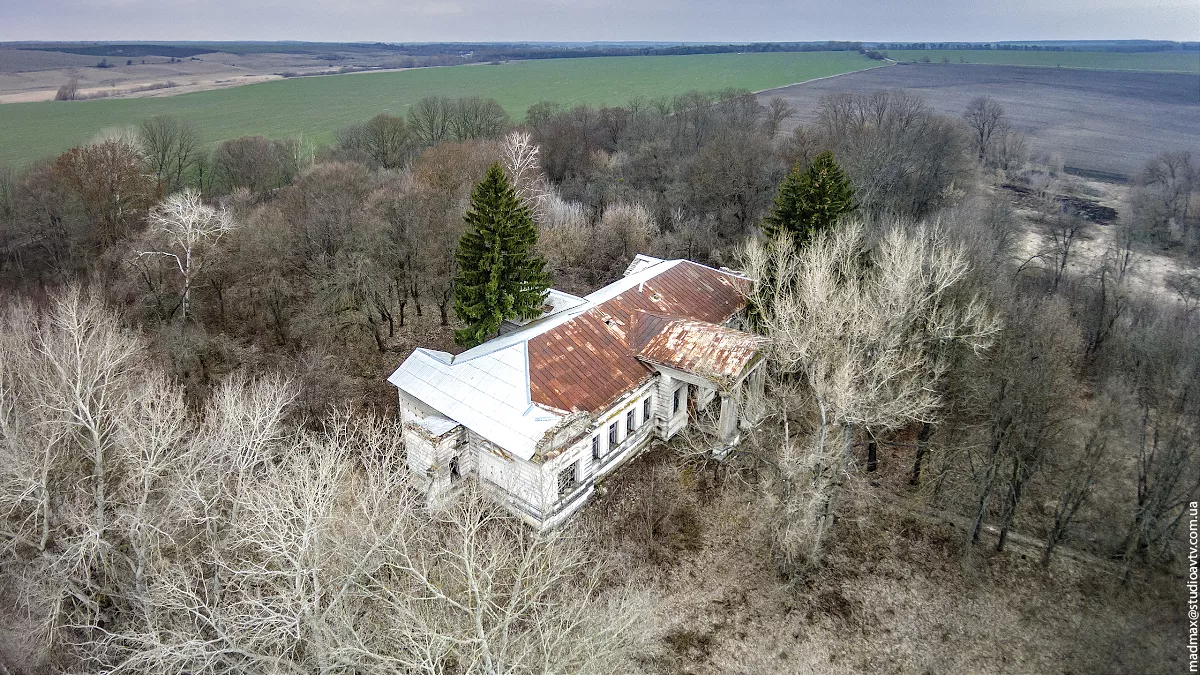
Right on the border of Vinnytsia and Zhytomyr regions, away from the main tourist routes, stands a building for which it is worth driving extra kilometers. The Kornytskyi estate in the village of Rohachi in the Ruzhyn region is one of the most expressive examples of neoclassical estate architecture in Right-Bank Ukraine from the early 20th century and, at the same time, a typical story of lost and unpreserved heritage.
The Land That Changed Owners
The village received the name Rohachi back in 1746 and belonged to the Pohrebysche key. In 1785, the village was owned by Anna Plater, wife of the castellan of Troki, August Plater. In 1790, she sold Rohachi to General Liubovytskyi, who in 1805 (according to other sources, 1808) resold the estate to the Polish nobleman Kornytskyi for 70 thousand rubles in gold—a sum that eloquently speaks to the value of these lands as early as the beginning of the 19th century.
Kornytskyi built a family estate on the outskirts of the village, where he lived with his wife and sons, Cezary and Wacław. Over time, only Wacław Kornytskyi remained on the estate. The first house had a straw and reed roof—and it was precisely due to a faulty stove heating system that a fire broke out here, destroying the original homestead.
1908: A New Palace Designed by Karol Iwanicki
It was this fire that served as the impetus for a new, much more ambitious construction. In 1908, Wacław Kornytskyi invited the famous Kyiv architect Karol Iwanicki, commissioning him to build a magnificent residence—simultaneously a family nest and a place to receive guests.
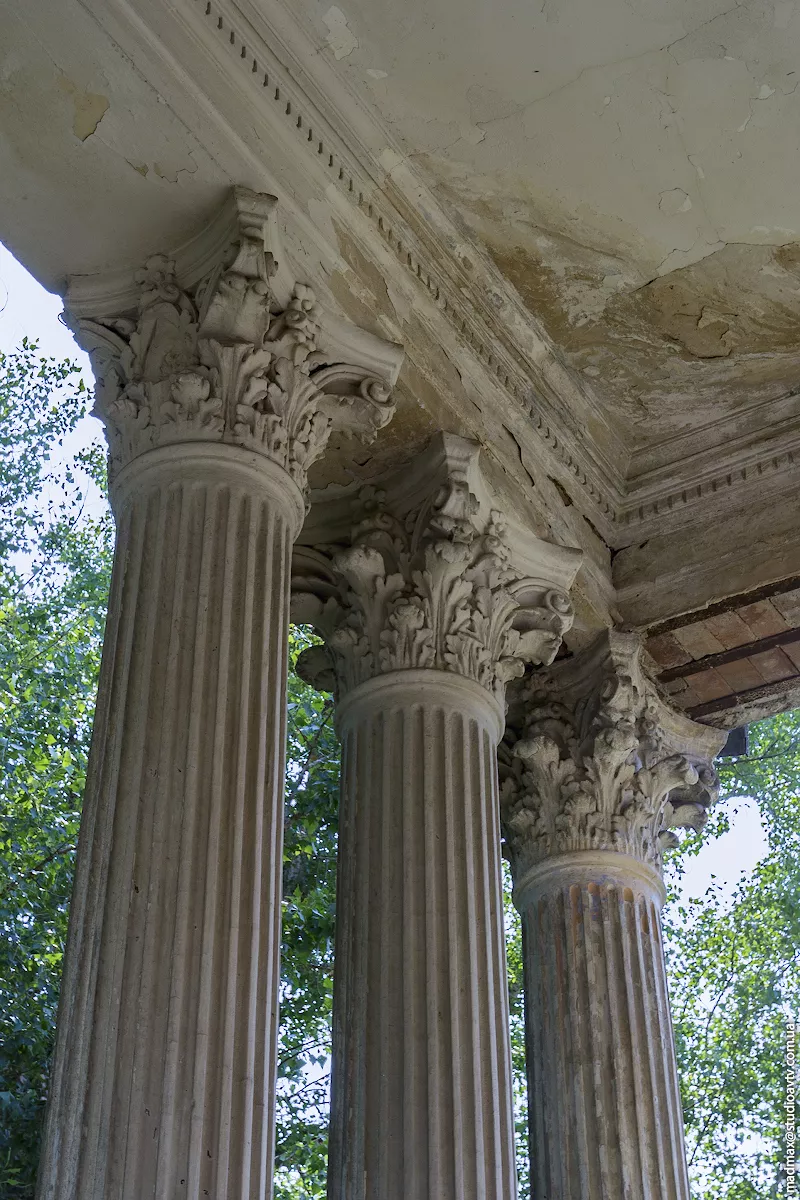
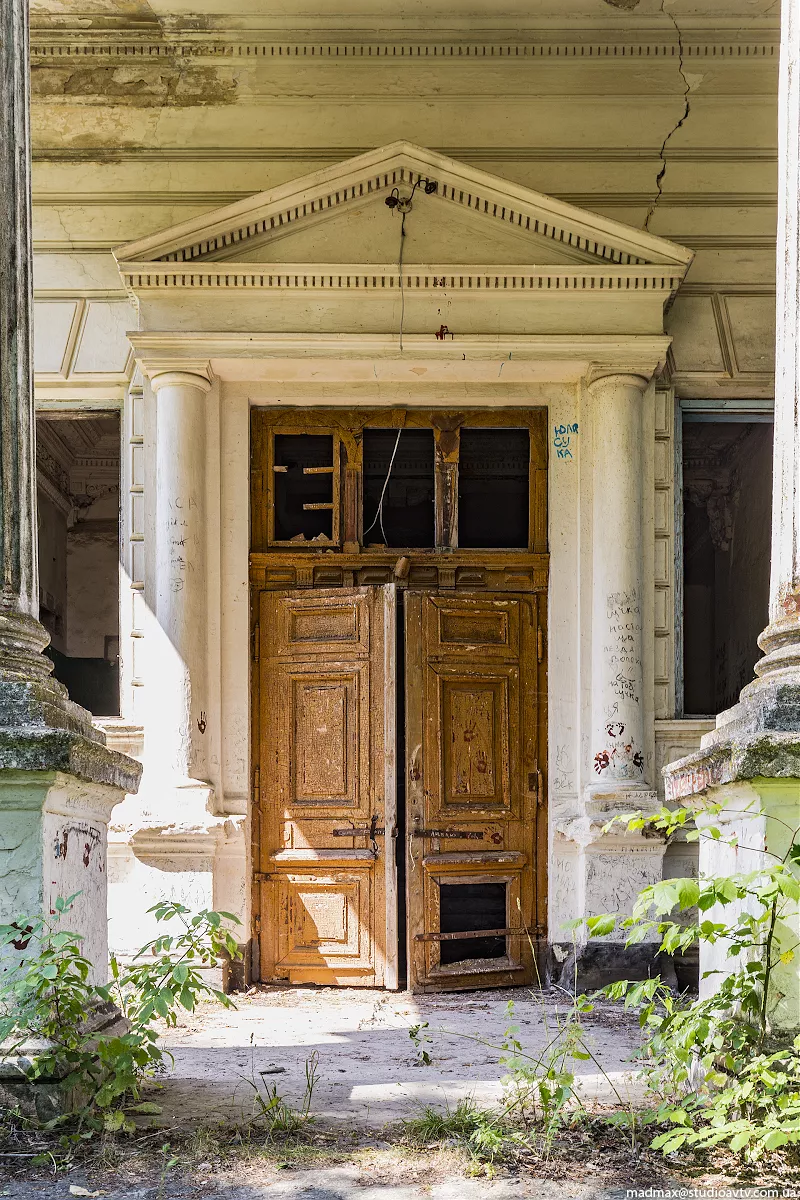
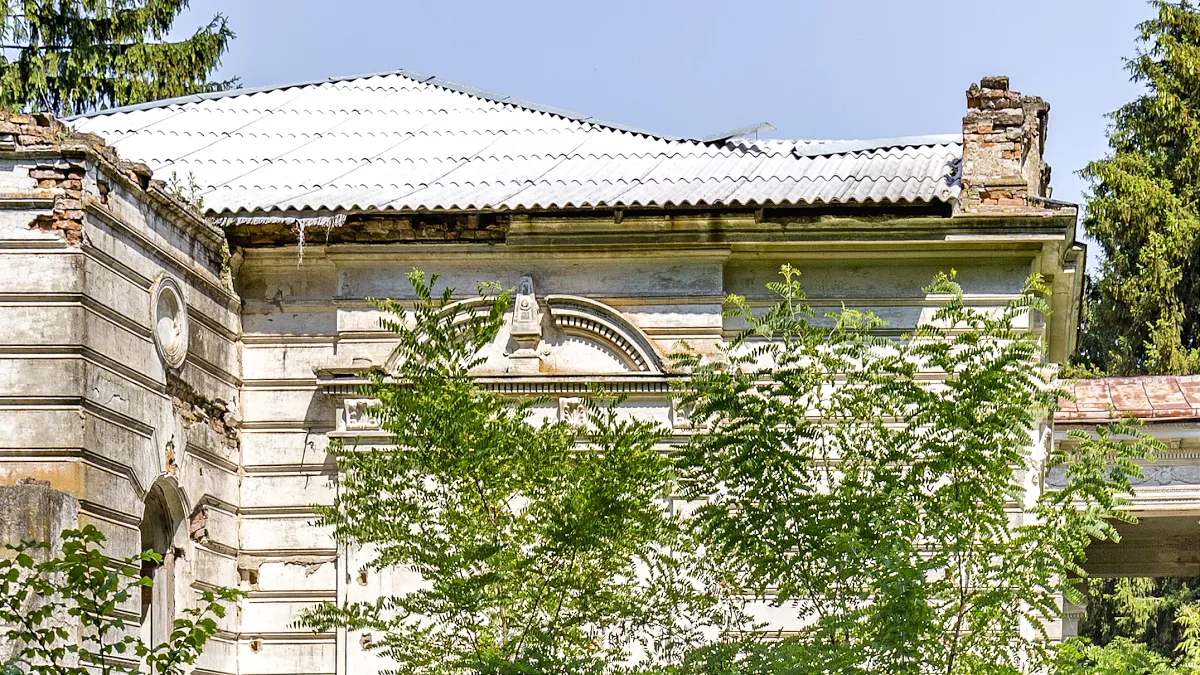
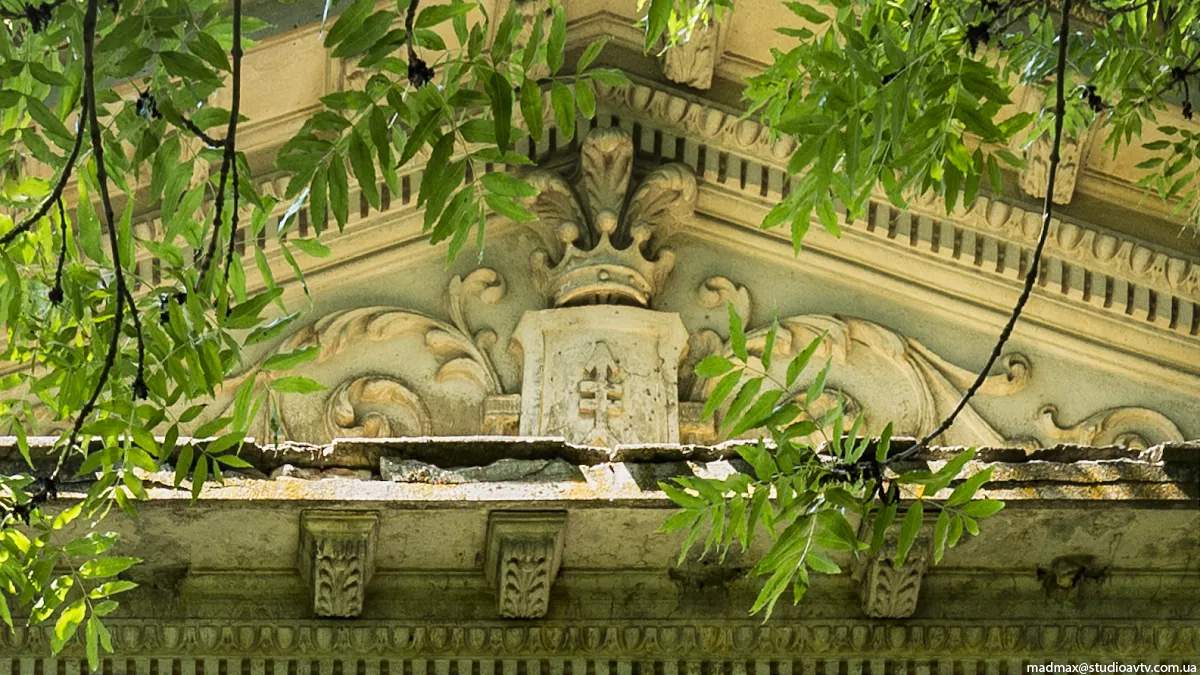
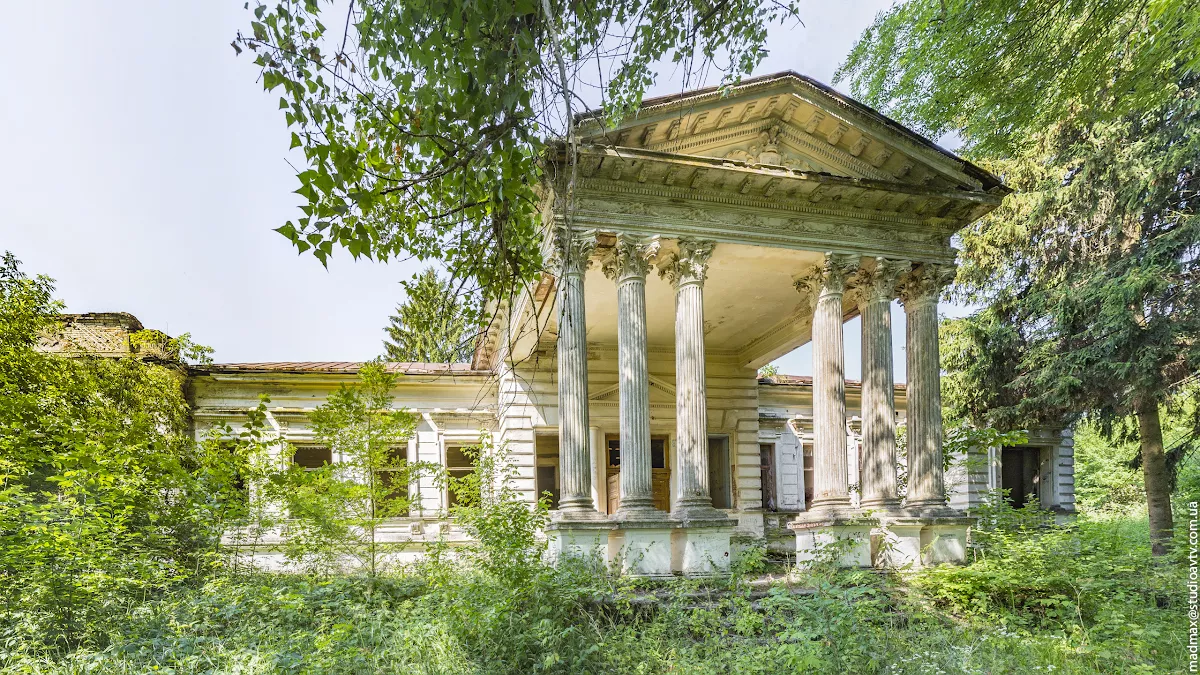
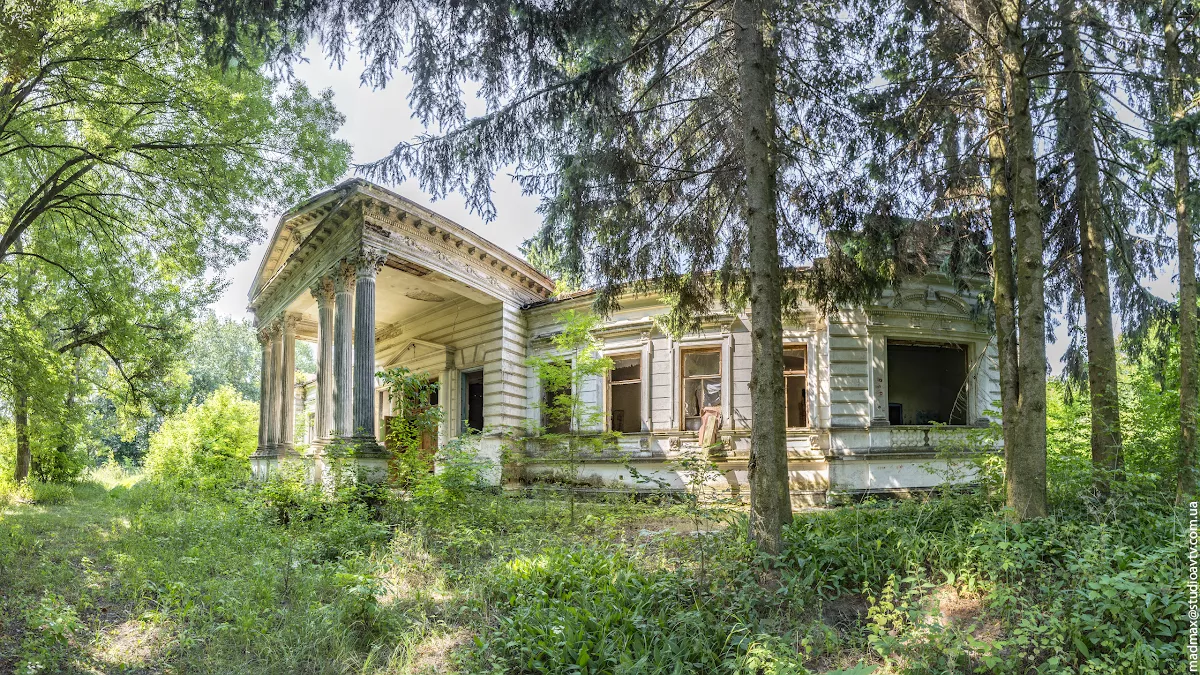
The palace was executed in the late neoclassical style. The construction estimate was 69 thousand rubles—an extremely substantial sum for its time. The most expressive architectural detail that immediately catches the eye is the massive portico with six Corinthian columns, crowned by a pediment featuring the Kornytskyi family coat of arms, which has survived to the present day.
A chestnut alley led all the way from the entrance to the palace, bringing visitors to the front facade with its colonnade. Wacław Kornytskyi continued to make changes to the estate's architecture for many years, the last of them shortly before the 1917 revolution.
Luxury, a Stud Farm, and a Theater
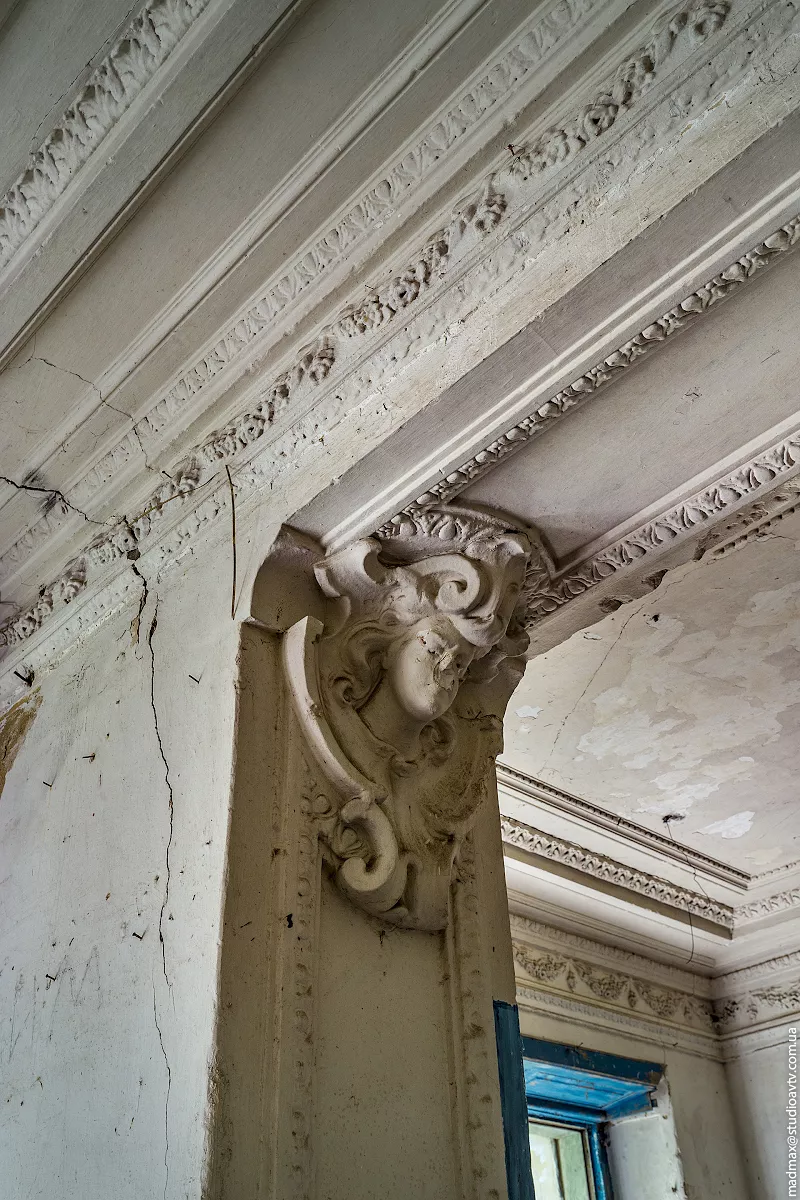
The interiors of the palace matched the status of its owner. A precious chandelier hung in the richly decorated dining room, the walls were adorned with oriental carpets, and the dining room itself was decorated with sculptural heads of mythical heroes. An entrance led from the garden to the house into the so-called Green Salon, where items made of gold and diamonds were kept.
Wacław Kornytskyi was known for his passion for horses—an Arabian horse stable was located on the estate grounds, considered the third largest in the southeastern part of the former Polish-Lithuanian Commonwealth. This structure has not survived; only the ruins of the cellar remain of it.
A separate, almost legendary detail—plays were staged in the estate theater, films were shown, and according to legend, Feodor Chaliapin even sang here once.
The Revolution and Lost Splendor
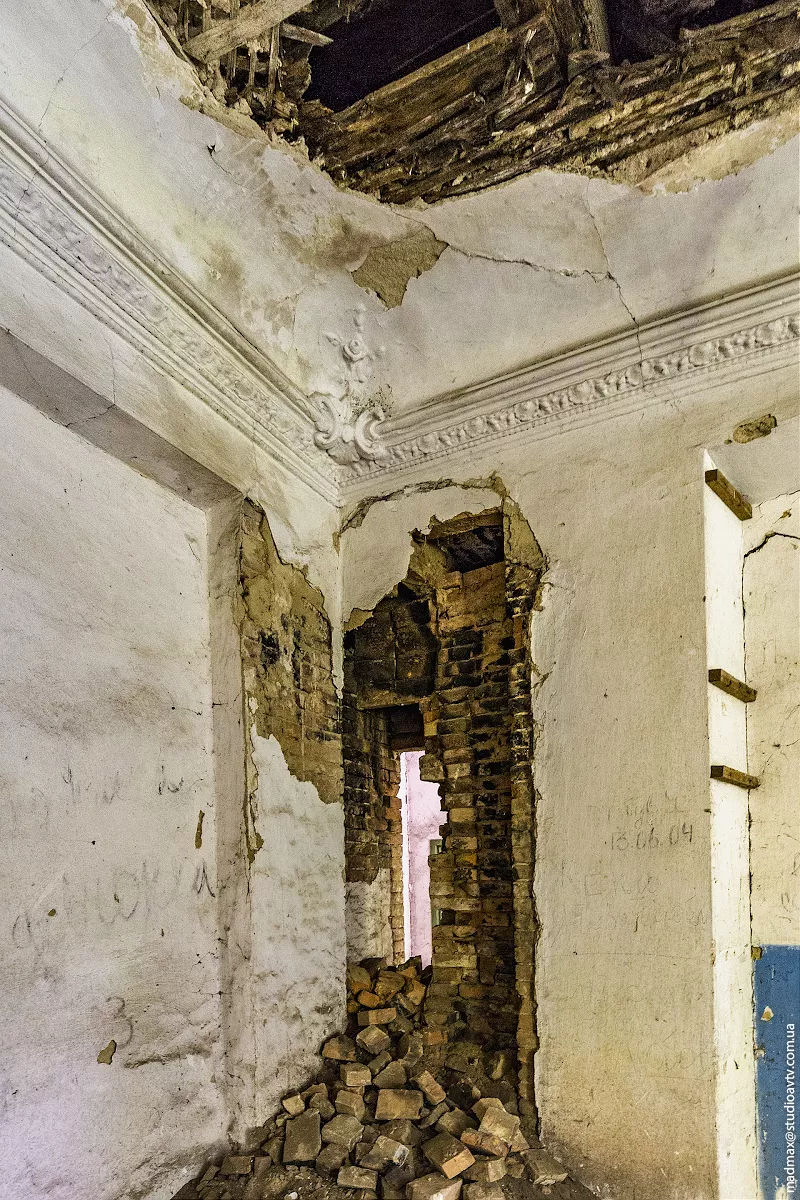
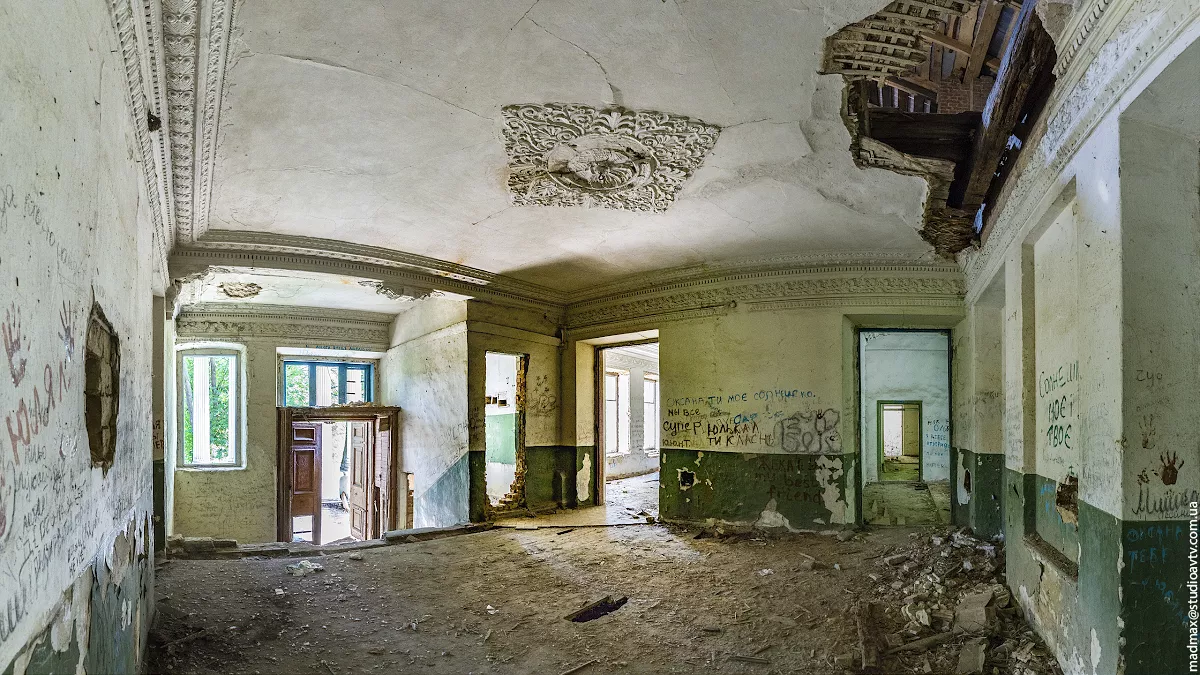
The revolution put an end to the family's luxurious lifestyle. Many valuable items from the palace interiors were destroyed or looted during the years of revolution and wars. Very little of the original decoration has survived—stucco molding and decorative elements have partially survived, but the overall splendor of the interiors is irretrievably lost.
Wacław Kornytskyi died at the age of 50 on the eve of the revolution and was buried in the Polish cemetery in the neighboring village of Topory. He had an illegitimate daughter by the housekeeper Nastia—Kornytskyi married her off to his cook Menzhynskyi and gave the newlyweds a house with a forest in an area called Kutok.
Soviet School and Gradual Decline
During the Soviet period, the palace received a new purpose — a local school was housed here, which operated until 1995. Paradoxically, it was precisely this period that became the last time the building was actually maintained in working order.
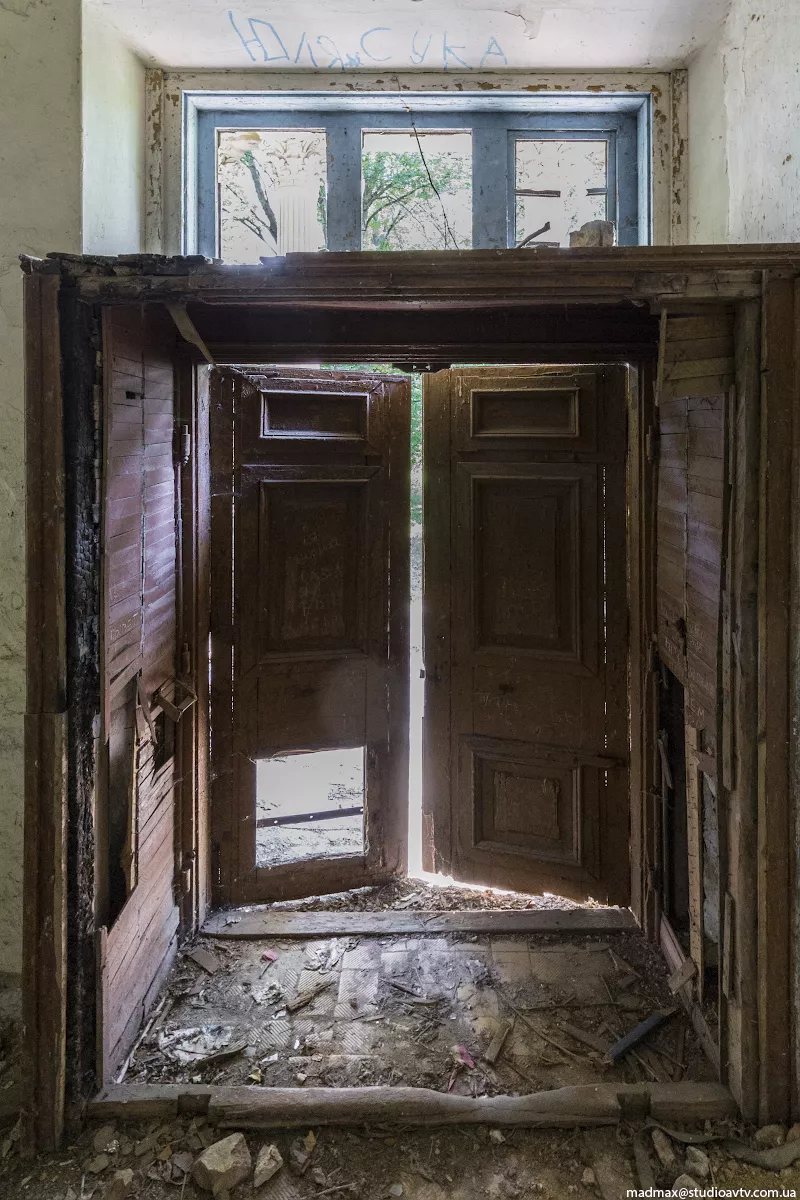
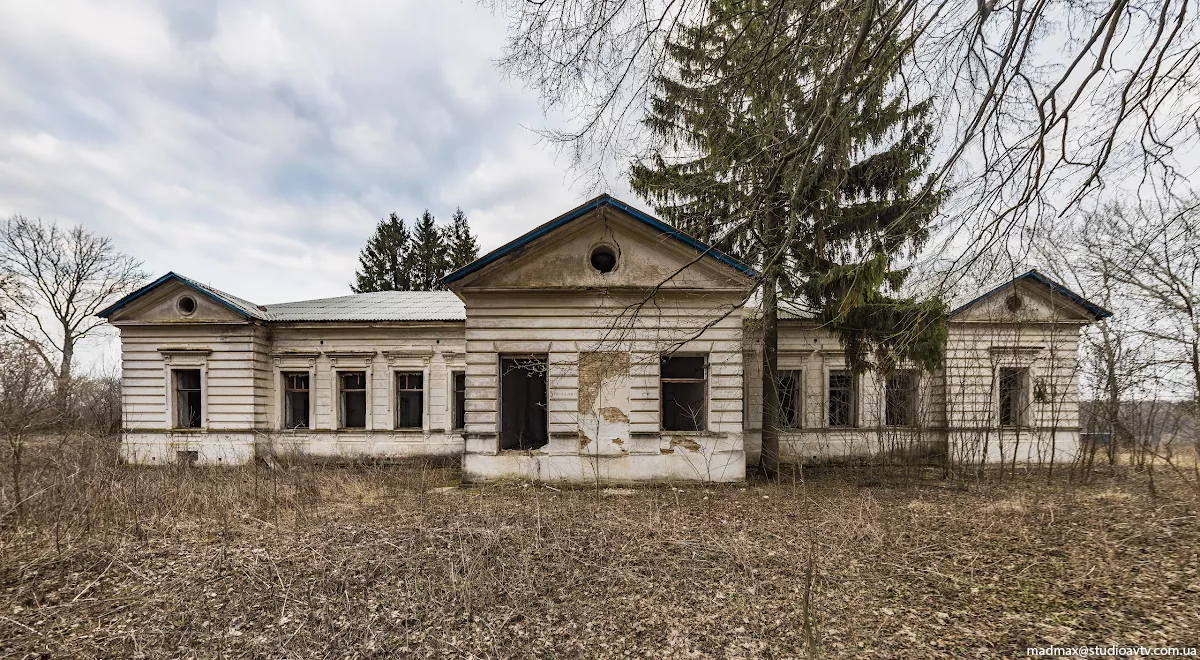
After the school was closed, the building ceased to be used altogether. The abandoned palace quickly fell victim to vandalism — it was looted, covered in graffiti, and partially smashed. Since then, the neglected structure has been deteriorating year after year, losing its windows, doors, and part of its decorative finish.
Attempts at Rescue: Sale and Reconstruction Project
The fate of the estate has taken several unexpected turns over the past decade. In the mid-2010s, the semi-ruined building was put up for sale via private classified ads websites — as an "antique classical-style mansion" with 5 hectares of old-growth park and a central alley leading down to the lake.
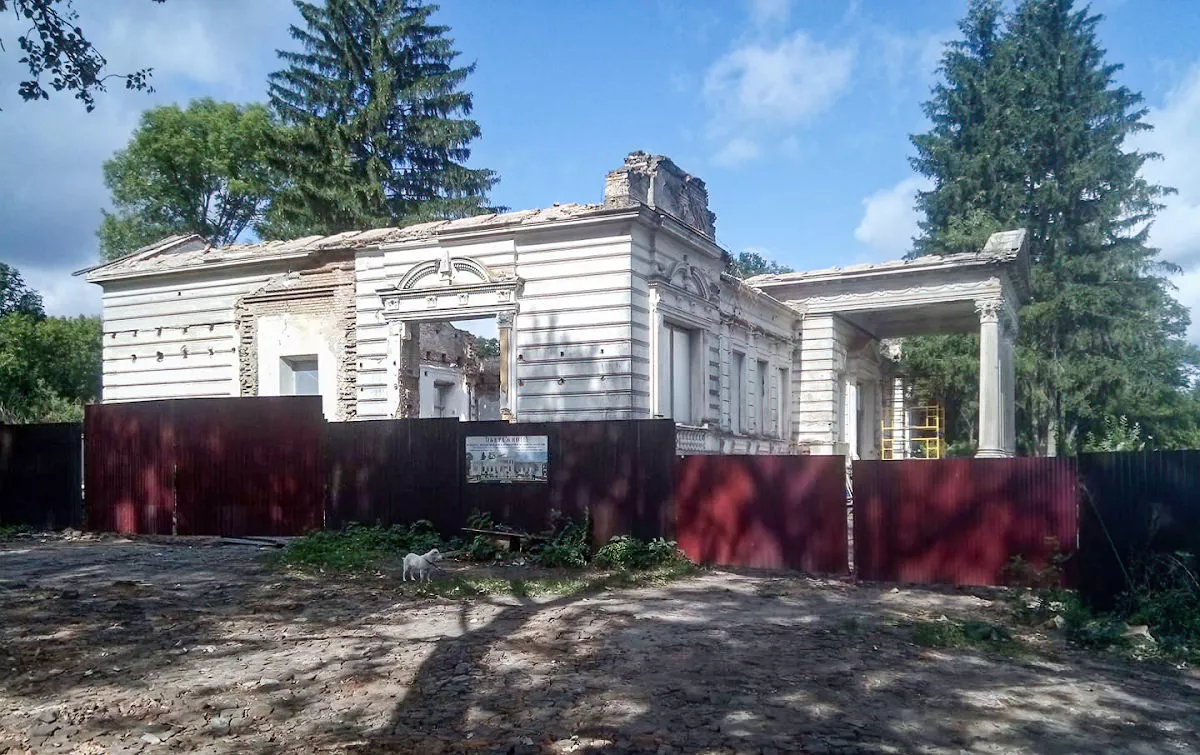
Subsequently, the estate was bought out by a private investor. In 2021, public hearings regarding the reconstruction of the former Kornitsky estate took place on the premises of the Ruzhyn Settlement Council. The developers of the detailed territory plan presented project documentation: the investor plans to completely reconstruct the palace and create a multi-functional hotel and restaurant complex on its basis. The stated project implementation timeframe is 10 years.
An important detail: despite its architectural value, the Kornitsky estate is not officially included in the register of architectural monuments. This allows the private owner to manage the property more freely, but at the same time leaves it without state conservation status.
Current Condition
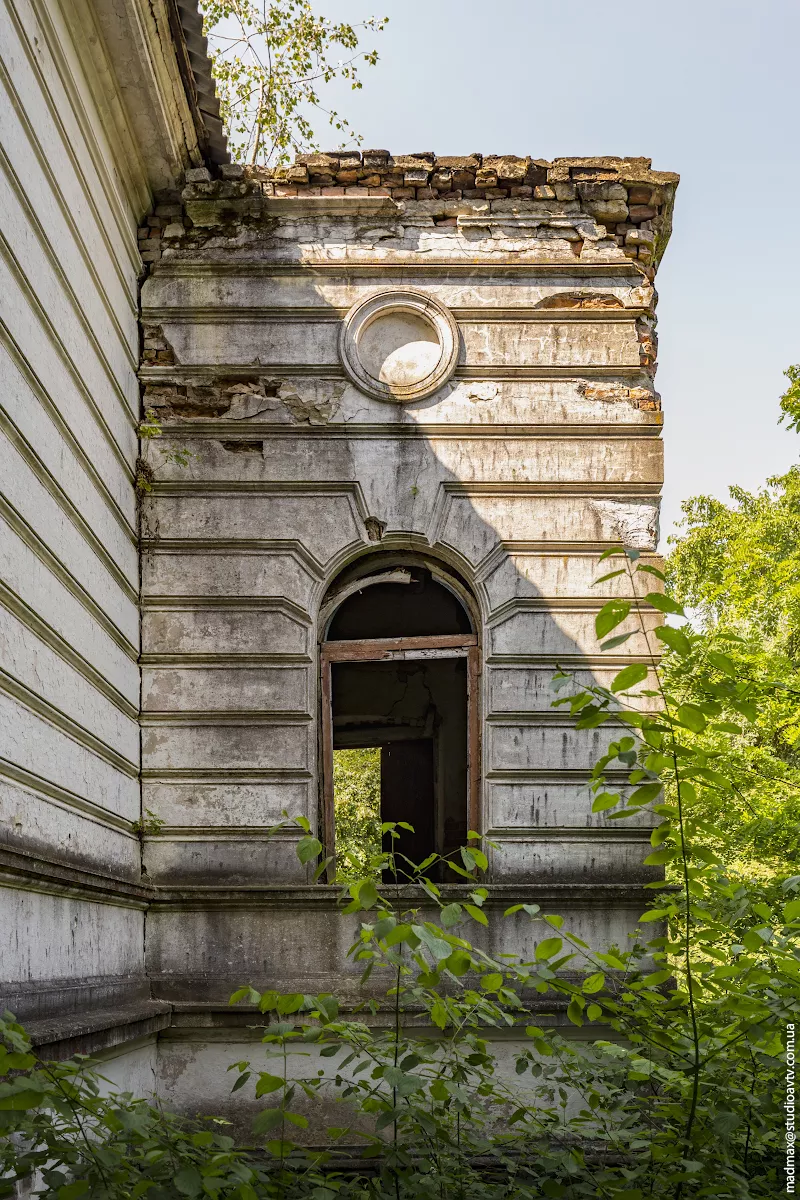
The palace continues to be in an emergency condition — without windows and doors, with partially collapsed structural elements. The alley leading to the front entrance is gradually becoming overgrown with weeds and shrubs. Local residents still sometimes refer to the building simply as "the old school" after its last function. The park surrounding the estate, once a well-kept landscape park ensemble, has turned into a dense grove with old trees.
Despite the neglect, the portico with its six Corinthian columns and the family coat of arms on the pediment still make a strong impression — the building remains one of the most expressive architectural landmarks of the Ruzhyn region.
How to Get There
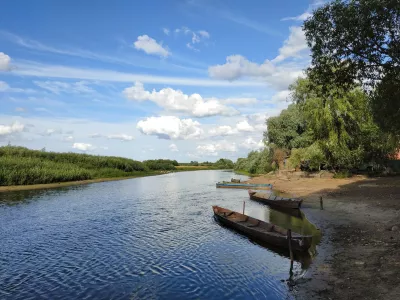
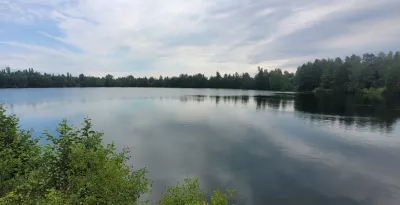
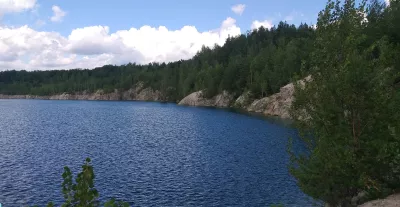
The estate is located about 10 kilometers from the town of Ruzhyn, on the border of Vinnytsia and Zhytomyr oblasts. The road to Rohachi leads through the neighboring village of Topory. Upon entering the village, you need to turn right, then the road runs along a shelterbelt and past a small pond toward a hill densely overgrown with the park — right there, among the old trees, the white columns of the palace show through.
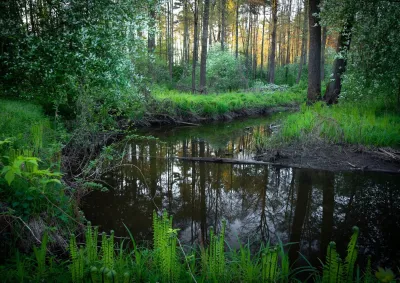
The palace stands in a forest-park strip opposite the village, on the opposite side of a small river. A former park alley leads to the building — you can walk along it from the main road.
The Kornitsky Palace in Rohachi is a story about the ambitions of a nobleman who invested heavily in his ancestral nest featuring a theater, a stud farm, and a collection of gold, and about fate, which over the centuries turned this luxury into a ruin without windows and doors. The reconstruction announced in 2021 gives hope for the building's return to life, and while the palace still stands, it is worth driving these kilometers and seeing the Corinthian columns and the Kornitsky family coat of arms with your own eyes.
Photos: "Ukrainian Architectural Monuments. Heritage" project