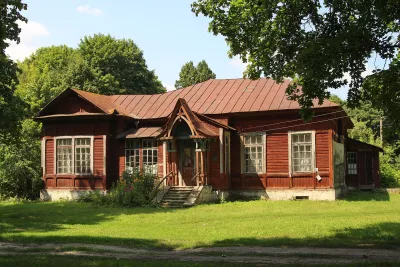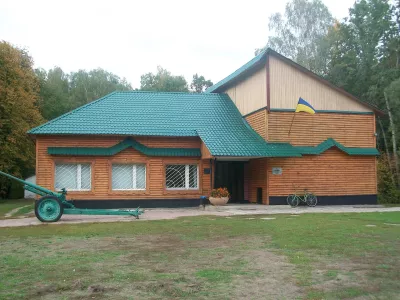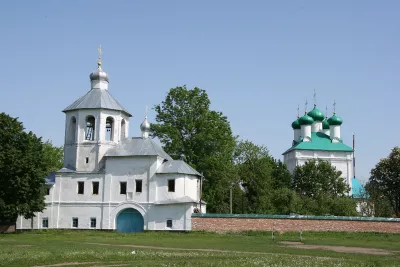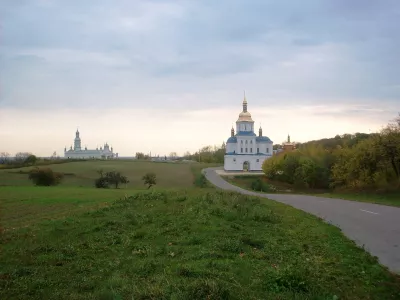
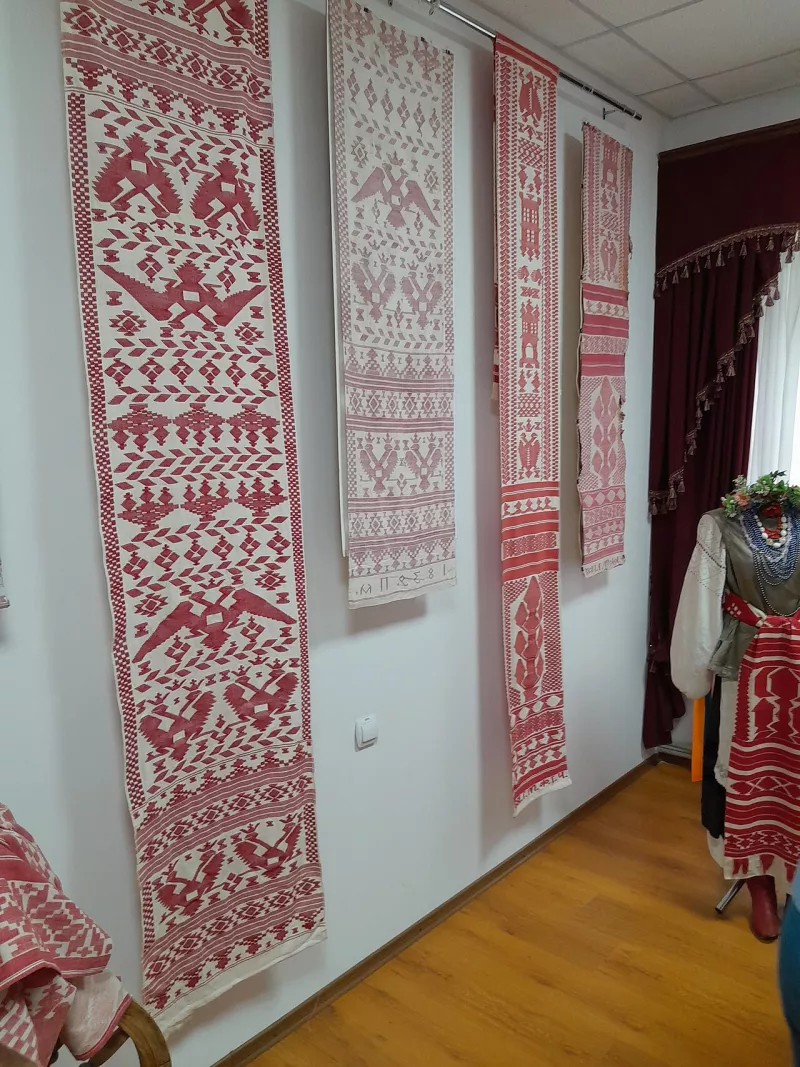
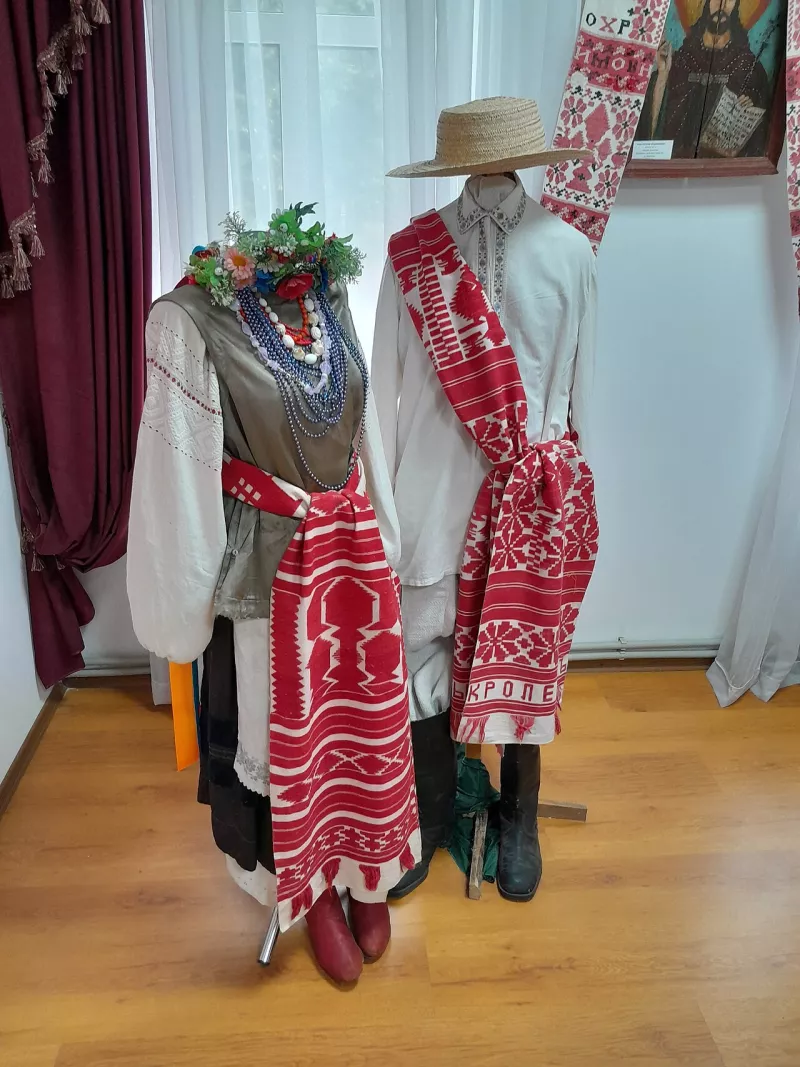
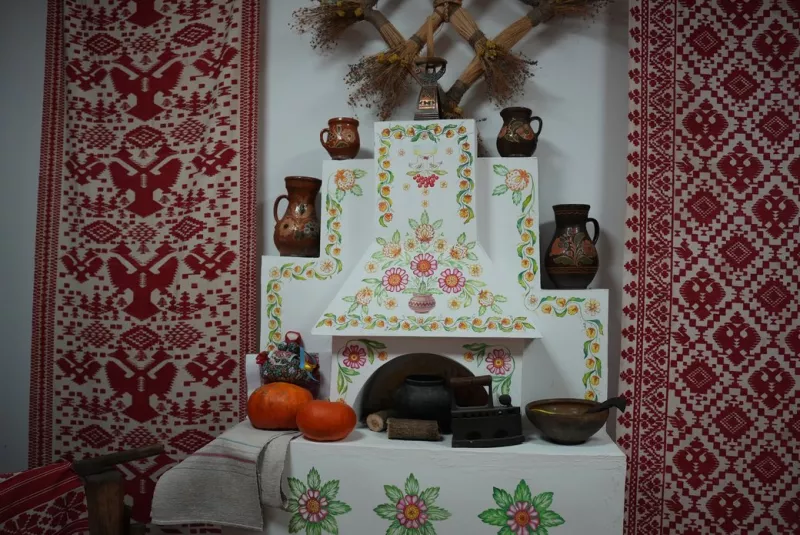

The Krolevets Weaving Museum has been operating since 2011 in the Ohiievskyi estate in Krolevets. Its collections include over three thousand items, most of which are products made using the Krolevets openwork weaving technique. The oldest towel is dated 1839.
Taras Shevchenko stayed in this house on August 25–26, 1859, during his last journey through Ukraine. In May 1861, when the poet’s body was being transported to Kaniv, the coffin was kept overnight at the estate. According to local legend, the Krolevets weaver Koshuk, from whom Shevchenko had ordered wedding towels, brought them and laid them on the coffin. Since 1964, a cast-iron memorial plaque has hung on the building.
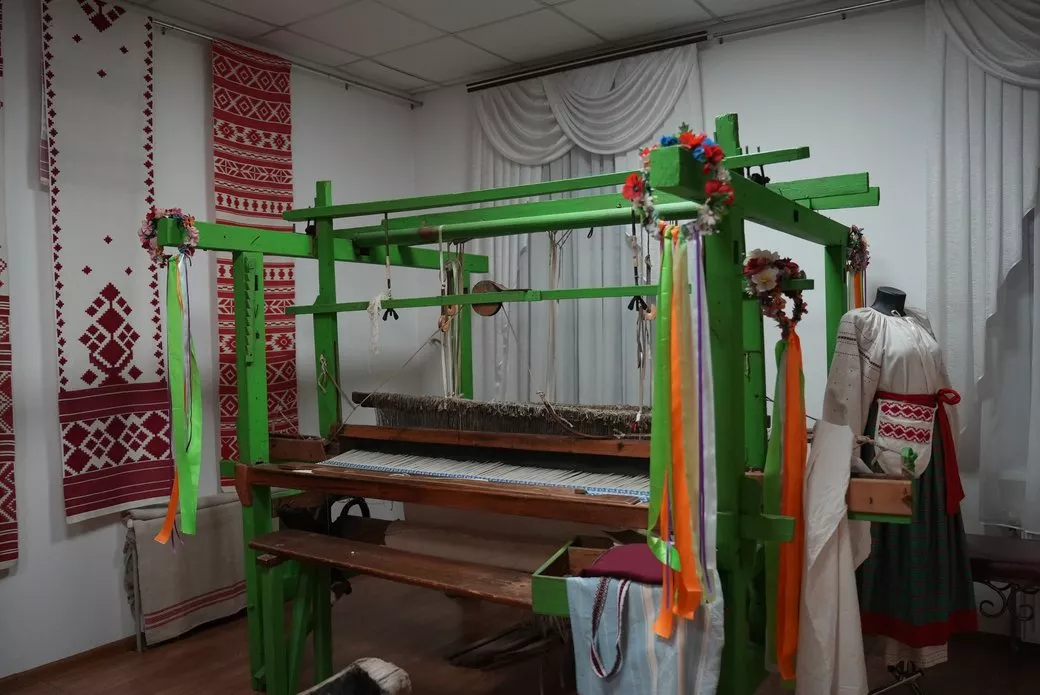
Photo: Viktoriia Hladchenko, Suspilne Sumy
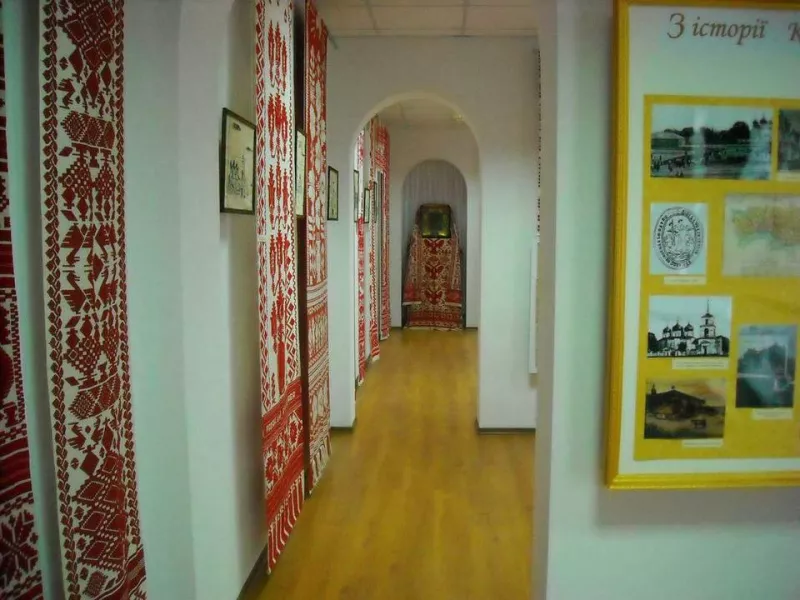
Towels in the Halls
The core of the collection consists of items from the Krolevets Artistic Weaving Factory Museum, which operated in the city since 1922. After the full-scale war began, the museum asked Krolevets residents to bring their grandmothers’ belongings, and since then the collections have only grown.
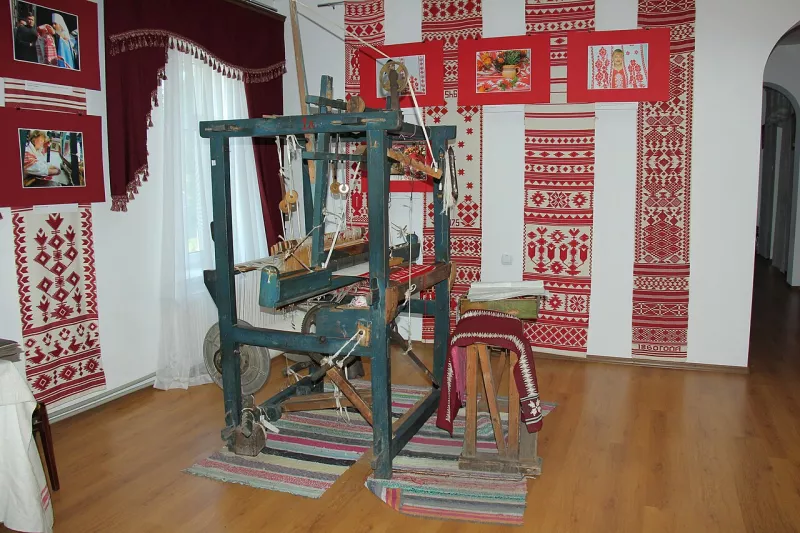
The 1839 towel was woven by an unknown weaver from fine linen. She gave it to her two sons, and the daughters-in-law cut the towel in half. One half is kept in the museum; the whereabouts of the other half are unknown. Among other exhibits are a multicolored towel from the early 20th century woven from leftover threads, a towel woven from left to right, and a towel featuring Soviet agricultural machinery. There is also a towel with an upside-down inscription: the weaver made it so that the name “Krolevets” and the client’s surname would be visible when the towel is hung vertically at exhibitions.
A separate hall is dedicated to Shevchenko. The halls also display looms and spinning wheels, and folk shirts hang on the walls.
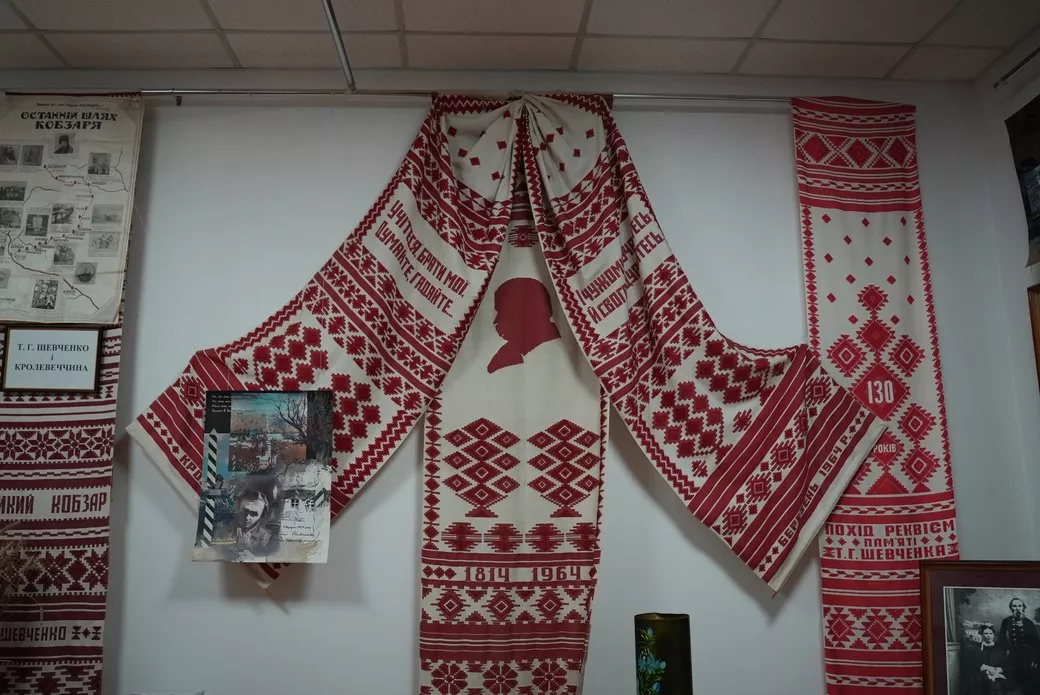
Photo: Viktoriia Hladchenko, Suspilne Sumy
Where the Krolevets Towel Came From
The first Krolevets weaver known from documents was Andriikha Obolonska, who wove together with her four sons. According to the Rumyantsev description of 1765–1769, the city already had 34 weaving households, nearly one hundred people. In 1891, there were about 1,200 artisan weavers in Krolevets, and with the surrounding khutors, one and a half thousand.
In the 19th century, the craft was taken over by the Ryndyn family. They distributed materials to home-based weavers, bought finished towels, and sold them, including abroad. It was the Ryndyns who introduced cotton and colored threads to Krolevets. One of the Ryndyn towels received a silver medal at an exhibition in Paris.
The Krolevets towel is recognized by the combination of white and deep red colors and geometric ornamentation: the tree of life, Berehynia, diamonds, flowers, birds. The red dye was once made from the cochineal insect, which was collected on oak leaves.
Where Towels Are Woven Today
After the factory closed, a municipal enterprise called “Krolevets Towels” was created in the city. Four weavers work there on looms that are over a hundred years old. A wedding towel takes five working days to weave; the enterprise produces up to 30 towels per month. “Krolevets towel” is registered as a geographical indication: towels woven in other cities are not considered authentic. The Krolevets Higher Vocational School trains hand-art weaving weavers.
Since November 1995, the city has held the "Krolevets Towels" festival. During the festival, exhibitions of old and new towels are opened at the museum.
Address and Schedule
The museum is located at: 33 Taras Shevchenko Boulevard, Krolevets, Konotop Raion, Sumy Oblast.
According to the tourist guide, the museum is open on weekdays from 08:00 to 18:00 (until 16:00 in winter), on Saturdays from 09:00 to 16:00, and on Sundays by prior arrangement.