
A few kilometres from Zhytomyr, in the settlement of Huiva, concrete bunkers with three-metre-thick walls lie hidden in an ordinary Polissian forest. These are the remains of "Hegewald" — the field headquarters of Reichsführer-SS Heinrich Himmler, one of the chief architects of the Holocaust. The history of this site is documented and tragic. But alongside the facts, another, far darker and more mysterious tale has lived for eight decades: that Himmler chose this place not by chance, but because here, deep in the Zhytomyr granite shield, he was searching for a "gateway to Valhalla" — the entrance to the otherworld of the ancient Germanic heroes.
An important note: we have already described the Hegewald bunker itself as a historical site in a separate article. This piece is solely about the legend and its roots.
First, the hard facts
To understand where history ends and myth begins, let's start with what is known for certain.
The "Hegewald" headquarters (the name means "protected forest") was built between October 1941 and July 1942 by Soviet prisoners of war under SS supervision. It was one of three field residences of the Nazi leadership on Ukrainian soil: Hitler's "Werwolf" near Vinnytsia, Göring's "Steinbruch" — also in the Vinnytsia region — and Himmler's "Hegewald" near Zhytomyr.
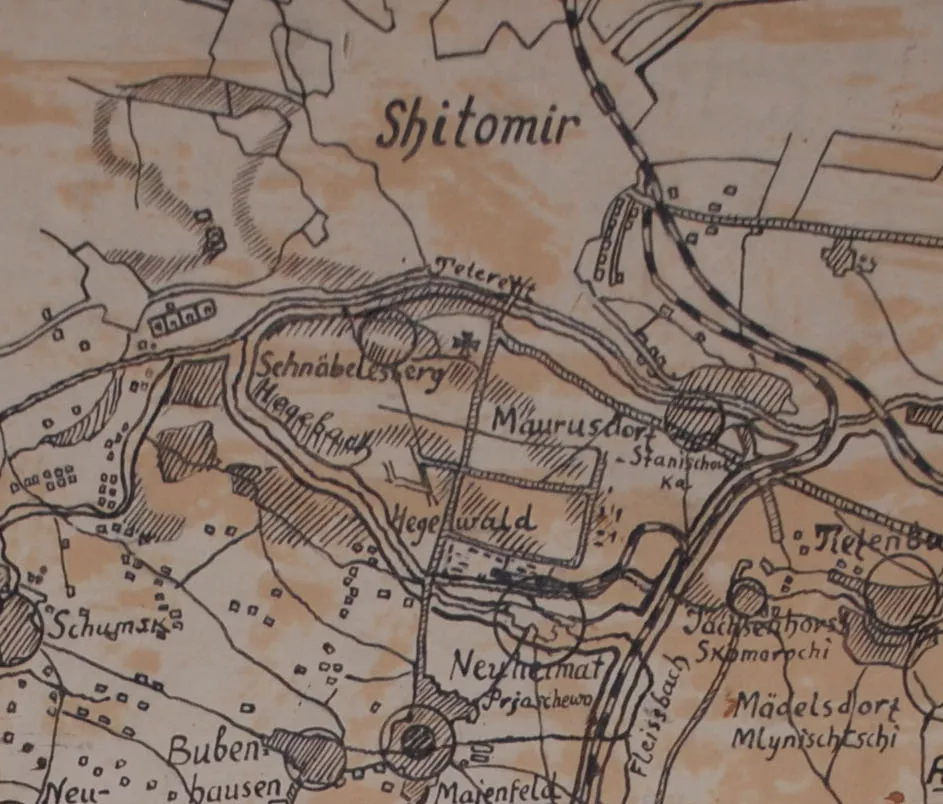
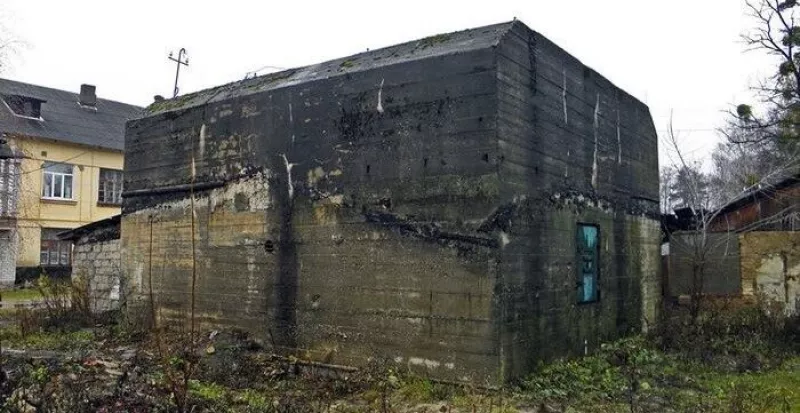
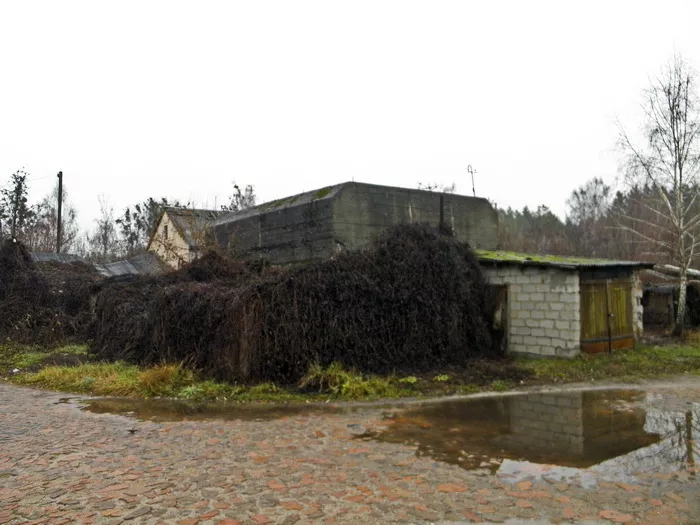
The complex, covering about 1.2 hectares, consisted of two reinforced-concrete above-ground bunkers with three-metre walls, topped with a thick layer of special rubber and disguised as ordinary buildings, complete with a false roof and netting. There was a direct line to Berlin and — quite mundanely — a tennis court and horses for riding.
Behind these walls, terrible things were decided. It was here, in late summer 1942, that Himmler read out the "Ost" plan — the programme for colonising the occupied eastern territories — and around the headquarters the German colony of "Hegewald" was created, taking in 29 Ukrainian villages: local residents were evicted, and their homes and land handed over to settlers from Germany. This is the documented history of occupation, repression and forced eviction — and it is the true meaning of this place.
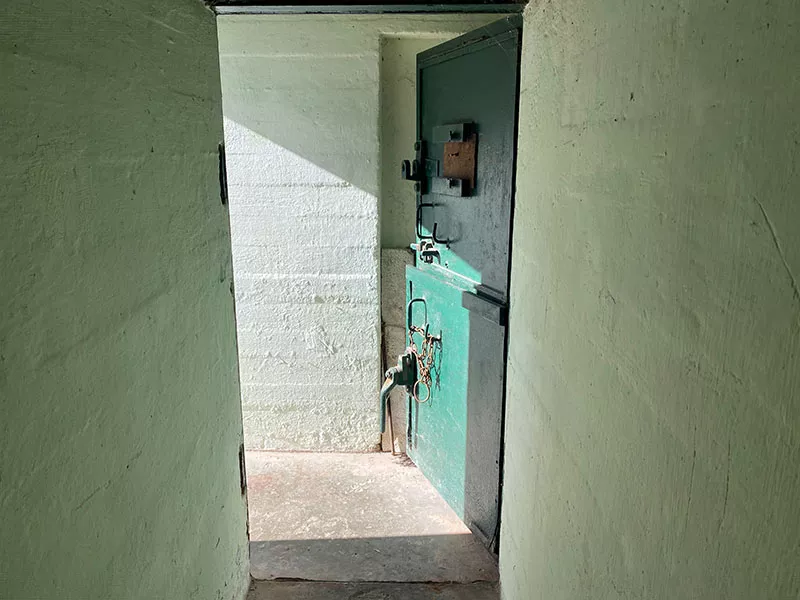
To this day, only isolated elements of Heinrich Himmler's underground headquarters complex survive. The main body of the structure was destroyed or filled in after the end of the Second World War, and most of the underground rooms are now inaccessible.
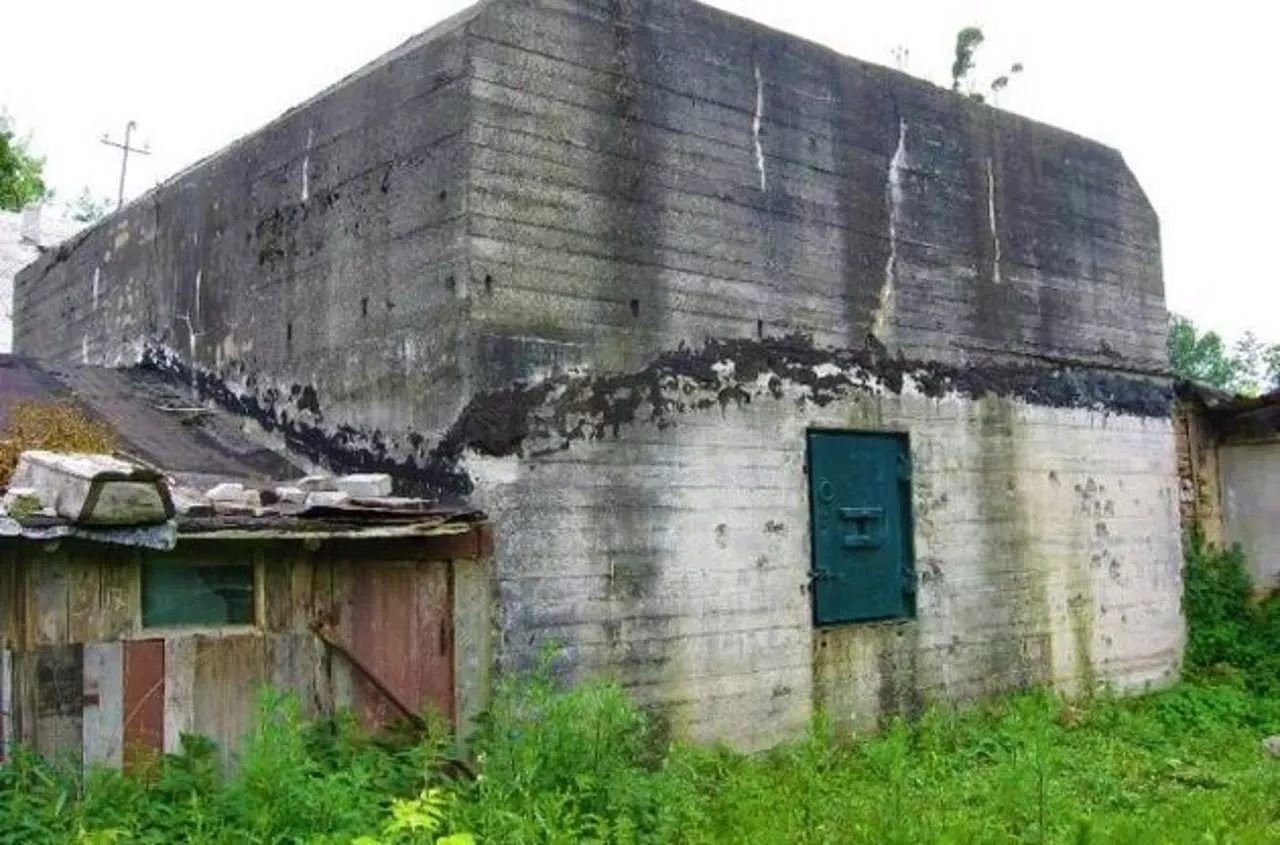
The best preserved are the two above-ground reinforced-concrete entrances to the bunker. One of them stands near the Zhytomyr–Berdychiv road. From the outside it resembles a massive concrete pillbox with a narrow entrance, today closed off with wooden doors. Beside it you can still see the armoured embrasure where, during the war, a machine gunner guarded the approaches to the site.
Numerous traces of combat remain on the concrete walls and metal structures. Dents from bullets and shell fragments are a silent reminder of the fierce fighting that took place here during the war.
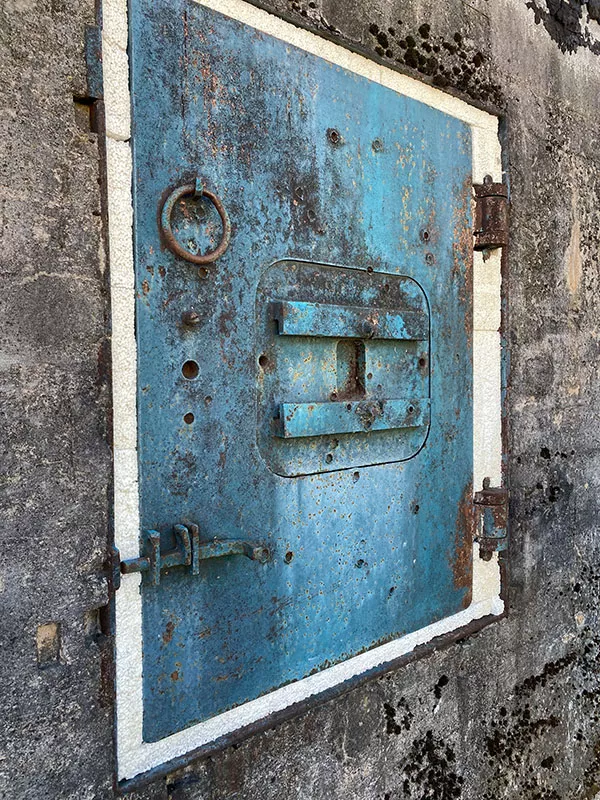
Shell marks on the metal doors
There is a theory that this structure was not the main entrance to Heinrich Himmler's bunker, but a special ventilation unit through which fresh air was fed into the underground complex. The bunker itself could be reached both through this structure and via a network of underground tunnels that connected it to the staff buildings.
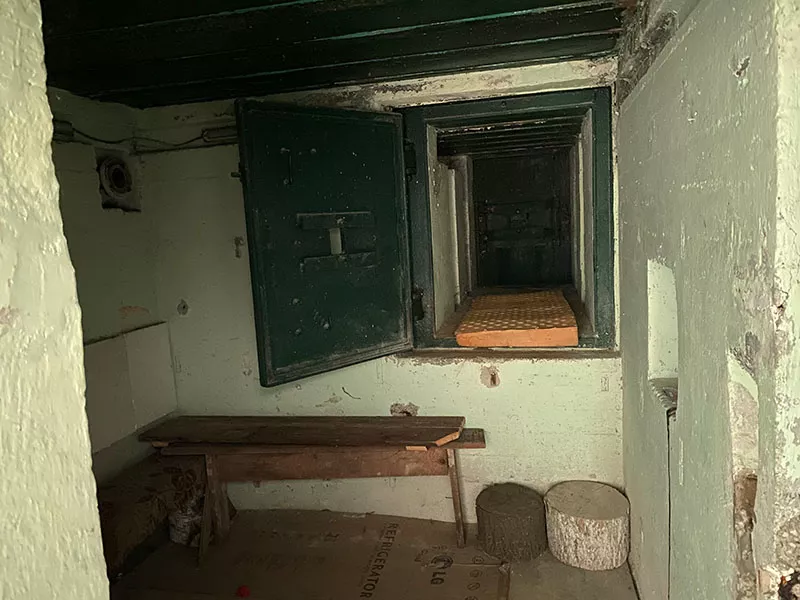
The ventilation-unit room also held a guard post with a machine-gun position. Access inside was provided by two massive steel doors, each divided into two sections to make them easier to open given their considerable weight. Even today you can see the remains of a thick cable which, according to researchers, provided communications between Himmler's "Hegewald" headquarters and Adolf Hitler's "Werwolf" headquarters near Vinnytsia.
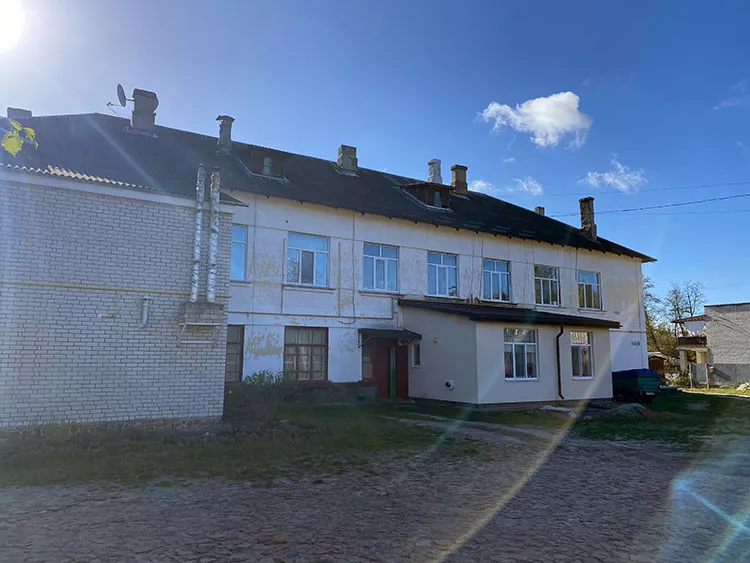
The barracks that remain from the complex
Generalplan Ost — a project to completely transform the East
On 16 September 1942, a major conference of SS and police leadership took place at the "Hegewald" headquarters, at which Heinrich Himmler laid out his vision for the future colonisation of the occupied territories. He declared that once the war was over, the vast expanses from the Baltic Sea to the Urals were to become the living space of German settlers. It was then that the creation of the first experimental German colonies on Ukrainian territory was announced.
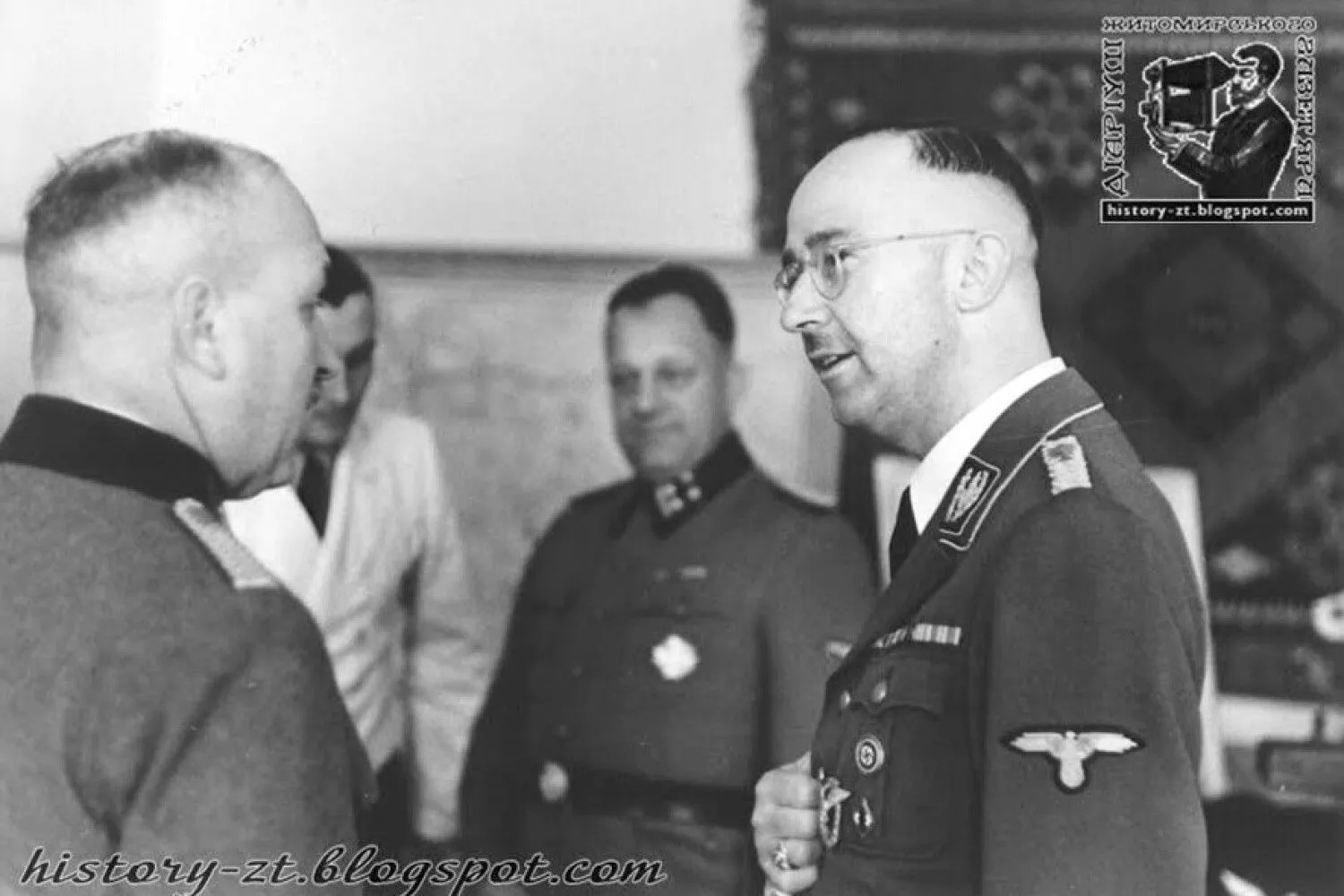
Himmler celebrates his 42nd birthday at the "Protected Forest" residence. Photo from the collection of Anton Sychevskyi
Why the Zhytomyr region was chosen
The Zhytomyr general district had one of the largest communities of Volksdeutsche — ethnic Germans who had lived on Ukrainian territory even before the war. This is precisely why the SS leadership viewed the region as an ideal springboard for launching the large-scale Germanisation of the occupied lands.
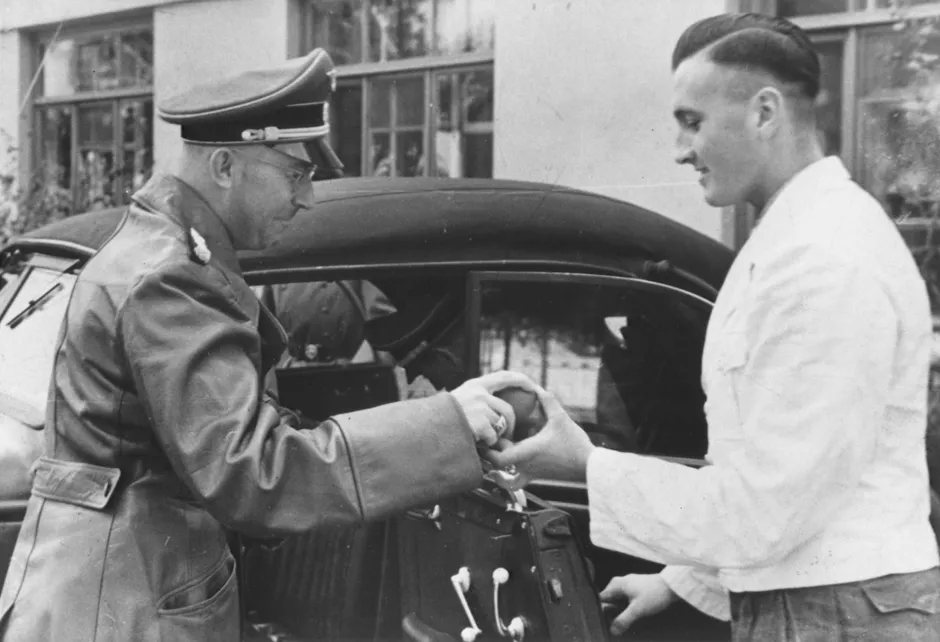
Heinrich Himmler (left) in 1942 near Zhytomyr
The plan for the German colony of "Hegewald" called not only for building housing for the Volksdeutsche settlers, administrative structures and military infrastructure, but also for creating a separate cemetery. Its location was chosen deliberately: by order of Reichsführer-SS Heinrich Himmler, it was to be laid out on the site of an ancient pagan sanctuary.
Himmler, who was fascinated by occult teachings and supported the work of the Ahnenerbe organisation, attached particular importance to mystical symbolism. He believed that burying members of the Nazi elite on the site of an ancient place of worship would carry sacred meaning and symbolise the rebirth of the "Aryan race."
One of the first to be buried in this cemetery was SS general Theodor Eicke — one of the creators of the Nazi concentration-camp system, whom historians often call the "father of the concentration camps." Eicke was killed on 26 February 1943 near Kharkiv, after which he was temporarily buried on the grounds of "Hegewald." Later, as the front line shifted, his remains were reburied elsewhere.
Near his residence, Himmler ordered the creation of three colonisation centres:
- Hegewald — between Zhytomyr and Berdychiv;
- Försterstadt — between Cherniakhiv and Korosten;
- Kölenfeld — near Kalynivka in the Vinnytsia region.
These settlements were to become the beginning of a future network of German colonies in Eastern Europe.
The mass eviction of Ukrainian villages
To create the Hegewald colony, the occupation authorities forcibly evicted the residents of 29 Ukrainian villages. People were usually woken before dawn. A settlement would be surrounded by police and SS units, after which residents were ordered to leave their own homes at once.
Families were allowed to take only a bare minimum of personal belongings. Livestock, poultry, food stores and most property were confiscated. Within a few hours German settlers would arrive at the vacated houses, each assigned to a specific home in advance. The names of the future owners were even chalked on the gates.
A colony for Germans only
The colony officially opened on 1 October 1942. Separate rules applied here: the Ukrainian legislation of the occupation administration did not extend to the colony's territory. The authorities sought to create a genuine "German island" with its own governance, schools, farms and administration.
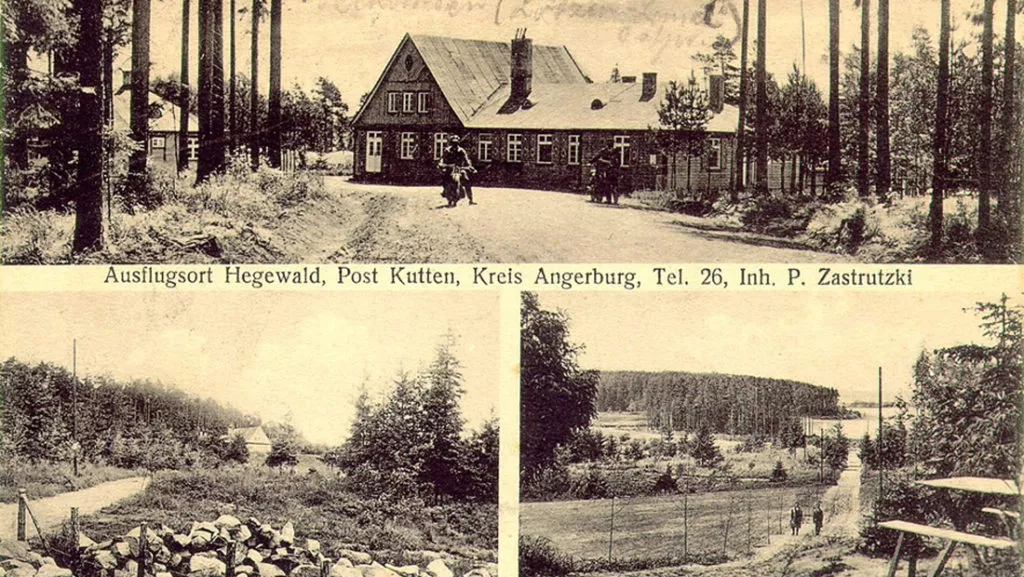
In the archives of Second World War researchers there are leaflets used to entice people from Germany to settle in the picturesque corner of "Hegewald."
Each Volksdeutsche settler received land, housing and property left behind by the deported Ukrainian families. Many settlements were given new German names, and geographical features were renamed in line with the region's Germanisation plans.
"Försterstadt" — another colonisation project
At the same time, the occupation authorities planned to create another large colony — Försterstadt ("Foresters' Town") in the area between Cherniakhiv and Korosten. It, too, was meant to become a centre for resettling Volksdeutsche and a stronghold for carrying out Generalplan Ost. Because of the changing situation at the front, this project was never fully realised.
In 1943 the strategic situation changed dramatically. After the German army's defeats on the Eastern Front and the Red Army's advance, carrying out the "Ost" plan became impossible. In late 1943 the German colonists began to evacuate, and the retreating SS troops destroyed much of the infrastructure of the "Hegewald" headquarters.
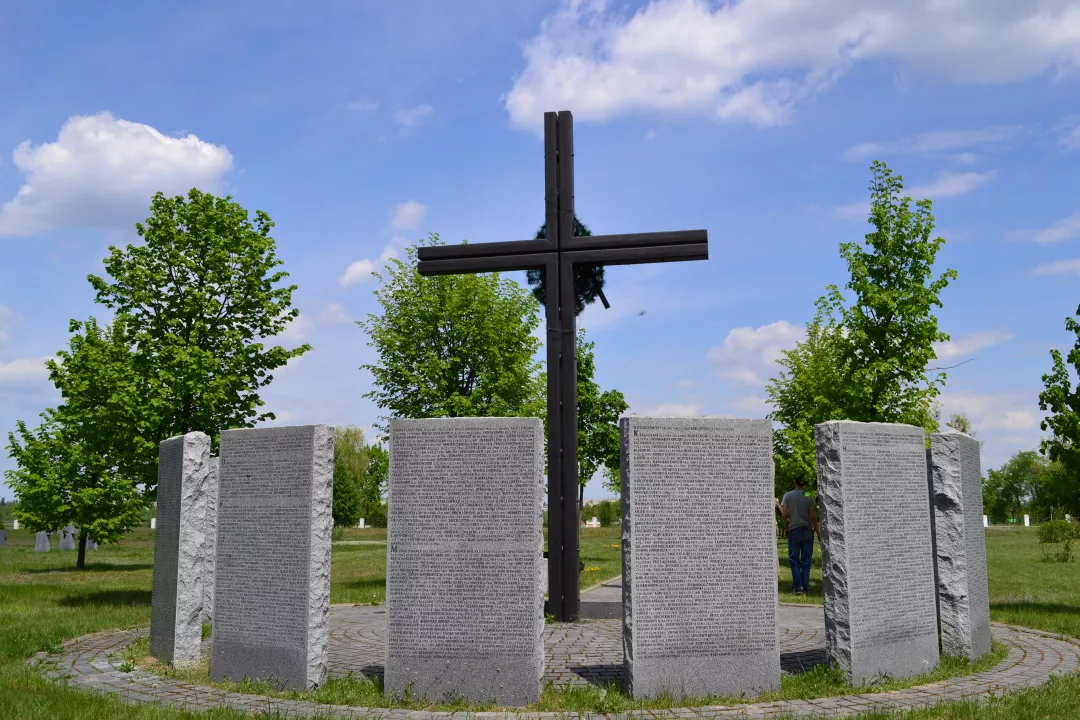
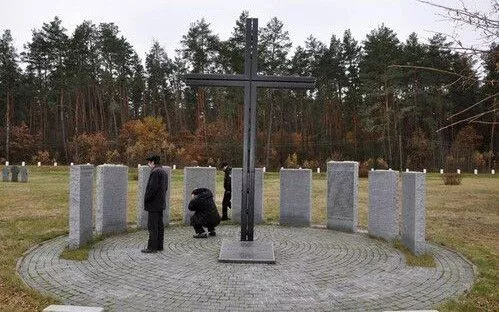
The "Hegewald" cemetery for German soldiers on the outskirts of Zhytomyr, near the village of Zarichany.
Now — the legend of the "gateway to Valhalla"
Now for the mystical layer that has grown around Huiva over the years.
According to this version, the choice of location for Himmler's headquarters was not a purely military decision. The Reichsführer-SS, so the story goes, deliberately searched the Zhytomyr region for a "place of power" — a point where, in the imagination of Nazi occultists, a "gateway" runs between the worlds, an entrance to Valhalla, the otherworldly hall of fallen warriors from Norse mythology. And the supposed basis for this choice was the region's unique geology: the Zhytomyr granite shield, with its fractures in the earth's crust and its distinctive natural backdrop, was regarded as one such potential energy zone.
Woven neatly into this legend is another storyline — the work of the Ahnenerbe institute.
The Ahnenerbe: what was true about the occultism
Here it is important to be precise, because it is on the real facts that the legend rests.
The Ahnenerbe ("Ancestral Heritage") was a real organisation, founded by Heinrich Himmler on 1 July 1935 and later incorporated into the SS. And this is no invention of journalists: a significant part of its activity really was tied to the occult. The society was divided into dozens of departments studying Norse mythology, runic symbolism, the Celts, the "World Ice Theory" and other esoteric subjects. The Ahnenerbe funded expeditions around the world — from Tibet to Crimea — in search of traces of a "primordial Aryan race" and mystical artefacts; the most famous episode is the search for the Holy Grail, for which Himmler promised almost unlimited funding.
Himmler himself really did have a morbid attraction to the occult and to ancient Germanic mythology — historians confirm this. He believed the world was governed by hidden energies that could be activated through ancient knowledge, and he set up the SS headquarters at Wewelsburg Castle, which he conceived as a kind of "spiritual centre" of the order.
In other words, the foundation of the legend is real: the SS leadership genuinely was fascinated by mysticism, the Ahnenerbe genuinely did search for "places of power," and Himmler genuinely was immersed in it more deeply than most.
Where fact ends and myth begins
But here is what appears in no serious historical source: any documents confirming that the headquarters at Huiva was built specifically for the sake of a "gateway to Valhalla," or that the Ahnenerbe carried out occult research on the granite shield here.
The reasons for "Hegewald's" appearance are entirely prosaic and documented: it was a protected field residence near Hitler's headquarters, convenient both logistically and geologically (granite a few metres below the surface is an excellent natural foundation for a thick-walled bunker). The same argument — the granite shield — applies to the "Werwolf" near Vinnytsia, and researchers of these sites say plainly: the mysticism around the headquarters was inflated after the war by journalists and sensation-seekers, while the regime itself gave ample grounds for it with its real fascination with the occult.
Put simply: Himmler's occultism is a fact. The granite shield beneath Huiva is a fact. But an "entrance to Valhalla" at this particular spot is a legend — built on the combination of these two facts, yet unconfirmed by any document. And it should be treated exactly as a legend: atmospheric, telling in what it reveals about the diseased ideology of Nazism, but not as a hidden historical truth.
After the war, Himmler's "Hegewald" headquarters was not a museum or a memorial. Its history is rather unusual.
What is known about "Hegewald" today
After the Zhytomyr region was liberated in 1944, the Soviet authorities paid little attention to the site. Most of the above-ground structures were destroyed or dismantled for building materials, and the underground rooms remained neglected for a long time.
According to local residents, in the Soviet years some underground rooms were used as cellars for storing vegetables and home preserves. Many people did not even know that these were the remains of one of Heinrich Himmler's field residences.
Only after Ukraine declared independence, in the 1990s, did historians, local-history enthusiasts and searchers begin to study the complex. In time the location became known among tourists, photographers and makers of documentary films about the Second World War.
In the 2010s, interest in the site grew further still. Television filming took place here more than once, and Ukrainian and foreign researchers of the history of the Nazi occupation worked here as well.
Private property
One of the most unusual features is that the remains of the complex are not in state ownership. According to local historians and journalistic reports, the plot of land containing part of the underground structures belongs to a private owner — a former serviceman now living abroad. Because of this, the site effectively has no status as a full-fledged museum, and no large-scale archaeological or restoration work is carried out there.
A tourist site
Despite the absence of any official museum infrastructure, "Hegewald" is regularly visited by tourists. Local residents often lead tours, telling the story of the headquarters, the "Hegewald" colony and the unrealised "Ost" plan. It is thanks to these enthusiasts that the place remains known among military-history buffs.
Did Himmler's grandson really visit?
A claim circulates online and in some publications that a grandson of Heinrich Himmler supposedly visited the Zhytomyr region and wanted to see the remains of the headquarters, but was not allowed onto the grounds.
There is, however, no official confirmation of this. The story is passed on by local guides and local-history enthusiasts, but it is not backed by archival documents or authoritative historical sources. It should therefore be presented only as a local legend or an unconfirmed account, not as an established fact.
What remains today
Today, from the headquarters you can see:
- the remains of reinforced-concrete underground structures;
- fragments of foundations and utility rooms;
- ventilation shafts;
- elements of the former engineering infrastructure;
- forest roads that were used while the complex was in operation.
Most of the above-ground buildings have not survived, and much of the area is overgrown with forest. This is why "Hegewald" today is more of a historical landmark and a site of military tourism than a museum in the classic sense.
If you decide to visit
The site lies along the Zhytomyr–Berdychiv road, a few kilometres from Zhytomyr, in the area of the settlement of Huiva.
One of the above-ground bunkers stands to the left of the road — it can be viewed from the outside. The second bunker is located on the grounds of a military unit, so access to it is restricted — especially now, in wartime, when approaching military sites is forbidden.
Nearby, a two-storey building of the former headquarters, an old cobbled road and a German hydrant with inscriptions — still functioning — have survived.
Treat the place with respect: this is not an entertainment spot but a place bound up with tragic pages of the Zhytomyr region's history. Do not leave litter, and do not damage the structures.
In wartime, it is worth checking in advance whether it is safe and permitted to visit the area, and on no account approaching an active military unit.
FAQ
What is the "Hegewald" headquarters? A Second World War field residence of Reichsführer-SS Heinrich Himmler, built in 1941–1942 in the settlement of Huiva near Zhytomyr.
What does the "entrance to Valhalla" legend mean? An unofficial account according to which Himmler supposedly chose this place while searching for a "gateway" to the otherworld of the Germanic heroes deep in the Zhytomyr granite shield.
Is there any evidence the bunker was built for mystical reasons? No. In documentary terms the headquarters was a military residence; the "entrance to Valhalla" is a legend with no confirmation.
Is it true that Himmler was fascinated by the occult? Yes, this is a historical fact; he had a pronounced attraction to the occult and to ancient Germanic mythology.
What was the Ahnenerbe? An SS organisation, "Ancestral Heritage," founded by Himmler in 1935, much of whose activity was tied to the occult and to the search for "Aryan roots."
Did the Ahnenerbe study the granite shield beneath Huiva? There is no confirmation of this in serious historical sources — it is part of the legend.
Why does the granite shield feature in the legend? The Zhytomyr granite shield, with its crustal fractures, may have been regarded by Nazi occultists as an "energy zone"; at the same time, the granite was a purely practical foundation for a bunker.
Where is the headquarters located? Along the Zhytomyr–Berdychiv road, a few kilometres from Zhytomyr, in the Huiva area.
Can it be visited? One bunker can be viewed from the outside; the other is on the grounds of a military unit and inaccessible, especially in wartime.
What else has survived at the site? A two-storey building of the former headquarters, an old cobbled road and a functioning German hydrant with inscriptions.
Why does the legend matter if it is unconfirmed? It shows how deeply mysticism and pseudoscience were woven into Nazi ideology, and it can draw attention to the real history of the place.
What actually happened at "Hegewald"? Here Himmler announced the "Ost" plan, and around the headquarters a colony was created from 29 evicted Ukrainian villages — these are documented, tragic events of the occupation.