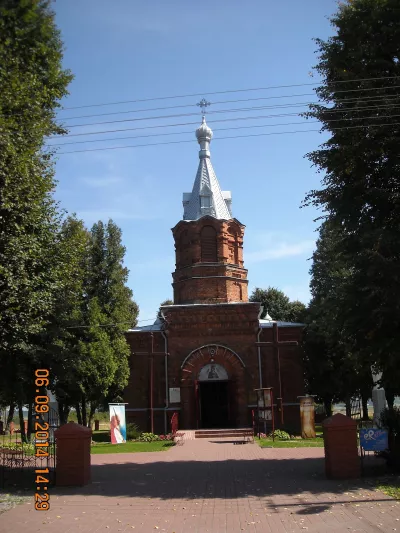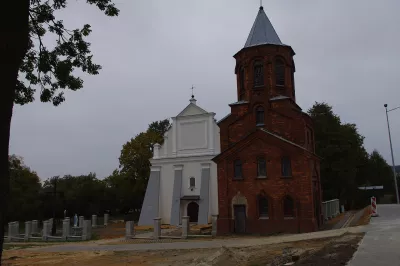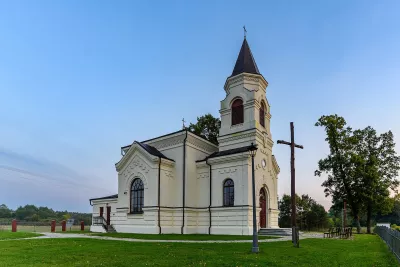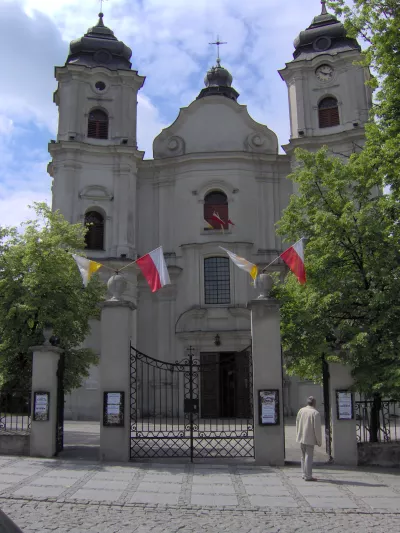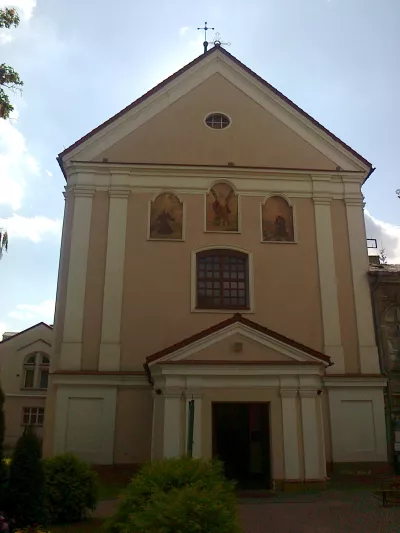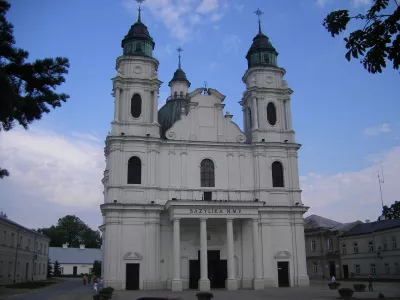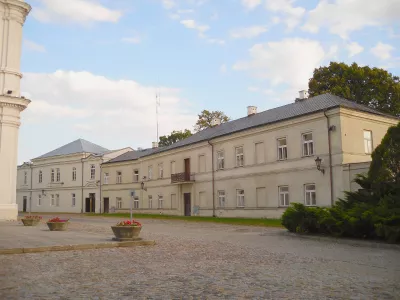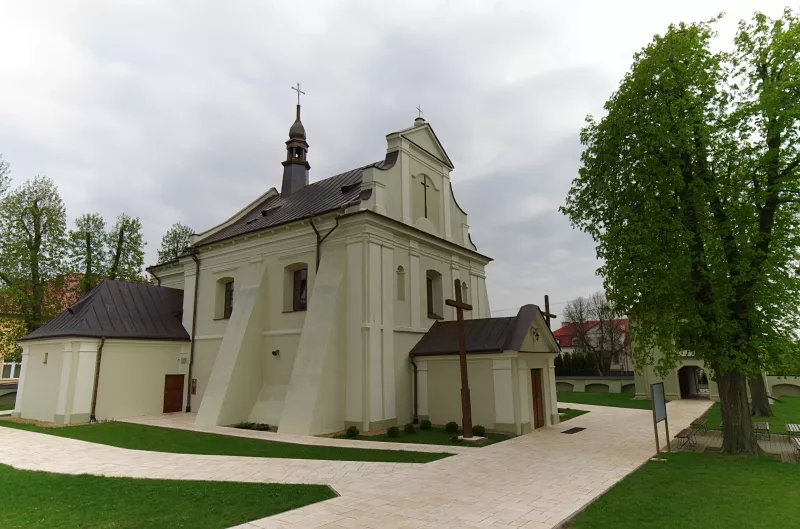
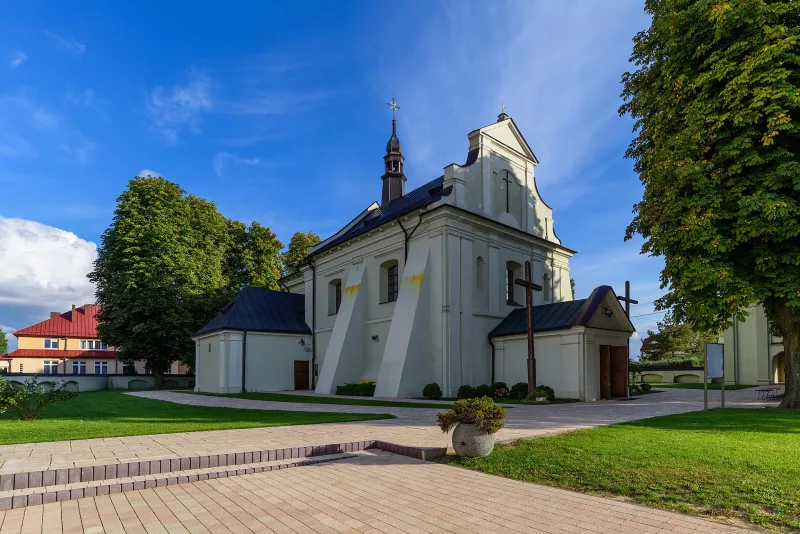
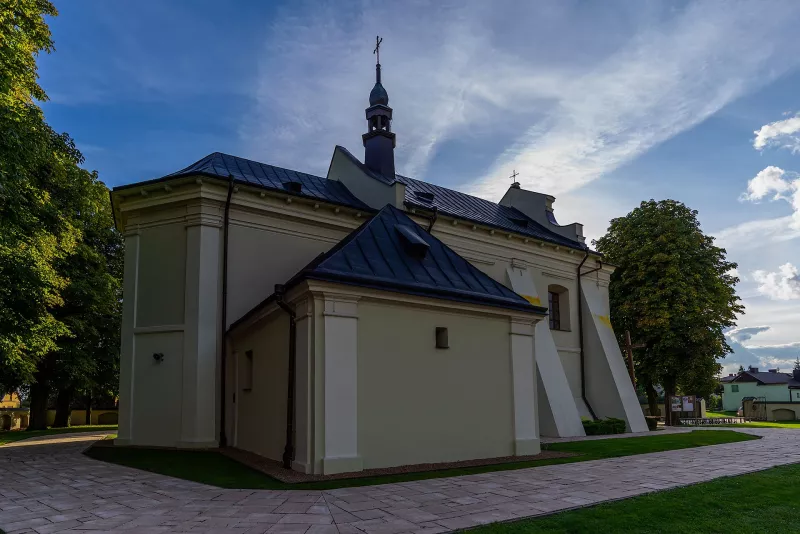
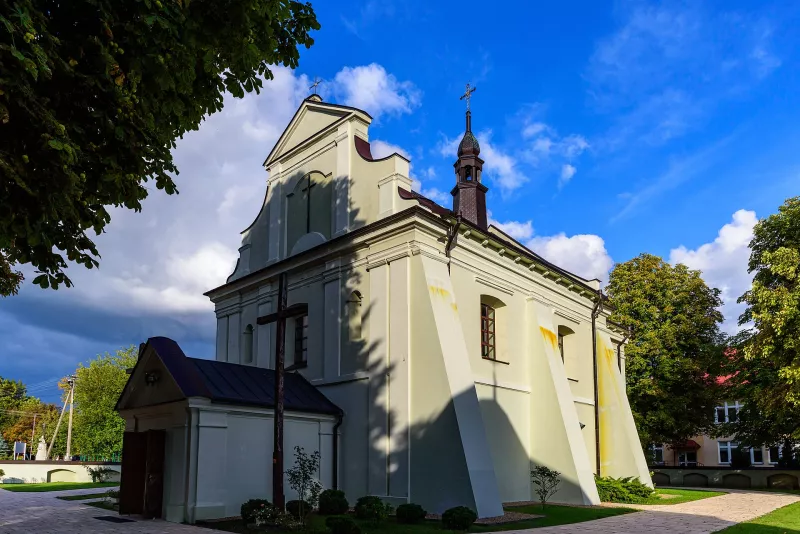
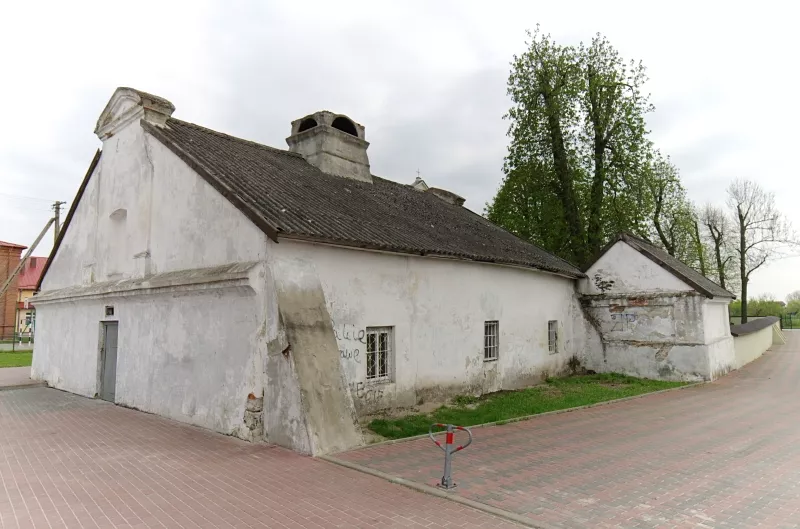

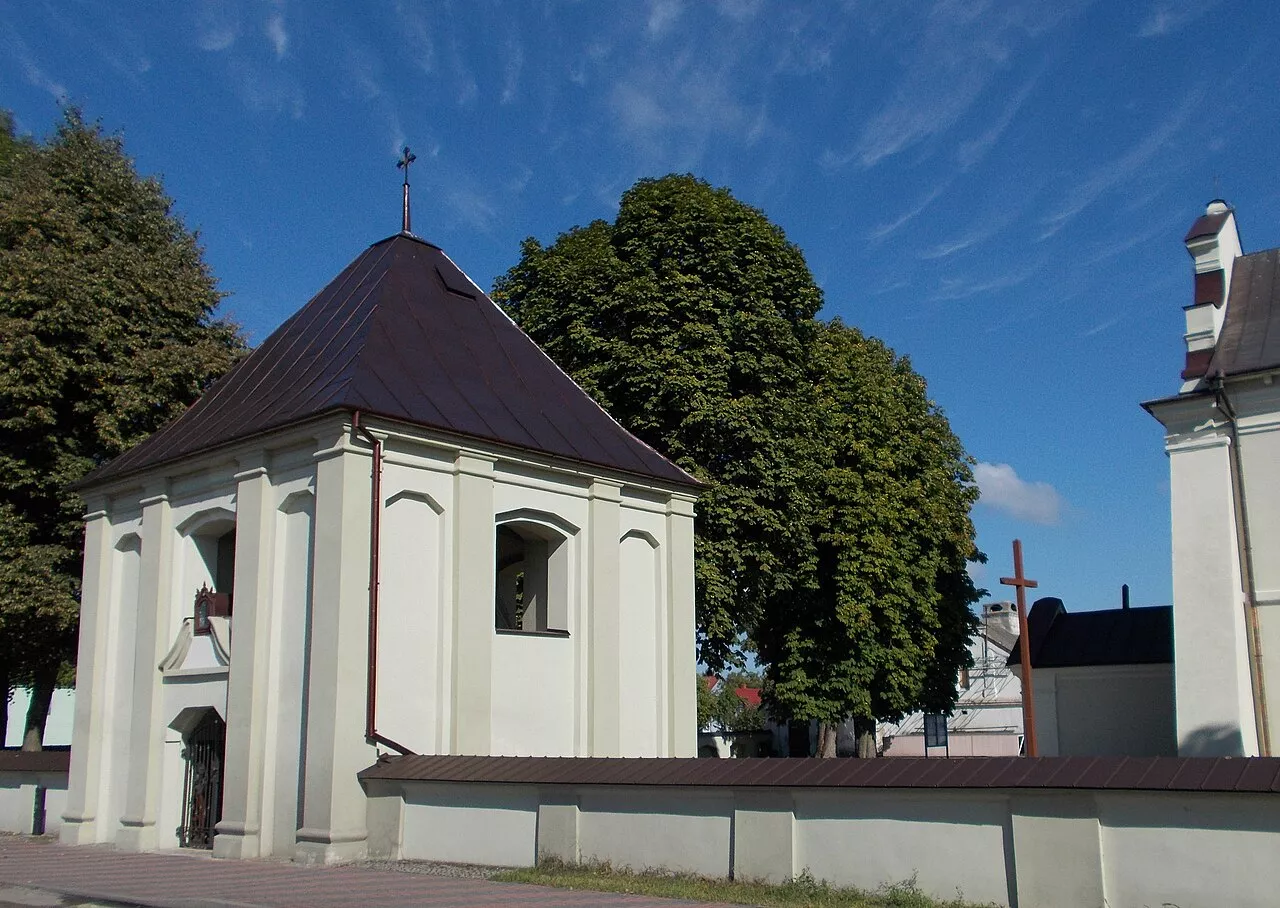
The Church of the Transfiguration of the Lord in Sawin — a masonry late Baroque church from the 1730s in a large village 15 km north of Chełm, on road No. 812 to Włodawa. Together with the bell tower-gate and the house for the poor, it forms an 18th-century church ensemble. Sawin was once the town of the Chełm bishops, and the church is the main thing left from those times.
City of Bishops
The settlement existed already in the mid-14th century. In 1456, King Casimir IV Jagiellon granted Sawin city rights and gave it with the surrounding estates to the Chełm Roman Catholic bishops; in 1506, Bishop Mikołaj Koscielecki renewed the location under Magdeburg law. The parish was founded here in 1531. Sawin lost its city rights in 1870, and in 1915 it was burned down by retreating troops.
Sawin was also a Jewish town: in 1921, Jews made up almost half of the population. In 1940, the Germans set up a forced labor camp here, and in June 1942 all the Jews of Sawin were deported to the death camp Sobibór. The only remnant of the community is an 18th-century cemetery.
The Dłużewski Church
The current church was built in 1731–1740 at the expense of Barbara née Podowska Dłużewska, wife of the castellan of Chełm, and her son Stanisław. In the early 1750s it was consecrated by the Chełm bishop Józef Eustachy Szembek. The building is single-nave, with a plan close to a rectangle; the side walls are supported by massive slanting buttresses, a low vestibule is attached to the façade, and the gable roof is crowned with a cupola with a slender Baroque dome.
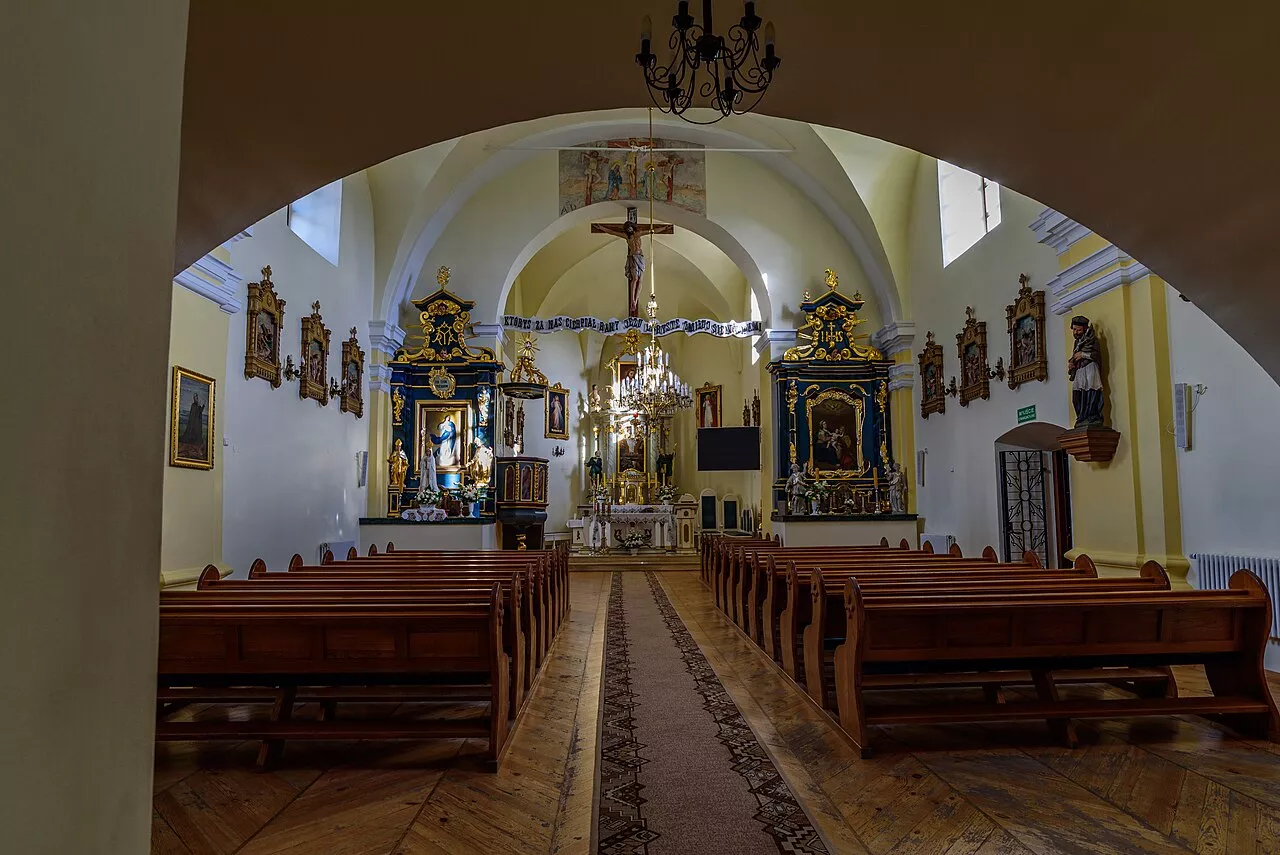
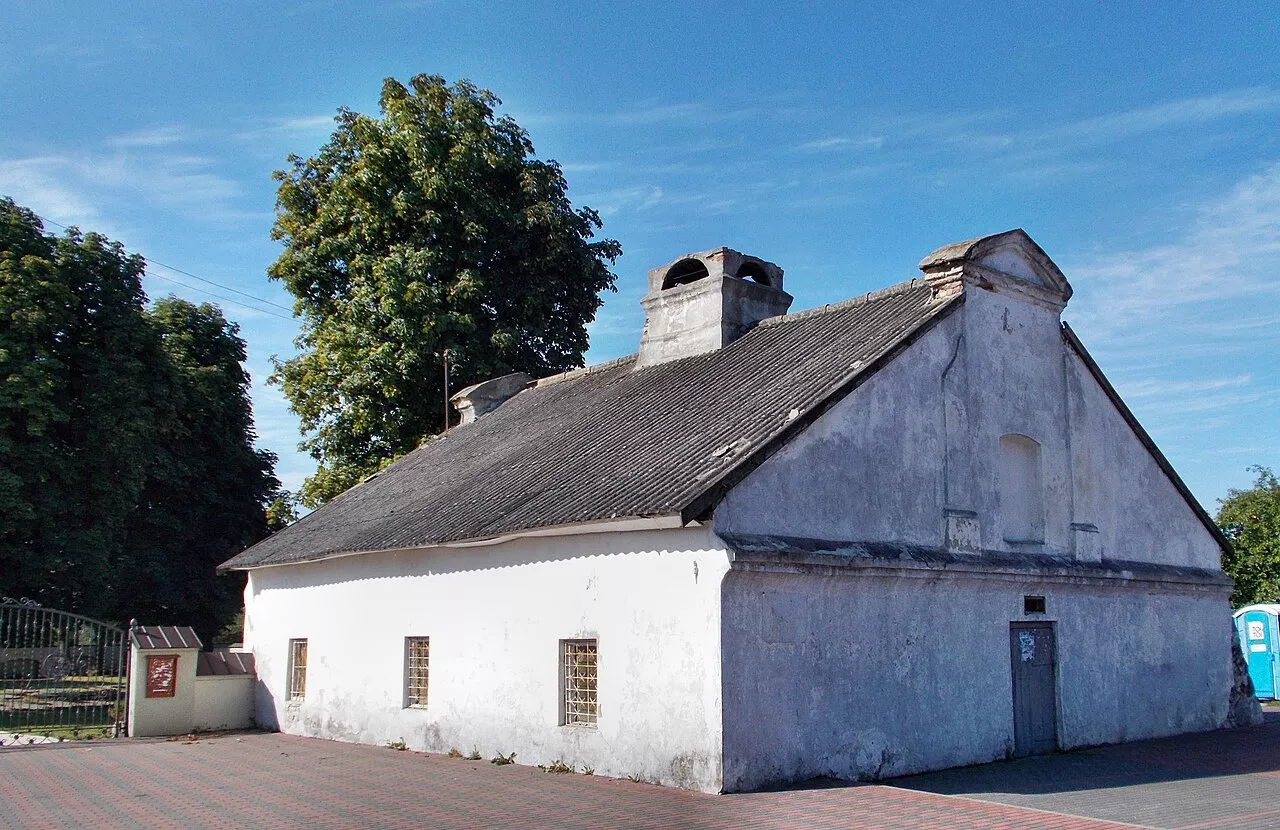
Inside, the decoration is late Baroque and Rococo: altars, ambo, baptismal font, organ, sculpture of Christ, angels, and icons. The bell tower-gate in the fence dates from the same time as the church, and in 1757 a house for the old and poor, called a hospital, was built nearby. Such shelters at parishes were common in the Polish–Lithuanian Commonwealth.
How to get there
Sawin lies on road No. 812 Chełm – Włodawa: about 15 km from Chełm, about 40 km from Włodawa. The church stands on Kostelna Street. On the way from Chełm, it is worth stopping by the church in Chulchytsi, and further north, near Włodawa, begin the lakes and forests described in the articles about Polesie National Park and the Trail of the Seven Włodawa Lakes. More about the region in the article “Polish Polissia: what to see beyond the Bug”. The church is a parish one, so the surest way to get inside is before the service. This is Poland: Ukrainian citizens need a foreign passport.