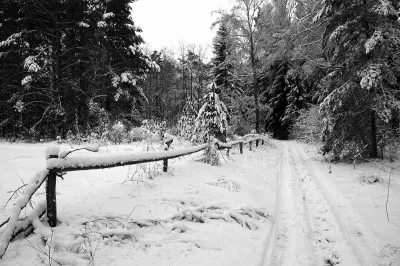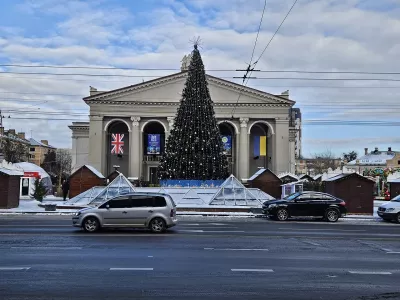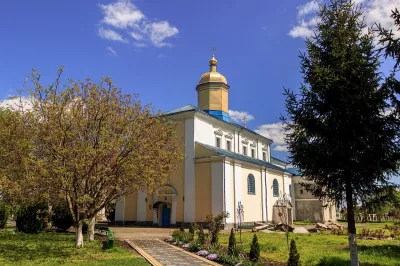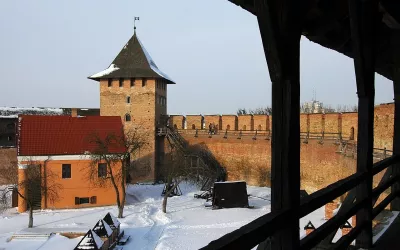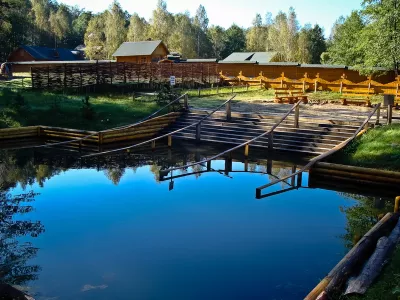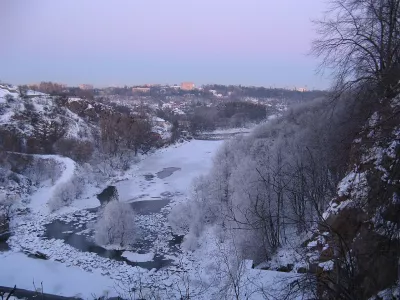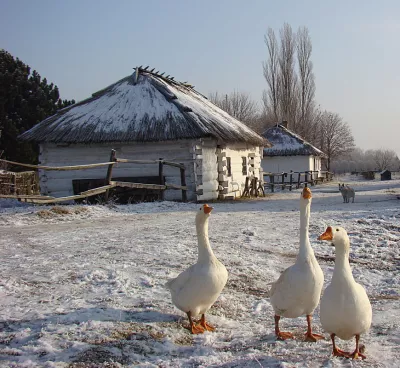

In winter, Polissia becomes quiet and clear: in deciduous parks, views open up that are hidden by greenery in summer, granite over the rivers is covered with frost, and the pine forest smells of resin even in the frost. For such a walk, you don’t have to travel far — beautiful places are right in the regional centers and within an hour or two from them.
We have gathered routes for 2–3 hours: parks along rivers, cliffs, arboretums, and pine forests in Zhytomyr, Rivne, Volyn, Kyiv, and Chernihiv regions. Almost all places have separate pages in our guide with history and a route button.
Zhytomyr: Cliffs over the Teteriv
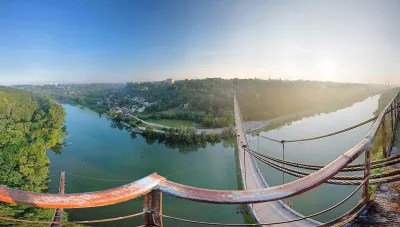
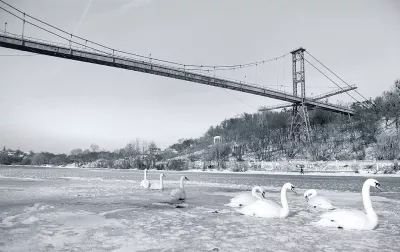
The best winter route in Zhytomyr starts in the Shoduarivskyi Park at Staryi Boulevard, 34. This park of over 30 hectares was arranged at the end of the 19th century on the rocky bank of the Teteriv by the philanthropist Ivan de Shoduar; until 2024 it was called Gagarin Park. A suspension bridge spans the river, hanging more than 30 meters above the water — from there you can see the snow-covered granite banks.
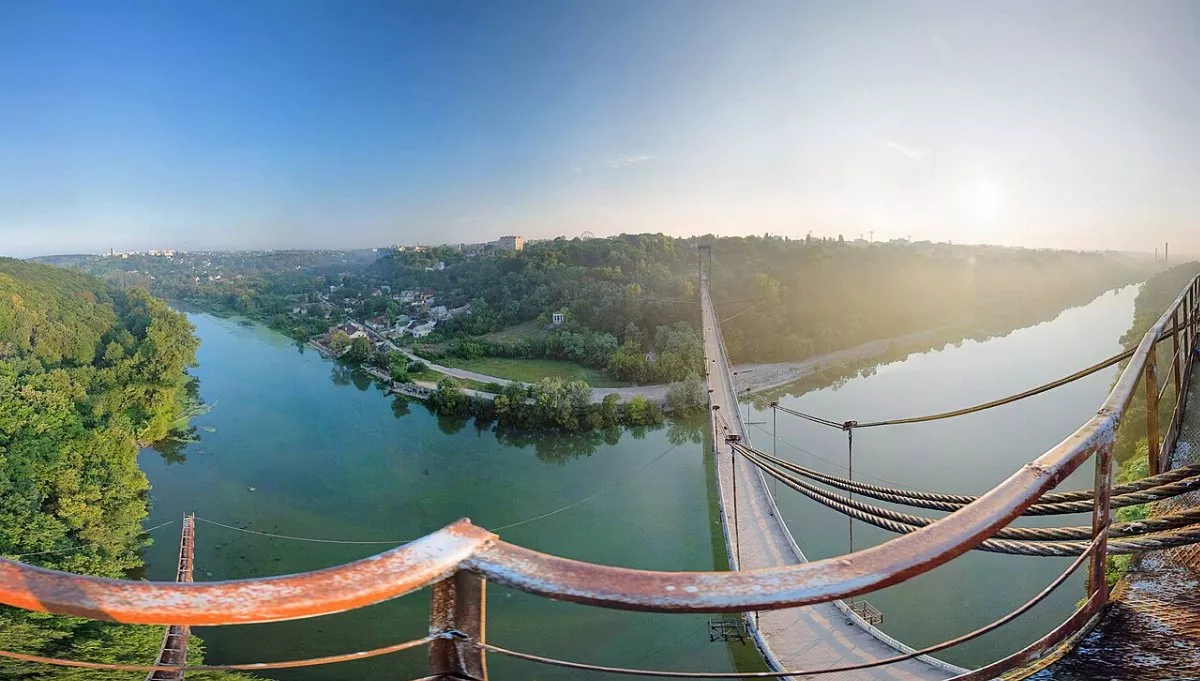
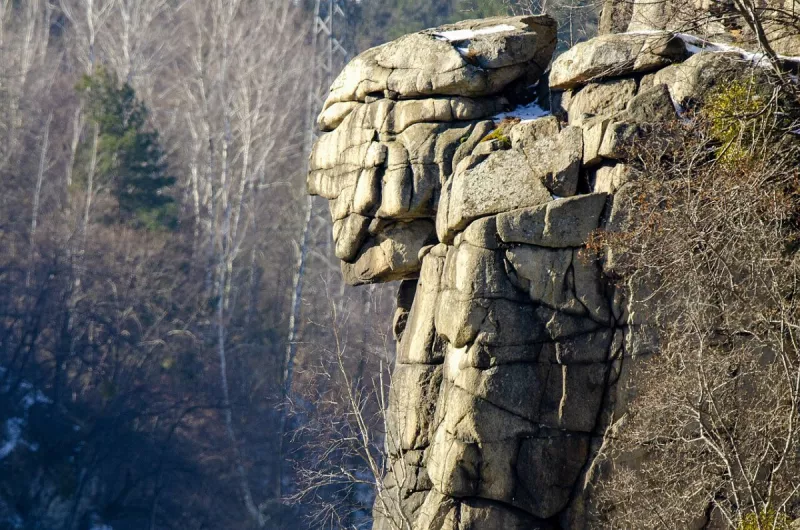
From there, you can walk along the bank to the dam of the Zhytomyr reservoir. The dam, about 100 meters long, lets water overflow along its entire crest, so during high water it looks like a small waterfall. Above it stand the “Four Brothers” cliffs and the “Holova Chatskoho” — a granite outcrop about 30 meters high, resembling a human profile. It has been a nature monument since 1967. For the whole park, bridge, and cliffs, allow 2–3 hours.
If you have a car, it’s worth driving out of town to the granite canyon on the Teteriv and Denyshi with cliffs over the river and the ruins of the Tereshchenko palace.
Korostyshiv and Korosten
Sculpture Park and Felinskyi Cliff
Korostyshiv Park was established in the first half of the 19th century by Count Gustav Olizar. Now it bears the name of the sculptor Vitalii Rozhyk: on 12.9 hectares of terraces over the Teteriv stand over a hundred of his granite sculptures. The park is open 24/7, and entrance is free. Opposite, on the right bank, is the steep granite cliff of Felinskyi, and on the river, a stone rapid roars.
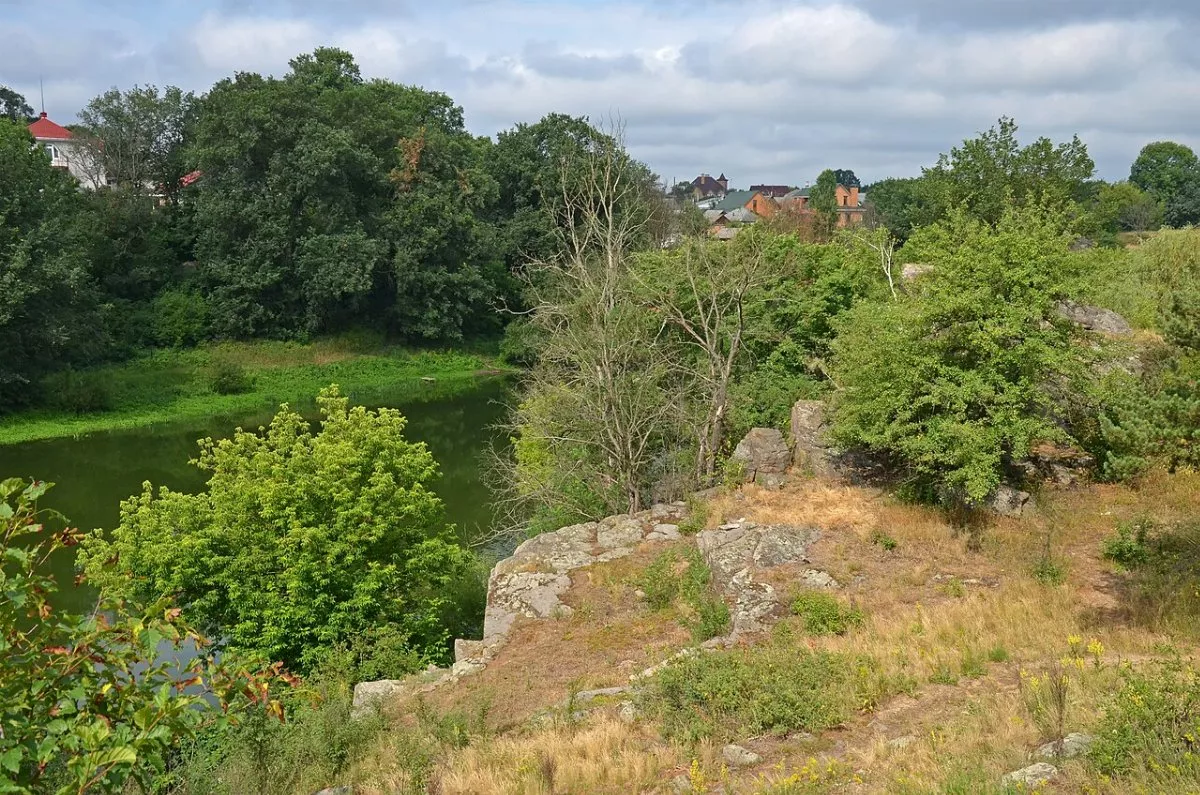
On the outskirts of the town, in the pine forest, lies the Korostyshiv Canyon — a lake among granite cliffs. In summer, people swim here, and in winter the snow-covered cliffs are especially impressive. The park and canyon can easily be combined in half a day; details are in the article Korostyshiv: what to see in one day.
Drevlianskyi Park
In Korosten, Drevlyanskyi Park lies on both sides of the Uzh River on granite rocks, on the site of ancient Iskorosten. Bridges connect the banks into a single route lasting 1.5–2 hours. In winter, the granite slabs are slippery, so descend to the water carefully.
Rivne Region
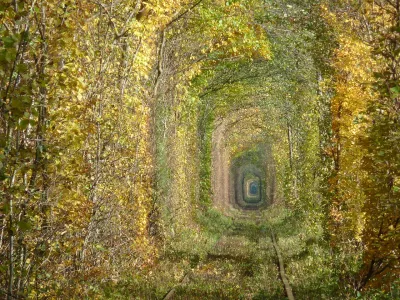
Just fifteen minutes from Rivne is the Tunnel of Love near Klevan: several kilometers of a green corridor over the railway, which is "trimmed" by a shunting train. In winter, the arch of branches becomes white with snow. The track is active, so when you hear a whistle, step aside.
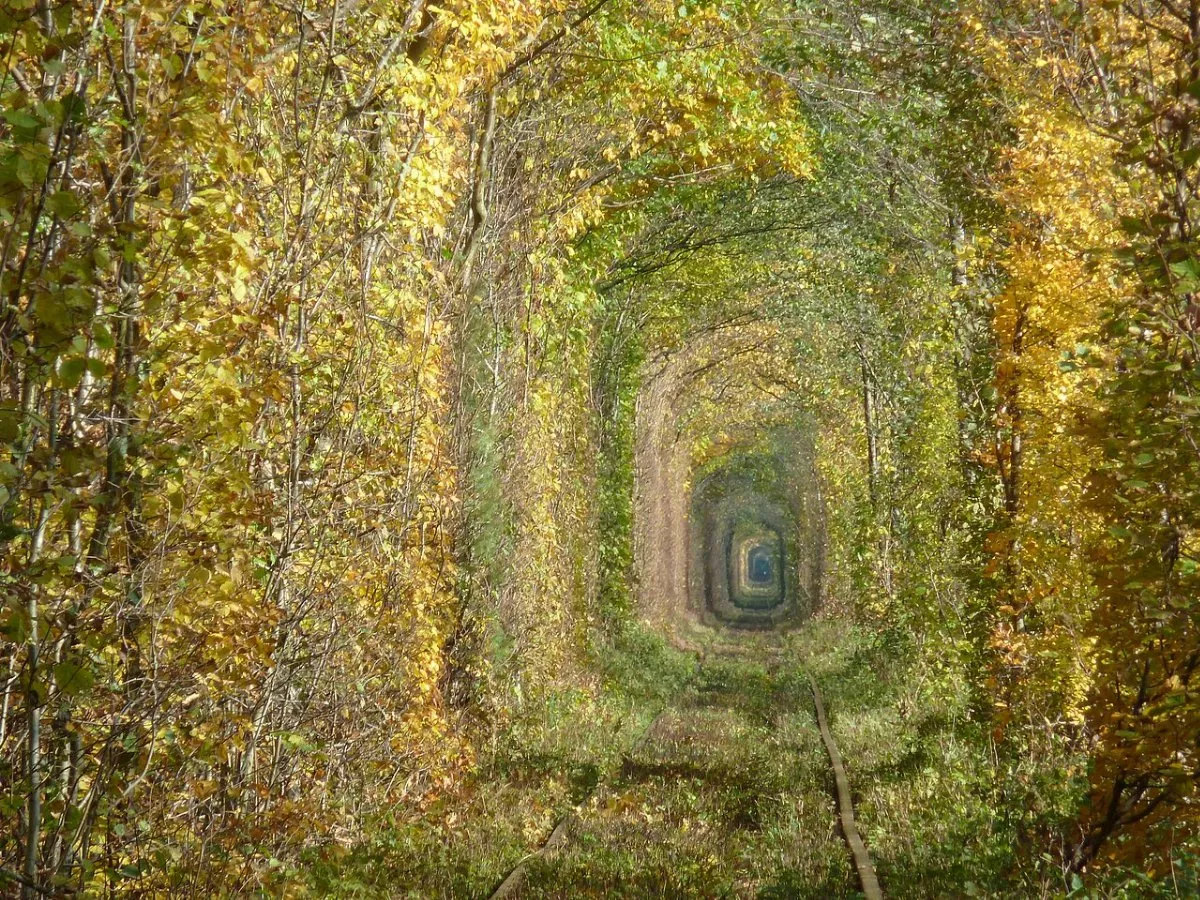
On the road between Rivne and Sarny, in Klesiv, is the Klesiv Dendropark. It covers 3 hectares of figures carved from living junipers, thuja, yews, and spruces. The plants are evergreen, so the park is beautiful even in winter; an hour is enough to explore. In Rivne itself, Shevchenko Park is suitable for a walk — a nationally significant park-monument that grew on the site of the Lyubomyrskyi estate.
Volyn: Lutsk and Shatsk Lakes
In Lutsk, a winter walk conveniently combines the old town on the hill in the bend of the Styr River and Lesya Ukrainka Central Park above the river. It’s just a few minutes’ walk from Lubart’s Castle to the park.
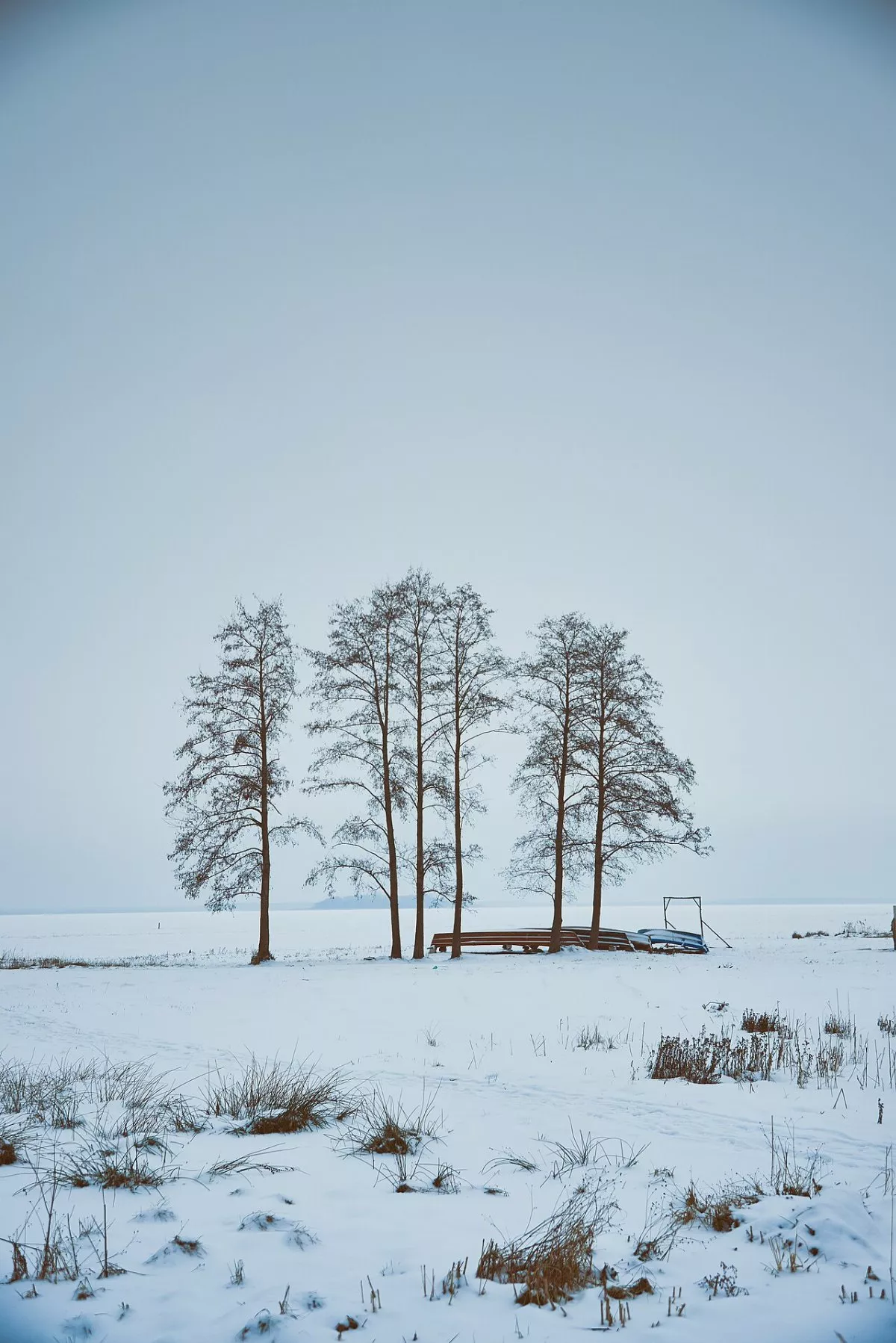
Further north are Shatsk and Svityaz among the pine forests of Shatsk National Park. In winter, the lakes freeze, and the area becomes almost deserted. Walk along forest trails and the shore, but do not go onto the ice without checking its thickness. Remember, this is a national park: bonfires are allowed only in designated places, and vehicles do not drive to the water.
Kyiv Region: Pine Forests
The closest pine forests of Kyiv Polissia are in Bucha District. The Vorzelskyi Reserve covers 85 hectares of pine and oak forests right between the streets and sanatoriums of Vorzel. Nearby is Zhukiv Khutir: 622 hectares of tall pine-oak forest with a small lake and wide forest roads for a 2–3-hour walk.
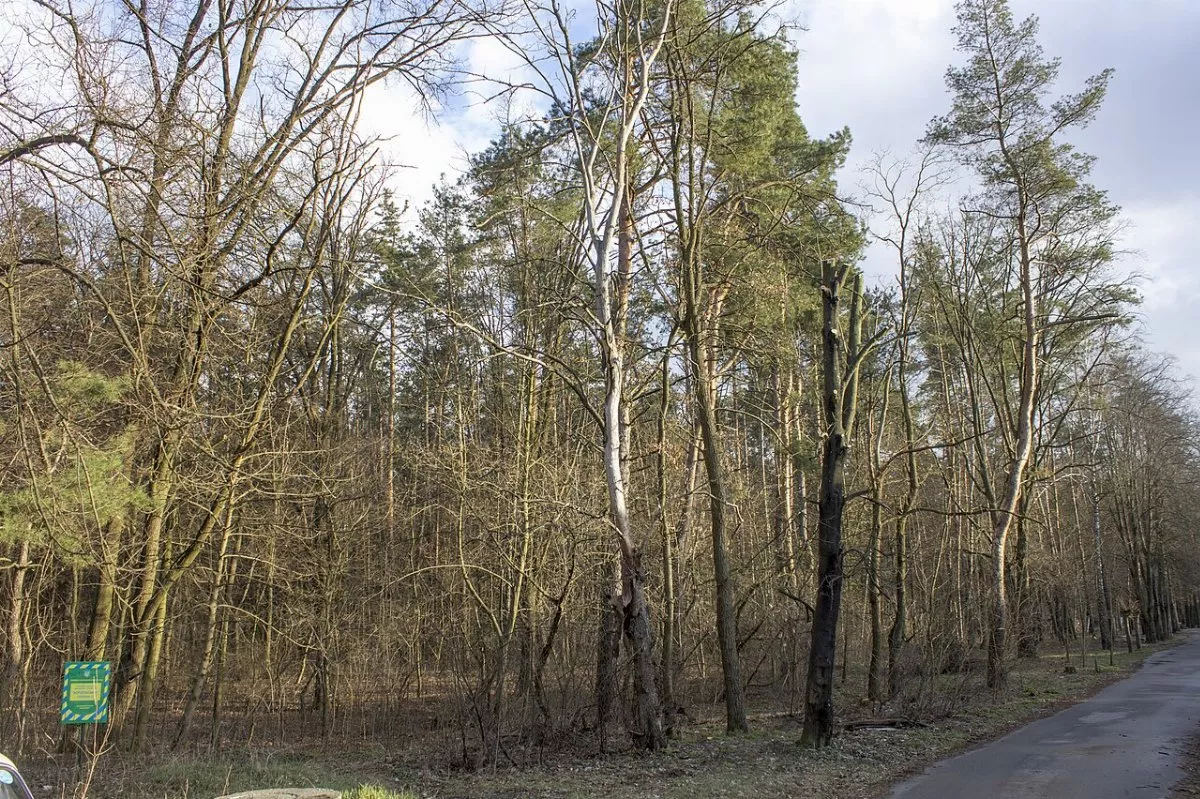
On the left bank of the Desna lies the Zalissia National Park. Almost all of its forest is pine, and about 1,700 hectares of stands are over one hundred years old. The park is only gradually opening to visitors, so check routes with the administration.
Chernihiv Region
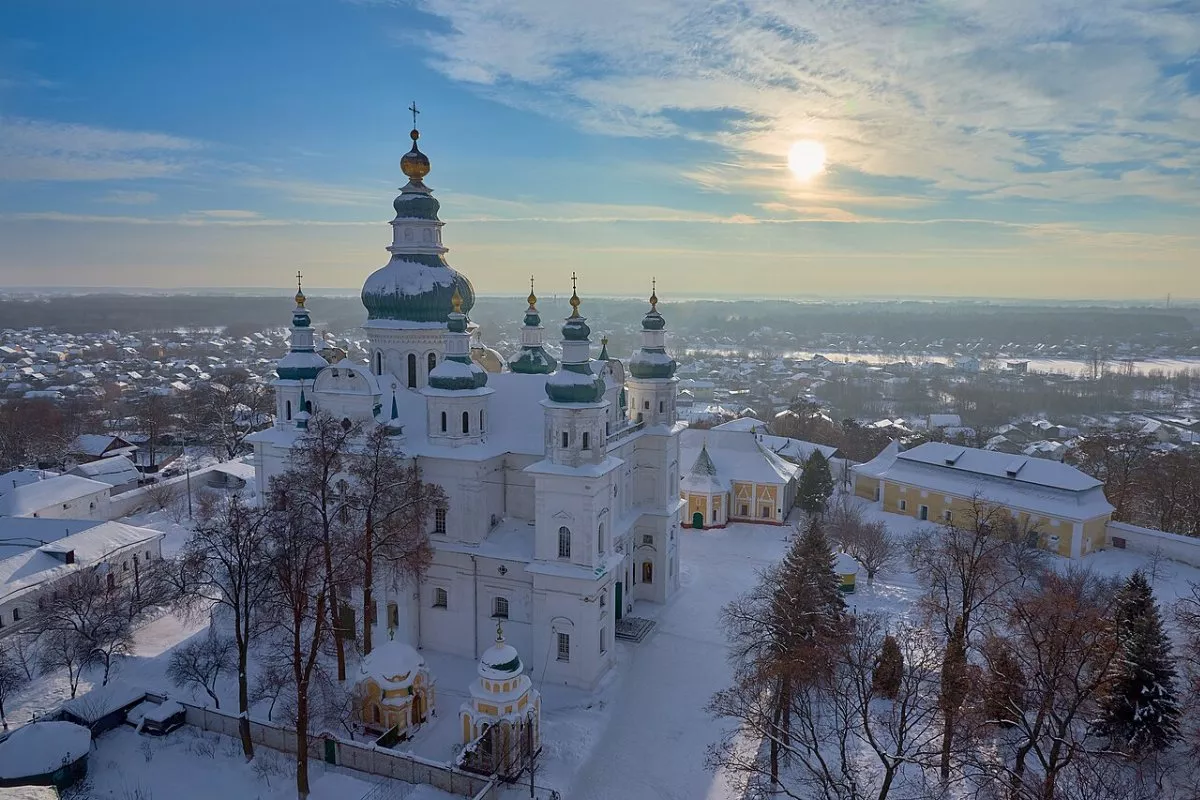
In Chernihiv, a winter route for 2–3 hours runs from Val with the Catherine Church to the Yeletskyi Monastery and further on Boldyni Hills to the Trinity-Illinsky Monastery and the Antoniev Caves. The hills rise 20–35 meters above the Desna floodplain, and in winter you can see far from them. For a forest walk within the city, there is the regional landscape park “Yalivshchyna.” More in the article Chernihiv — the Ukrainian Ravenna on the Desna.
In the northeast of the region, above the Desna, is the Mezyn National Park with chalk cliffs and old oak groves. Winter here is colder and snowier than in the rest of Polissia. But the park lies in Novhorod-Siverskyi district near the border with Russia, which is shelled, so do not go there unless absolutely necessary. We also do not recommend trips to the border communities of Sumy region.
How to prepare
- In December the daylight is short — about eight hours. Set out in the morning and plan to return by dusk.
- Granite and wooden stairs in parks are slippery in winter: footwear with good tread and, if desired, crampons.
- Take a thermos, power bank, and spare gloves: there are usually no cafes in forests and parks.
- Do not approach cliff edges and do not go onto the ice of rivers and lakes.
- During air raid alerts, seek shelter; in the forest, know in advance where to return.