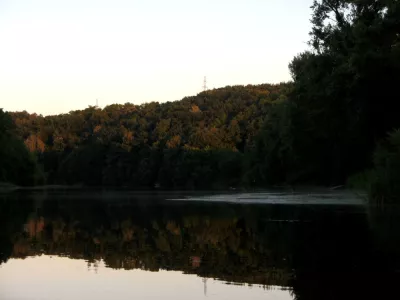
According to legend, Korostyshiv arose back in the 6th–7th centuries — back then the settlement was called Khminychi and was a center of the Drevlyan tribe of the Minchany. The first written mention is dated March 26, 1499. In 1565, the town was bought by Jan Olizar-Wolczkowicz, and until 1873 this noble family owned Korostyshiv. Under the most prominent of the Olizars — Count Gustaw — the town experienced its first heyday: a church, a luxurious palace and park, and a medical facility utilizing local healing waters appeared here, and German cloth makers and Italian granite-processing masters were invited. In the second half of the 19th century, Korostyshiv was a true multi-confessional town: two Orthodox churches, a Catholic church, a Lutheran church, and as many as six synagogues stood here — almost all of these structures, except for the Catholic church, have not survived to this day.
In the 19th century, granite mining began in the town, and Korostyshiv is still called the "granite town": local stone was exported for construction in Kyiv and Zhytomyr, and the flooded quarries have become the main tourist highlight of the hromada. Exploring all the main sites in the center takes a few hours, although many people set aside a separate half-day for the canyon and quarries. There is not much tourist navigation here, so the route to the quarries should be studied in advance, and the most interesting stories are often told by the local residents themselves.
Vitalii Rozhyk Park — 111 Sculptures and a Record of Ukraine
The main calling card of Korostyshiv in recent years. The park was founded in 1820 on the lands of Count Gustaw Olizar's estate, and it received the status of a local-level park and garden art landmark in 1964. A true second birth of the park began thanks to local sculptor, Honored Artist of Ukraine Vitalii Rozhyk, who lives nearby and created most of the town's sculptures and monuments.
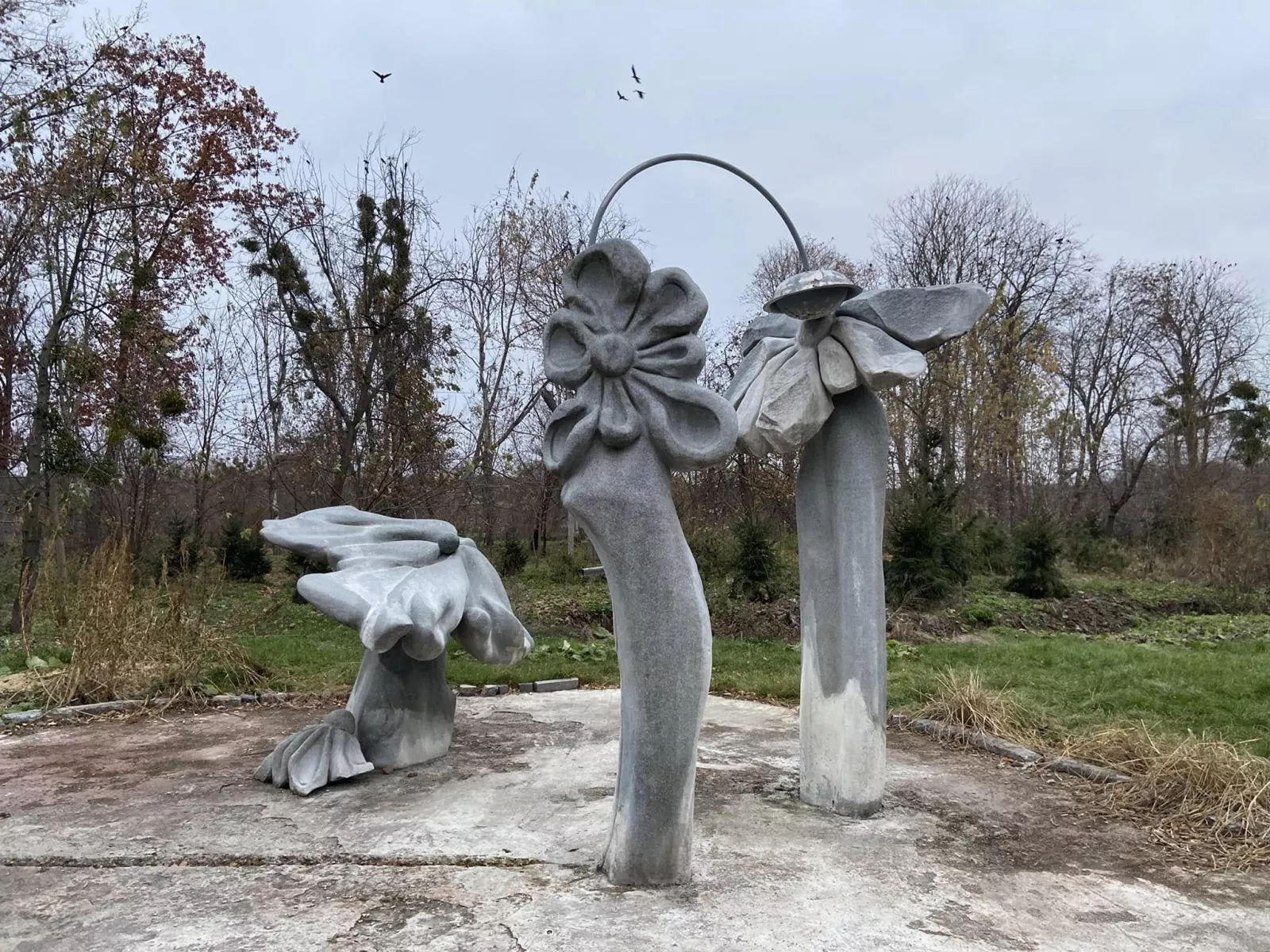
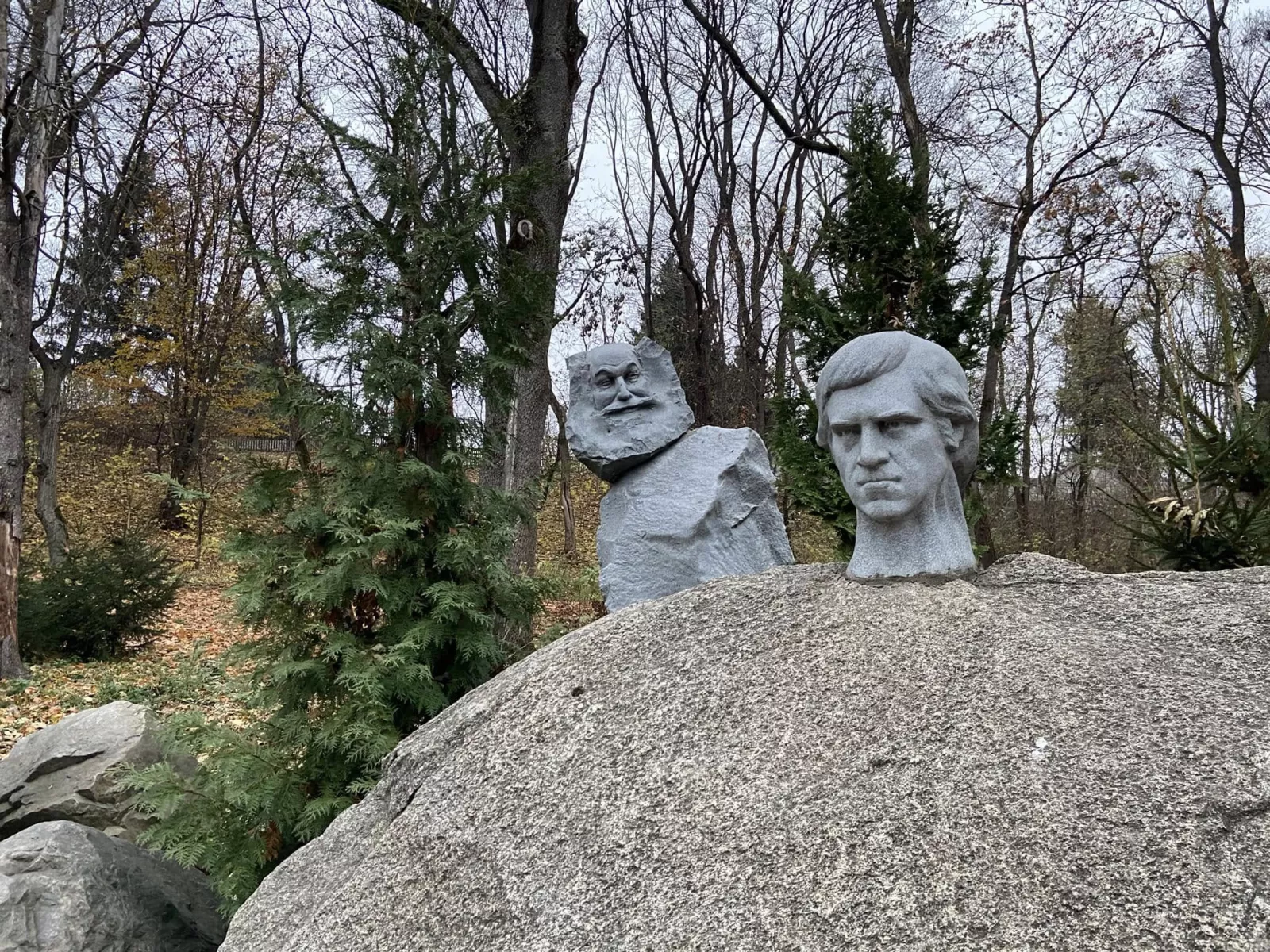
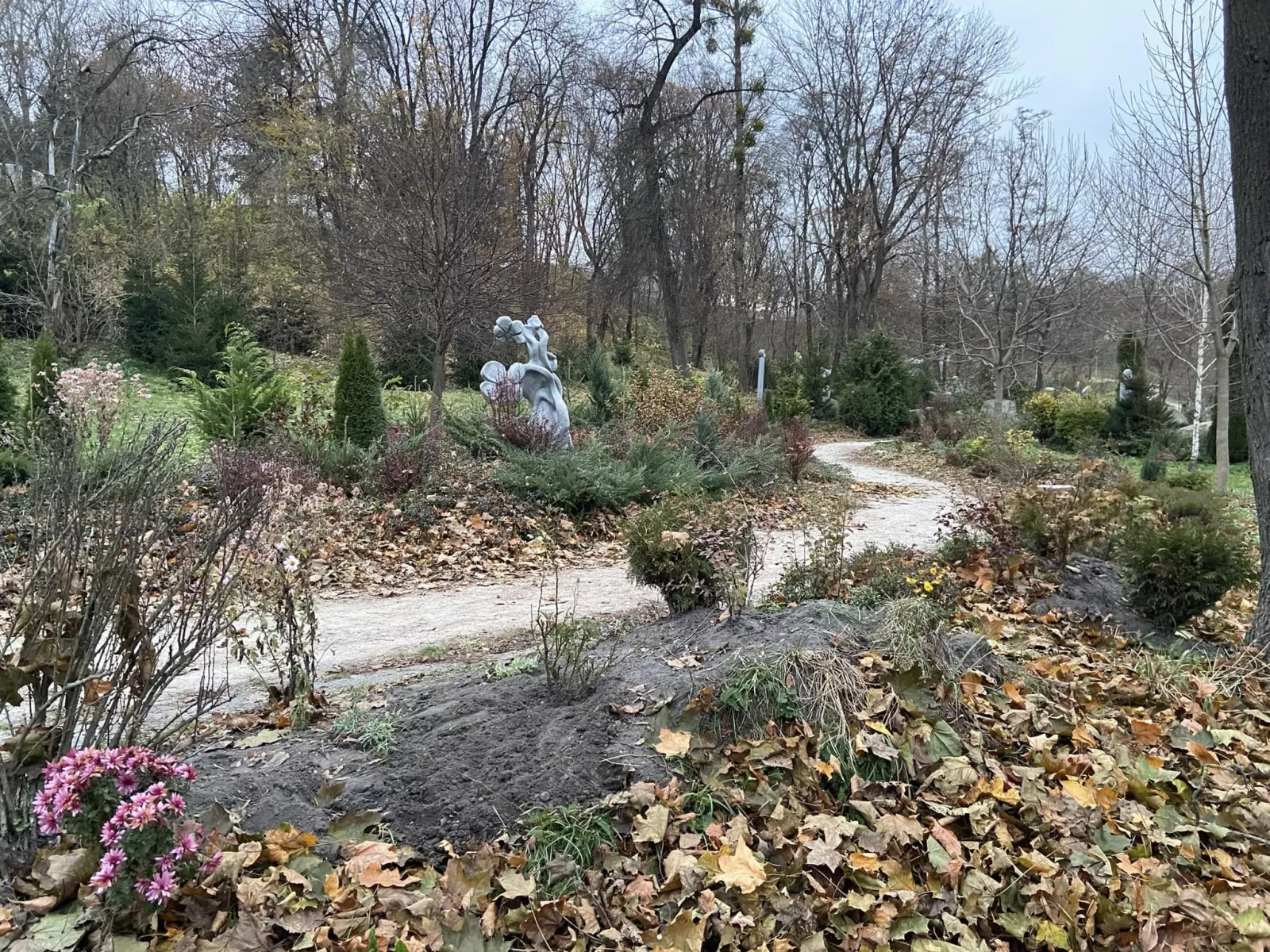
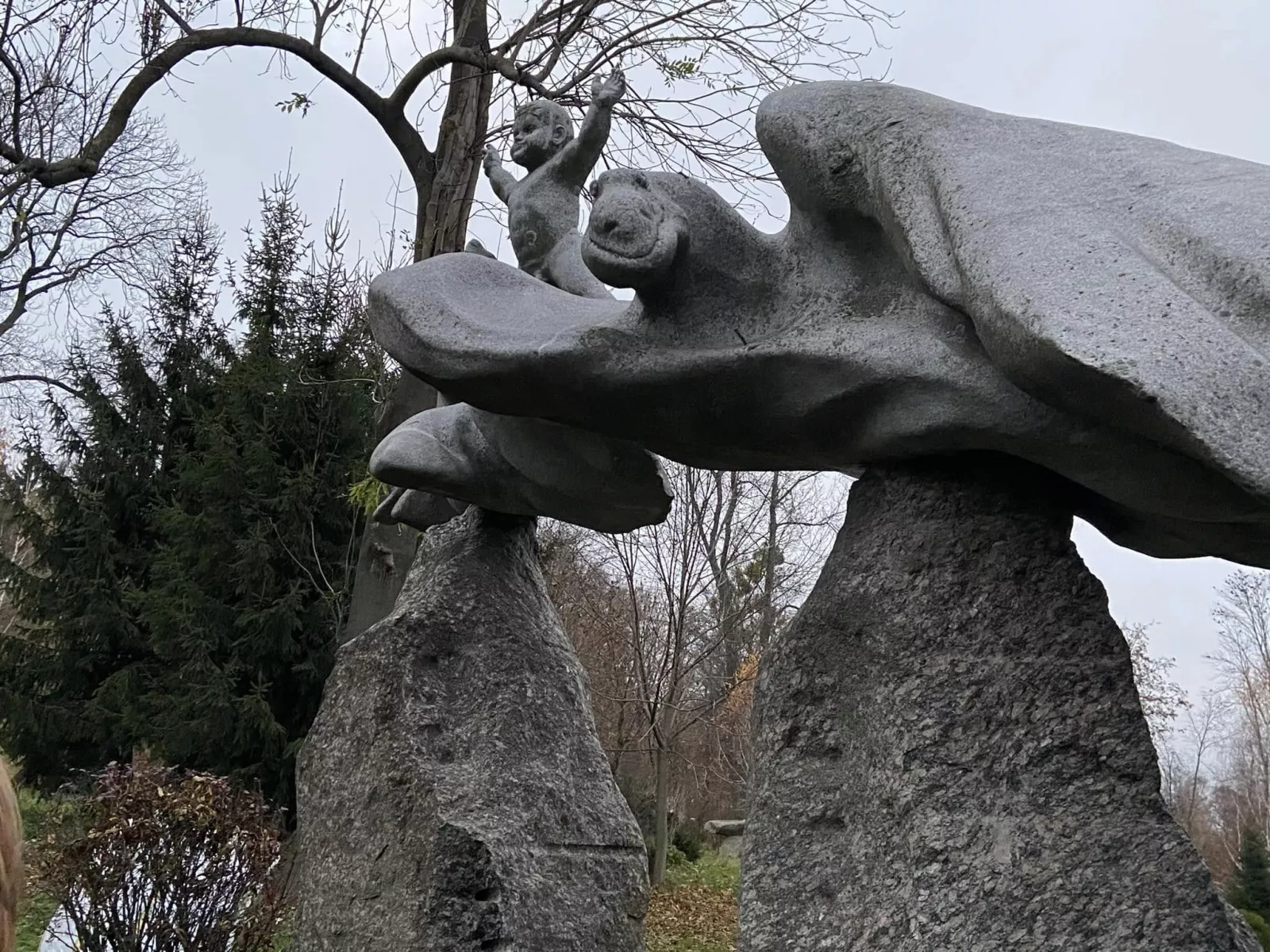
It is here that ordinary granite blocks turned into dozens of artistic compositions. The first works appeared back in the mid-2000s near the decorative ponds of the former estate of the counts Olizar. Every year the collection was replenished with new sculptures, and today the park has become one of the most interesting tourist locations in Zhytomyr region.
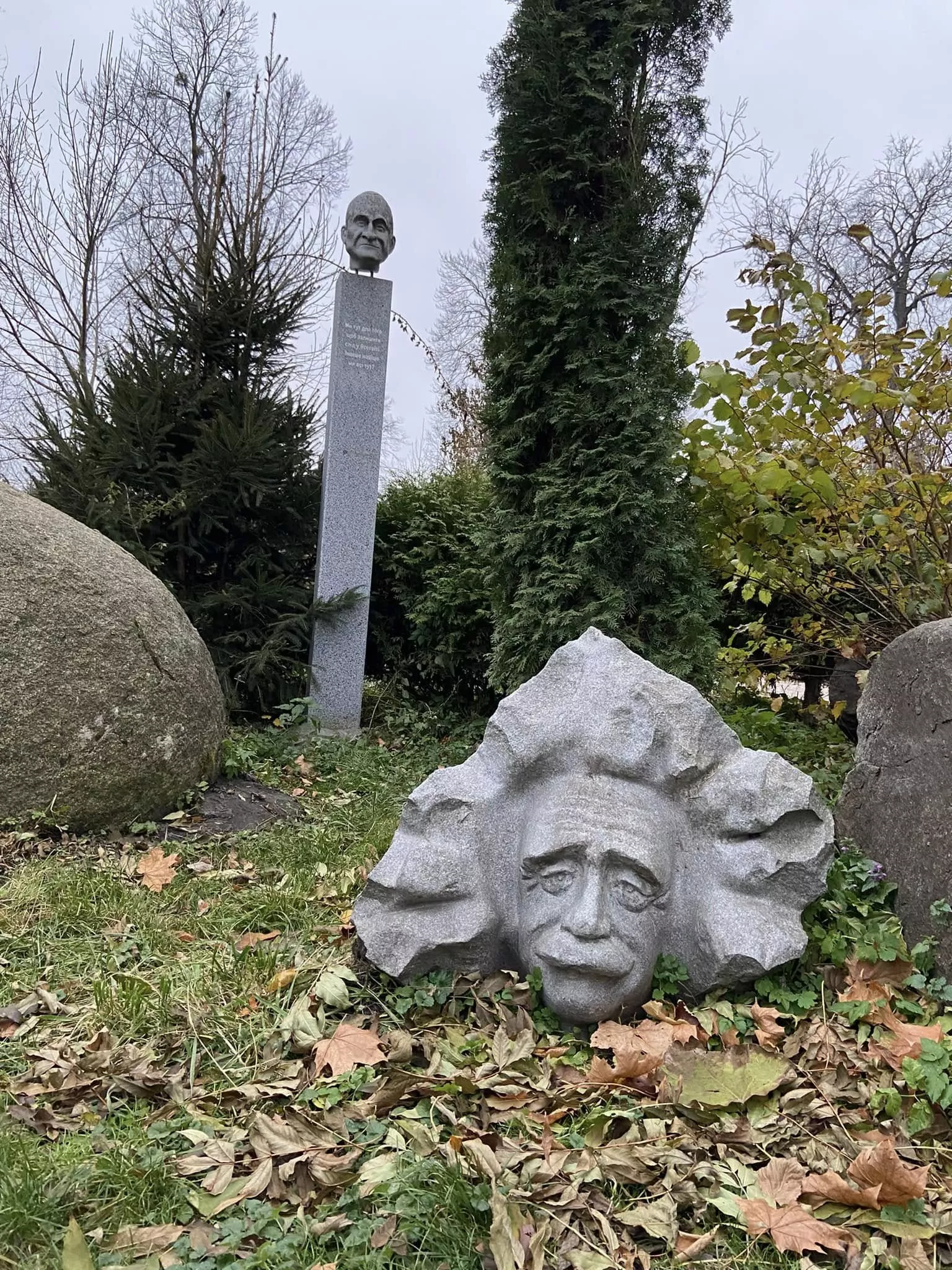
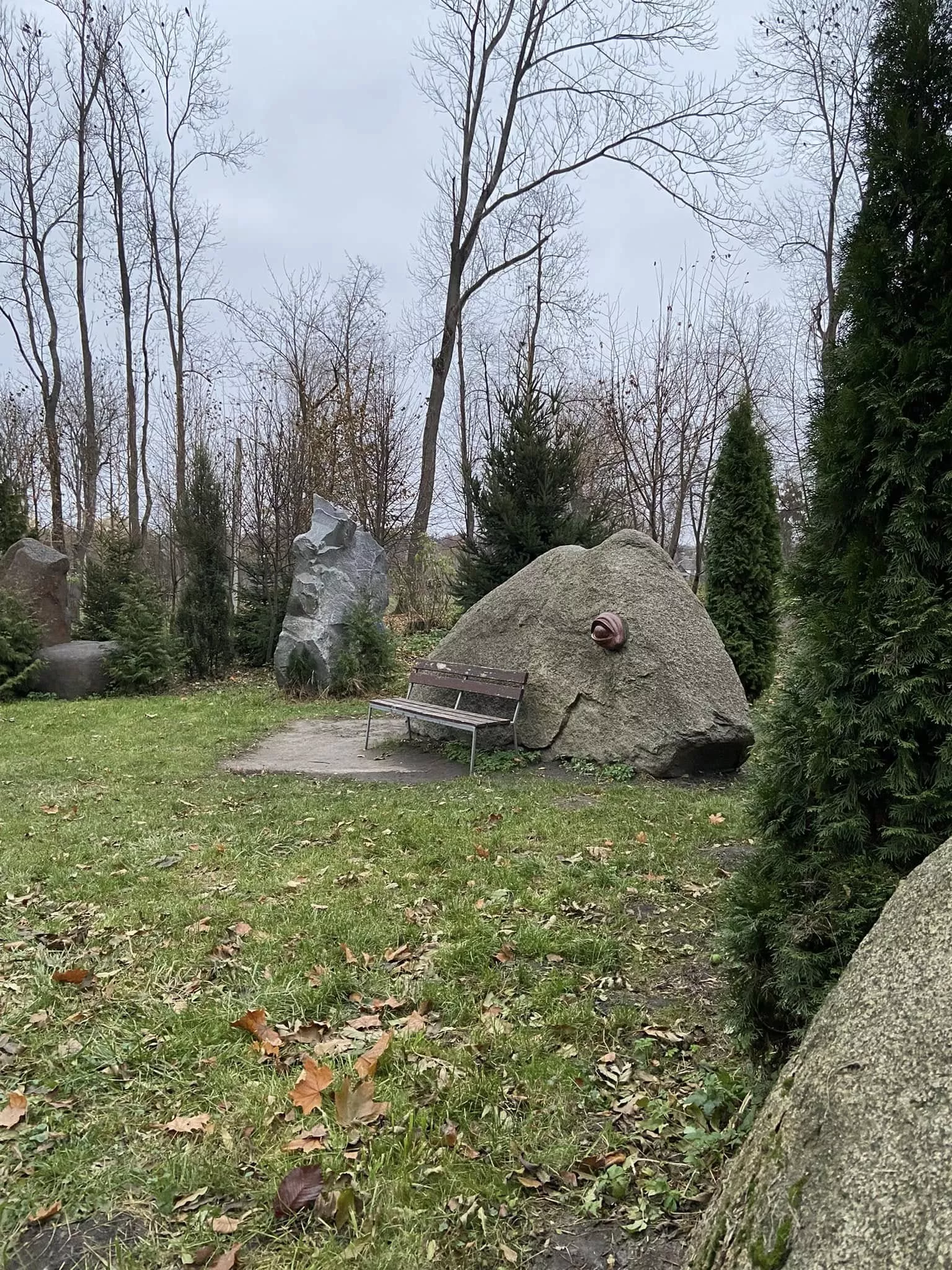
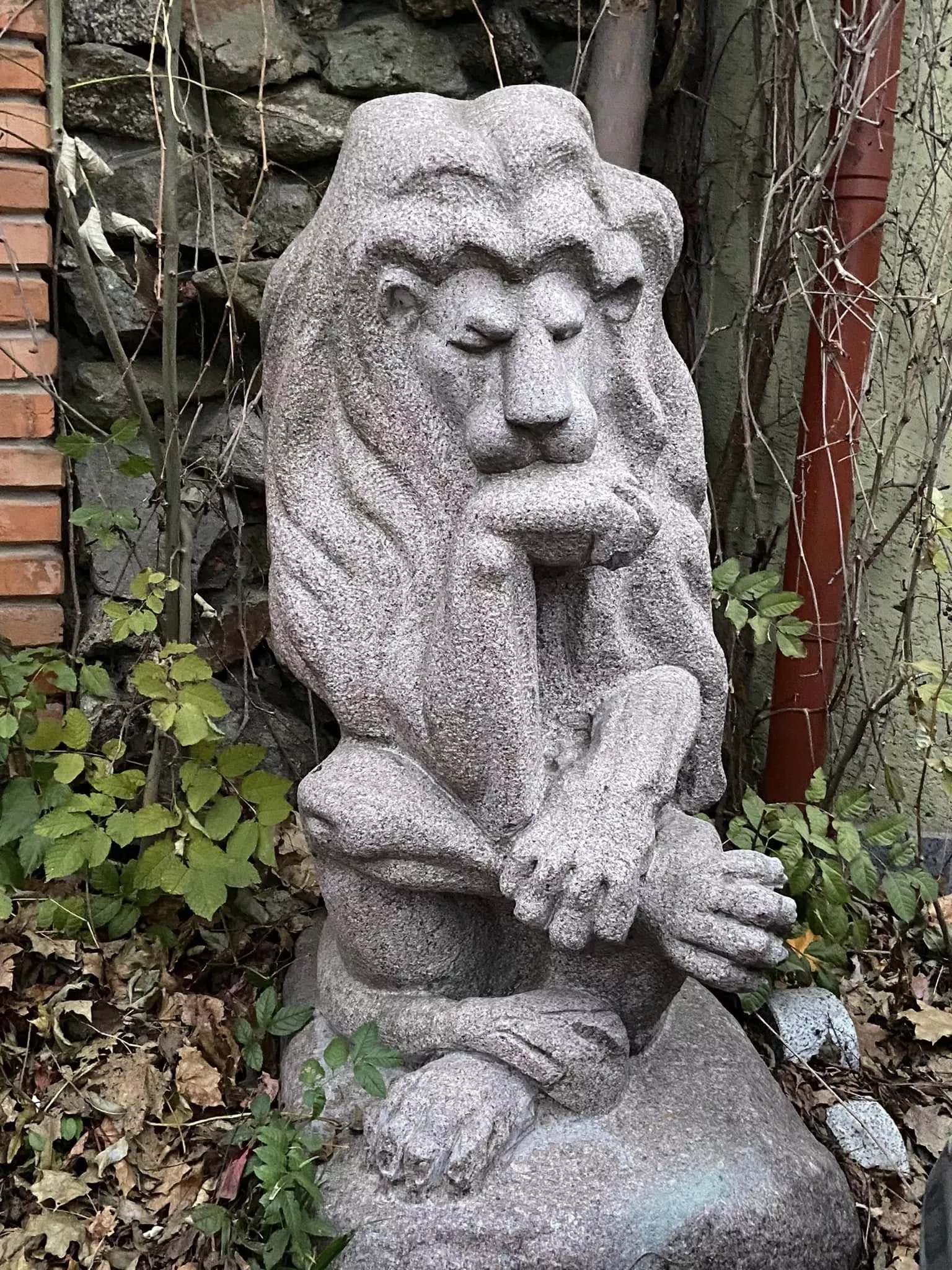
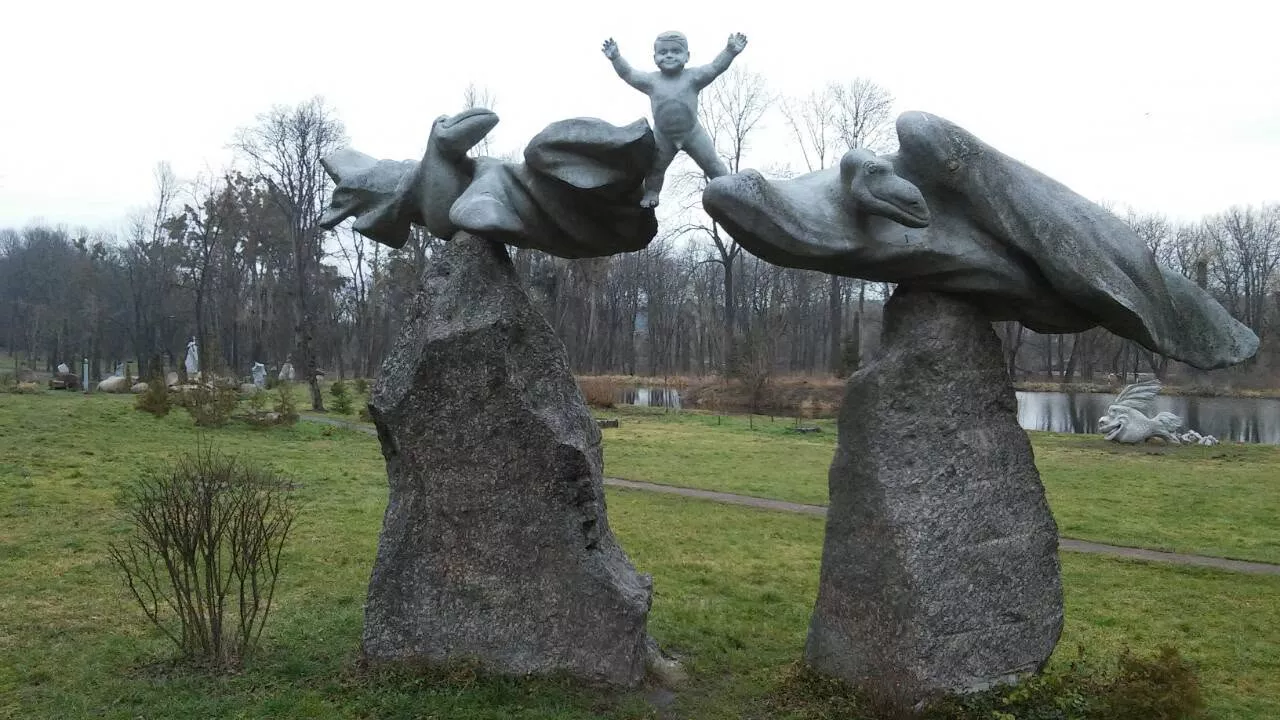
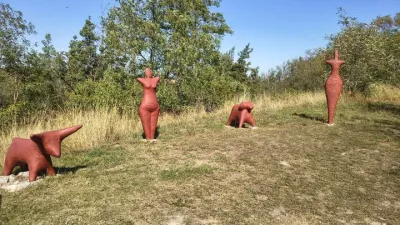
Among the works are images of prominent Ukrainians and world figures, allegorical compositions, characters from literary works, as well as unusual granite cacti, decorative benches, flower pots, and natural stone compositions. Each sculpture has its own character and invites you to stop, examine the details, and take striking photos.
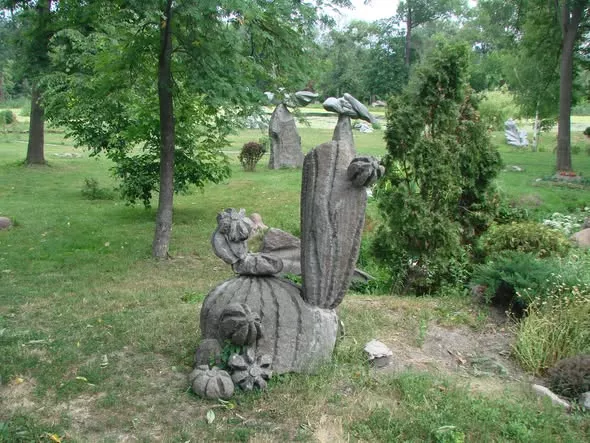
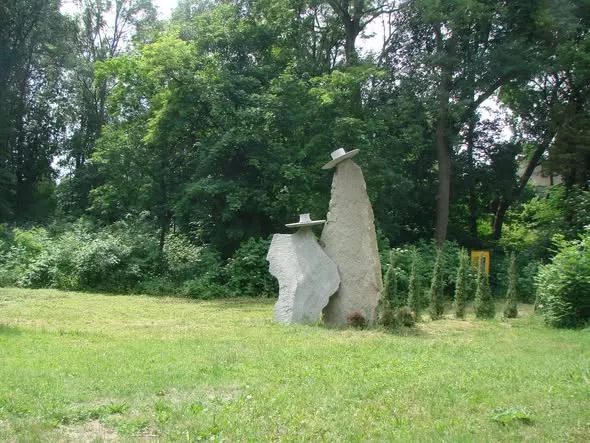
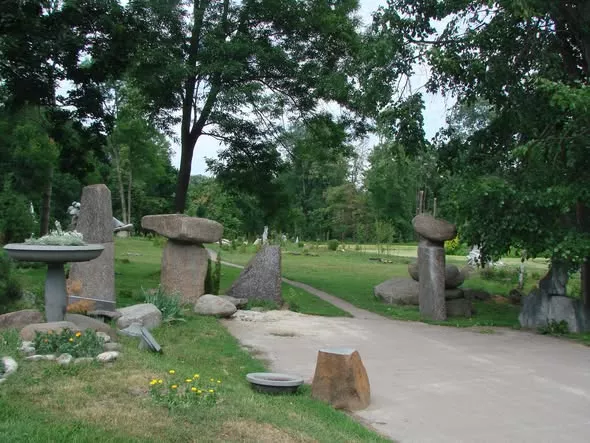
In May 2024, Korostyshiv received a diploma from the Book of Records of Ukraine in the nomination "best city in Ukraine by the number of sculptures per population" — 111 sculptures and monuments for a small town.
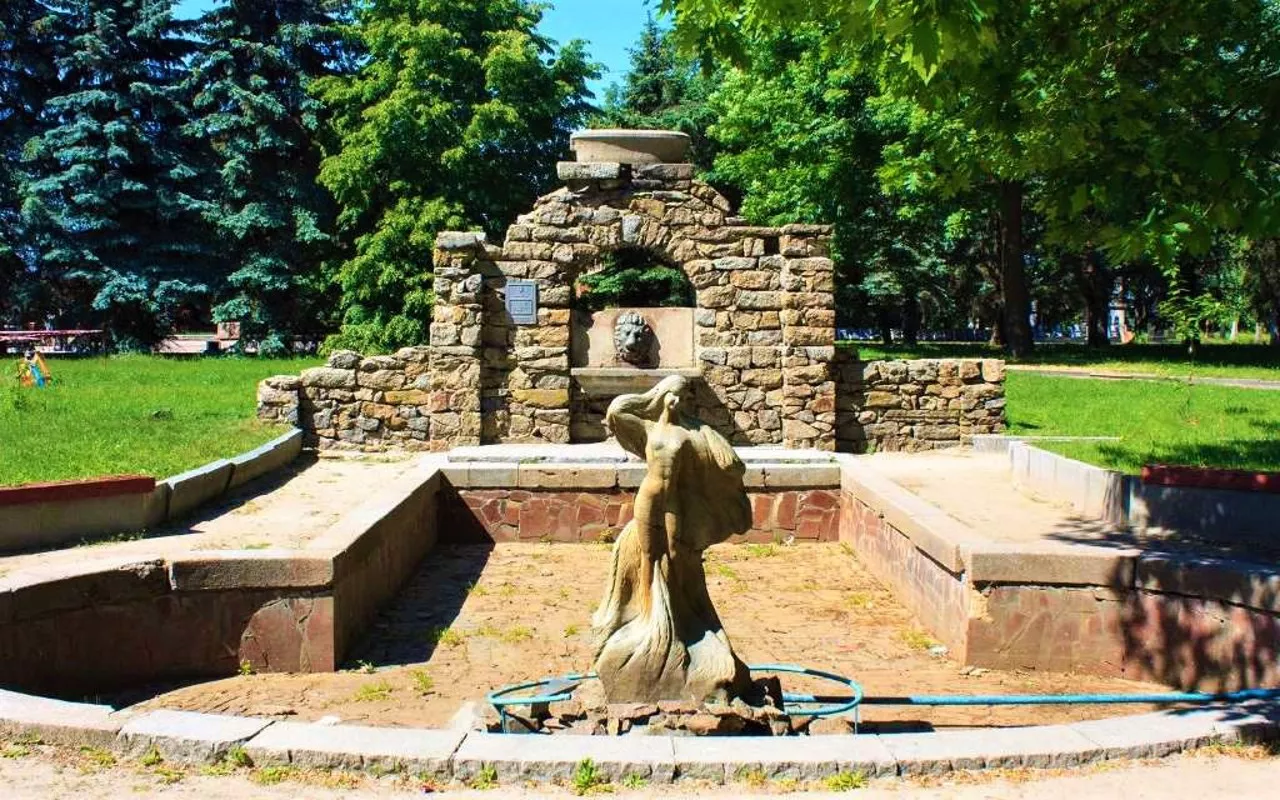
What is inside: the park covers an area of 12.9 hectares, with two terraces on the hill slopes, ponds with overgrown islets, a waterfall (locally known as "shum"), fountains with sculptures, and viewpoints overlooking the rocky banks of the Teteriv River and the dam. Among the sculptures are Hryhorii Skovoroda, Taras Shevchenko, Salvador Dalí, Einstein, as well as characters from local legends and even residents of surrounding villages. One of the sculptures — "The Kissing Stones" — is considered one of the most romantic in the country. The park has also preserved an older layer of history: the entrance gate of the estate, a fountain-bath with a sculpture of a girl and a lion's face (Gustav Olizar headed a Masonic lodge, hence the symbolism), as well as Felinsky Rock. The park is open around the clock; you should allow 1–1.5 hours for a leisurely stroll. There are no cafes in the park, so it is best to bring water and snacks with you.
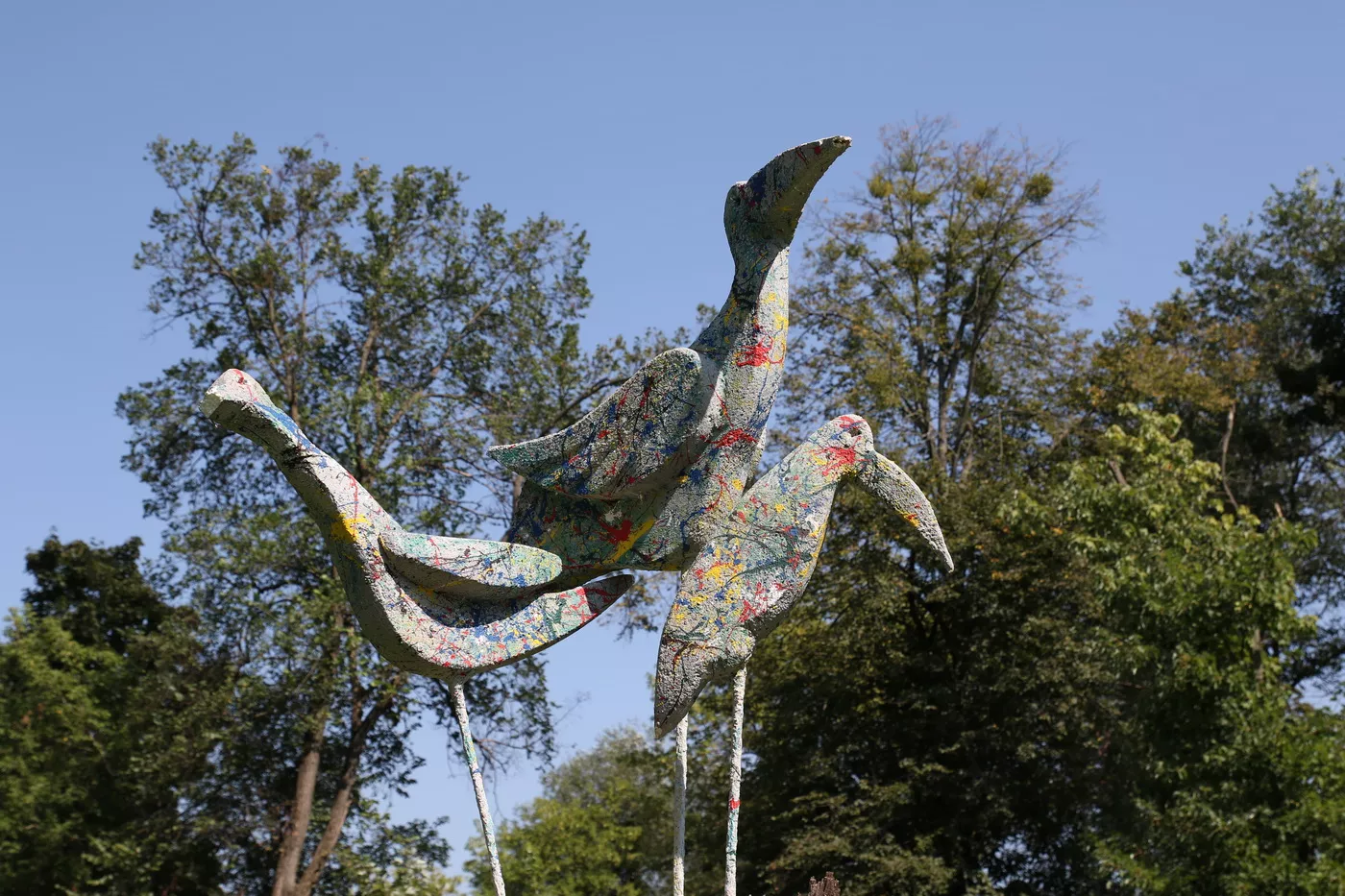
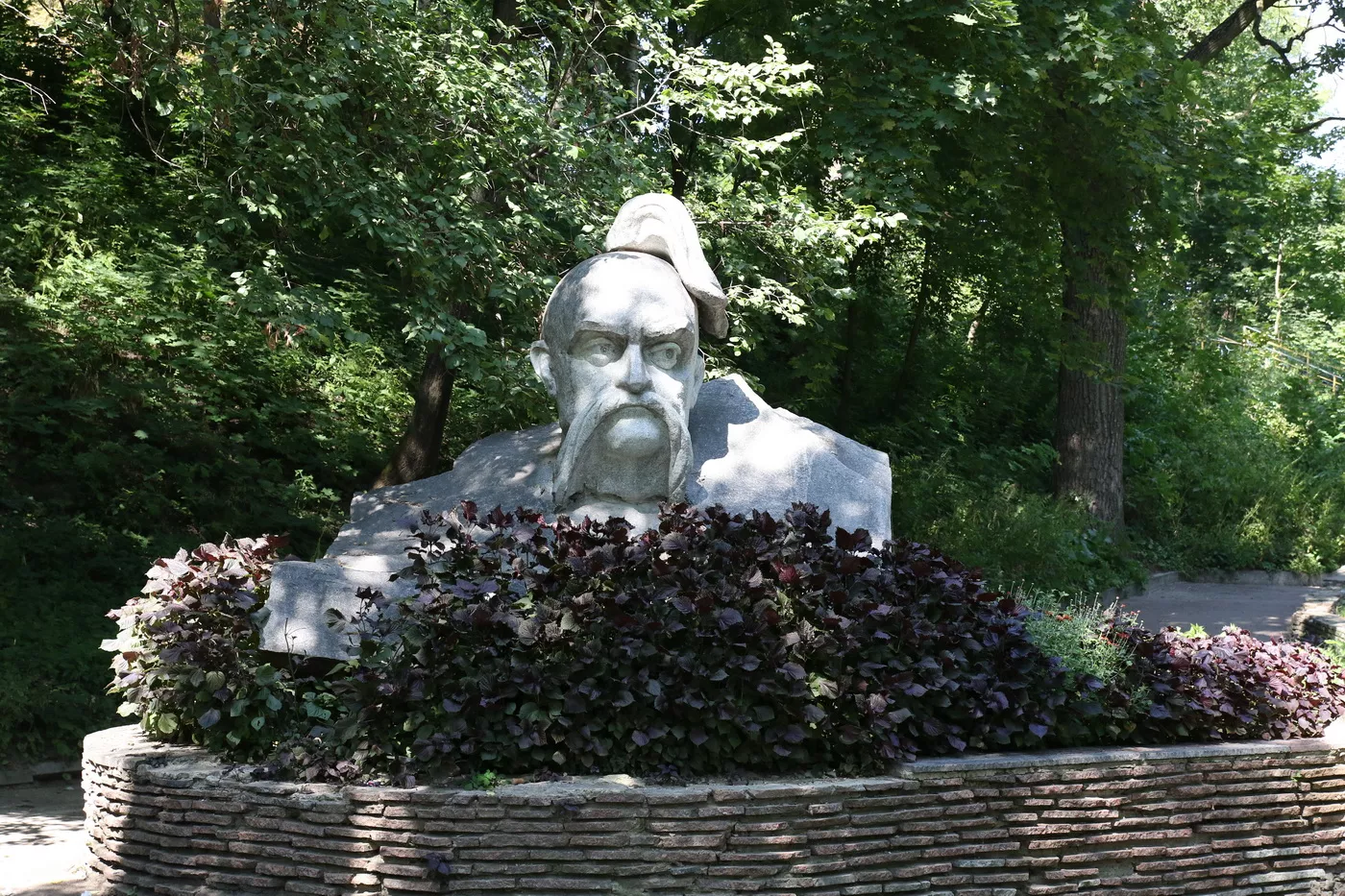
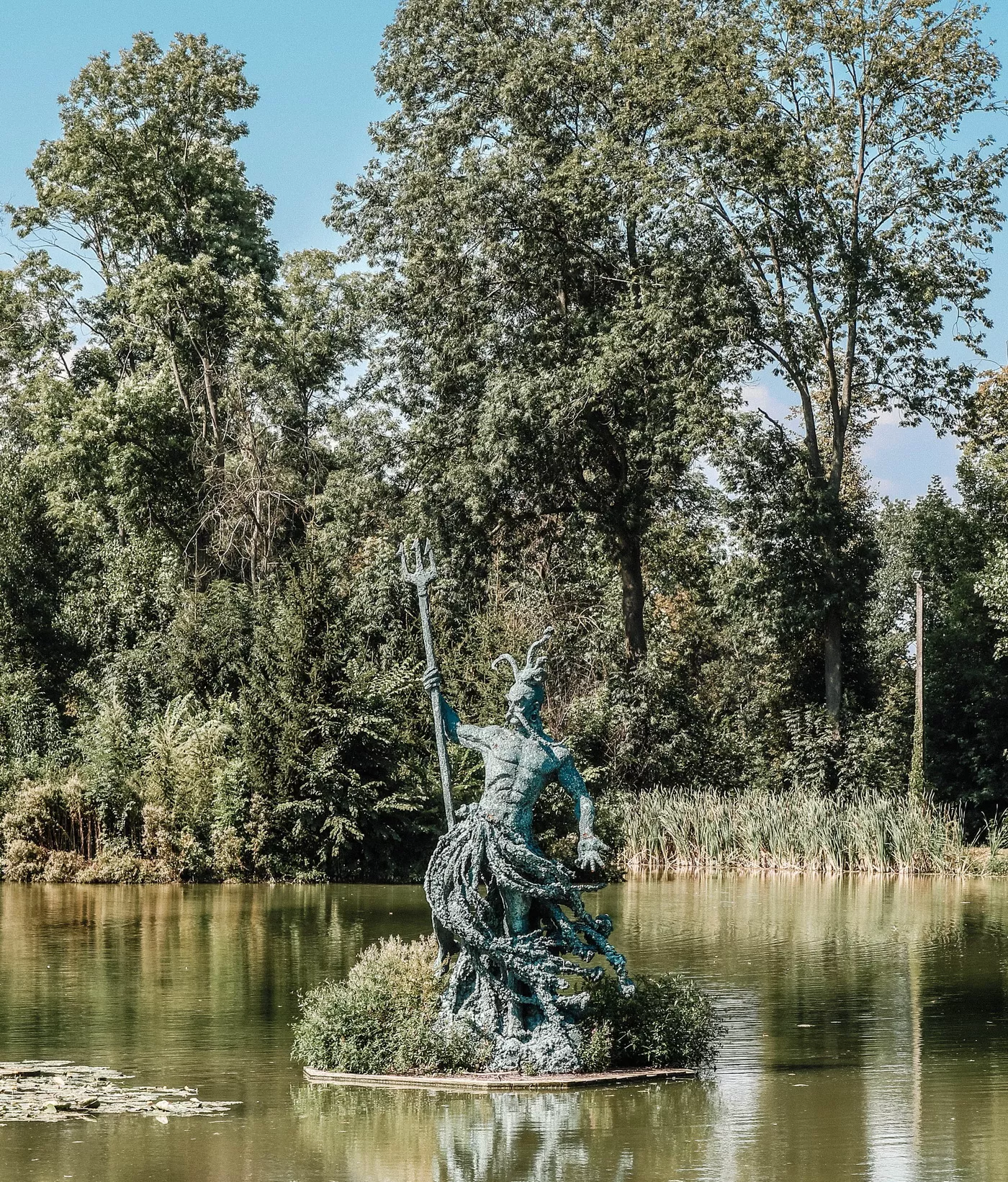
The Stone Toad
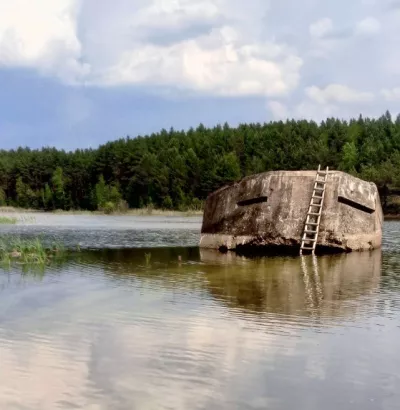
Not far from the city park is another unusual landmark of Korostyshiv — the famous Stone Toad. According to local lore, this is an ancient Slavic idol that was once raised from the bottom of the Teteriv by order of one of the Olizars; local historian Dmytro Antoniuk also describes it this way in his guidebook "4 Journeys Through Zhytomyr Region". However, some local historians dispute this legend and explain the name differently. Today, the sculpture sits on a large granite rock and remains one of the city's most famous locations.
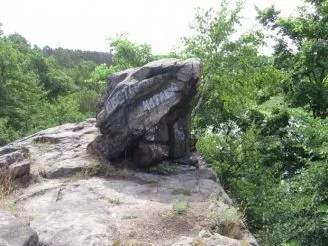
Traditional fishing competitions that brought together dozens of participants and spectators used to be held every year near the rock with the stone Toad. Thanks to the combination of legends, history, and the picturesque scenery of the Teteriv River, this location remains one of the symbols of the city.
Church of the Nativity of the Blessed Virgin Mary – the main architectural landmark
One of the oldest religious structures in the Zhytomyr region and a local architectural monument. It stands on Darbinian Street, next to the park.
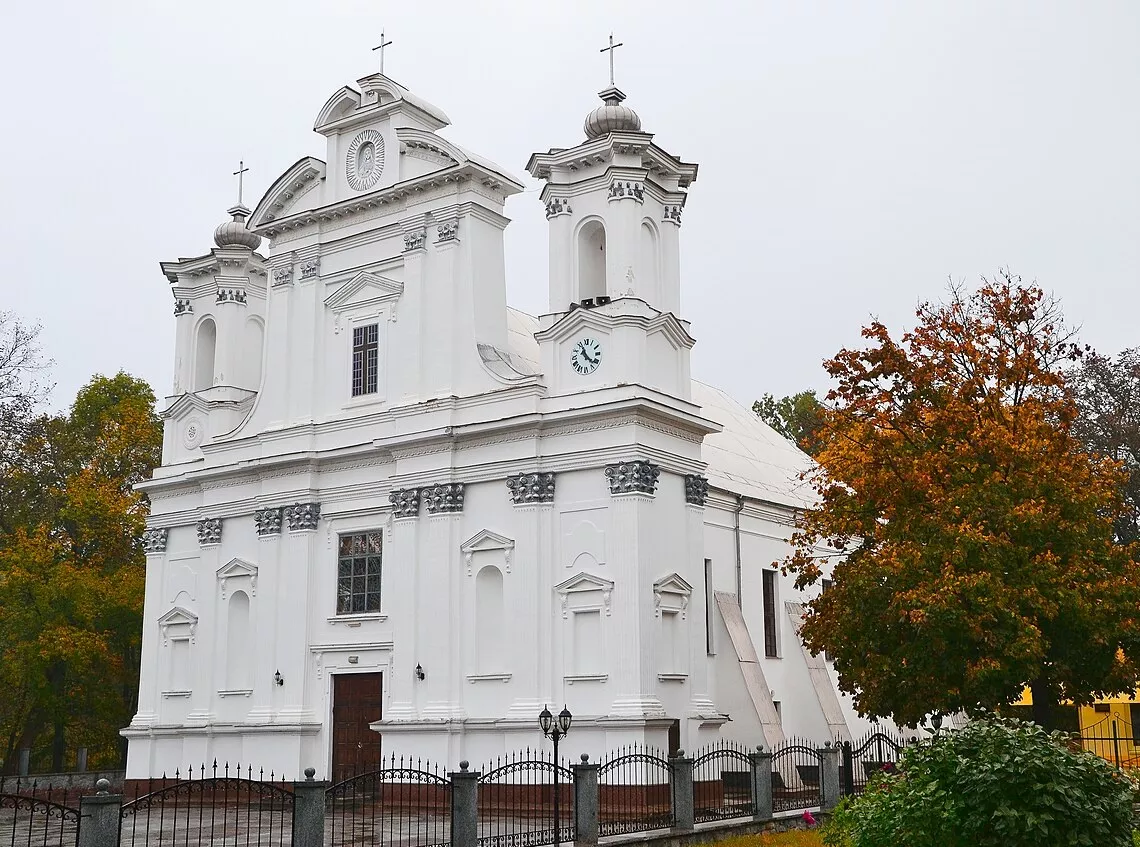
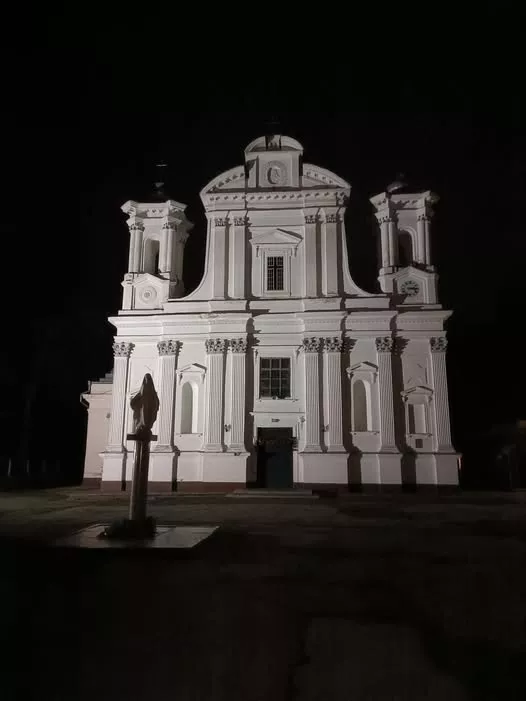
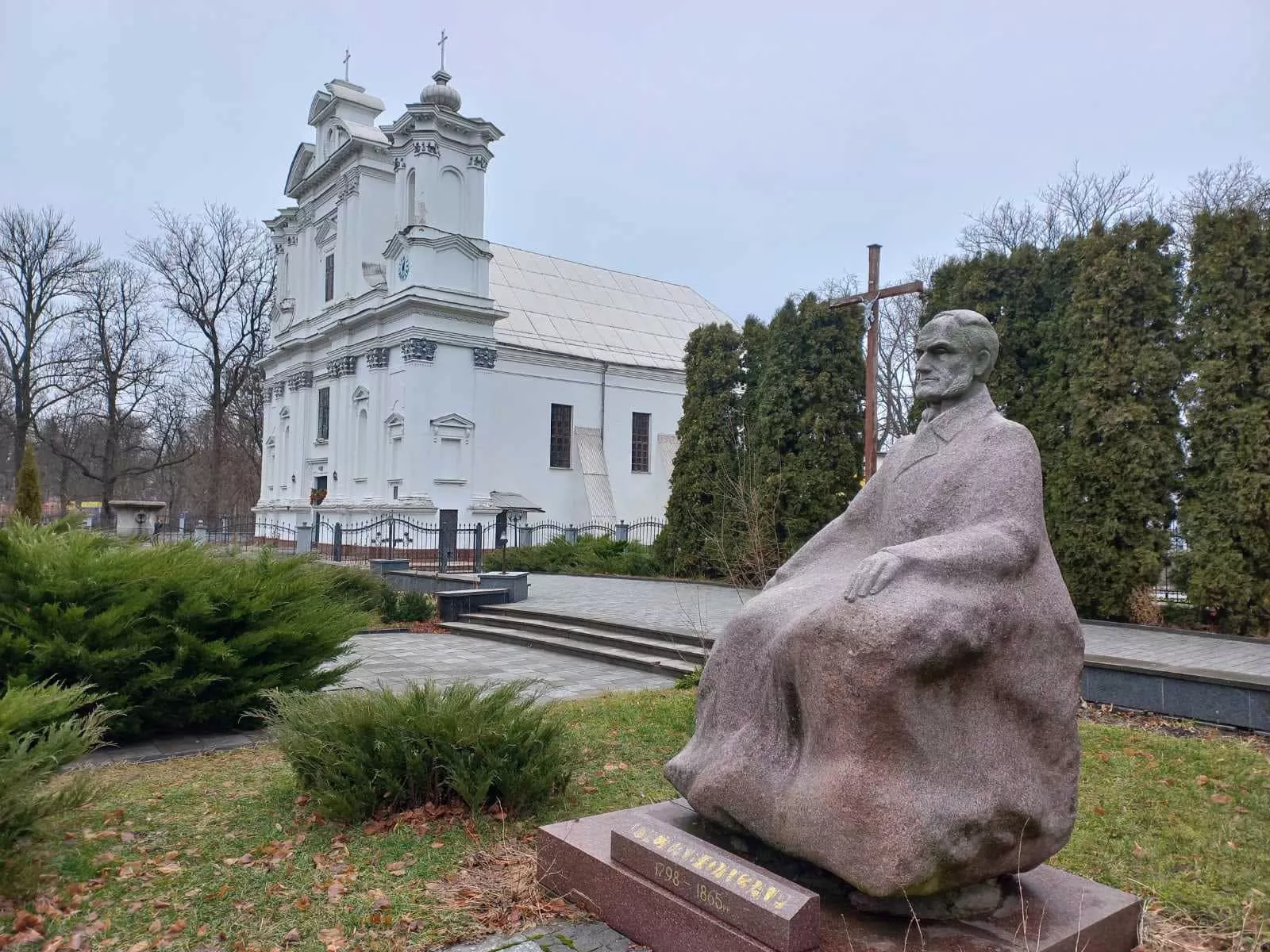
History: the first wooden church was consecrated here in 1608 thanks to Adam Olizar, who converted from Orthodoxy to Catholicism, and his wife Anna. The stone Baroque building with elements of classicism was erected at the expense of the Olizar family in 1776–1779, and in 1802 Pylyp Olizar added a family burial chapel on the left. In Soviet times, the church was closed: from 1936 to 1938 it served as a grain storehouse, and from 1938 to 1991 as a cinema. The Catholic community was officially registered in 1989, the church itself was returned to the faithful in 1991, restored in 1991–1997, and consecrated on November 9, 1997. Inside, the Stations of the Cross, carved in an atypical manner by the Polish master Furdyna, have been preserved. In front of the church stands a granite monument to Count Gustav Olizar (1798–1865) by Vitalii Rozhyk, representing a smooth transition from an unworked boulder to a human figure.
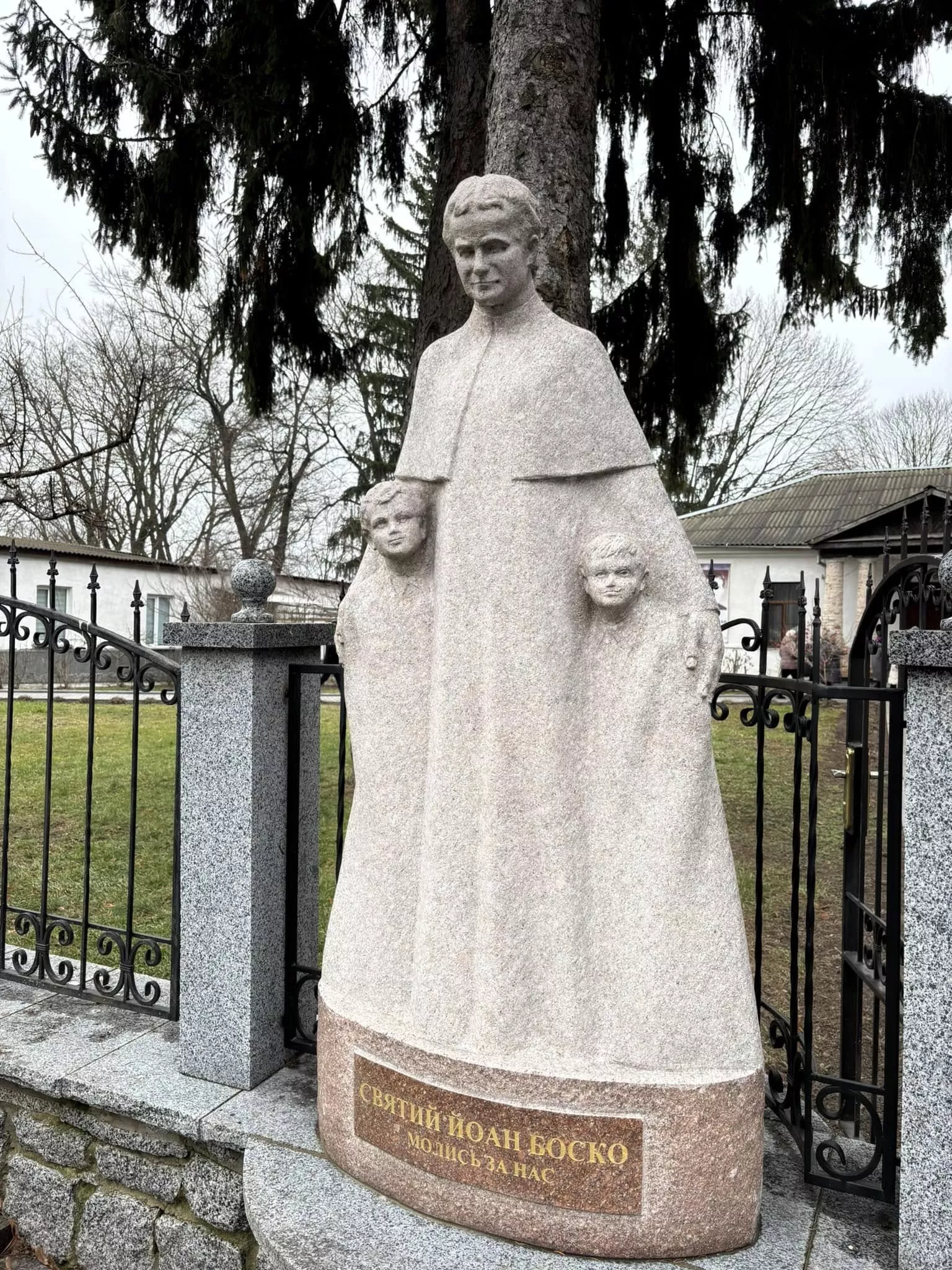
This is an active parish church served by the Salesian Fathers; it is best to check visiting times against the worship schedule, and to clarify with the parish regarding photography inside during services. 20–30 minutes is enough to explore it.
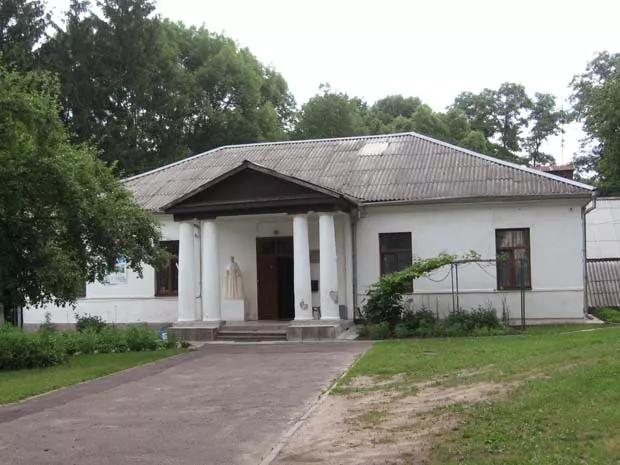
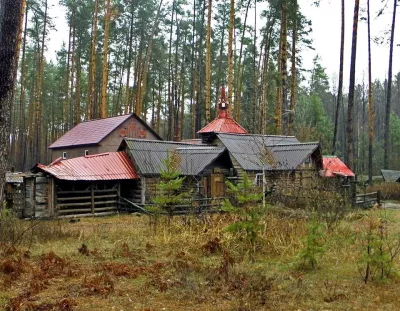
Priest's house (18th century). Photo: Ukraїna Incognita
Remnants of the Olizar estate
Near the park and the church are all that remain of the former palace of the counts Olizar: two columns and a fountain-basin with a lion's muzzle. Both objects have the status of local heritage monuments (protection numbers 215 and 215/1). 10–15 minutes is enough to view them as part of a park walk.
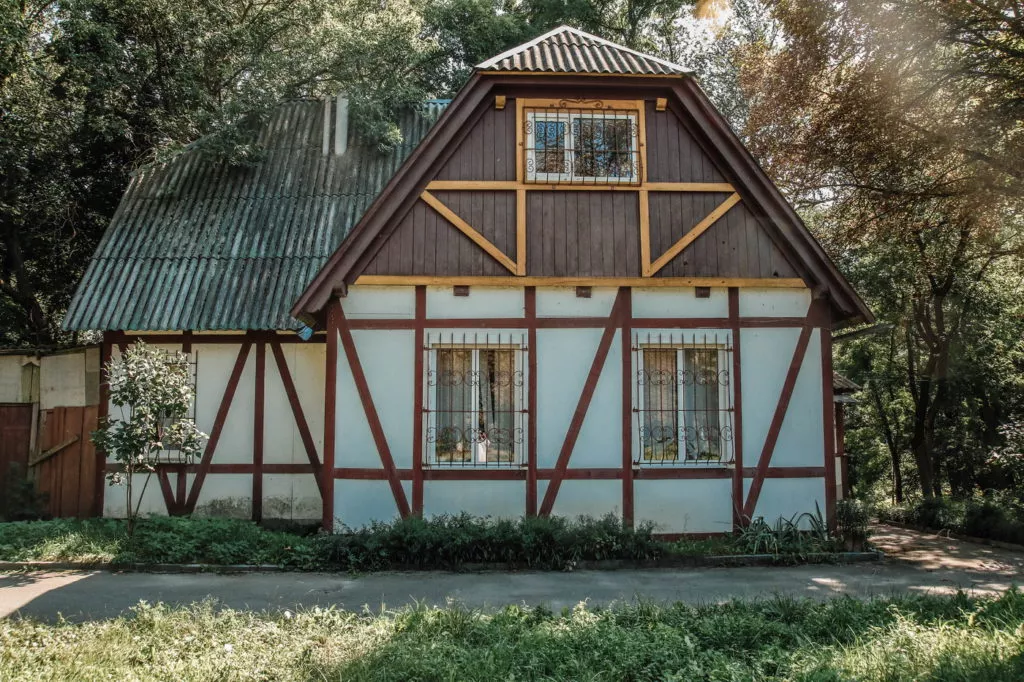
Near the stairs leading to the dam in the Korostyshiv Park, there once stood an unusual building — the archive of the Olizar family. Here, the counts kept a huge collection of ancient documents, charters, and manuscripts.
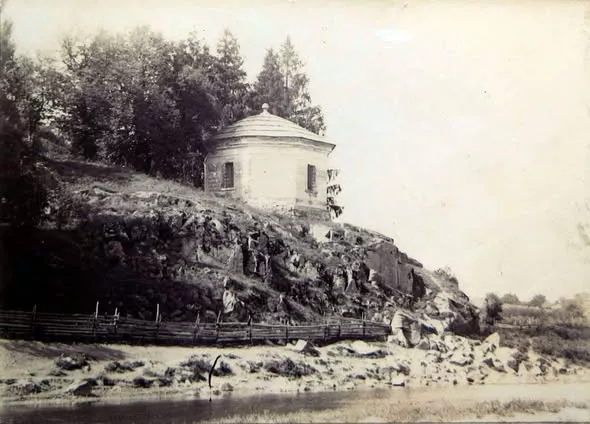
This archive has been known about since 1826. During a search of Gustav Olizar's estate, Russian Empire officials reported that there was a separate stone building in the park filled with a large number of ancient papers. Due to their value, the building was even sealed.
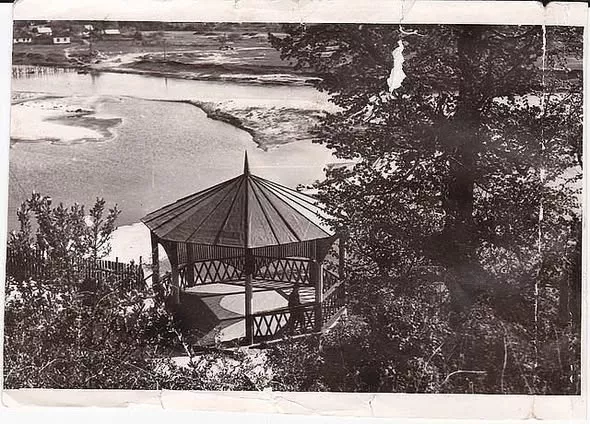
In different years, historians worked here, and some of the documents were later transferred to the Kyiv Archaeological Commission. In total, hundreds of unique historical acts were stored there.
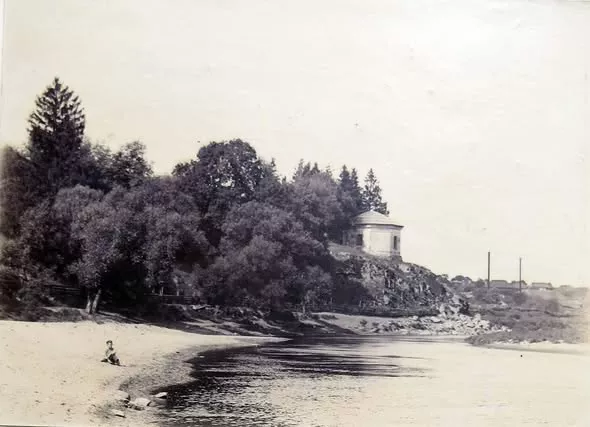
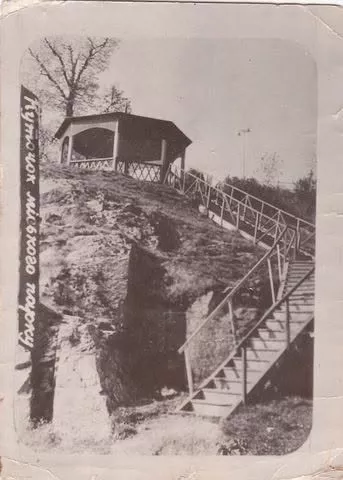
The archive itself was built in the early 19th century in the neo-Gothic style. After the estate was sold, the building lost its purpose, gradually fell into decay, and was completely dismantled after the revolution. Today, nothing remains of it, but it was once home to one of the most valuable private historical collections of Right-Bank Ukraine.
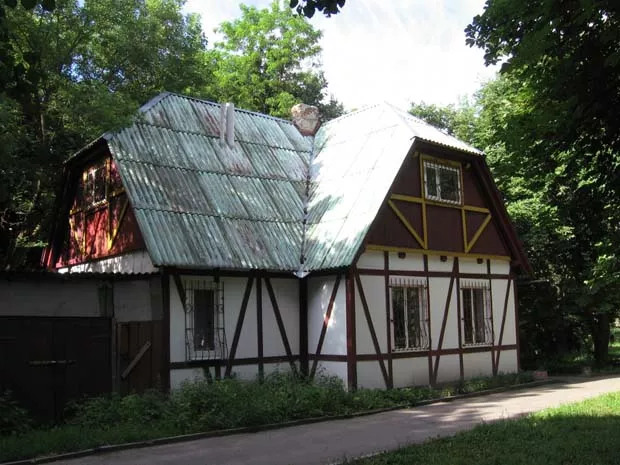
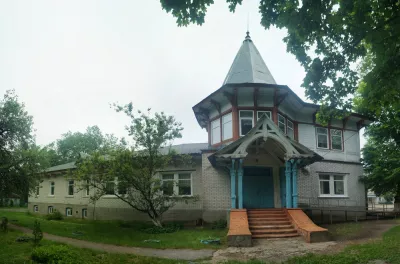
Estate library. Photo: Ukraina Incognita
Korostyshiv Canyon and quarries — the main natural landmark
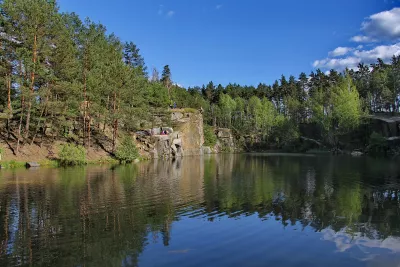
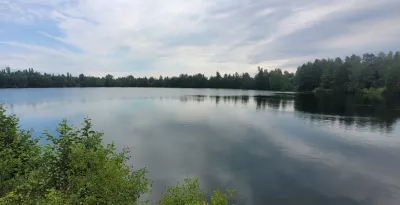
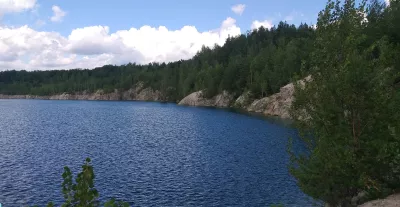
On the outskirts of the city, surrounded by a pine forest, is a cluster of several flooded granite quarries — it is precisely for them that people travel to Korostyshiv even from Kyiv. The most famous of them is the Korostyshiv Canyon, a horseshoe-shaped lake among granite rocks where scenes from the film "The Stronghold" and the TV series "Servant of the People", "The Witch", and "The Sniffer" were filmed. In your navigator, look for "Korostyshiv Canyon" specifically — there are several lakes in the cluster.
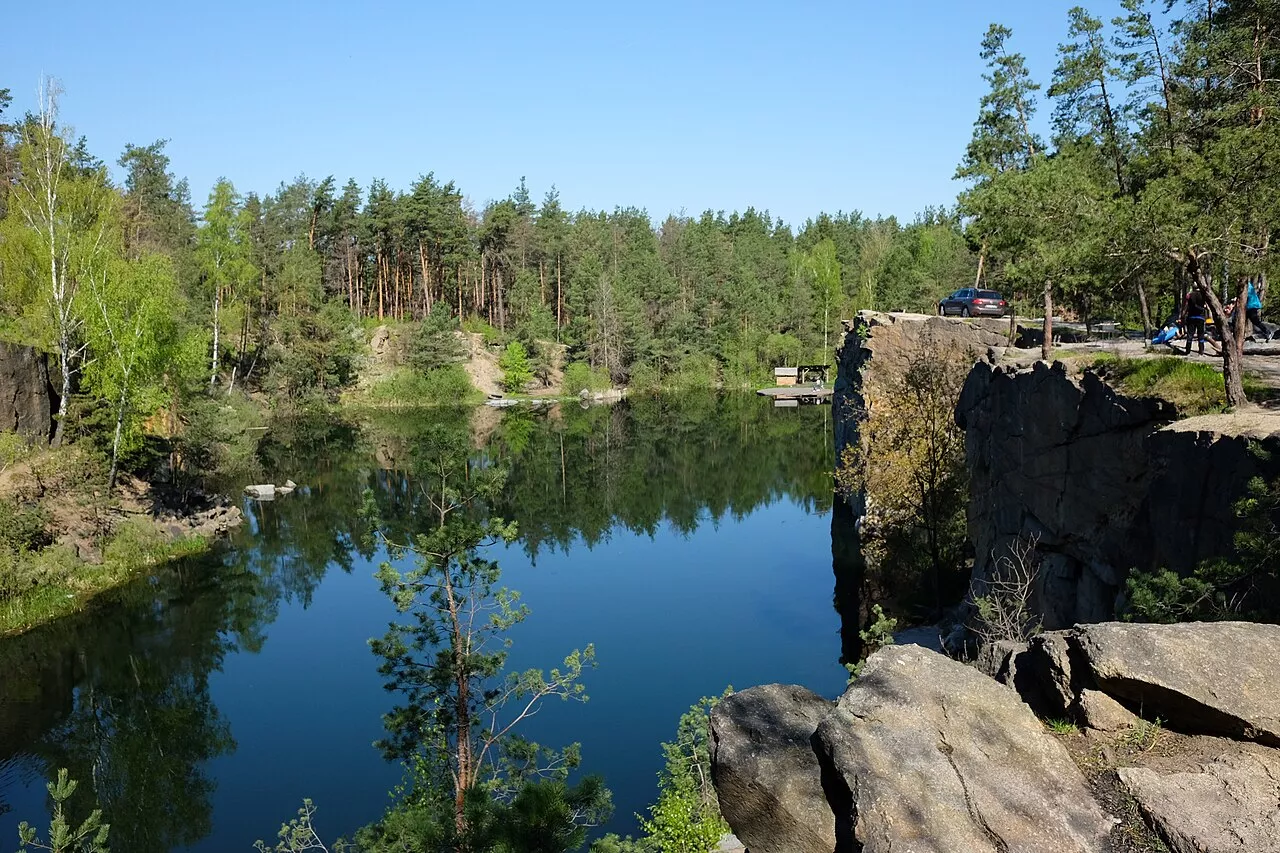
What it's like: the depth reaches up to 20 meters in places, the water is spring-fed and clear, but it warms up slowly. The shores are mostly steep and rocky, with a few shallow entry points into the water, though most visitors jump off the rocks—this requires caution. Due to the lack of waves and currents, supboarding is popular here, and mobile SUP board rental points often appear on weekends. Rocks up to 10 meters high attract beginner rock climbers, and rock-climbing lessons are held on-site. The swimming season lasts from May to September, and in winter the snow-covered rocks are especially striking. People even come here for wedding photo shoots.
Infrastructure: this is mostly a wild location rather than a developed resort. Camping is the main format: on weekends, entire tent towns spring up around the lake. There are no hotels on the shore—for a comfortable night's stay, visitors go to hotel complexes along the Kyiv – Chop highway or rent accommodation in Korostyshiv itself. In summer on weekends, mobile coffee shops operate near the entrance, but it is better to buy picnic groceries in advance in the city. Along the perimeter of the forest, there are homemade tables, campfire spots, and wooden gazebos. There are no permanent toilets, and due to the large flow of people, the trash problem is acute in summer—please take your garbage bags with you. Cars are left at the approach, in the forest belt.
Other lakes in the cluster:
- Granite Quarry Lake — the largest of the four, to the right of the entrance to the city. It is large enough that the beach area on one shore does not interfere with fishing on the other.
- First Lake — to the left of the entrance, surrounded by deciduous forest, adjacent to a dacha sector; less suitable for swimming, but quiet and convenient for photography and fishing.
- Natural lake near the hotel complex — the only naturally occurring one in the cluster; the calmest option with a lower tourist flow.
Teteriv River and its rocky shores
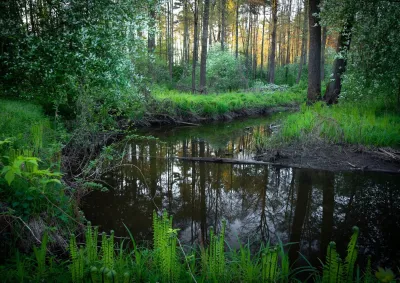
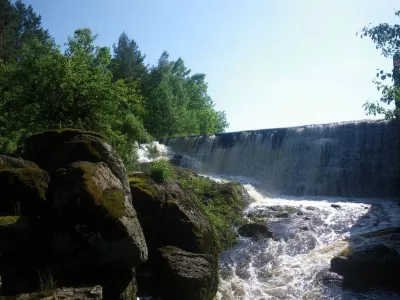
The Teteriv River cuts through the local granites, forming steep banks, rocky ledges, and rapids—one of the most spectacular landscapes of Zhytomyr region. In summer, you can see kayakers tackling the rapids, in autumn, photographers hunting for golden landscapes, and in winter, the snow-covered rocks acquire a special austere beauty.
Ivan Franko Pedagogical College (former teachers' seminary)
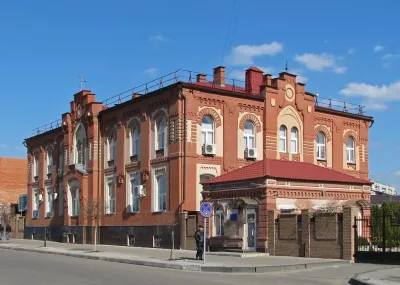
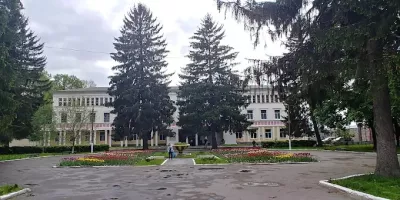
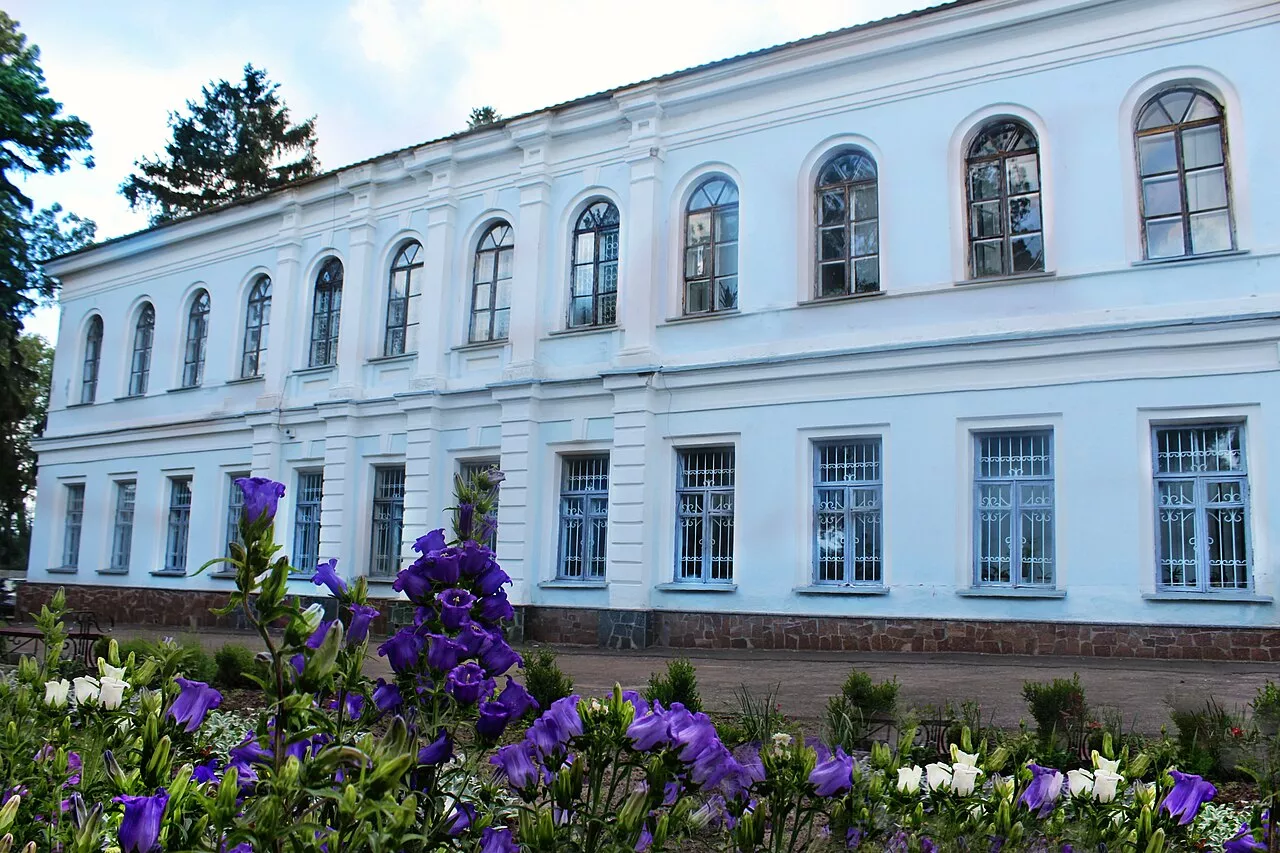
A historic two-story brick building on Seminarska Street, erected in the early 1870s for the Korostyshiv Teachers' Seminary, is one of the oldest educational structures in the city that is still in use for its original purpose. Access to the institution's grounds is restricted for visitors, but the building can be freely viewed from the outside.
Holy Annunciation Church
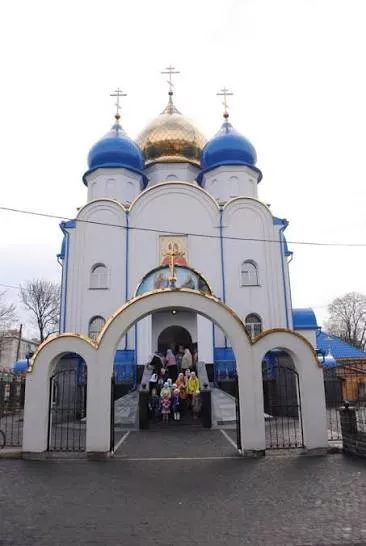
An Orthodox church in the city center, on Peremohy Street, is another active religious building in Korostyshiv besides the Roman Catholic church.
Nearby: the quarry in Vysoke Kamin
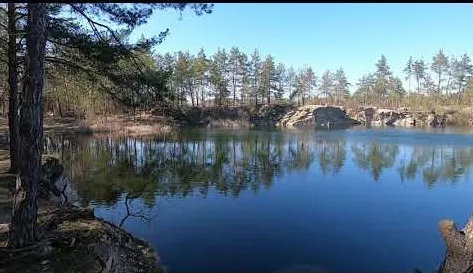
If you have time for a trip outside the city, a few kilometers away, towards the village of Vysokyi Kamin, there is another picturesque quarry — a deep lake surrounded by steep cliffs, pines, and birches; locals compare the scenery to that of Karelia. Outcrops of pegmatite, an ancient igneous rock, can be found here. This location is suitable for those planning a whole day in the Korostyshiv region.
Practical Tips
- One-day itinerary: in the morning — the church, the sculpture park, and the remains of the Olizar estate (all within a 5–10 minute walk of each other); in the afternoon — transfer to the canyon or one of the quarries for swimming, rock climbing, or a photoshoot; if time permits — a trip to Vysokyi Kamin.
- Parking: in the center — along the streets near the park and the church; near the canyon and quarries — on the side of the forest road.
- What to bring: water and snacks (especially for the canyon), non-slip shoes for descending the cliffs, and garbage bags.
- When to go: the park and church — all year round; the canyon and quarries — May to September for swimming, but beautiful at any time.
FAQ
How much time is needed to explore Korostyshiv? The main sights in the city center (the park, the church, the remains of the estate) take a few hours. If you add the canyon and quarries, plan for a full day.
How many sculptures are there in the Korostyshiv park? There are 111 sculptures and monuments in the city, most of them created by Vitalii Rozhyk; it was for this indicator that Korostyshiv was entered into the Book of Records of Ukraine in May 2024.
Is it allowed to swim in the Korostyshiv Canyon? Yes, although the shore is mostly rocky and undeveloped — gently sloping entries into the water are only available in some places, so you should be careful.
Is the canyon far from the center of Korostyshiv? It is located on the outskirts of the city, about a kilometer away from the built-up area.
When was the Church of the Nativity of the Blessed Virgin Mary built? The stone building was erected in 1776–1779 at the expense of the Olizar family, although the parish has existed since 1608.
What remains of the Counts Olizar estate? Two columns, a fountain bath with a lion's face, the entrance gate, and the park itself.
How to get there
Korostyshiv lies on the Kyiv — Chop highway (M-06), about 30 km east of Zhytomyr and about 110 km from Kyiv. It is convenient to get here by car or by buses running along this highway between Kyiv and Zhytomyr.