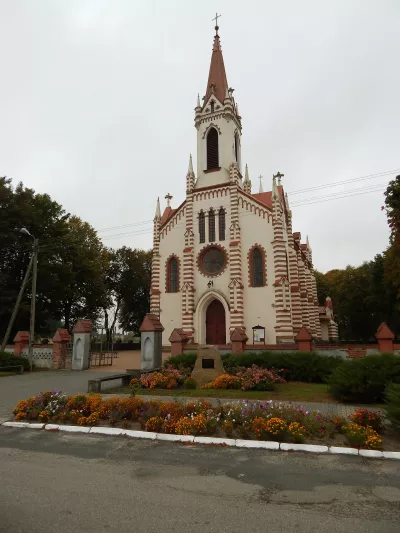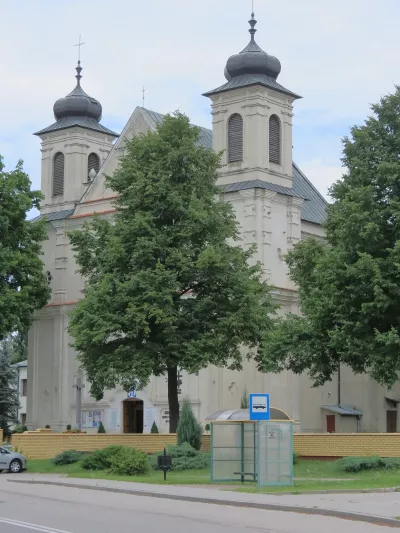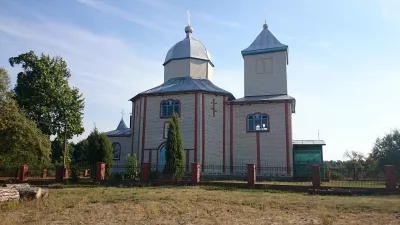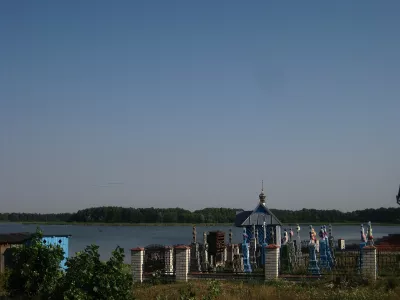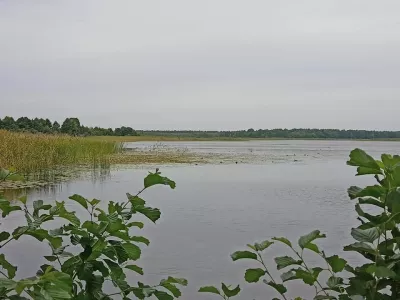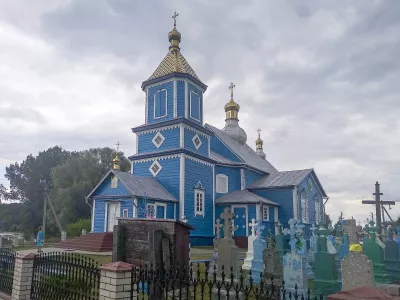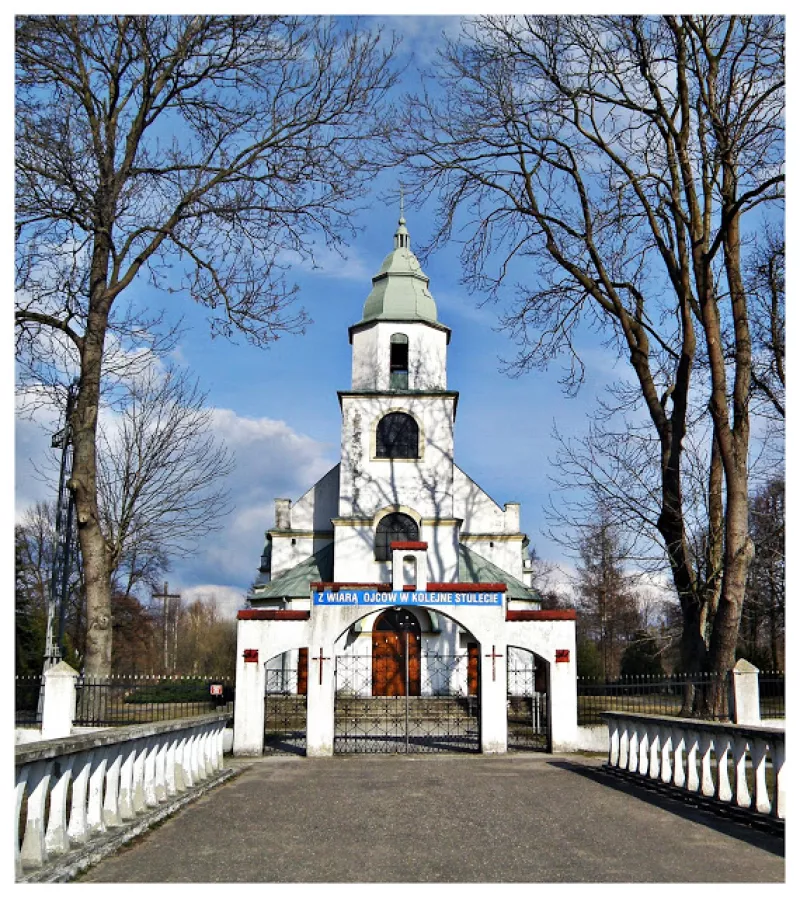
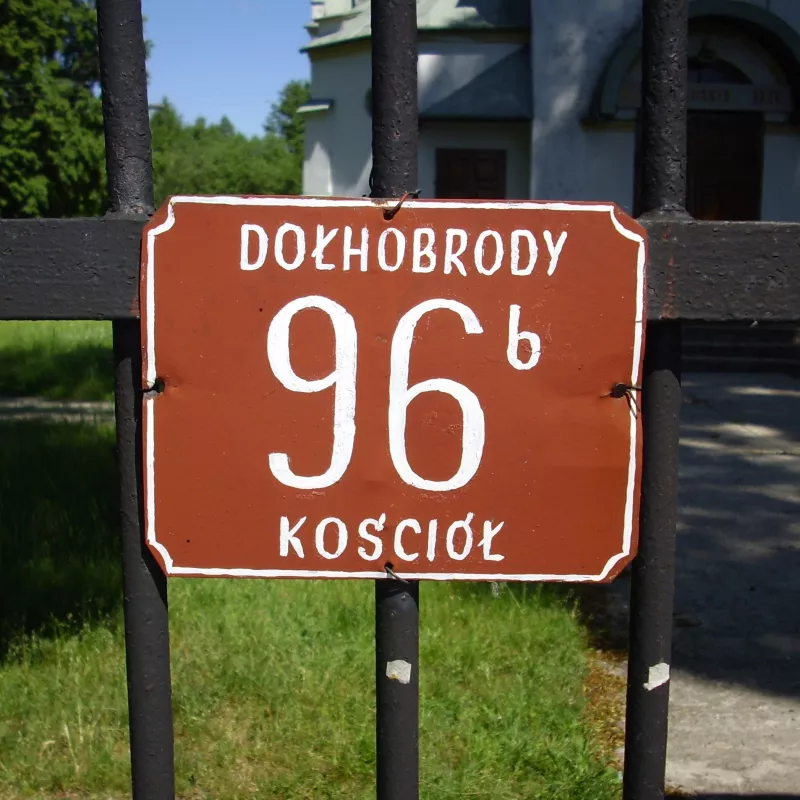
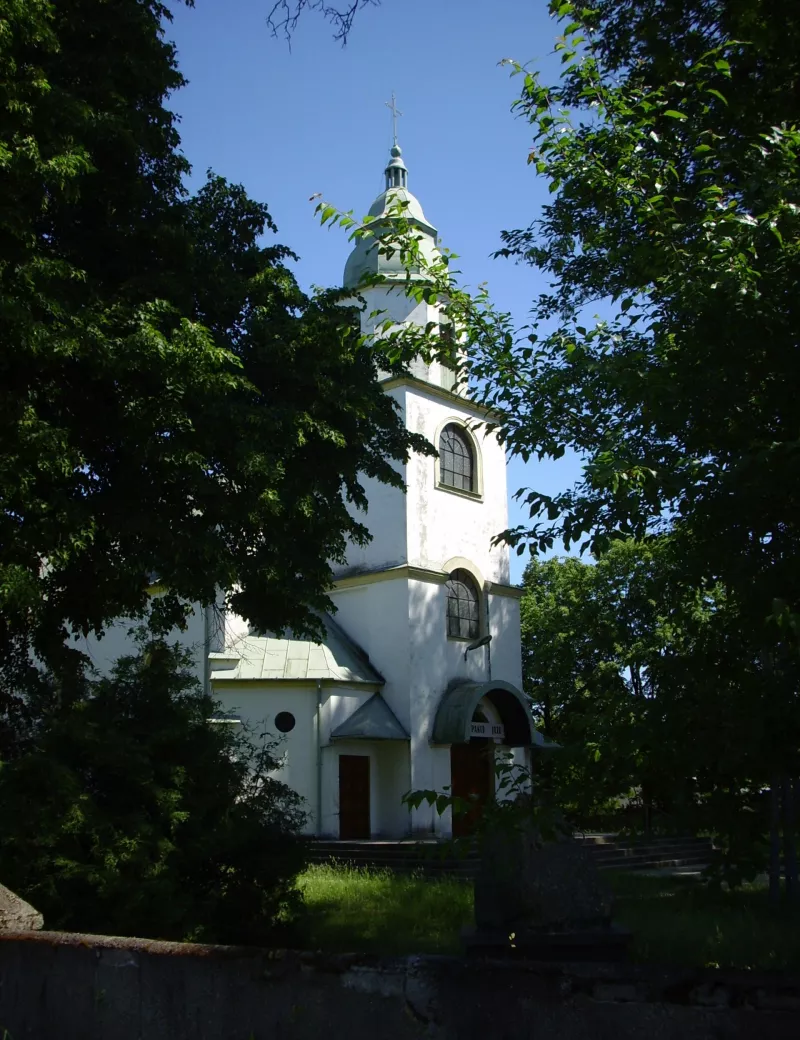
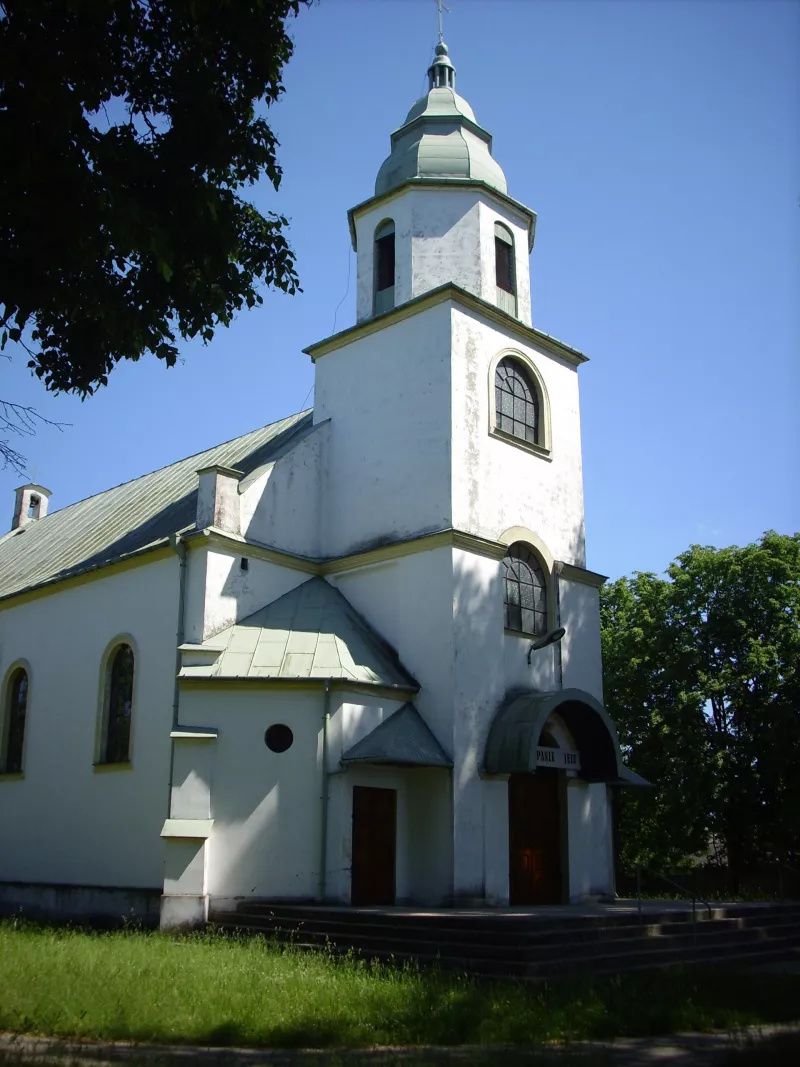

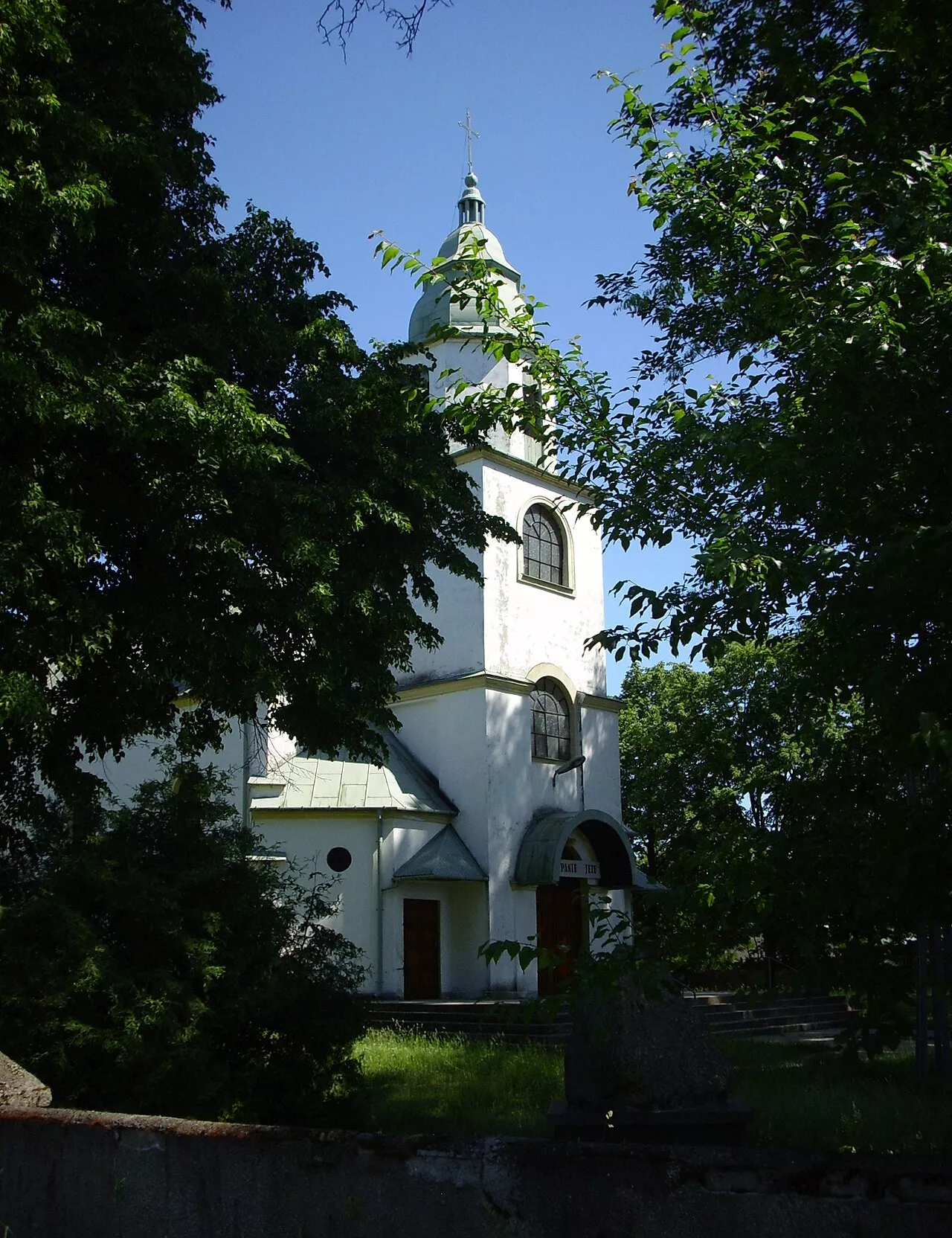
The church in Dolhobrody is a brick masonry temple built in 1927–1932 in a large village on the Buh River, in the gmina of Hanna of Włodawa County, about 15 km north of Włodawa. The church itself is dedicated to Saint Stanislaus, and the parish is named the Exaltation of the Holy Cross — which was the name of the old church on the site of which it stands. Because of this, the church is often confused: both names appear in maps and guidebooks, but they refer to the same building.
A village of long beards or long fords
The beginnings of Dolhobrody date back to the 14th century, and from the late 16th century the village belonged to the Radziwiłł family. Several legends are told about the name. According to one, three monks with long beards settled here, and the locals nicknamed the place accordingly. According to another, the name comes from the long shallow fords across the Buh River, which spreads out widely here. There is also a version about an «oak town» — indicated by the local form «Dubuhrody» and the neighboring hamlet of Zahorodocze. In 1921, the village had over a thousand residents: Roman Catholics, Orthodox Christians, and several dozen Jews.
From church to Roman Catholic church
Since the 17th century, a church of the Exaltation of the Holy Cross stood in Dolhobrody — initially Orthodox, then Uniate. In 1701, Grand Lithuanian Chancellor Karol Stanisław Radziwiłł endowed it with land, which is why the 300th anniversary of the parish was celebrated here in 2001. In 1875, following the liquidation of the Chełm Uniate Eparchy by the tsarist authorities, the temple became Orthodox. In 1919, it was handed over to Catholics, and in 1929 the old wooden church was dismantled.
The present eclectic-style church was erected in 1927–1932. It has preserved the memory of the previous temple: 18th-century angel figures in the main altar were brought over from the destroyed church. Among the ancient items are a mid-19th-century monstrance, an 18th-century Lyon chasuble, and a candle chest with folk ornamentation. In the main altar is the icon of Our Lady of Częstochowa, which covers the image of Saint Stanislaus, the patron of the church.
Village of artists
Dolhobrody is called the «village of artists»: the famous Polish painter Stanisław Baj lives and paints here, having dedicated many canvases to his native places and the Buh River. The folk politician Josafat Błyskosz was also born here. The village has a school, a fire brigade, and a Border Guard outpost — the Buh is just a stone's throw away from here.
How to get there
Dolhobrody lies on road 816 along the Buh: from Włodawa it is about 15 km north, and from Chełm about 65 km. For Ukrainians this is Poland, a foreign passport is required. Near the border with Belarus, do not enter closed border zones. Nearby are the former church in Łącuki, which was once a filial church of the Dolhobrody parish, the wooden temple in Hanna, and the church in Różanka. More broadly about the region, see the article Polish Polissia.