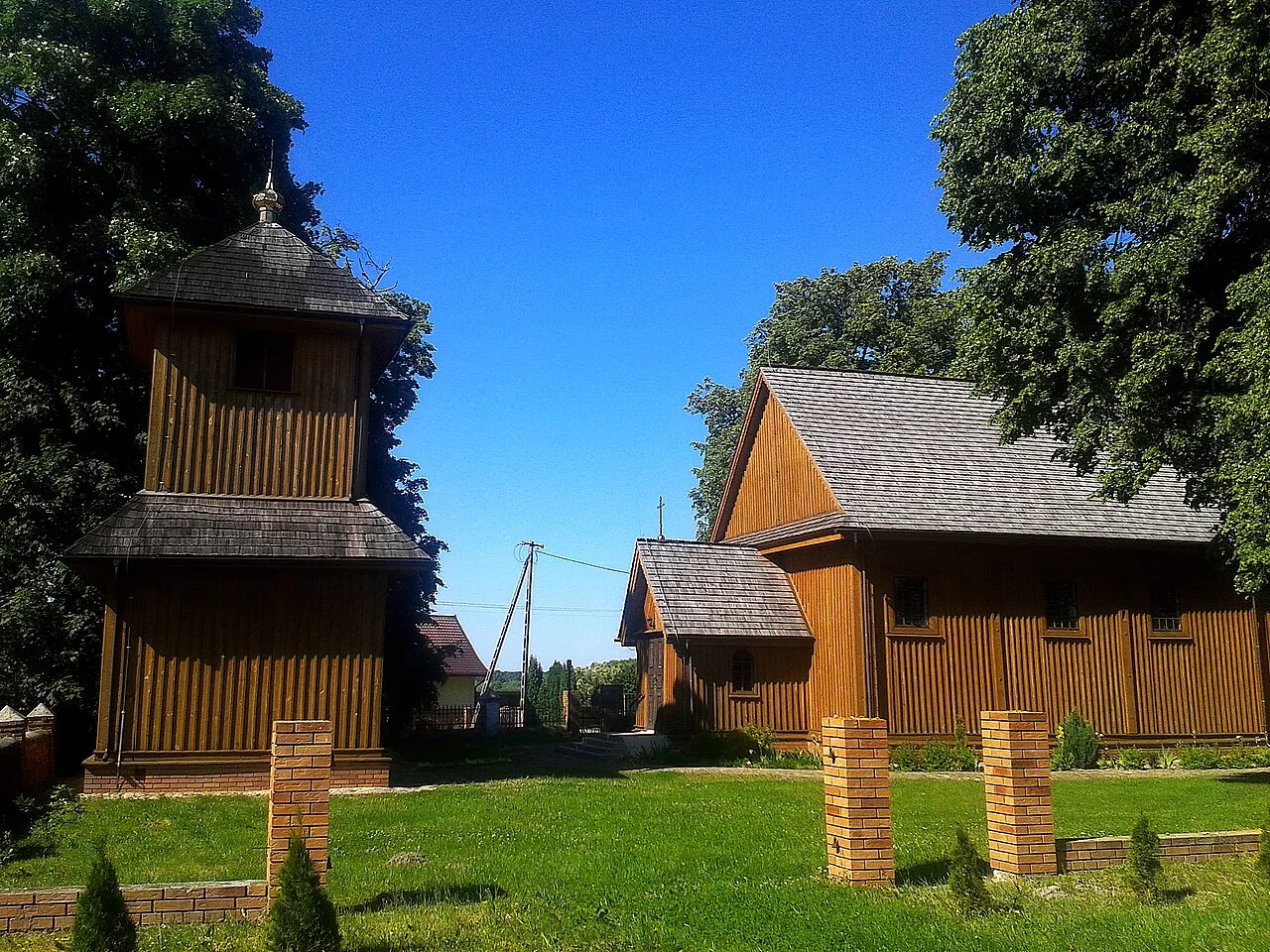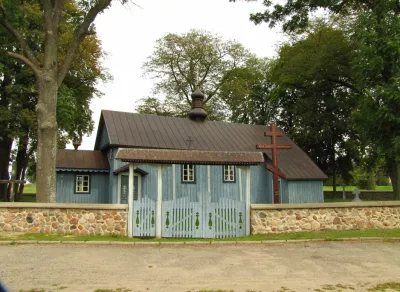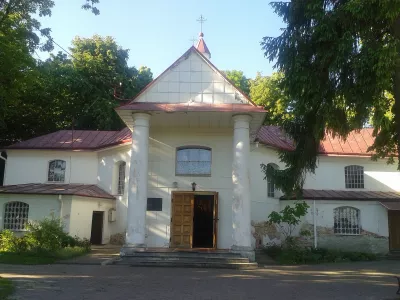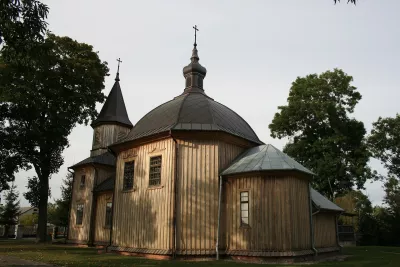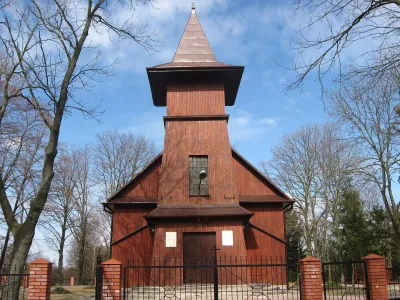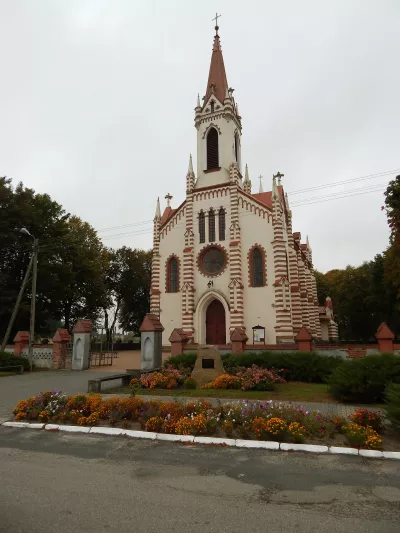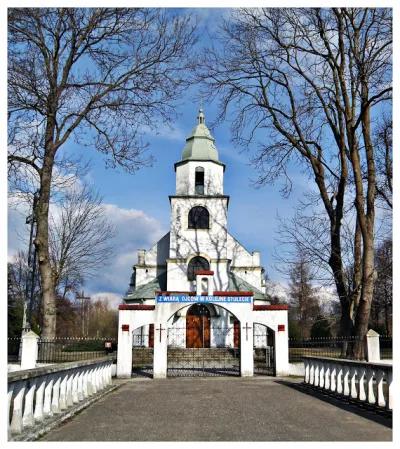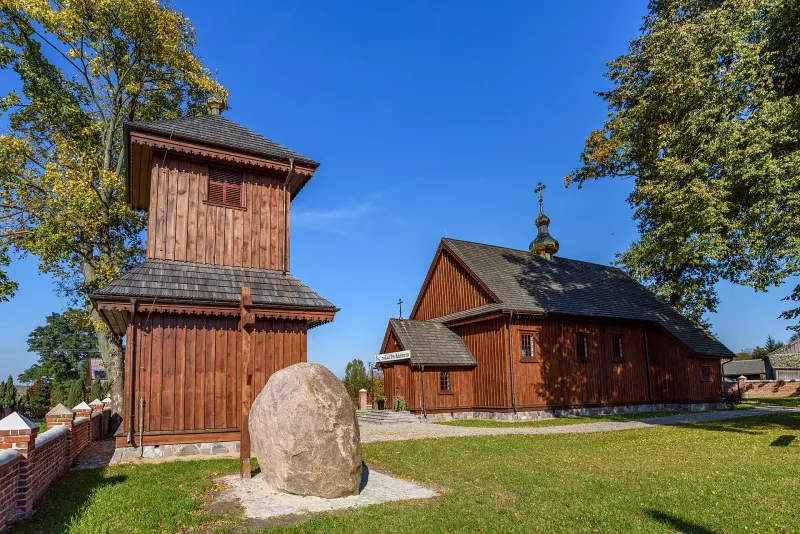
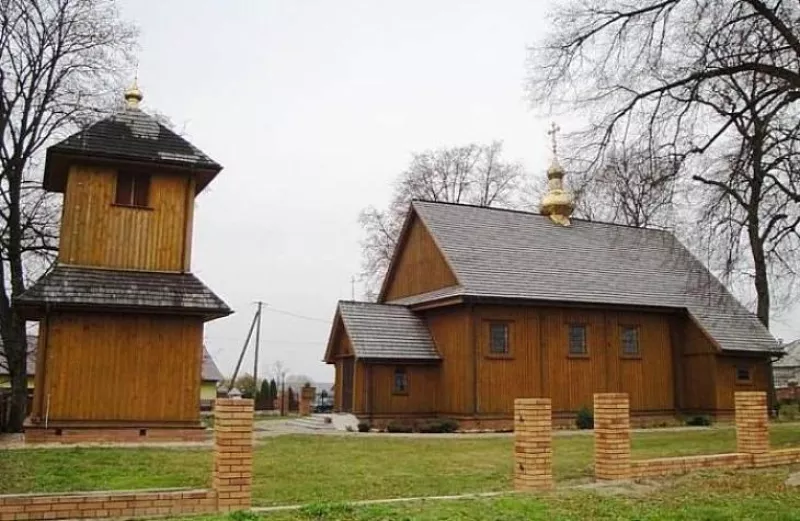
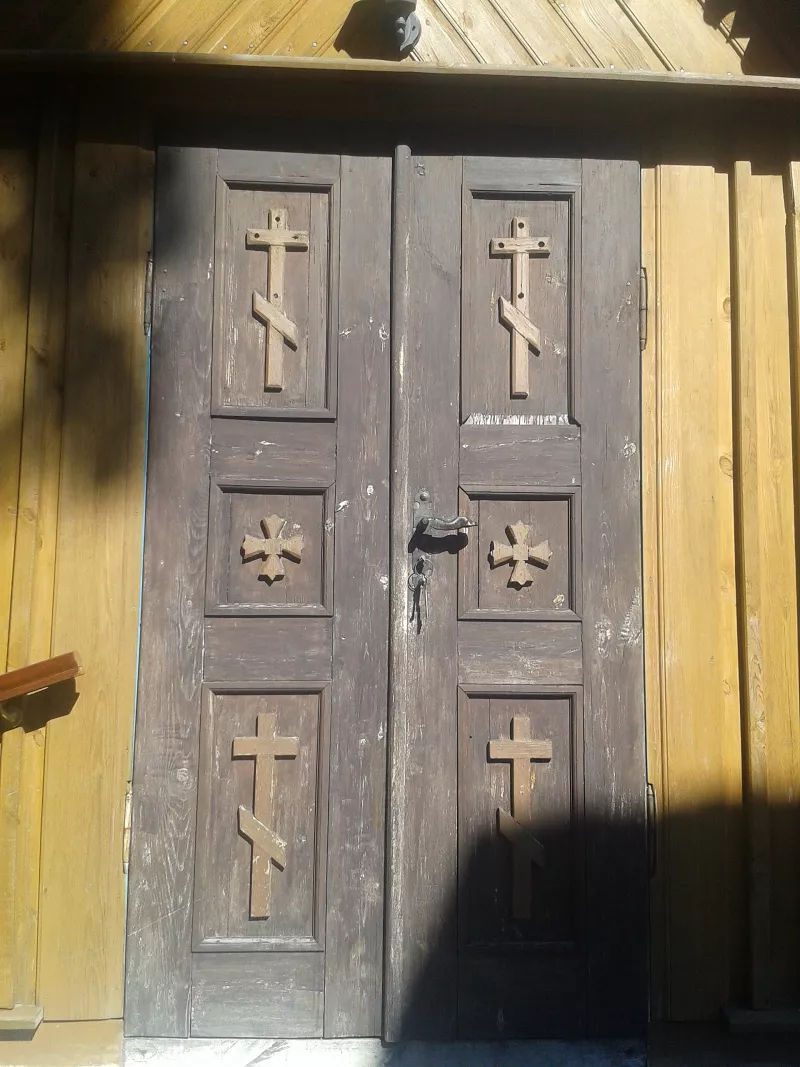

The wooden church of the Exaltation of the Holy Cross stands in the village of Horostyta in gmina Wyryki, a couple of dozen kilometres west of Włodawa. The church is slightly set apart from the village buildings, by the road, among old trees, next to a separate bell tower and a carved fence. The parish here is one of the oldest in the region: the first church is mentioned in 1521, and the current wooden one was built in 1702. Today it is a parish church of the Polish Autocephalous Orthodox Church, which also includes filial churches in Hola and Kaplonosy.
Five Centuries of the Parish
A record from 1521 names the Orthodox Dean of Włodawa, Jan Sopoćko, as the founder of the church, and Michał Kopeć among the benefactors. At the time, the church was a filial of the parish in Opole. In 1596, the Bishop of Chełm accepted the Union of Brest, and the church, along with the entire Eparchy of Chełm, became Uniate. By 1699, Horostyta already had a separate Uniate parish, and in 1702 the Kopeć family, owners of the Opole estate, built a new wooden church — the one that still stands today. It was thoroughly repaired in 1793–1794, and in 1861 a bell tower was erected and the church was renovated once again at the expense of Stanisław Szlubowski, the owner of the local sugar refinery.
From 1875 to Operation Vistula
In 1875, the Russian authorities liquidated the Uniate Eparchy of Chełm, and the parish was forcibly transferred to the Russian Orthodox Church. Around 1880, a new iconostasis appeared in the church. In 1915, most of the Orthodox residents went into exile deep into Russia, and until 1917 services were held only occasionally.
After the war, the church was claimed by both Orthodox and Catholics, who cited its Uniate past. In 1923, the church was opened as an Orthodox one, and in the interwar years about 150 people attended it regularly. In 1947, the Orthodox residents were deported during Operation Vistula, and the church was closed. The parish was successfully restored in 1953. A major renovation in 2004–2010 renewed the walls, foundations, shingle roof, iconostasis, and bell tower, and in 2021 the church received an award from the Lublin Voivodeship Conservator of Monuments. That same year, on the 500th anniversary of the first mention, on 26 September, Archbishop Abel of Lublin and Chełm consecrated the renovated church.
Iconostasis and Old Icons
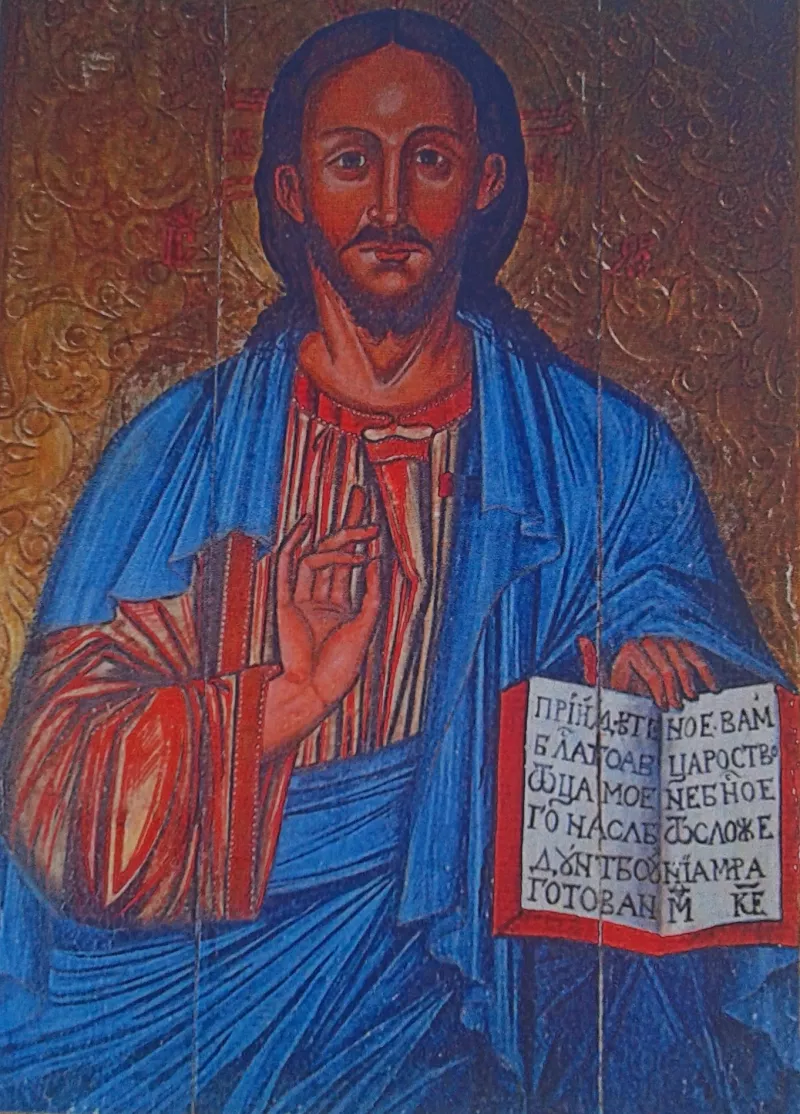
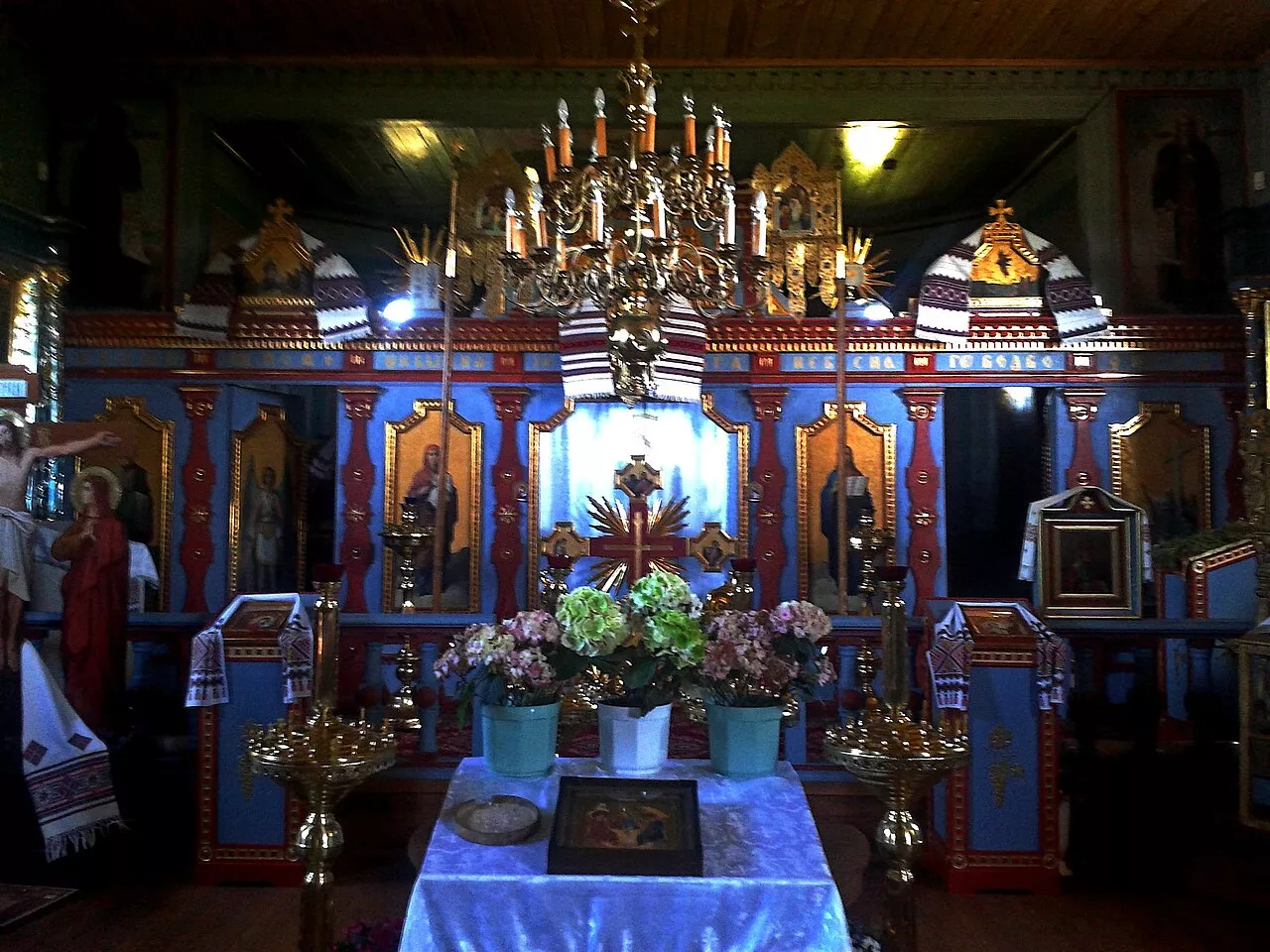
The church is single-nave, with a single cupola, log-built, covered with planks outside and inside, under a gable shingle roof; during services, it can accommodate about a hundred people. The single-tier 1880 iconostasis is painted white with brown pilasters. On it are Saint Nicholas, Saint George, an angel, the Mother of God, Christ Pantokrator, and the Exaltation of the Cross.
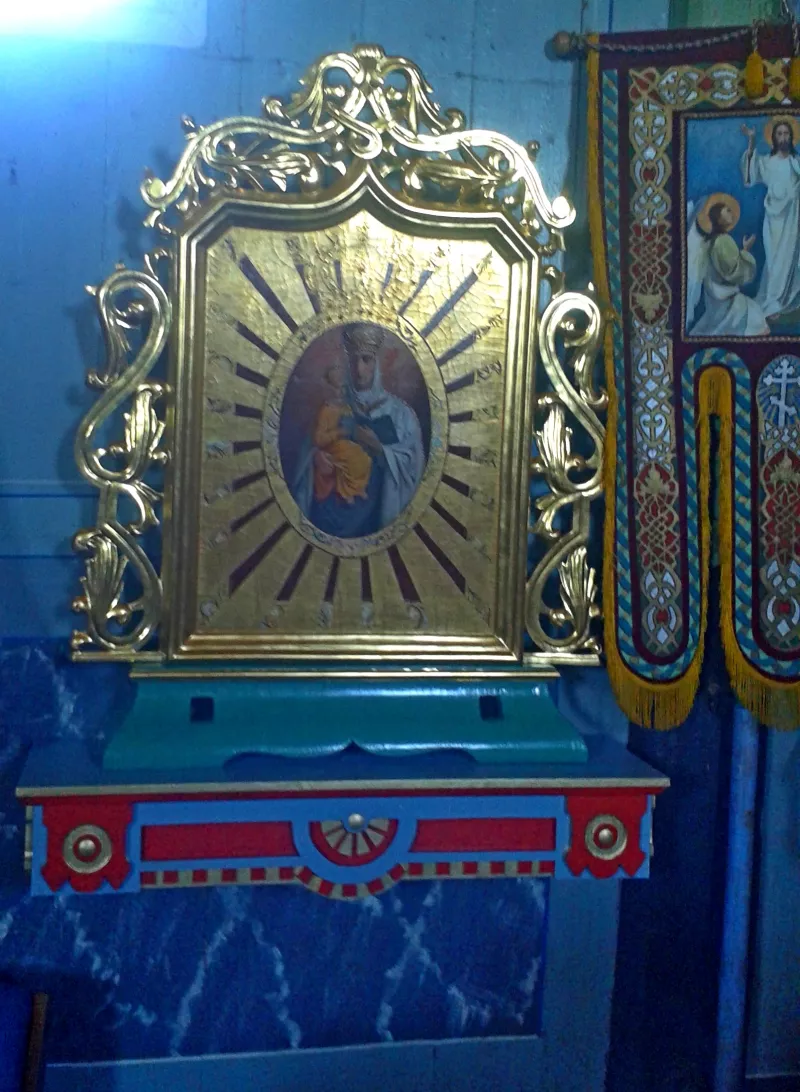
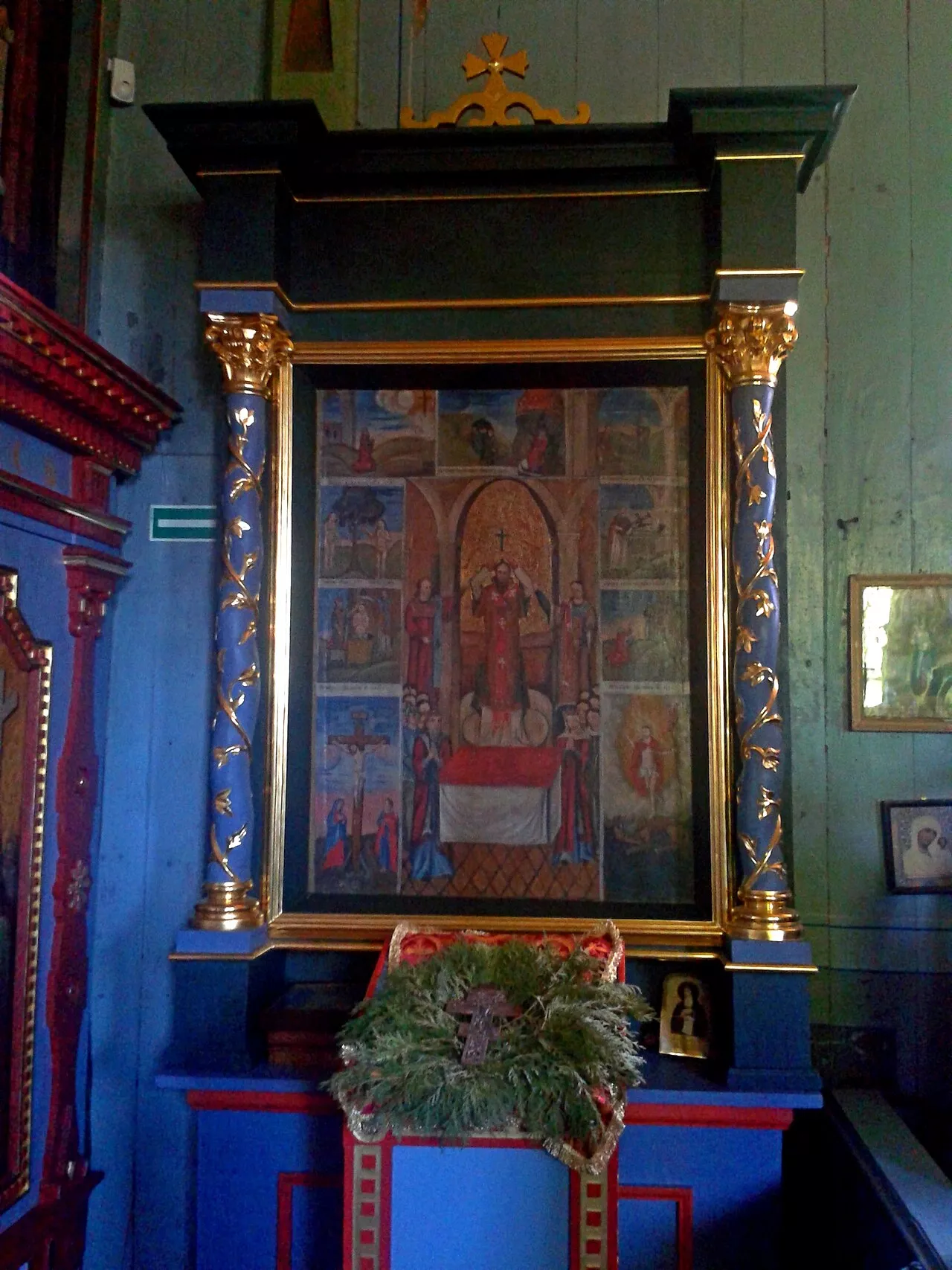
The most valuable artefact is the late Gothic icon of the Exaltation of the Cross, painted in oil on wood. The main scene is surrounded by small panels, among them Saints Anthony and Theodosius of the Caves and Prince Borys. To the left of the iconostasis in a kiot is an icon of the Mother of God with Child from the early 19th century, and the church preserves processional icons with the Mother of God of Chełm and Mount Athos. The church and bell tower are entered in the register of monuments.
How to Get There
Horostyta lies approximately 20 km west of Włodawa, with buses running from Lublin and Chełm; beyond that, it is more convenient by car or bicycle. A few kilometres away are the wooden church and skansen in Hola and the cemetery church in Kaplonosy, making it easy to visit all three churches of the same parish in a single day. The Włodawa Forests Trail runs through the forests west of Włodawa, and a broader overview of the region can be found in the article Polish Polissia. The easiest way to get inside is during a service or by arranging it with the parish. For citizens of Ukraine, this is Poland: a biometric passport is required.