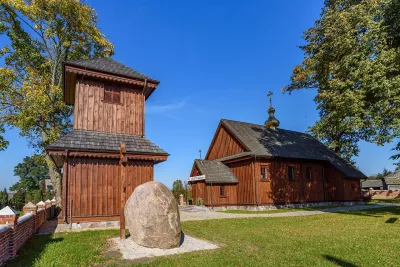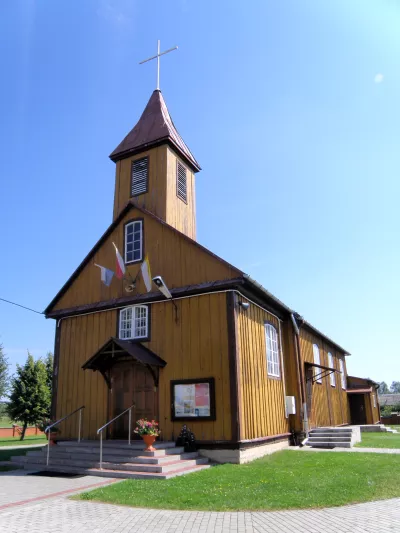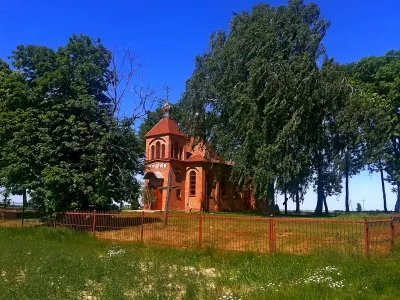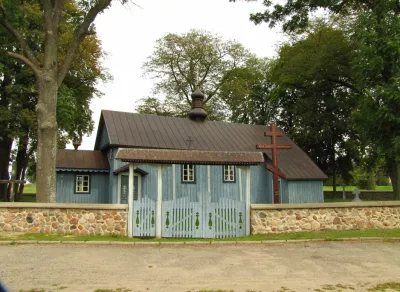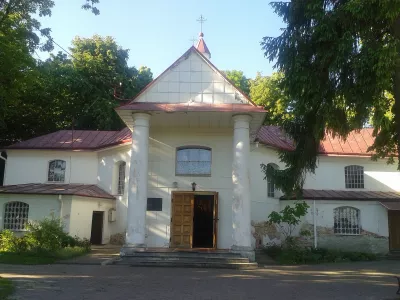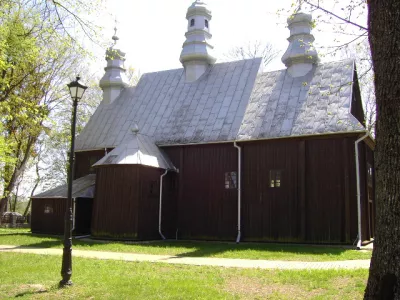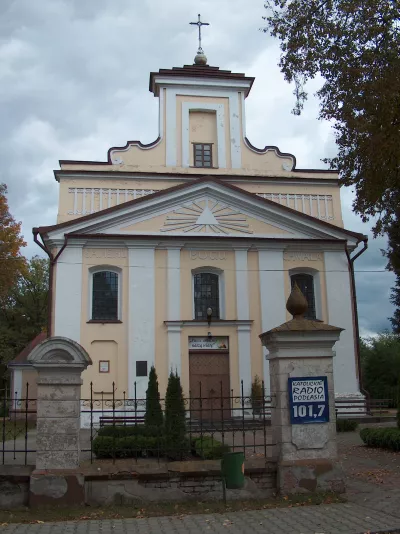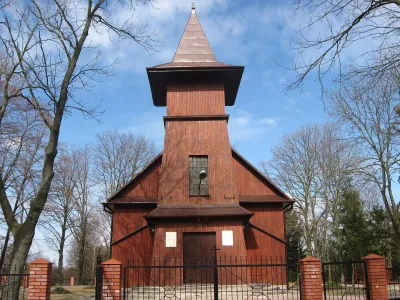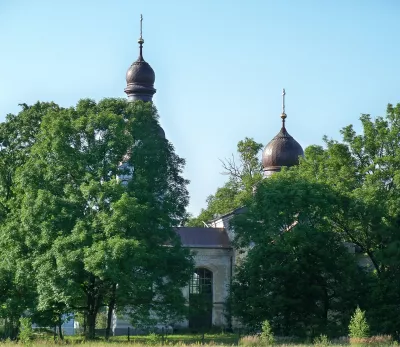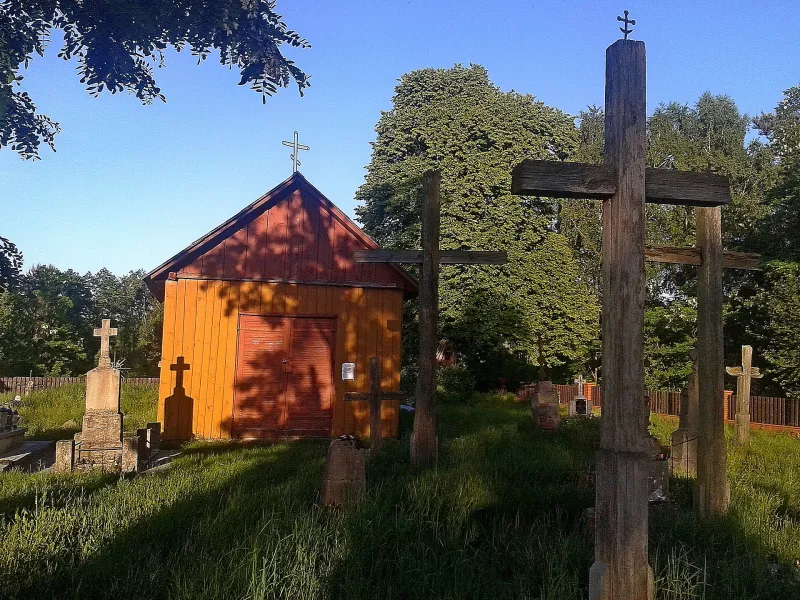
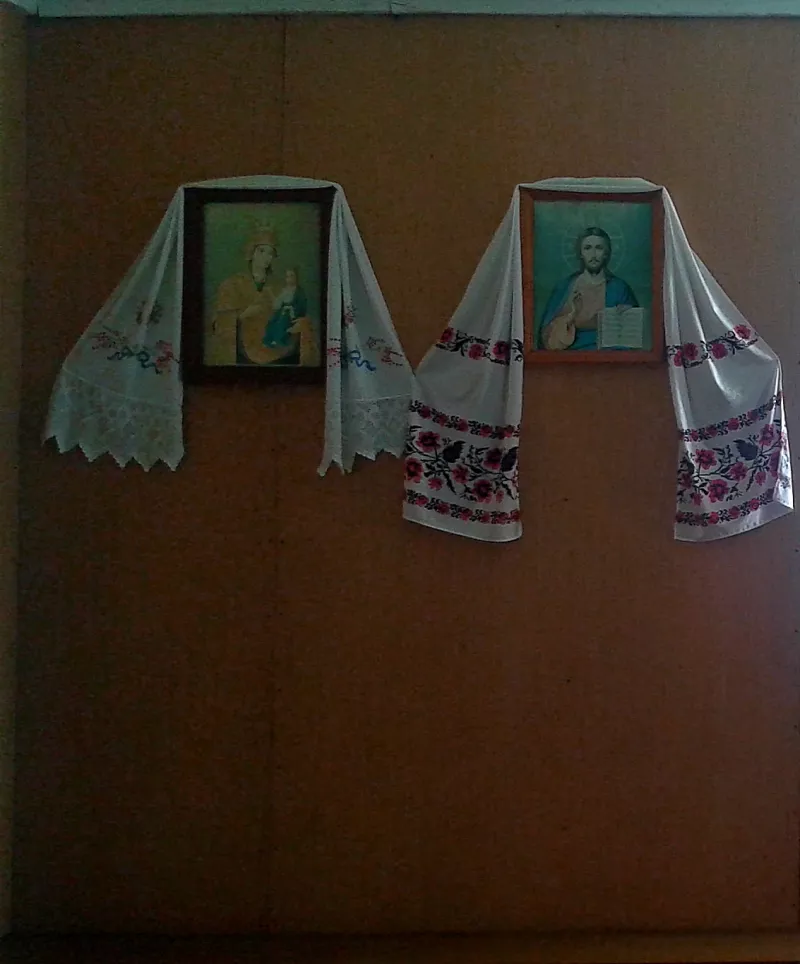
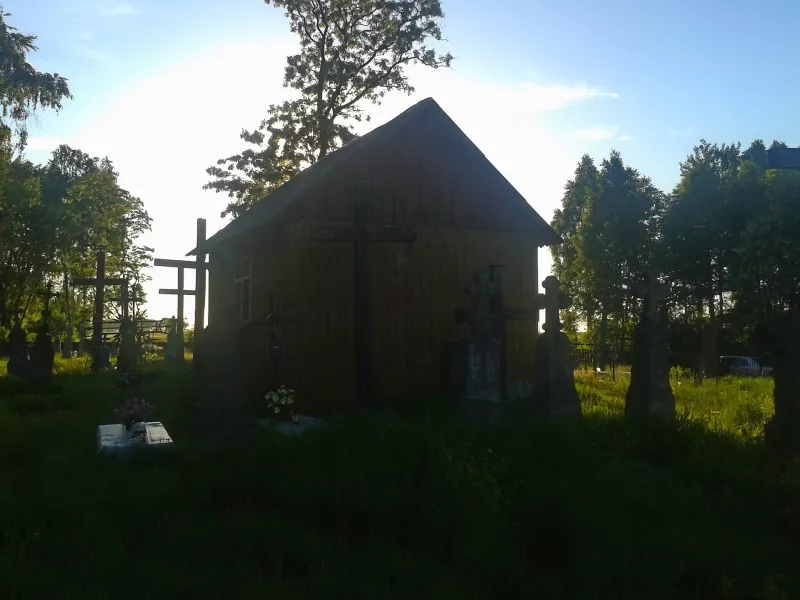
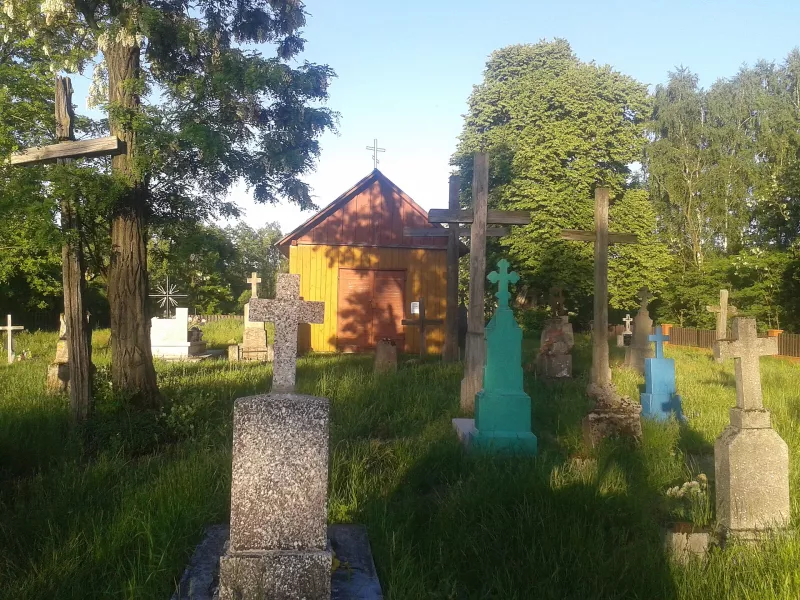
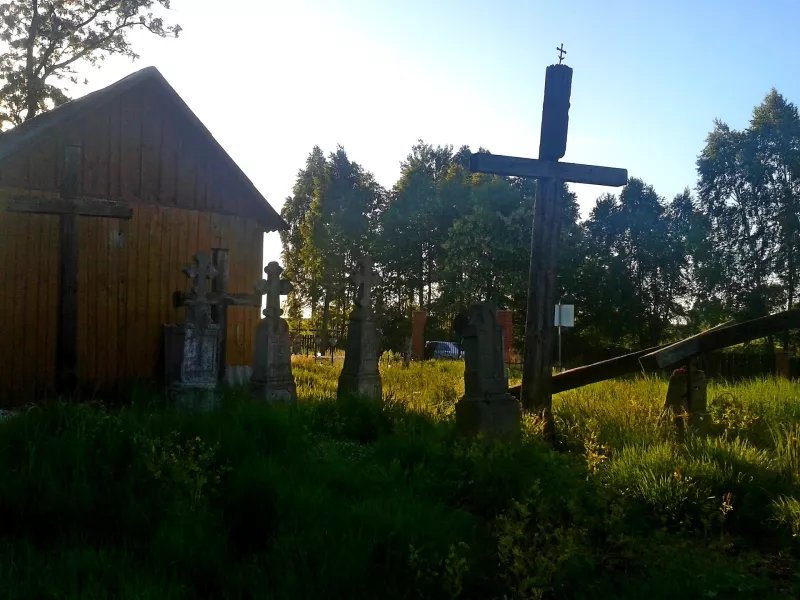

The small wooden church of Saint Olha stands in the Orthodox cemetery in the southern part of the village of Kaplonosy in Gmina Wyryki, about 15 km west of Włodawa. It is a filial church of the parish of the Exaltation of the Holy Cross in Horostyta. The value of this place lies not only in the church itself, but also in the old cemetery around it: tall oak crosses and forged metal crosses show how Polissian villages in Chełm Land buried their dead.
A village with ancient roots
Linguists derive the name Kaplonosy from the nickname Kaplynos; as early as the maps of the early 19th century, the village was recorded as Kapłanos. In 1514, King Zygmunt Stary granted the lands here to Prince Andrij Sanguszko, and since then Kaplonosy has been part of the large Włodawa estates, which later passed to the Leszczyński, Pociej, Fleming and Czartoryski families. Almost all the peasants were initially Orthodox, after the Union of Brest — Greek Catholics, and from 1875 Orthodox again; they belonged to the parish of Saint Nicholas in Lubień. In 1921, out of 744 residents of the village, 640 were Orthodox.
From chapel to church
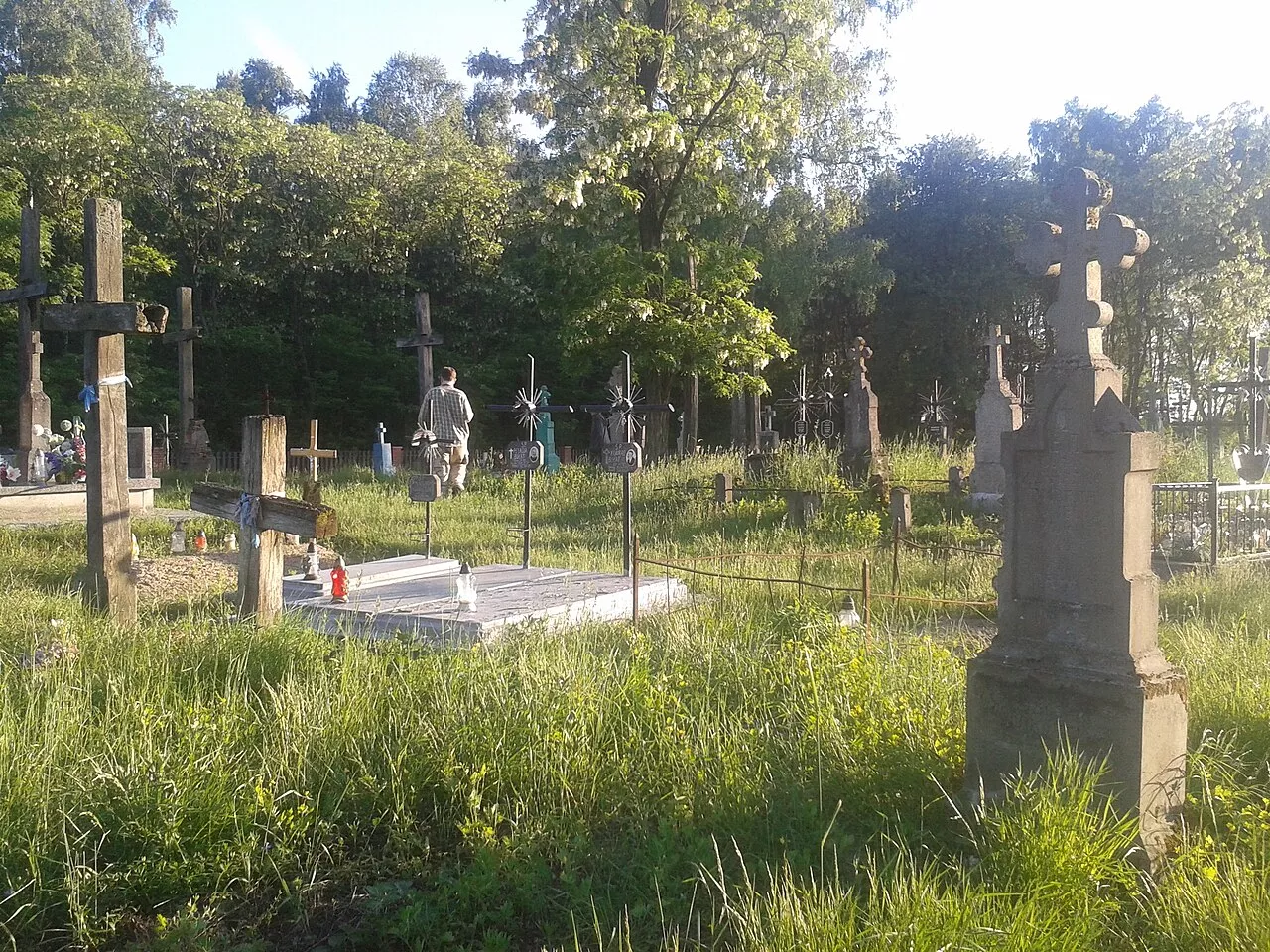
The cemetery was Uniate and, according to old descriptions, epidemic; it is already visible on the Austrian map of 1801–1804, and in 1853 it was described as completely full. In the same year 1853, a Greek Catholic chapel of Saint Josaphat was built in the cemetery, and in 1885 an Orthodox church of Saint Olha was erected in its place. After the Second World War, most Ukrainians left for the USSR in 1944–1946, the rest were deported during Operation Vistula in 1947, and the church was closed. The wooden church was restored in 1984, and today it serves the Orthodox community again — in Kaplonosy most residents are still Orthodox today.
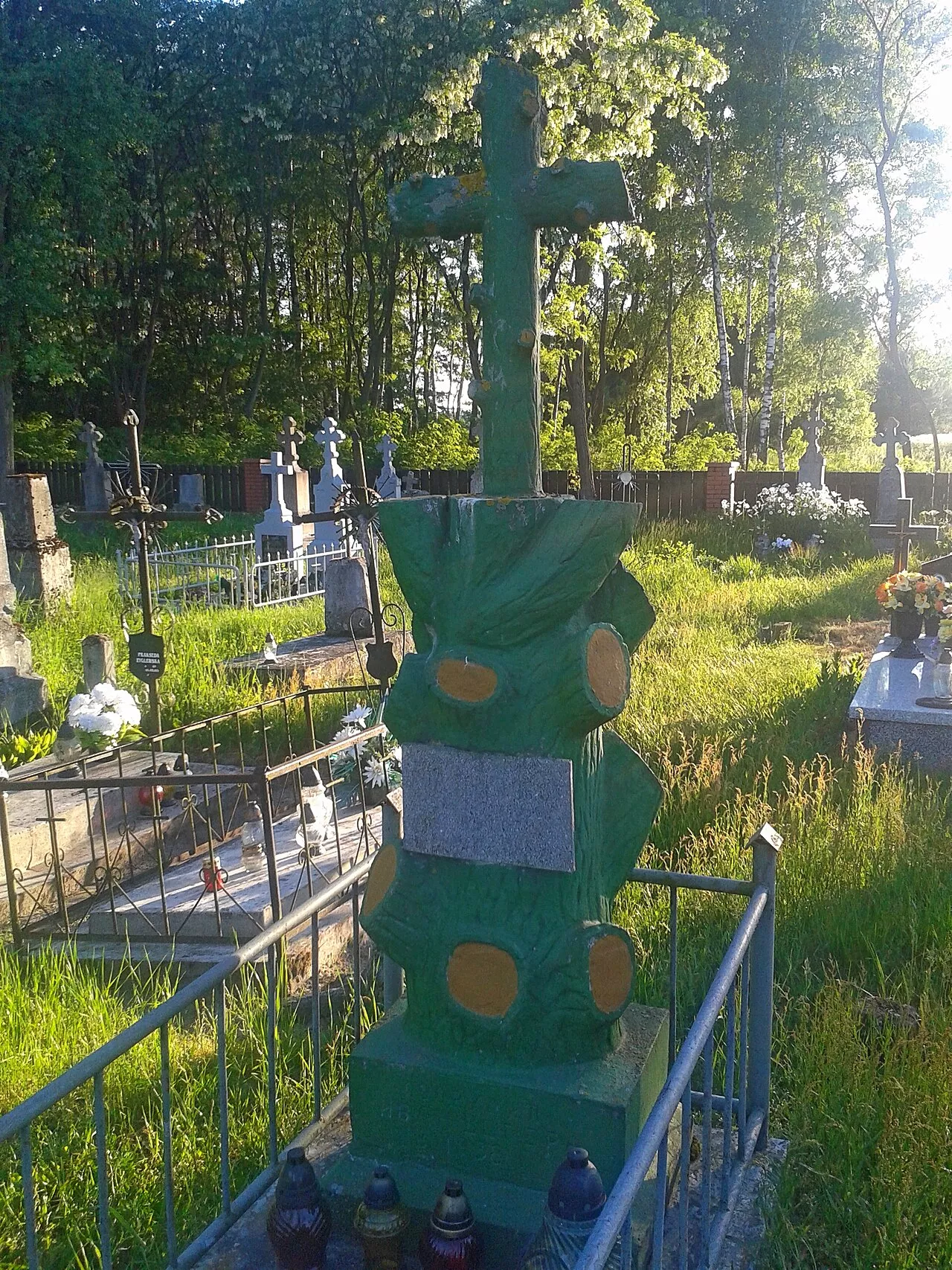
The cemetery covers more than three hectares and has been entered in the register of monuments since 2012. About twenty tombstones from the early 20th century have been preserved here: metal crosses with trefoil ends on high pedestals and cast-iron monuments topped with crosses. Between them are a dozen tall wooden crosses on earthen graves. Once, oak and pine crosses defined the appearance of the cemetery; of many, only forged crosses of various shapes remain. In the Kaplonosy-Kolonia part, there is a memorial stone at the burial site of about 70 Jews murdered by the German occupiers in 1943.
How to get there
Kaplonosy lies about 15 km west of Włodawa; from Lublin and Chełm you should first drive to Włodawa. Nearby are the church in Horostyta and the wooden church and skansen in Hoła, and to the east, closer to Włodawa, the routes of the Włodawa Forests Trail and „Adampólskie Lasy” begin. The cemetery is open, and the church is usually closed outside of services. For citizens of Ukraine, this is Poland: a foreign passport is required.