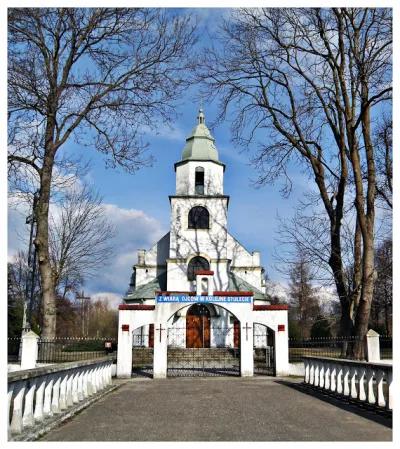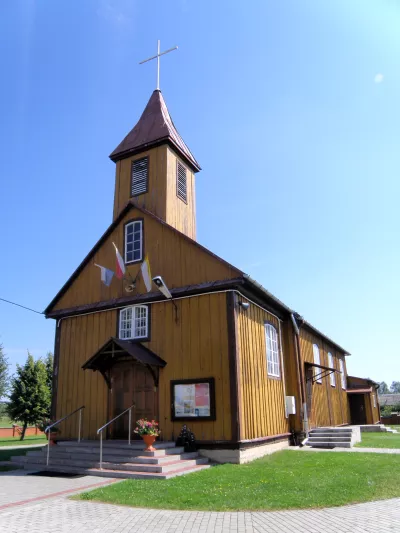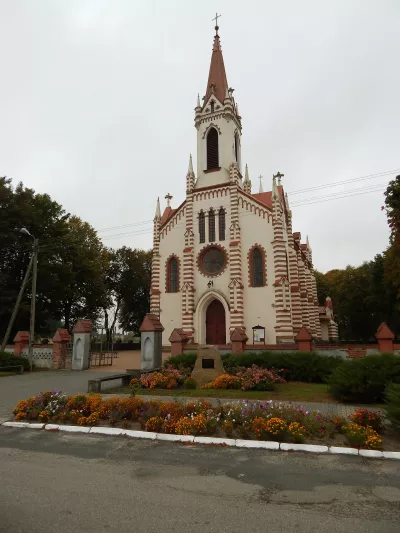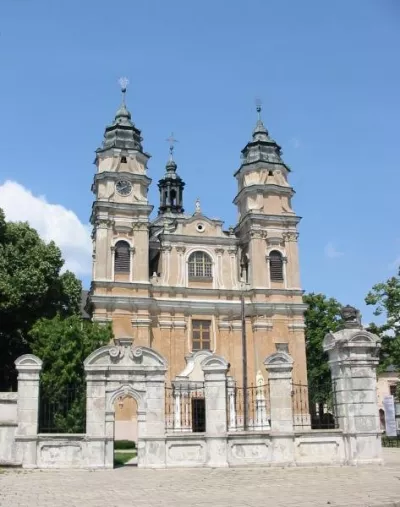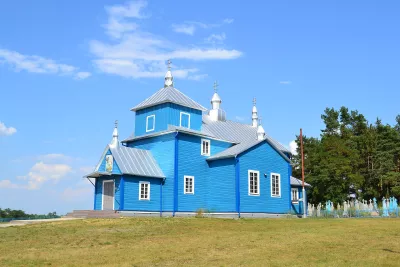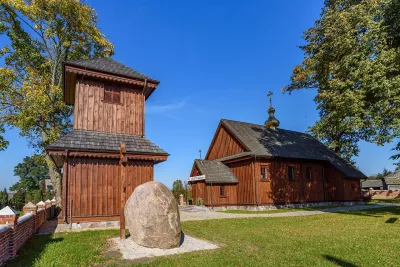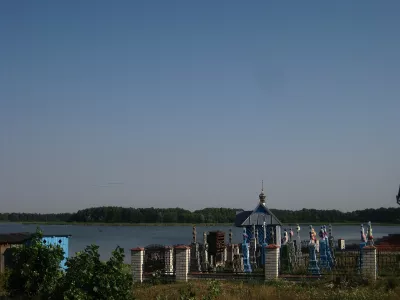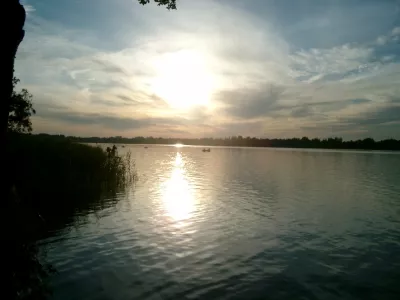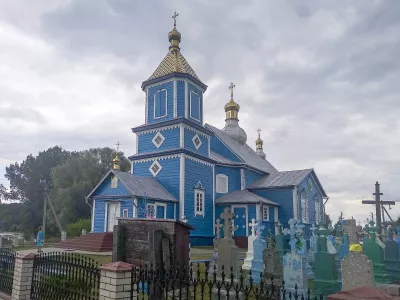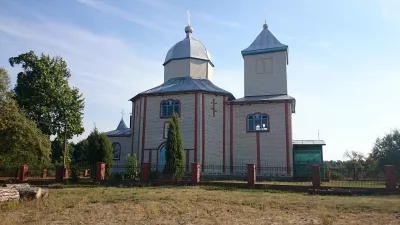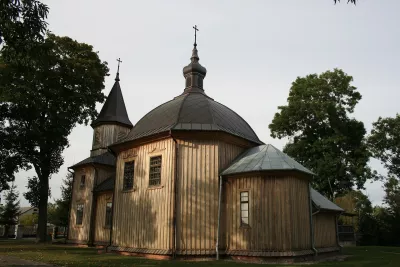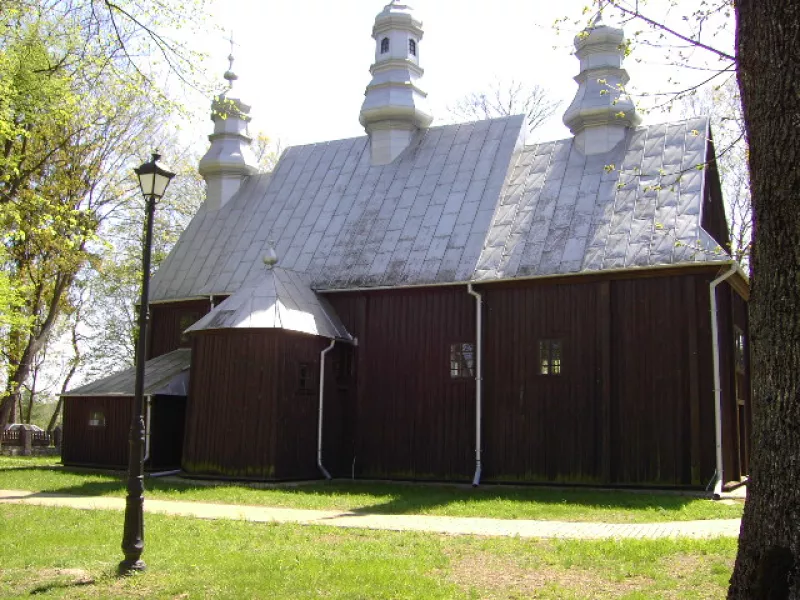
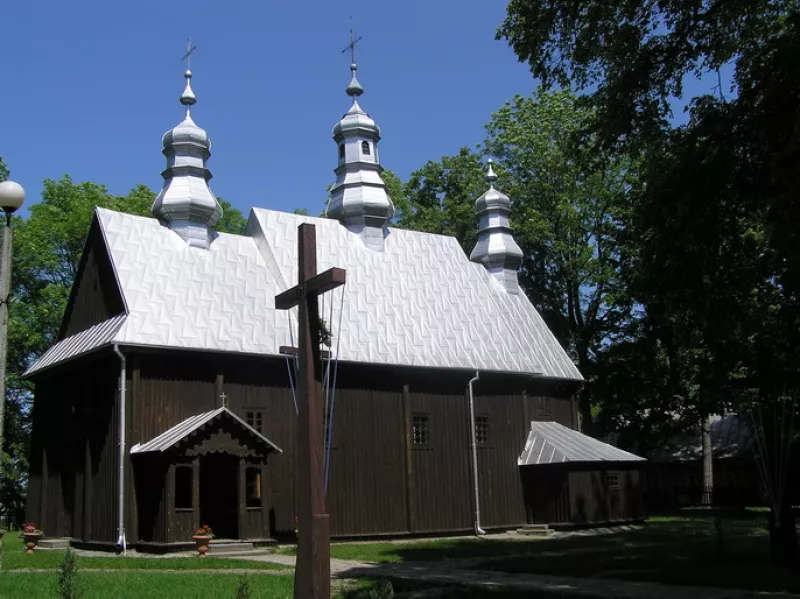
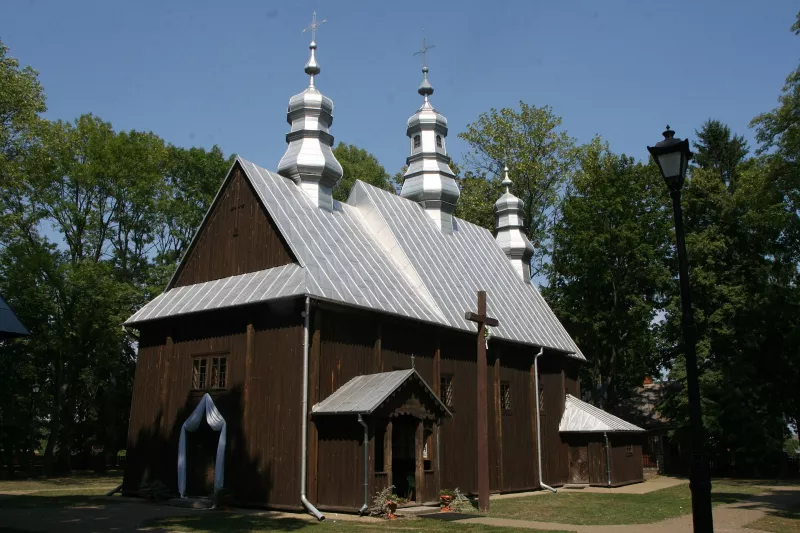
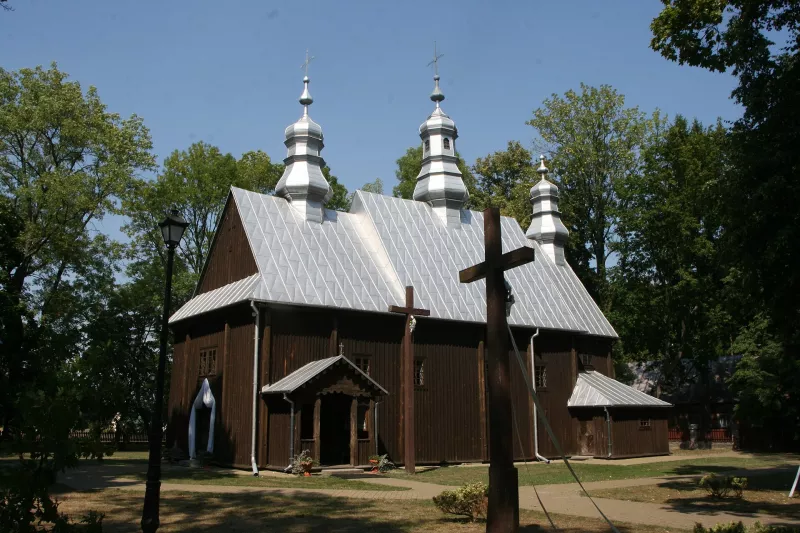

The Church of Saints Peter and Paul in Hanna is a wooden church from the mid-18th century built for Greek Catholics, which now serves as a Roman Catholic church. It stands in the centre of the village of Hanna, the seat of the gmina of the same name in Włodawa County, on the Hanka and Bug rivers, approximately 20 km north of Włodawa. On the opposite bank of the Bug is the Belarusian village of Podluzhzhia.
A town named after a queen
Hanna was first mentioned in 1546, when Bohdan Bohovytin founded it under Magdeburg rights. Later, the settlement became part of the Radziwiłł Nesvizh Ordynation and held town status until 1821. According to legend, the name was given by Anna Jagiellon: she stayed here overnight on her way to Rus, and was received so hospitably that she allowed the settlement to be named after her. In the local dialect, Anna became Hanna.
A Uniate church of the Radziwiłłs
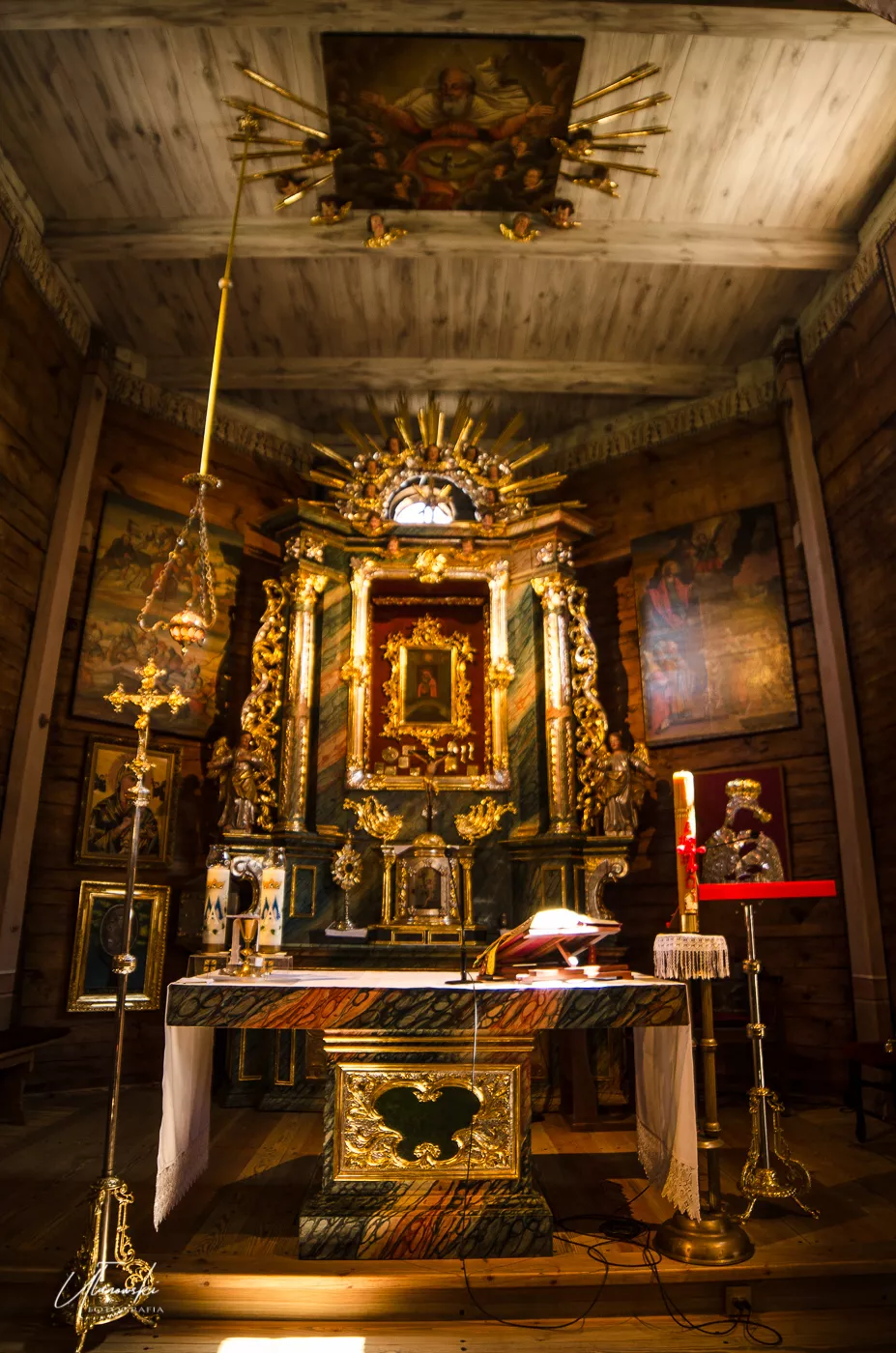
The first written mention of the church in Hanna dates back to 1726. The current wooden church was built between 1739 and 1742 at the expense of Prince Hieronim Florian Radziwiłł, and he completed its furnishing in 1750. The wooden belfry nearby and the icon of Our Lady of Hanna — a copy of the Pochaiv Icon that is still in the main altar — also date back to 1739.
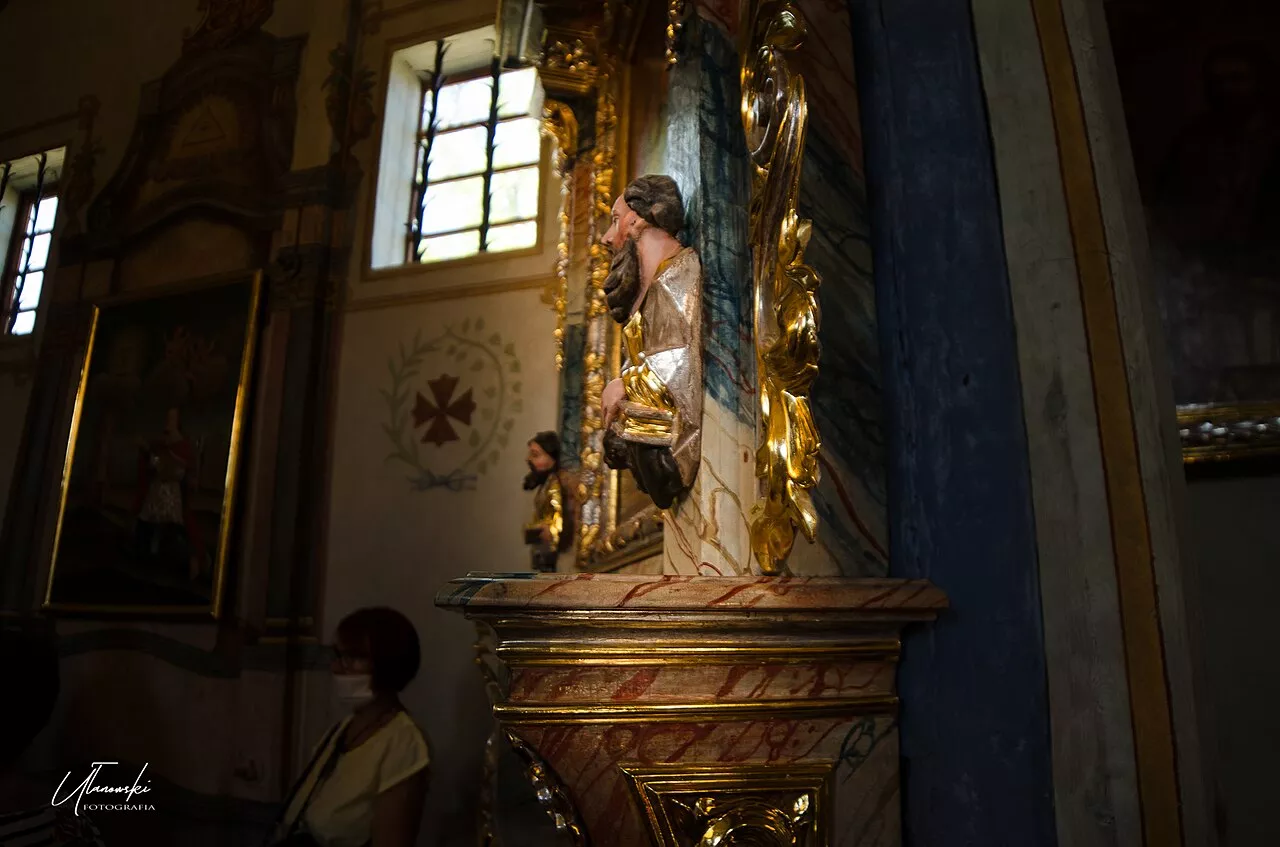
The church was built after the Synod of Zamość in 1720, which ordered Greek Catholic churches to be furnished in the same way as Latin churches. Therefore, inside there is no iconostasis, but rather several Baroque altars, and the walls are covered with paintings from the first half of the 18th century executed on canvas. In 1791, the polychrome was completed and a chapel was erected in memory of the Basilian missions. In the old cemetery, there is a wooden chapel of Saint Anne from 1880.
Orthodox church, then a Roman Catholic one
In 1875, when the tsarist authorities liquidated the Chełm Uniate Diocese, the church in Hanna was transferred to the Orthodox. After the restoration of Poland, the church passed to the Roman Catholics, and in 1924 the first Roman Catholic parish in the history of the village was established here. Near the road to Danka, on the site of an older cemetery, lies a stone with a Church Slavonic inscription in Cyrillic.
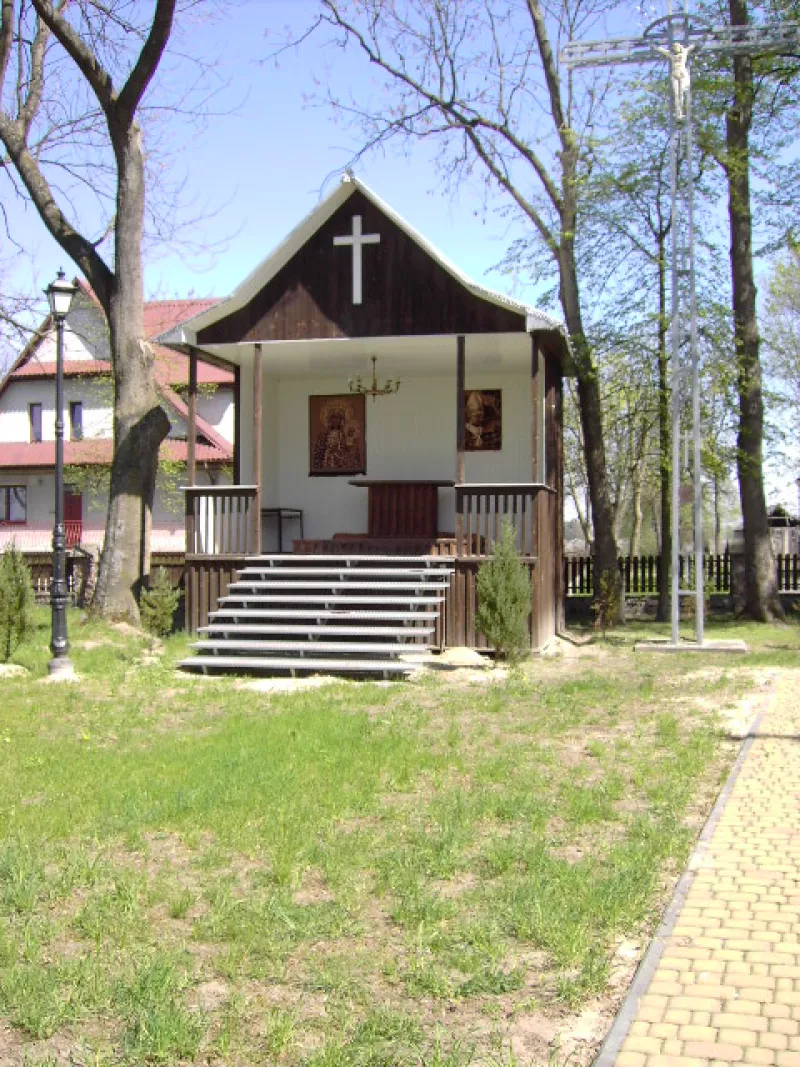
The church fell into disrepair for a long time, but it was thoroughly restored, and in 2020 the gmina and parish received the "Conservator's Laurel" award for this work. A space for meetings of various faiths, a small skansen and a gallery of paintings by artist Stanisław Baj from neighbouring Dołhobrody were arranged around it.
How to get there
Hanna lies on road 816, which stretches along the Bug: about 20 km north of Włodawa, approximately 70 km from Chełm, and about 55 km from Biała Podlaska. For Ukrainians, this is Poland, and a foreign passport is required. The border with Belarus is nearby, so do not enter closed border zones. The Green Velo bicycle trail and the Biała Podlaska — Hanna route pass through Hanna. On the way from Włodawa, it is worth stopping in Różaniec, Dołhobrody, and Łąki. You can read more about the region in the article Polish Polissia.