
In Rivne region, the most famous holy springs are located in the south of the region, on the border of the Volhynian Upland: here water emerges from slopes and ravines, where chapels have been built over it for centuries, and some eventually grew into monasteries. In 2019, the regional laboratory center tested 28 holy springs in the region; three made it to the "blue list" with flawless water: Saint Anne's in Onyshkivtsi, Saint Sergius's in Hrushvytsia Persha, and the spring in Horodyshche.
Saint Anne's Spring in Onyshkivtsi
On the western outskirts of Onyshkivtsi, in Smyha hromada of Dubno district, a kilometer from the border with Ternopil region and about 30 km from the Pochaiv Lavra, bubbles the region's most famous spring. People knew about its healing water back in the 16th century. Legend has it that a church once stood on this spot, which "the earth swallowed" during a Tatar attack. Later, shepherd children found an icon of righteous Anne; it was taken to the village church several times, but kept returning to the exact same spot. Then the people built a chapel here, and a spring started flowing nearby. Another account tells of a landowner who mocked the icon, went blind, and regained his sight only after washing with this water—and donated money for a chapel.
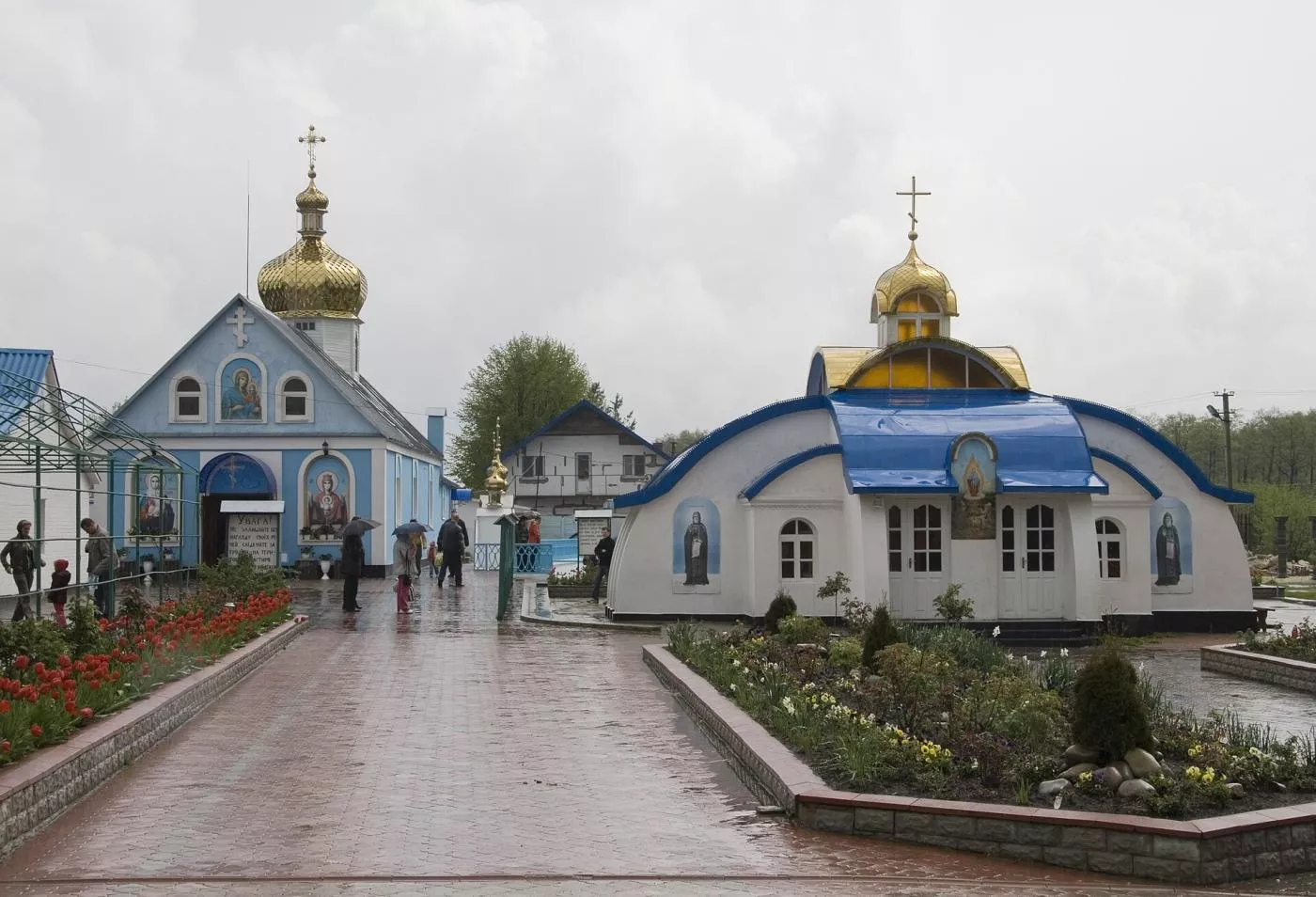
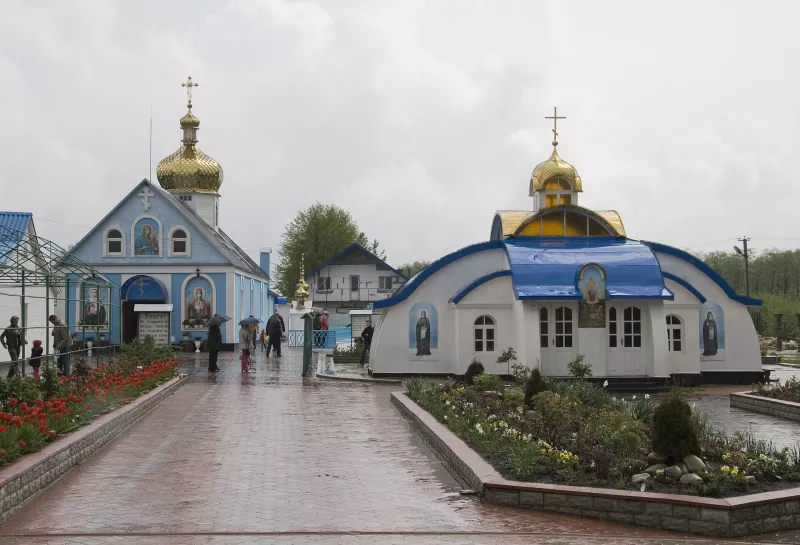
A new chapel was erected in 1853 through donations, and a stone foundation was placed under it in 1887. During World War I, Austrian troops dismantled the chapel and the neighboring Trinity Church for fortifications; in the 1930s, a new prayer house was built through donations. In 1959, the shrine was closed: the chapel was dismantled, and the spring was filled in and covered with concrete slabs. In 1991, locals cleared it out, and from those same slabs laid out a small bathing pool. In 2000, a women's skete of the Horodok Saint Nicholas Monastery (UOC MP) opened here.
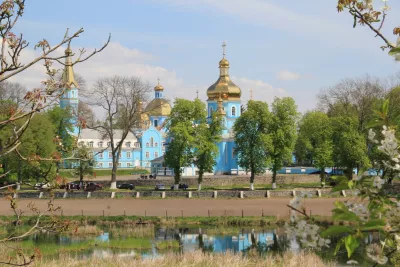
Today, above the spring stand the Church of Saint Anne, a well, and separate men's and women's bathhouses, renovated in 2019. The water maintains a temperature of 4–6 °C year-round. Anne is revered as the patron saint of motherhood, so women praying for children are the most frequent visitors here, and they try to immerse themselves in the bathhouse on Saint Anne's Day.
Saint Nicholas's Spring in Hilcha Persha
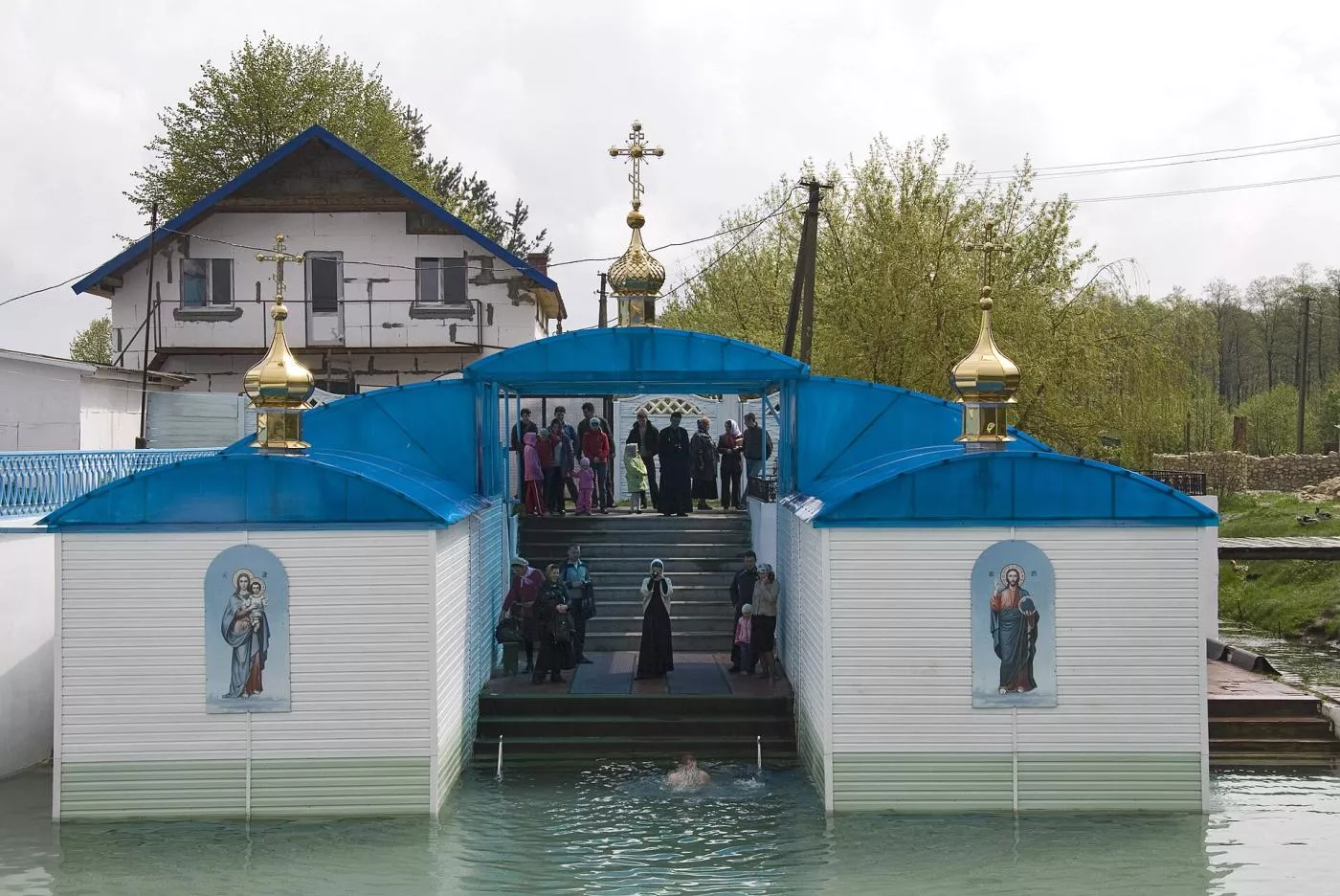
In the center of Hilcha Persha, in Zdolbuniv hromada, near the Rivne — Ostroh highway, lies the Saint Nicholas tract. Water here flows out in two twin streams from a stone grotto, approached by a few steps. The springs are called "thunder" springs: according to legend, lightning struck the slope, and water began to flow from the grotto. Another account says that in 988, people returning from baptism in Kyiv stopped here to drink and saw the reflection of Saint Nicholas in the water. According to local lore, this water was drunk by the insurgents of Severyn Nalyvaiko and the Cossacks of Khmelnytsky returning from the Battle of Berestechko.
The Saint Nicholas chapel above the spring has stood since the mid-19th century. The bathing pool is shaped like a human eye with an islet-pupil in the middle, and the water in it is knee-deep—because most stories of healing here involve the eyes. A grand blessing of the water takes place four times a year: on Epiphany, on the spring Saint Nicholas day on May 22, on July 7, and on the winter Saint Nicholas day on December 19. Half a kilometer away, in the village, stands the Saint Nicholas church built in 1900. The nearest town is Zdolbuniv.
Lypky: A Monastery That Grew Near a Spring
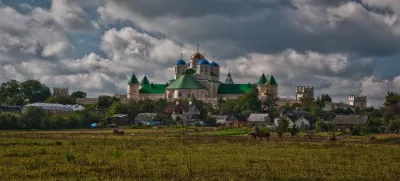
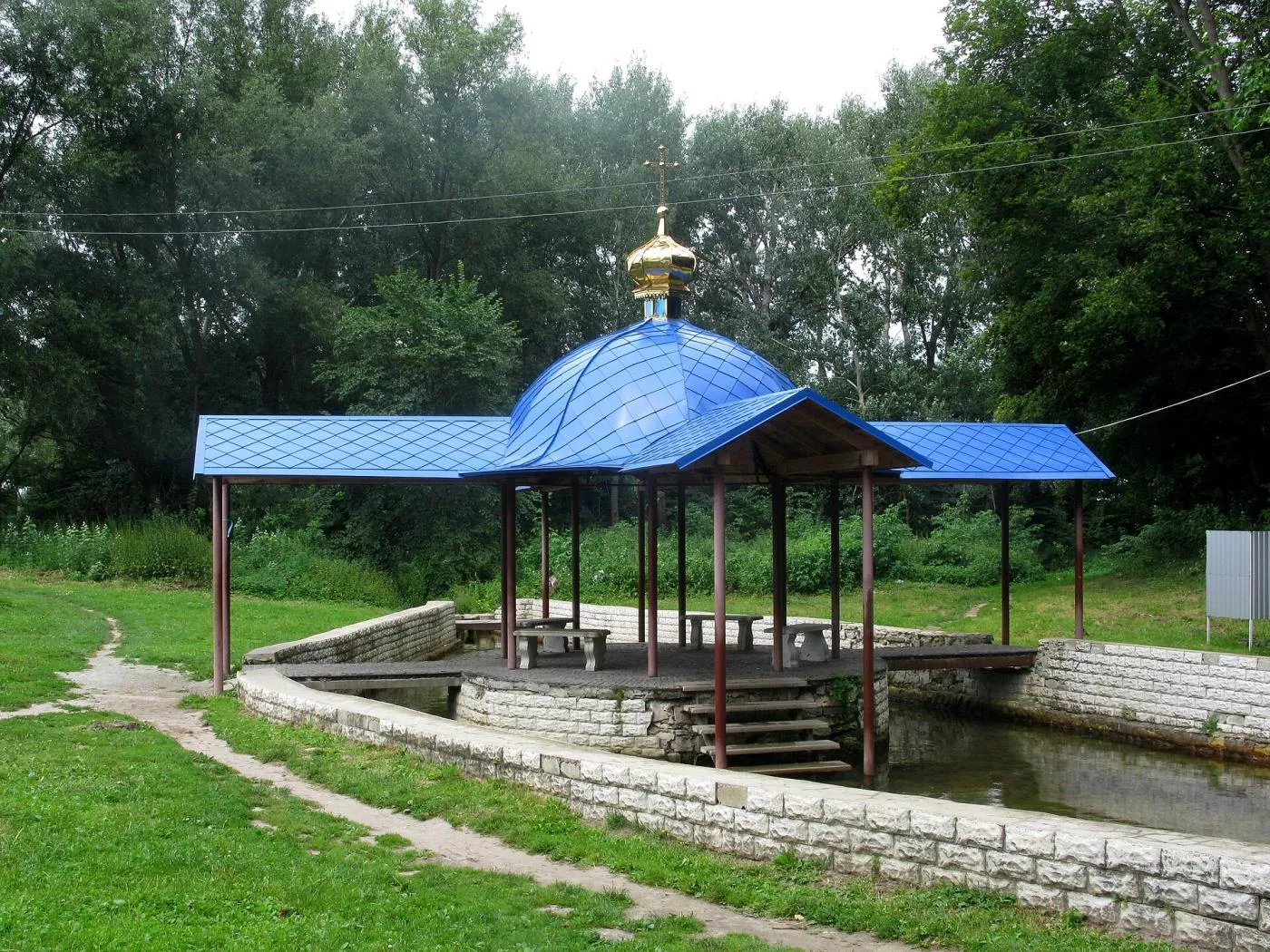
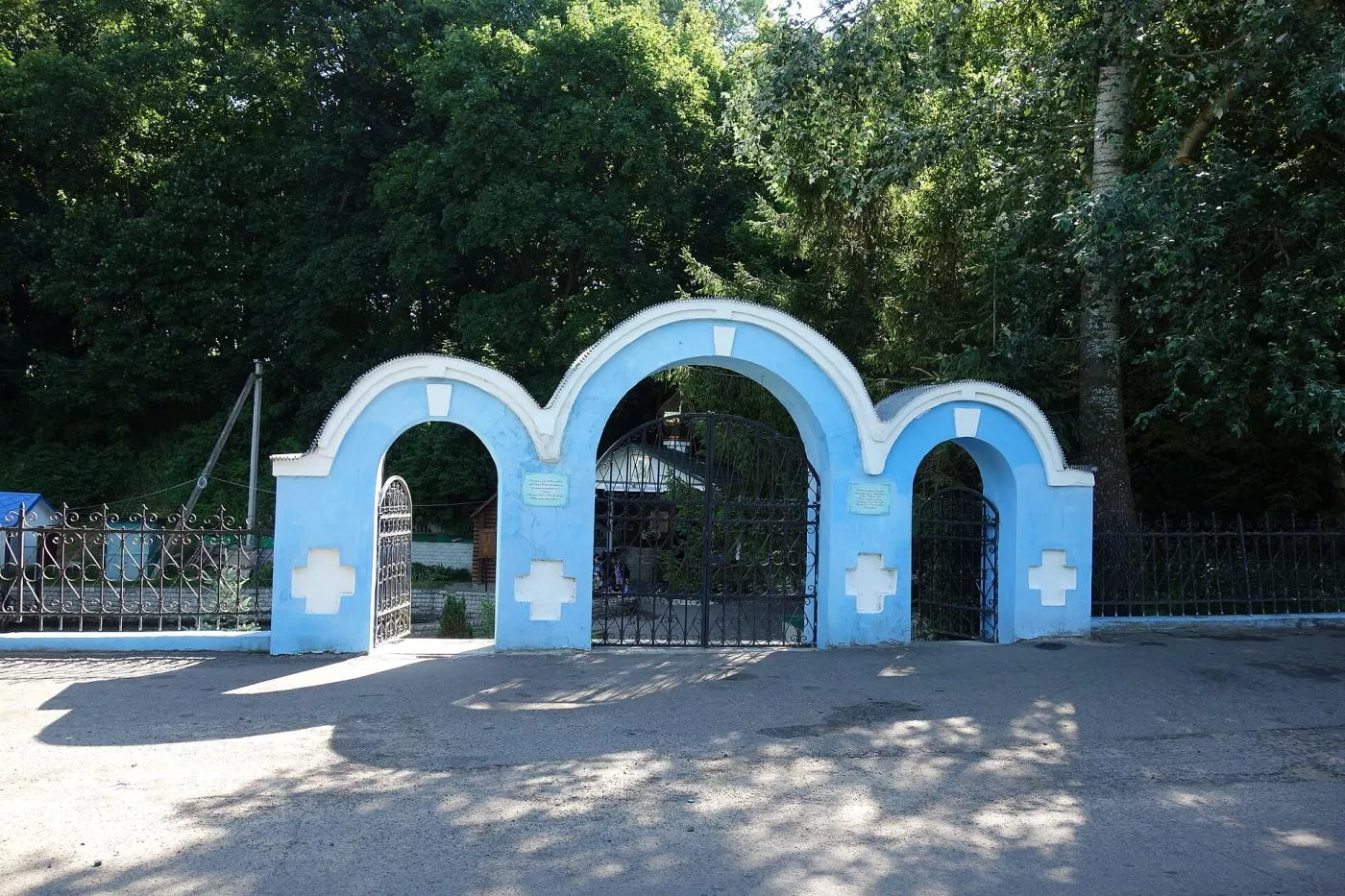
In Lypky of the Hoshcha hromada, a spring bubbles up on the slope of a hill where the Holy Dormition Men’s Monastery now stands. Legend links it to a Tatar raid: the church along with its defenders collapsed into the ground, and the stream of water was considered to be the tears of the last defenders of the ancient settlement. According to tradition, a native of Lypky, Ivan Naumchuk, who was sick with typhus, saw a woman in a dream who commanded him to drink water from the spring. He recovered, and later at the Pochaiv Lavra he recognized the same woman on the Mount Athos Icon of the Mother of God. Having become Monk Yakiv, in the 1920s he founded a skete of the Pochaiv Lavra near the spring with a seven-domed church.
In 1939 the skete was closed, during the German occupation it operated again, in 1951 it was closed for good, and in 1961 the church was destroyed. Believers continued to tend to the spring and placed a small chapel over it. The monastery has been reviving since 1992; construction of the Church of the Life-Giving Spring began right by the spring in 1999 and it was consecrated in 2004. In the superstructure above the spring are a well and a bathhouse. From Lypky it is not far to Hoshcha.
The Life-Giving Spring in Fedoryna
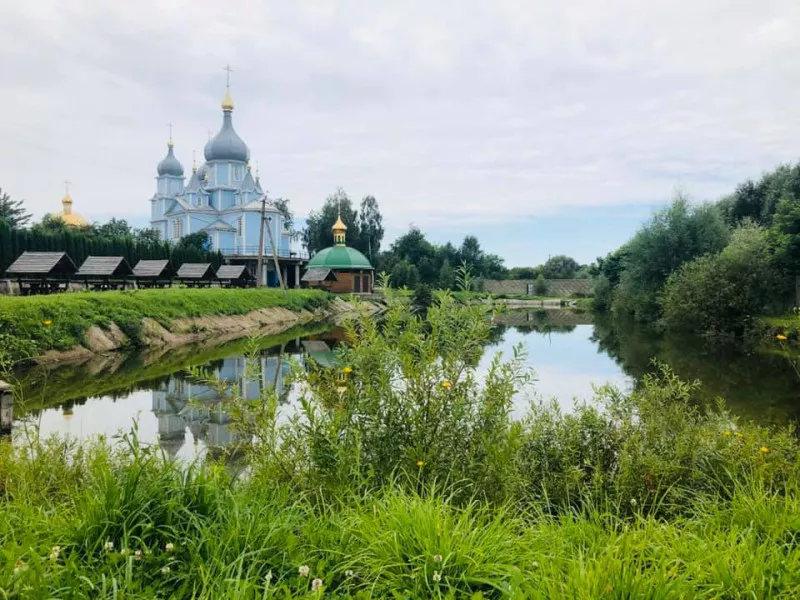
In the Fedoryna tract near Masevychi of the Rokytne hromada, in the Polissian forests in the north of the oblast, according to legend, the Mother of God left a footprint, and water began to flow from it. Local mowers found the spring near Danylo's farmstead, cleared it and put up an oak timber well lining, after which the water began to "surges", and people started coming here for water. In the 1970s–1980s the authorities wanted to fill the well with sand, but neighbors interceded, and the district ordered not to destroy anything. In 1999, a men's monastery dedicated to the icon of the "Life-Giving Spring" was opened here: first a wooden church on the site of the spring, later buildings and the cathedral of Anthony and Theodosius of the Pechersk, consecrated in 2005. The nearest settlement is Rokytne.
Spring of the Holy Trinity in Horynhrad Pershyi
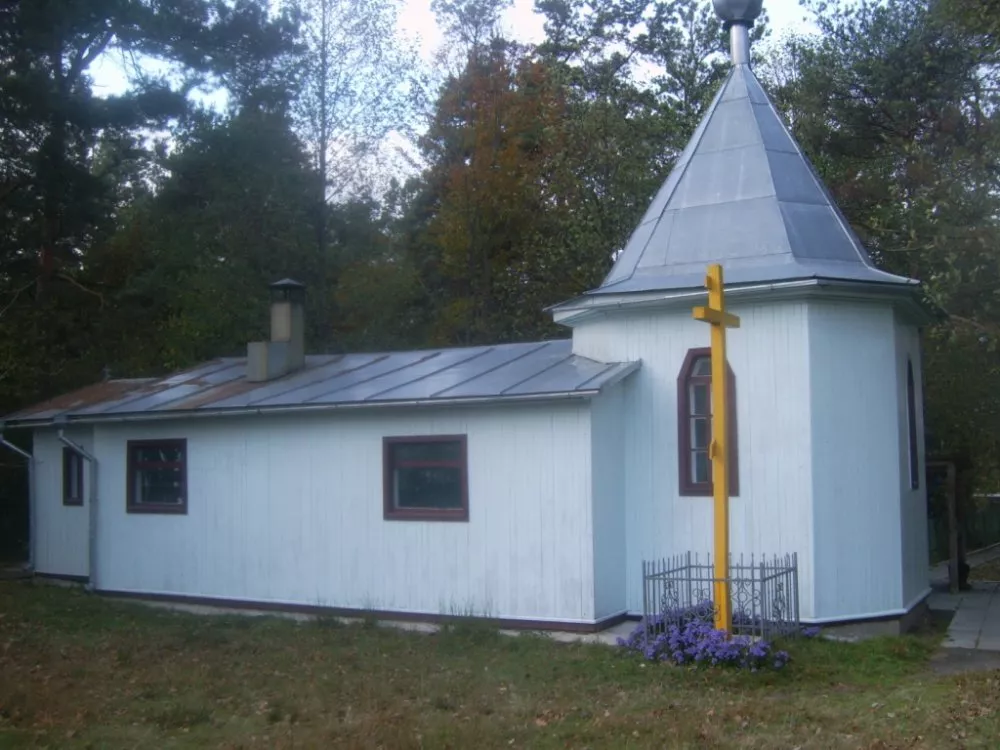
Near the Holy Trinity Church in Horynhrad Pershyi of the Rivne district bubbles a spring from which a stream flowing to the Horyn begins. The masonry church was built in 1812–1816 at the expense of Prince Havrylo Sviatopolk-Czetwertyński on the site of the wooden Trinity church mentioned in 1789; the spring has been known since the time of its construction. During the restoration of the church in 2009–2016, the spring was improved: here there is a chapel, a bathhouse and a memorial sign, and on Epiphany people plunge into the bathhouse.
Khotyn in the Berezne Area
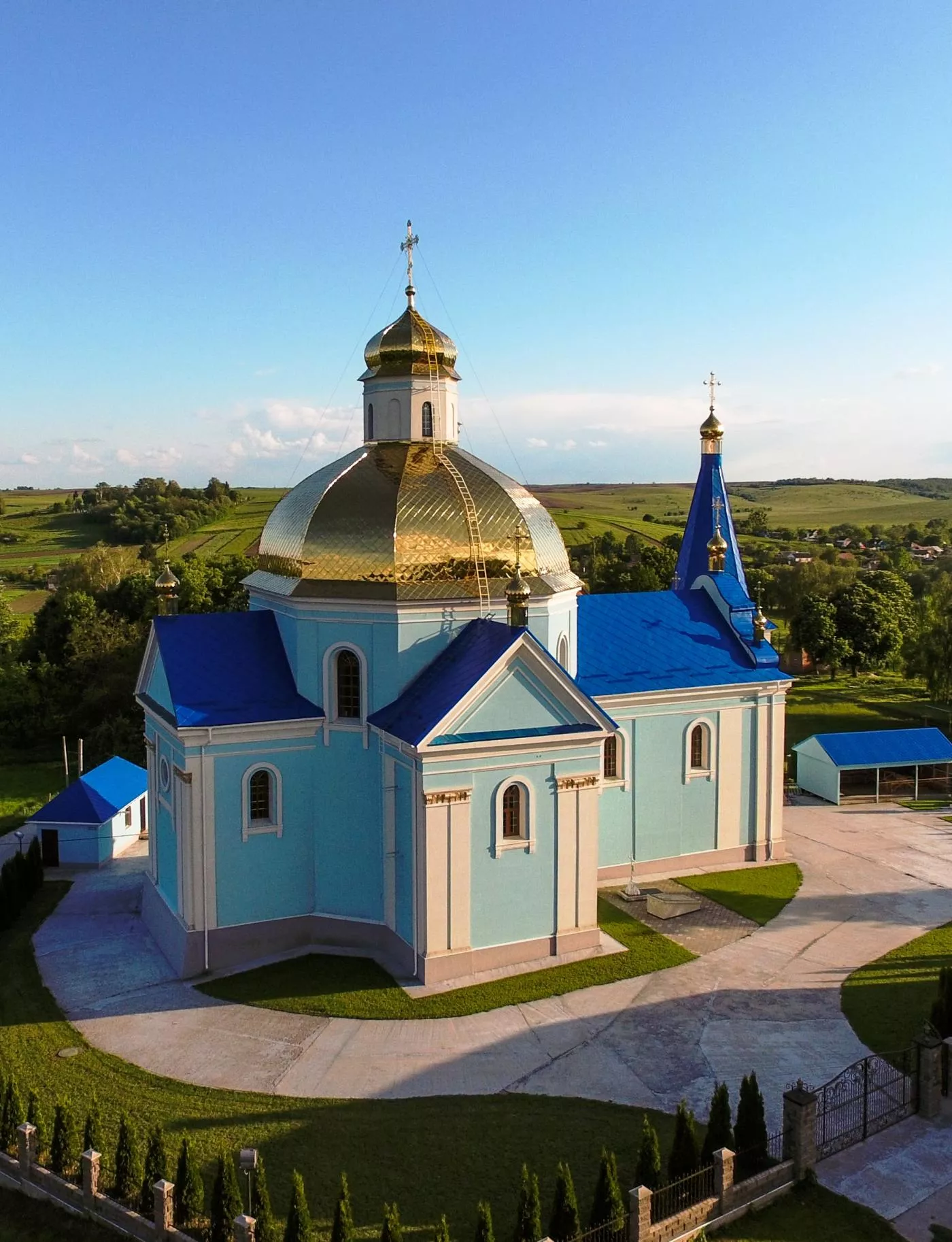
In Khotyn of the Berezne hromada stands the Intercession Church from 1760 on a stone foundation; in 2001, the parish was converted into a men's monastery. In 2011, a spring nearby was consecrated, and in 2013 a wooden chapel was built over it. This village should not be confused with another Khotyn near Rivne.
Bezdodnia near Pryvillia
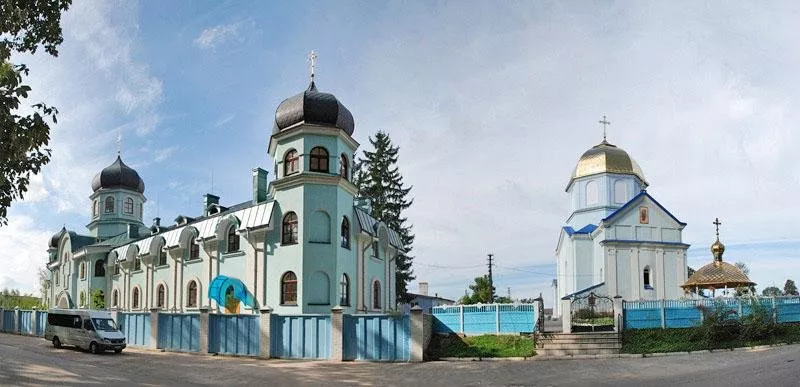
On the outskirts of Pryvillia in the Dubno district, about 10 km from Dubno, there is a spring that locals call "Bezdodnia" and old-timers call "biznia". Legend has it that a landowner forced a poor peasant to plough with his oxen on Easter night, and the ground under them caved in, forming an abyss with water; they say that on Easter night the roaring of oxen can be heard from there. The water comes from a great depth and has a temperature of 3–4 °C. In 2011, residents cleaned up the spring, set up a cross, and laid a road, and in 2012 it was consecrated in honour of the Holy Trinity.
St. Sergius Spring in Hrushvytsia Persha
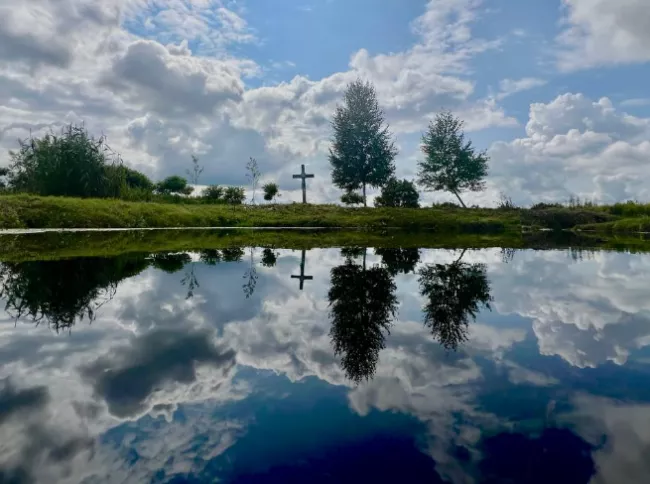
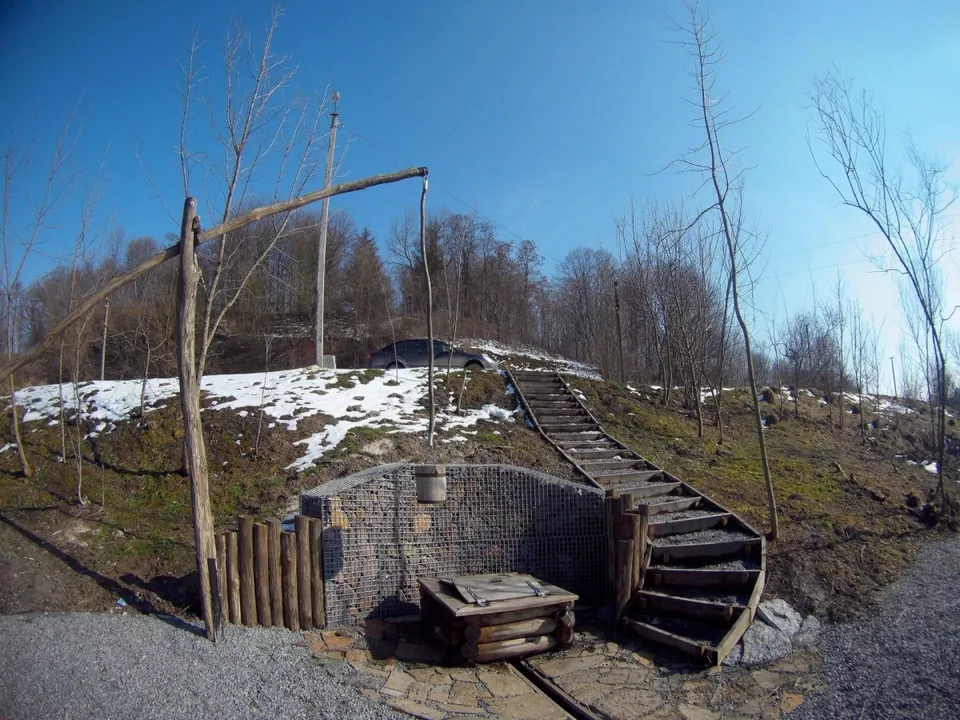
Near the 10th–11th-century Kievan Rus hillfort in Hrushvytsia Persha of the Velyka Omeliana hromada flows a spring consecrated on October 8, 2017, in honour of St. Sergius. Once upon a time, on St. George's Day, water was consecrated here in the "Horodshchyna" tract. The arrangement is simple: a wooden crib, a sweep well, gabions, and steps down the slope. In 2019, the regional laboratory centre included its water in the "blue list" of the cleanest springs in the region.
St. Barbara Spring in Hurby
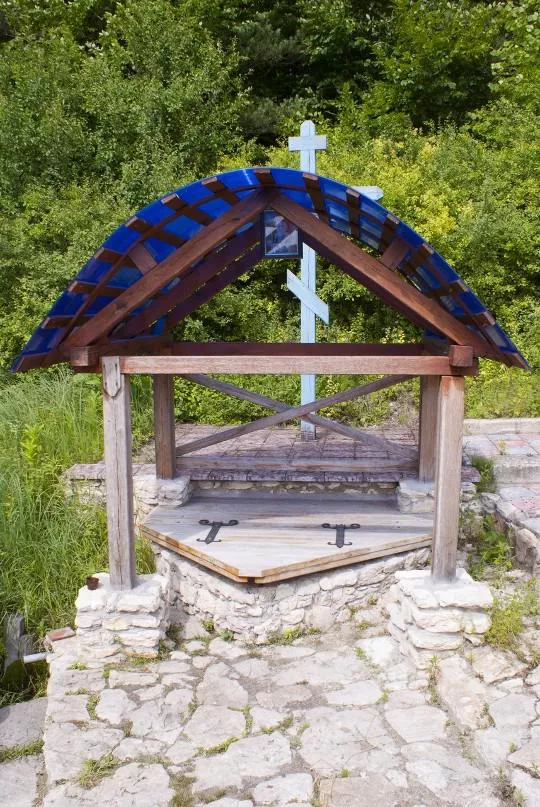
In the Hurby tract near Mosty, at the site of the largest battle between the UPA and NKVD troops in April 1944, a memorial and the Holy Resurrection Monastery have been under construction since 2006. Next to the pantheon, Cossack mounds, and crosses, the spring of the Great Martyr Barbara has been arranged: a well with a small roof and a cross over a stone framing.
Trishchava above the Horyn
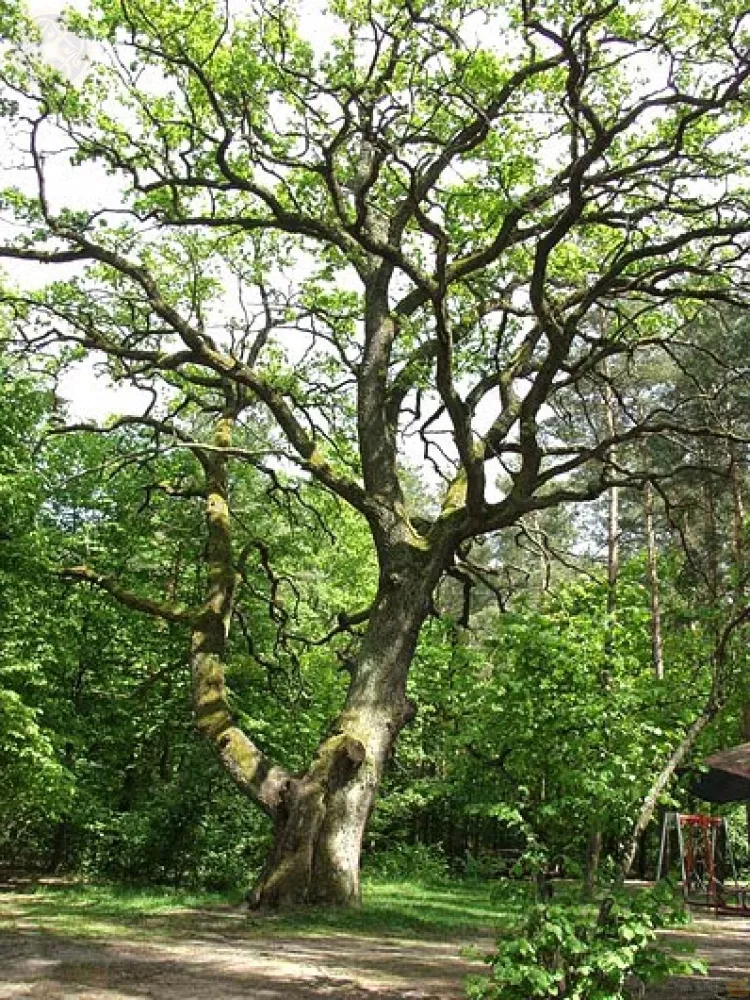
In Sarnenshchyna, half a kilometre from the Horyn River, in the Trishchava protected tract with 200-year-old oak trees, gushes a spring whose water is considered healing. Since the early 19th century, the infirm and the sick have been brought here. Until 1917, two churches stood near the spring; the Bolsheviks destroyed them, poured concrete over the spring, and built a dance floor on its site. In 1991, the spring was restored and a chapel was rebuilt, consecrated on Ivana Kupala Day. Since then, every year on 7 July, the Nativity of St. John the Baptist, an open-air liturgy is held here and the water is blessed.
Sarnenshchyna: Stepan, Udrytsk, Zolote, Vezhytsia
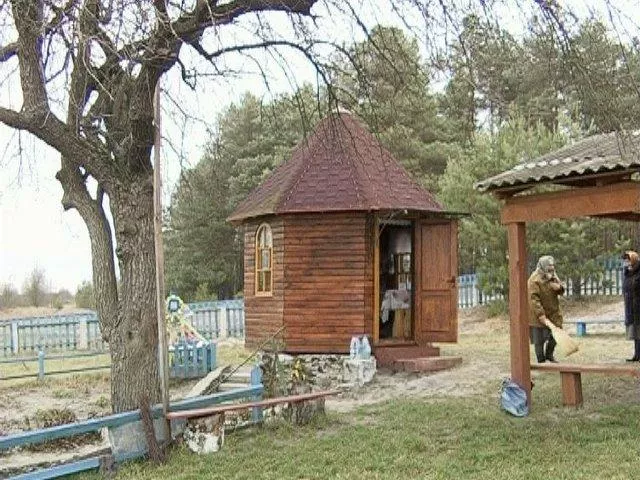
Near Stepan, a legend connects the spring with the Great Northern War: the wounded Swedish King Charles XII, whose army was stationed nearby, supposedly went blind, washed his eyes with water from the spring and regained his sight, then ordered a chapel to be built here. The chapel stood for several centuries until it was demolished in the 1960s, and in the 2000s, the local community rebuilt a wooden octagonal chapel at their own expense and landscaped the spring area.
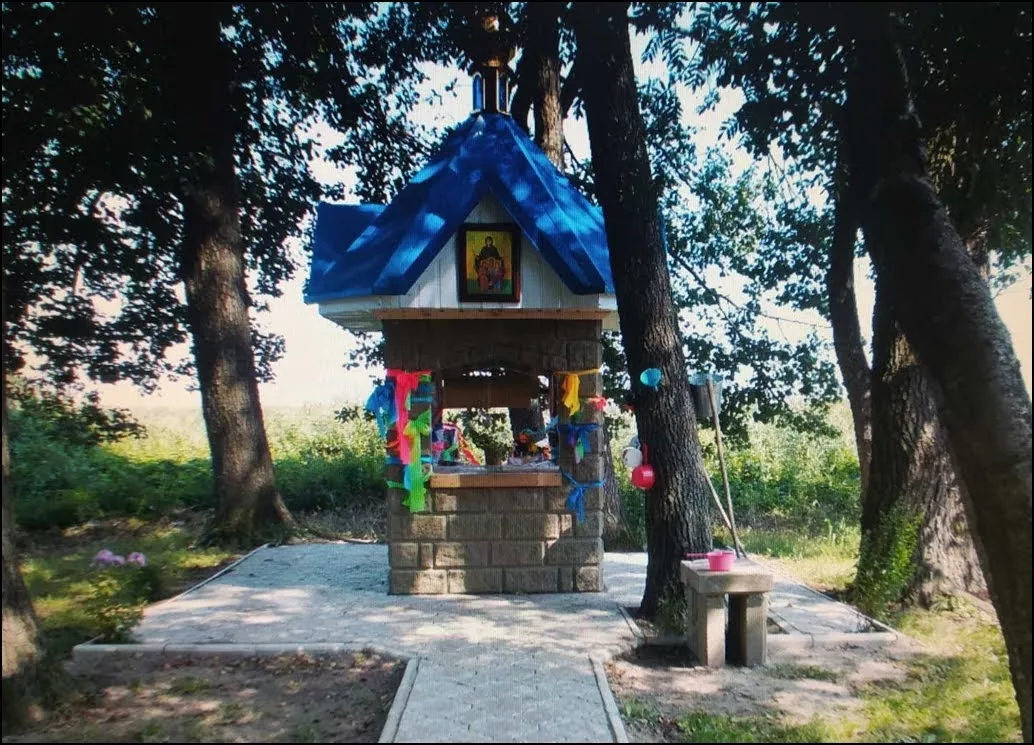
At the entrance to Udrytsk, in the shade of ancient oaks by the road to Khochyn, the tract has long been called "Krynychka". A well with spring water has stood here for centuries, becoming a sacred protector for the people of Udrytsk and Khochyn: people come here to pray, bringing flowers and ribbons. Today it is a brick-and-timber structure under a blue roof with an icon and a cross.
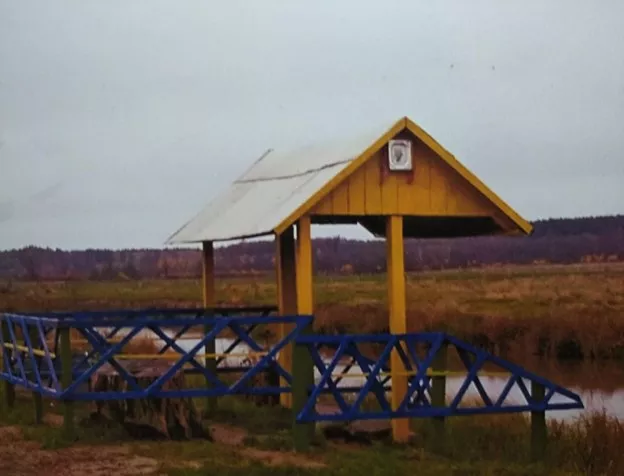
In Zolote, according to old-timers, water from the miraculous well was used to heal eyes — people even walked from Pinsk to wash their eyes here. The spring is consecrated, with a wooden canopy and a small icon above it.
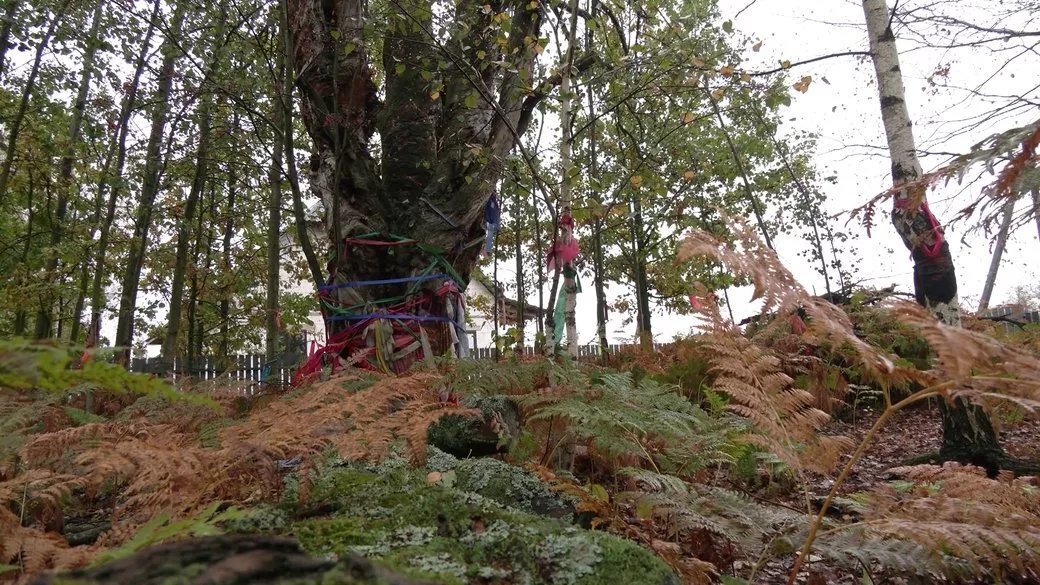
In Vezhytsia in Rokytnivshchyna, local lore says that a Polish nobleman was taking his sick daughter to healers and spent the night under a spreading pine tree; in a dream, an old man told him to give the girl a decoction made from its branches; the daughter recovered, and the nobleman built a small chapel near the tree. In the early 20th century, on Epiphany, the people of Vezhytsia walked to it in a religious procession and blessed water from the spring. The chapel and spring are gone, but the "Tsar Tree", tied with ribbons, is still revered by locals today.
A few more consecrated springs
Zdovbytsia: behind the place called "Palatsy" (according to legend, a castle once stood there), in 2015 the spring was cleaned, fenced off and consecrated in honour of the Archangel Michael, just like the village church. Moshkiv in the Mlyniv region: the long-known spring of Saint Onuphrius with water at 8 °C flows into the Kozulka river, and a mineral water plant once operated nearby; it was consecrated in 2018. Yasenynychi above the Ustia river: on Epiphany, a water blessing service is held at the spring of Saint Nicholas and the Holy Martyr Barbara. Hrabiv in the Rivne district: on 11 July 2010, a spring near the pond was arranged and consecrated.
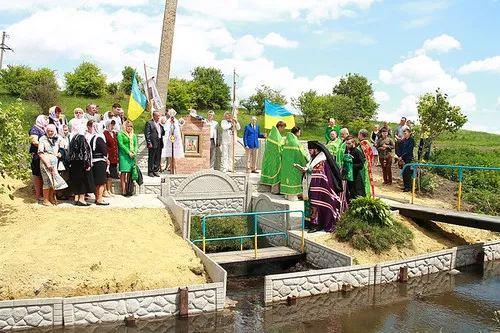
Kunyn: the "Sviatka" spring is called a spiritual shrine of the village by locals. Legend says that people captured by the Horde prayed to the Mother of God, her image appeared, the ground parted and swallowed the attackers, and where the image disappeared, a spring gushed forth. In the courtyard of the Korets Holy Trinity Monastery, founded in 1620 by Prince Samuel Korecki, there is a monastic well from which pilgrims drink. Near Khotyn near Rivne (Shpaniv hromada), a natural spring on the left bank of the Horyn, a hydrological landmark since 1983, was lined with stone by the hromada, a bathing facility was built, and in recent years water has been consecrated here on Epiphany.
Karpylivka in the Horodok hromada: the spring of the Holy Apostles Peter and Paul on Naberezhna street, near the church of the same name. This is the official bathing place on Epiphany, and in summer Ivan Kupala is celebrated near the spring. From Karpylivka it is not far to Horodok with the monastery on the island.
Ptych in the Dubno district: on 6 August 2015, a spring was consecrated here in honour of the Most Holy Mother of God and Equal-to-the-Apostles Mary Magdalene; over a thousand people came to the consecration, and a great water blessing service is held here on Epiphany.
Monasteries of the oblast that have springs, and other shrines, can be found in the article "Monasteries and Shrines of the Rivne Region". All known springs and wells of the Rivne region are marked on the map of Polissia springs, and the most famous springs of the region are in the article "Holy Springs of Polissia".
Holy springs of other oblasts of Polissia: Volyn, Zhytomyr region, Kyiv region, Chernihiv region, Sumy region.