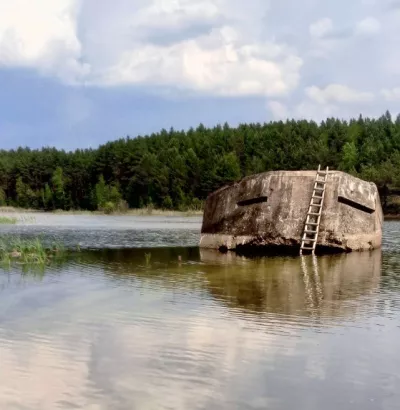
There are places that do not advertise themselves. The mill in Pavoloch is one of them. It stands on the dam of the Rostavytsia River, silent, crumbling under the rain and wind, and waiting. It was built in 1863 by Stanislav Abramovych. Almost as old as the mill is the brick synagogue from 1861 in the center of the village. Both buildings have survived to this day, and this in itself is a wonder.
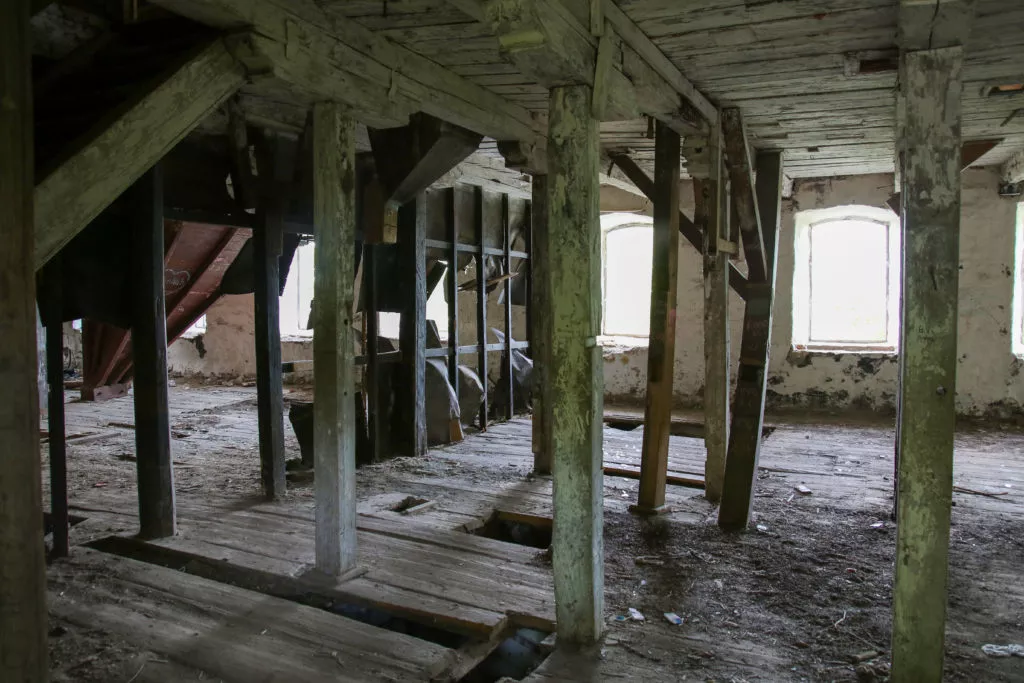
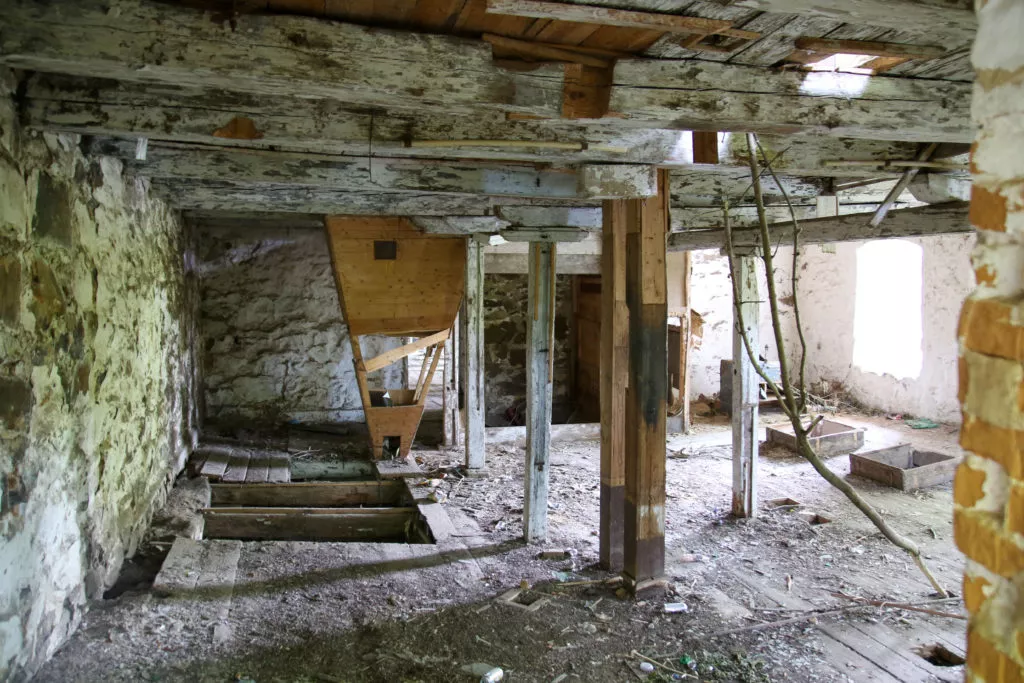
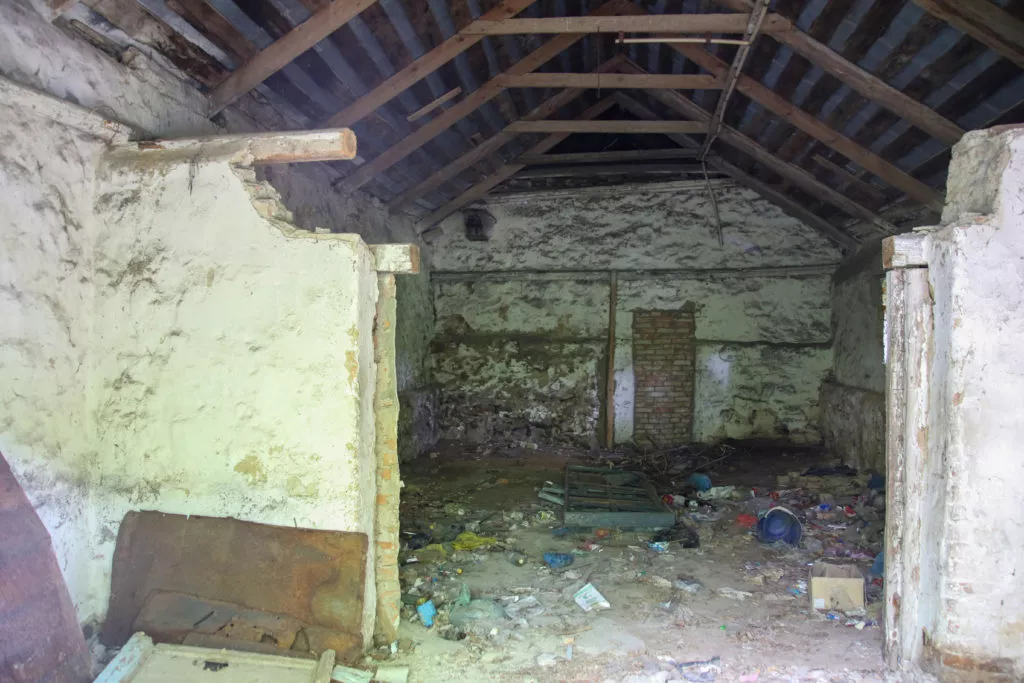
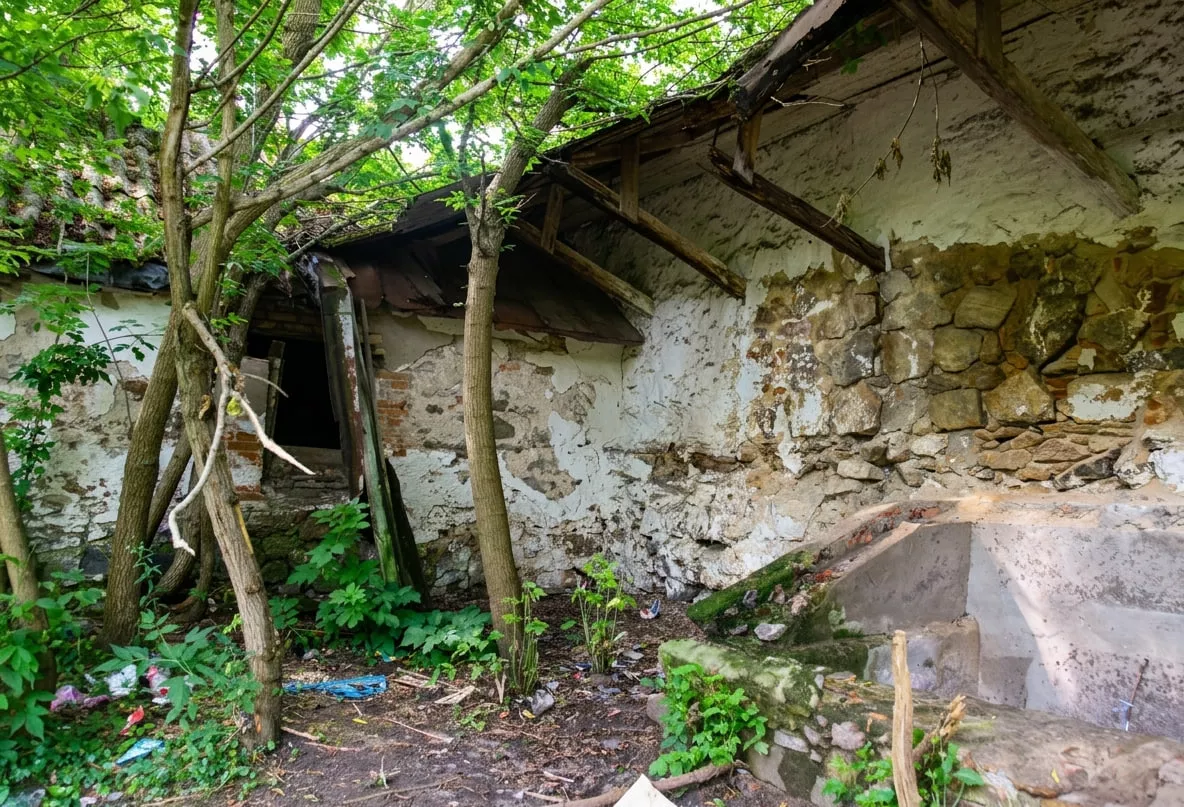
The three-story stone structure stands right on the dam, and when you look at it from the shore, it is hard to imagine that grain was once milled here, millstones turned, and the air smelled of flour. The main building is constructed from local stone, while two extensions facing the river are made of wood and once housed two turbines. The wood has long since been crumbling, but the stone core holds firm — as if it knows it is not yet time to be written off.
Pavoloch in general is a place with character. A settlement existed here back in Kievan Rus, and in 1648, during the Khmelnytsky Uprising, the Pavoloch Regiment was established here. Against this background, the mill is a relatively young structure, but it is one of the few witnesses to the 19th-century shtetl life that has long since vanished from these parts.
People come here not for comfort — there are no cafes, signposts, or QR codes. They come for that special feeling when you stand before something real and abandoned and think: what if someone took it upon themselves to restore it? It is suited for those who love quiet local history tourism, photographers interested in industrial ruins, and everyone ready to travel without infrastructure, but for the atmosphere.
How to find the mill
The mill stands on the southeastern outskirts of Pavoloch, near the dam on the Rostavytsia: look for the dam, and you will see the mill immediately. This is not a museum, but an open-air landmark that can be viewed from the outside at any time.
What is nearby
Less than a kilometer from the mill, in the center of the village, is the former 1861 synagogue, which has housed the Pavoloch National Museum of History and Local Lore since 1993. This is a must-stop: 14 halls on two floors covering the Cossack era, the Jewish community, and local archaeology.
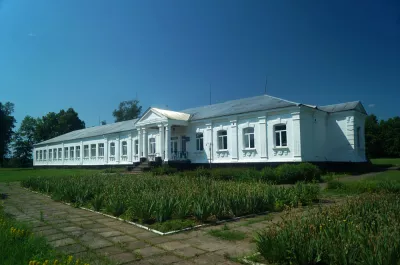
A separate route leads to the neighboring village of Verkhivnia, about 15–20 minutes away by car. Honore de Balzac lived and worked here between 1847 and 1850, and today the Hansky Palace houses the writer's literary and memorial museum.
Tips
When to visit: in spring or early autumn — the river is full, and the mill looks most impressive. In summer, the grass is tall, and approaching the bank is more difficult.
What to bring: rubber boots or sturdy shoes — the bank is wet and uneven.
How to get there: Pavoloch is located 13 km from Popilnia, which has a railway station. You can take a taxi from the station. A personal car is the best option, especially if you plan to visit Verkhivnia.
Attention: the mill is not officially guarded or restored. Entering inside is dangerous.