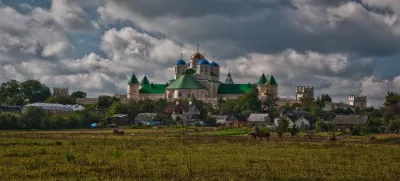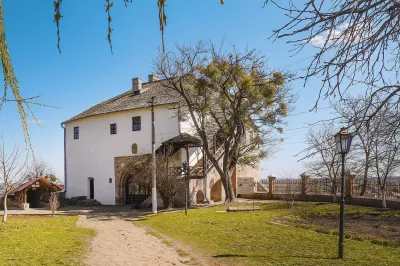

Rivne region is one of the richest lands of Volyn in castles. Here stood the main residences of the princes Ostrogski, Koretskyi, Chortoryiskyi, and Vyshnevetskyi, and later — the palaces of the magnates Liubomyrskyi, Stetskyi, and Karvytskyi. Some castles have been almost completely preserved and turned into museums, others remain as ruins on cliffs above rivers, and a few estates are known only by their parks and old drawings by Napoleon Orda. We have gathered them into one selection with links to detailed articles.
Opening hours and ticket prices at castle museums change, so check them on the reserve websites before your trip. During air raid alerts, exhibitions are closed.
Castle Museums
Ostroh
The ancestral nest of the Ostrogski princes on a hill above the Vilia River. From the castle, the Murovana Tower, the Round or New Tower, the Epiphany Cathedral-fortress, and the gate bell tower have been preserved, and in the city — two gate towers, Lutsk and Tatar. The Murovana Tower houses a local history museum, and the Lutsk Tower hosts the Museum of Book and Printing. Ostroh is the most convenient place to see the castle, cathedral, academy, and monastery in one day. Details in the articles Ostroh: castle of the Ostrogski princes and Ostroh Academy and Ostroh Bible.
Dubno
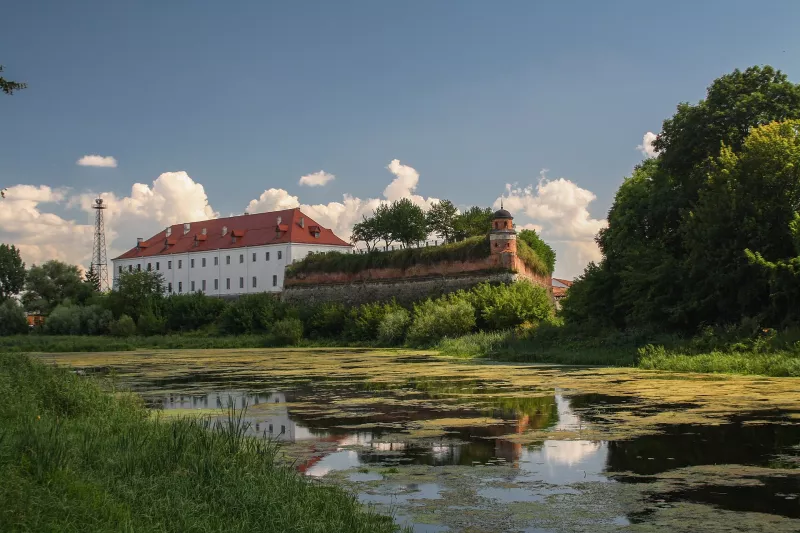
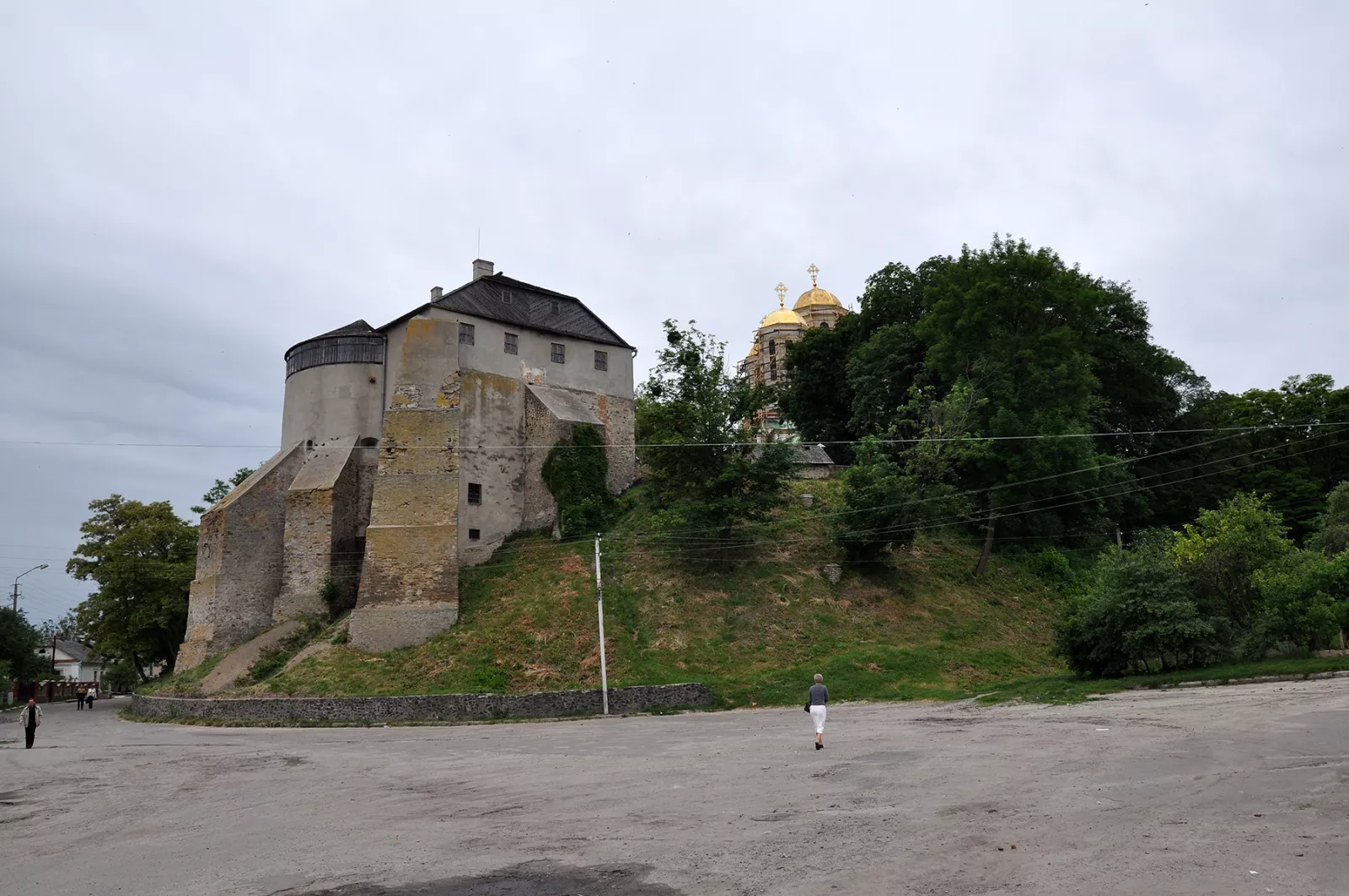
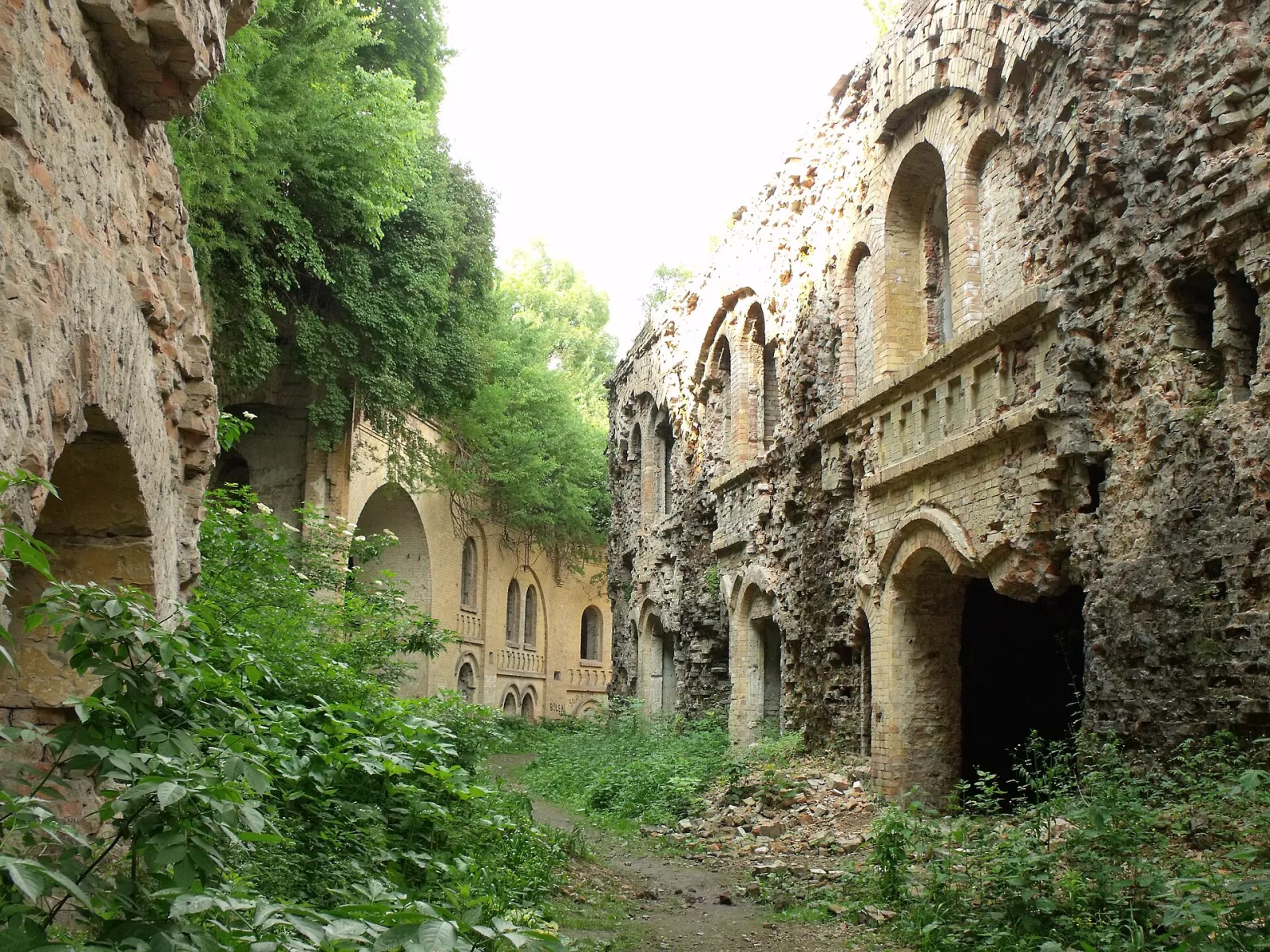
Dubno Castle is the best-preserved fortress in the region: powerful bastions, a moat, the palaces of the Ostrogski and Liubomyrskyi stand on a cape above the Ikva River, with dungeons beneath. The castle withstood many sieges, including the Cossack siege described by Gogol in "Taras Bulba." Today it is a state historical and cultural reserve. A few kilometers from the city is the Tarakaniv Fort of the 19th century with casemates and ramparts, which can only be viewed from outside. About the city itself — in the article Dubno — city of the Ostrogski castle.
Klevan
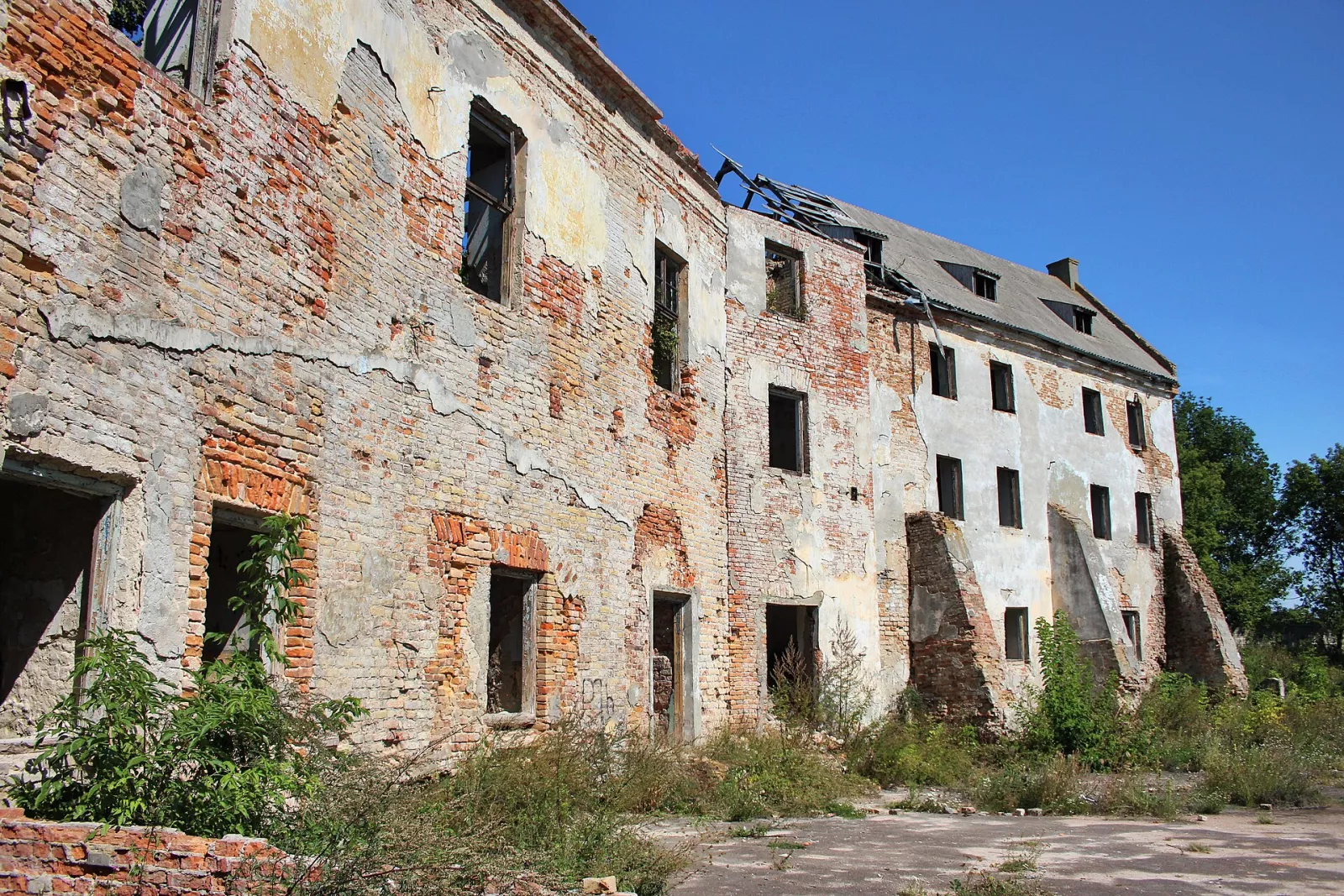
Klevan Castle of the Chortoryiskyi princes, 25 kilometers from Rivne, was first mentioned in 1475. A viaduct over the moat, two stone pentagonal "ponton" towers, and the buildings of the former theological school have been preserved. The castle can easily be combined with a walk through the Tunnel of Love, which is a few kilometers away.
Ruins Above Rivers
Korets
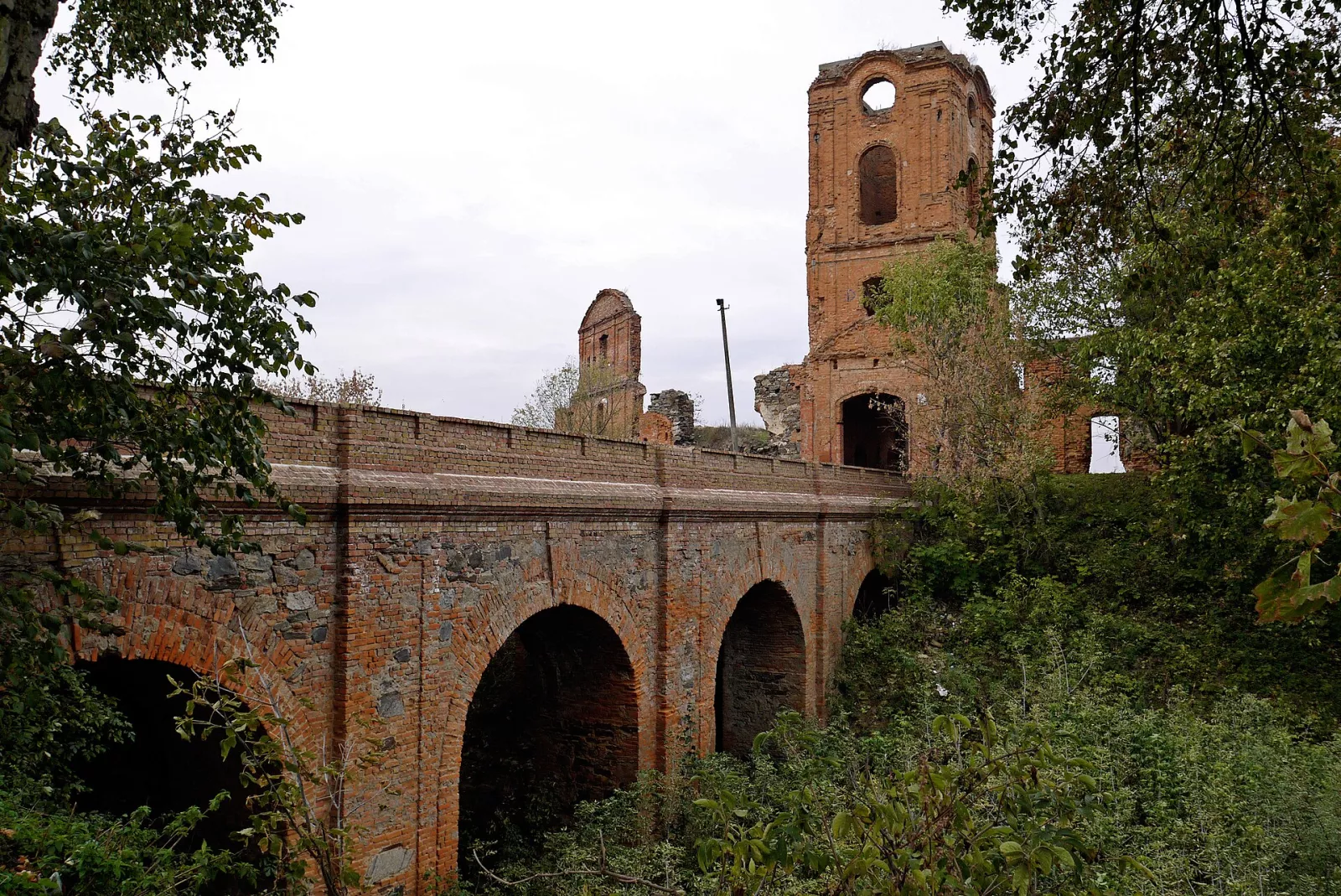
Korets Castle above the Korchyk River was begun in 1386 by Prince Fedor Ostrozkyi, and it gained fame under the Koretskyi princes. The gate tower remains — it is still on the city’s coat of arms — along with parts of the walls and a stone bridge over the moat. Nearby are the Holy Trinity Monastery and the city of ten churches.
Hubkiv
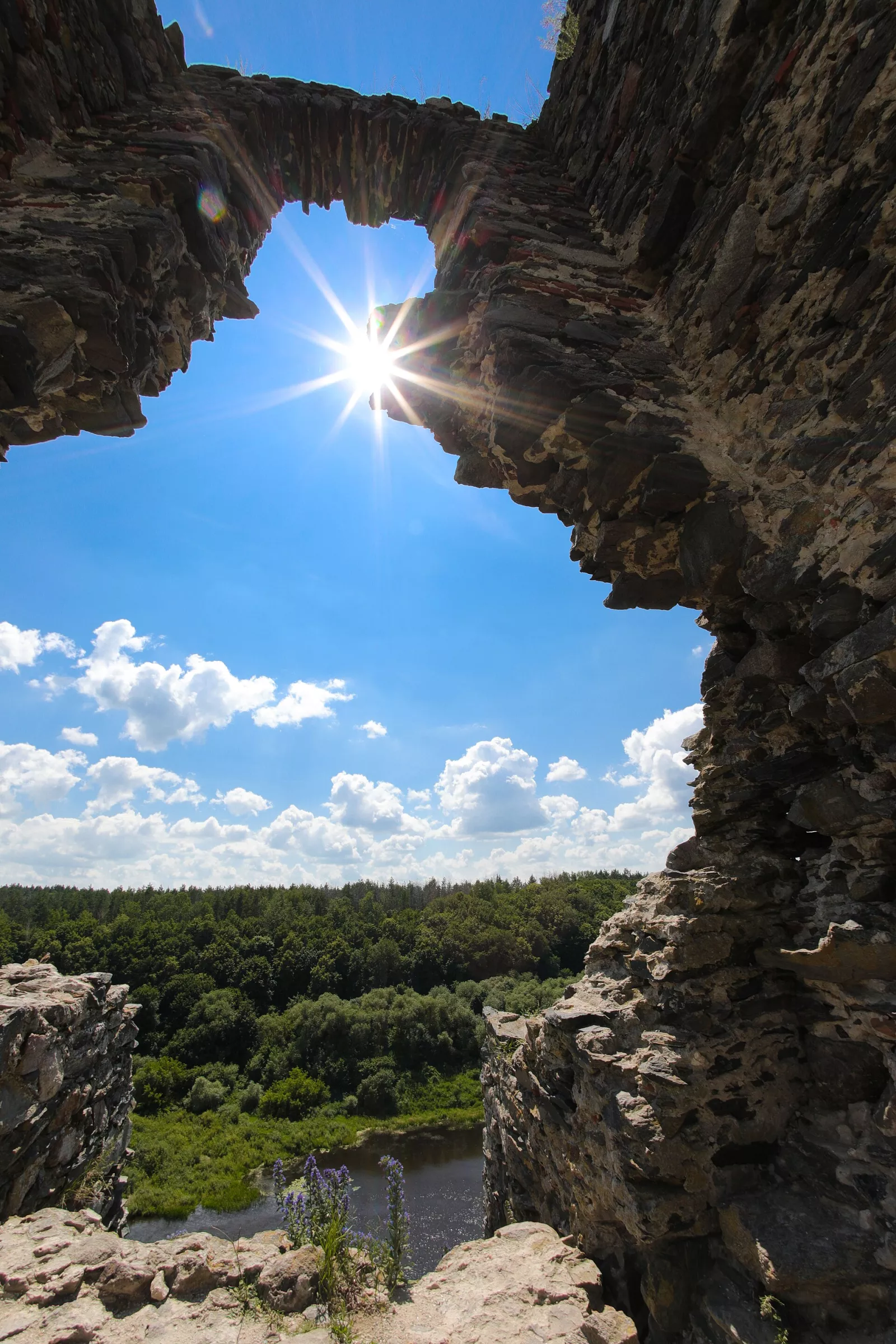
The ruins of the Hubkiv Fortress from the 15th century stand on the granite Knyaz-hora above the Sluch River. Only the northern wall and fragments of towers remain of the castle, but the view of the canyon is one of the most beautiful in Rivne region. Around it is the Sokolin Mountains reserve with rocks and rapids.
Novomalyn
The Novomalyn Castle near Ostroh was built in the 14th century on a hill above the Svitenka River. It had five corner towers and a moat with water, and in the 17th century the Malynski owners added a two-storey palace. The ceilings have collapsed, but the walls are still visible above the village, and the castle’s silhouette became the basis of the village coat of arms.
Taikury
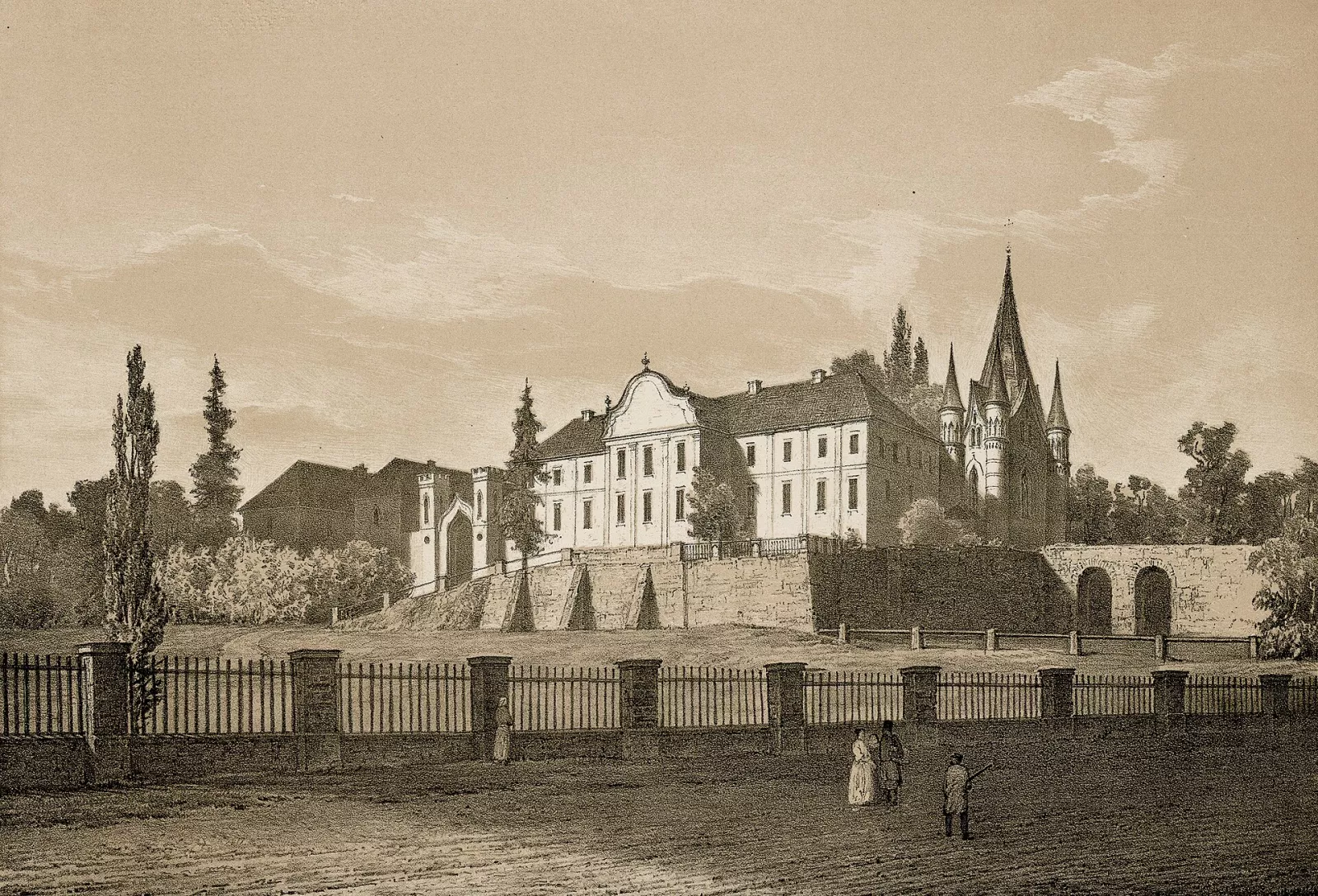
On the castle hill in Taikury near Zdolbuniv remain fragments of the walls and a tower of the Vyshnevetsky Castle from the late 16th to early 17th century, and at the foot of the hill are the remains of the Church of St. Lawrence. About the village — see the article Taikury — ruins of Vyshnevetsky Castle.
Stepan
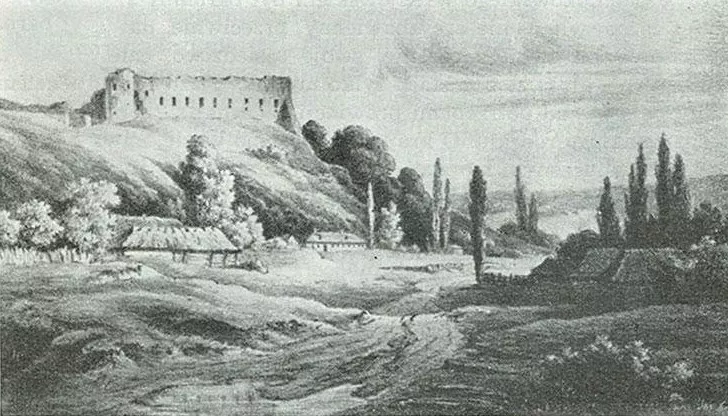
In the ancient princely town of Stepan on the Horyn River, one of the bastions of a powerful castle has been preserved, offering a view of the river valley. Nearby is the wooden Trinity Church from 1759.
Palaces and Estates
Velyki Mezhyrichi
The castle of the Koretski princes in Velyki Mezhyrichi has not survived, but the ruins of the classicist Stetsky Palace, built in 1789–1793 to a design by Domenico Merlini, and the abandoned baroque Church of St. Anthony of the Piarist Collegium remain. Behind the palace was once one of the first botanical gardens in Volhynia.
Zirne
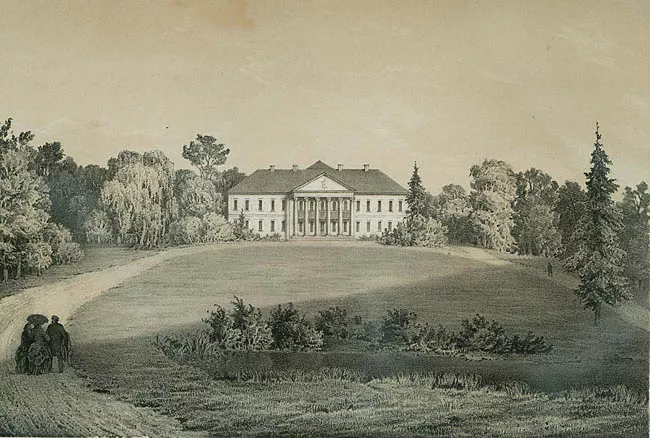
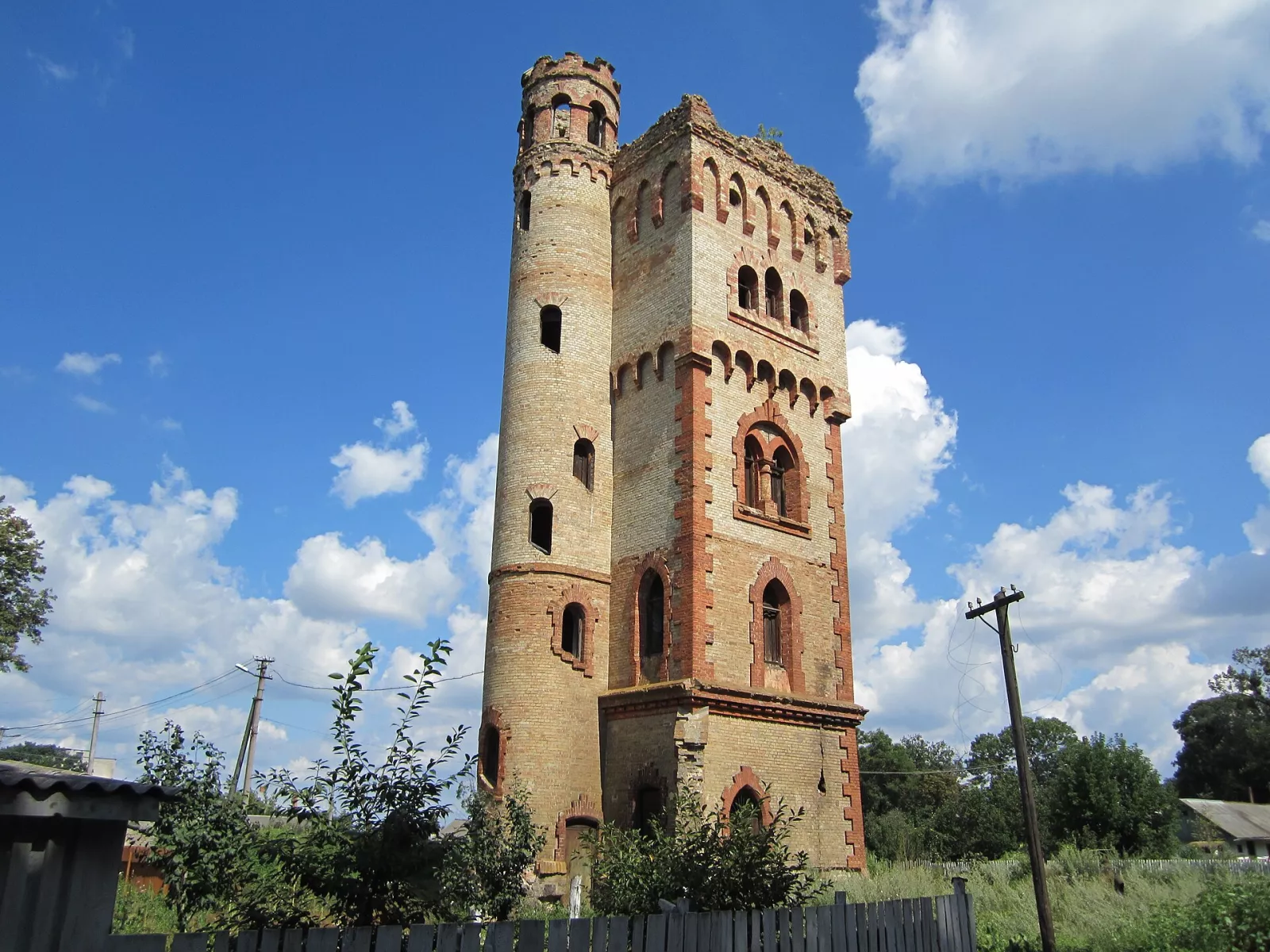
In Zirne, in the middle of a Polissian village, stands a twenty-five-meter-tall brick water tower resembling a piece of a Moorish castle. Nearby is an old park founded by an Irish artist, and the remains of an estate where once stood a palace made of cork wood.
Tynne
On the bank of the Tsyr in Sarny Raion, the estate of Ipolyt Mladzanovsky, built around 1900, has been preserved. The building is compared to the Belvedere in Warsaw, and since the mid-20th century, it has housed a village school, now a lyceum.
Mizoch
From the estate of the Karvytsky magnates in Mizoch, a park remains by the pond with a partially ruined brick orangery from the 18th–19th centuries — a rare structure for Volyn, where exotic plants were once grown.
Kozyn
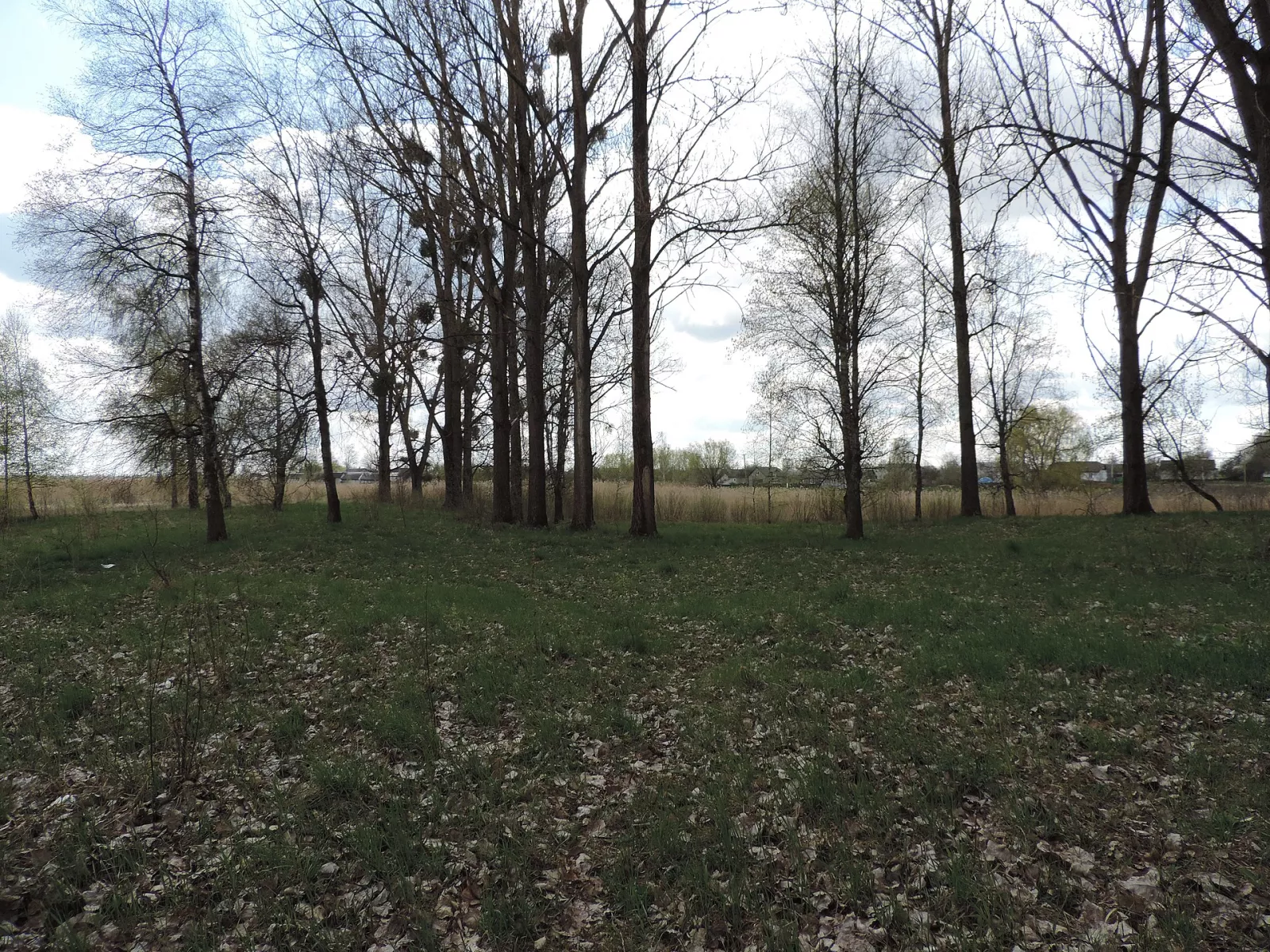
In Dubno Raion, in the floodplain of the Pliashivka River, lies the “Castle” island — a quiet park on the site of the Kozynski family’s castle. Later, Kozyn was owned by the Potocki and Tarnowski families, and in 1787 King Stanisław August Poniatowski visited here.
How to Combine in Trips
- South in a day: Ostroh, Mezhyritskyi Monastery, and Novomalyn — all within a radius of a few kilometers.
- Dubno in a day: Dubno Castle, city center, and Tarakaniv Fort; on the way from Rivne — Taikury.
- West of Rivne: Klevan Castle and the Tunnel of Love, nearby — Bilivske hillfort.
- East: Korets, Velyki Mezhyrichi, Hubkiv, and Sokolyni Hory, and on the way north — Zirne. Roads to Hubkiv are poor, allow extra time.
More places — in the articles Rivne — what to see in the city and nearby and Rivne Polissia: where to go and what to see, and in winter — in the collection Castles and Palaces of Polissia in Winter.