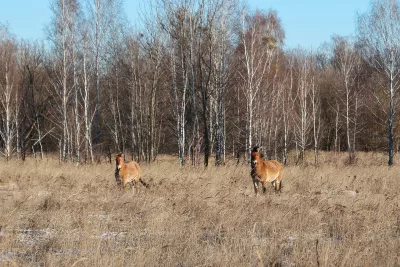
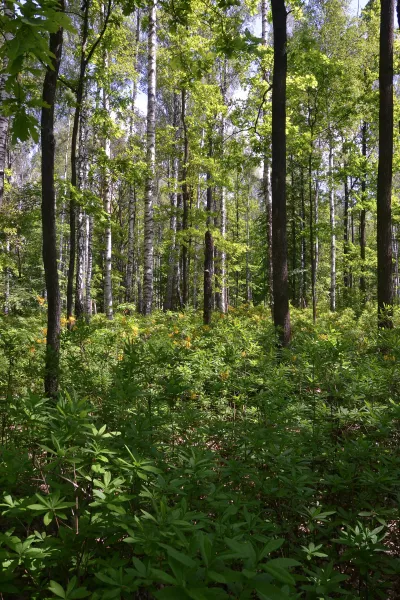
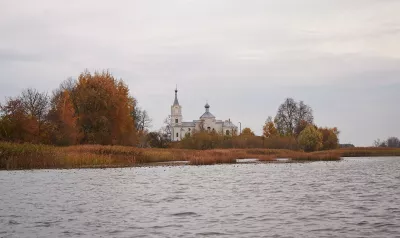
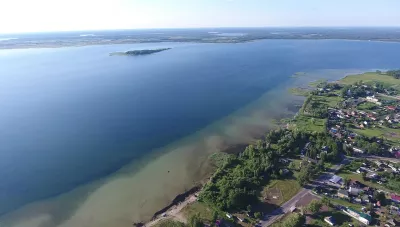
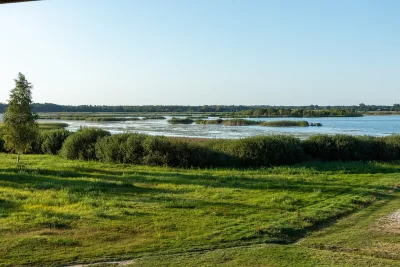
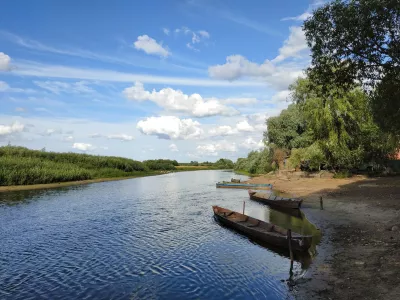
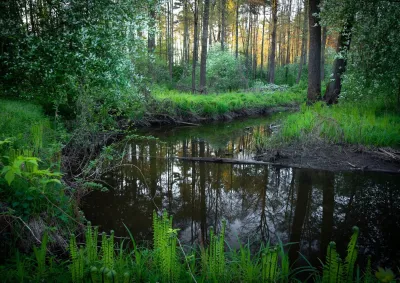
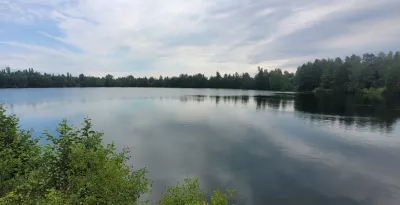
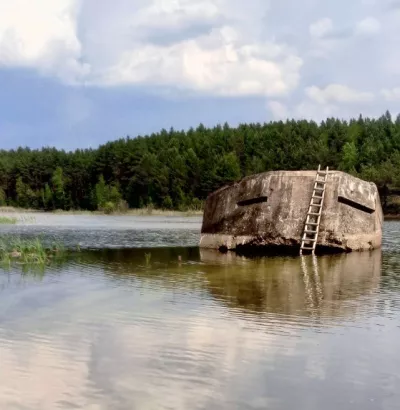
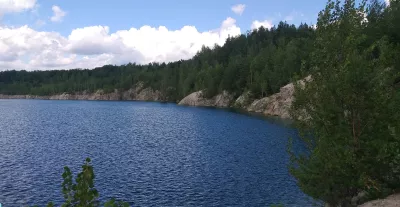
There are places where man is a guest. Where the silence of the forest is not measured by the absence of sounds, but quite the contrary — by the thick chatter of birds, the crunch of branches under an elk's hooves, the distant howl of a wolf at dusk. Such a place exists in Ukraine. This is the Polissia Nature Reserve — 20,104 hectares of untouched nature in the north of Zhytomyr region, where one of the oldest and most wonderful corners of our country's wildlife has been protected since 1968. Another 14,000-plus hectares make up the buffer zone, which additionally protects the ecosystem from human intervention.
Where the Taiga Meets Europe
The Polissia Reserve is located in the interfluve of the Ubort and Bolotnytsia — two rivers that merge beyond its borders and carry their waters to the Pripyat. To the north, it borders Belarus; to the west, Rivne region. This geographical position makes the reserve a unique natural crossroads: here, in a relatively small territory, animals and plants of various natural zones meet — from boreal taiga to broad-leaved forests and forest-steppe.
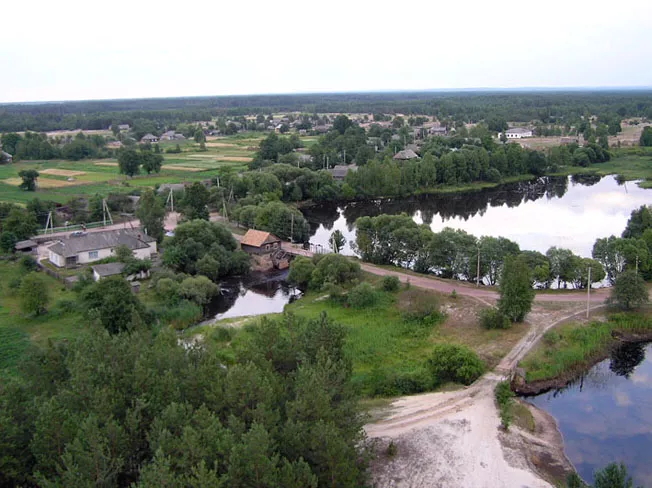
Continuous sub-taiga pine forests, which exist nowhere else in Ukraine, are interspersed with impassable sphagnum bogs, lakes with picturesque shores, and meadows along the rivers. It is here that the southern boundary of the range of many boreal plants characteristic of the taiga passes. This wildness is not only an aesthetic but also a scientific value: the reserve is part of the Emerald Network of Europe under the Bern Convention.
Granites Beneath Sands: Geology and Climate
Geographically, this area lies on the border of the Ukrainian Crystalline Shield and the Pripyat Lowland. Therefore, one can see ancient Precambrian rocks here — granites, gneisses, quartzites — while the surface is covered by glacial sands, alluvial deposits, and peats. The relief is very characteristic of Polissia: sandy ridges, dunes, glacial mounds, and deep depressions filled with bogs. Groundwater in the depressions lies at a depth of only 20–50 centimeters, while on elevations it can drop to 15 meters — this difference creates a mosaic of various vegetation types.
The climate is moderately continental and quite humid: summers are warm with an average temperature of about +17 °C, winters are mild, although frosts down to −36 °C do occur. Annual precipitation ranges from 510 to 1,070 mm, which constantly moistens the soils and supports the bog ecosystems.
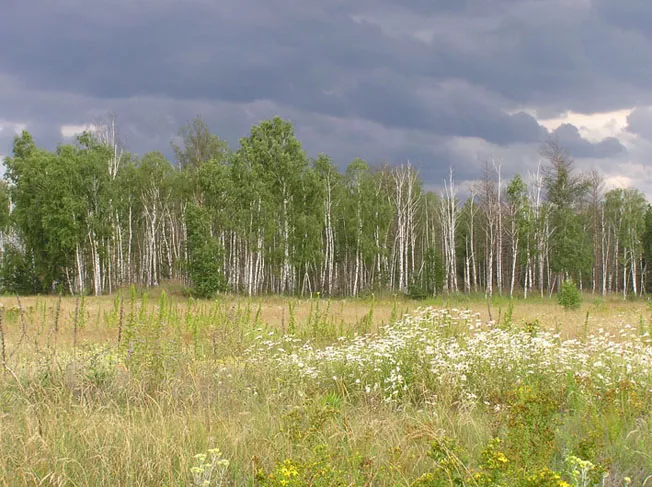
Pine Forests, Bogs, and Glacial Relicts
Pine forests occupy over 77% of the reserve's forest land area, with another roughly 17% being birch forests, and the rest consisting of alder and other stands. Rare lichen pine forests grow on the tops of sand dunes: pine trees here, even at 50–70 years of age, rarely exceed 10 meters in height, but they protect soils from erosion. In wetter areas, there are pine forests with bilberry, cowberry, heather, and green mosses; in inter-dune depressions, tall-moss and sphagnum forests; in floodplains, birch-alder complexes; and in the southeast, even oak and oak-pine forests.
Bogs occupy about 5,000 hectares. Most of them are mesotrophic, but there are also oligotrophic ones with brown and red sphagnum mosses. Glacial relicts — marsh arrowgrass and small cranberry — have been preserved on the Spudy bog complex. In total, the reserve's flora includes over 600 species of vascular plants and 139 species of mosses; 20 plant species are listed in the Red Data Book of Ukraine, among them orchids and clubmosses.
279 Species of Vertebrates — and That Is Not All
The fauna of vertebrate animals in the reserve and its surroundings numbers 279 species: 45 mammal species, 195 bird species, 12 amphibian species, 7 reptile species, and 19 fish species. Over 1,100 species of insects are known — and this figure is far from complete: the entomological fauna of the region has still not been fully studied.
The wildlife of the nature reserve can be imagined as several layers. At the base are taiga species typical of the forests of Scandinavia and Northern Europe: the lynx, moose, mountain hare, western capercaillie, and great grey owl. Along with them live typical inhabitants of Central European broadleaf forests—the wild boar, pine marten, hazel dormouse, and European green woodpecker. From the south, forest-steppe species penetrate the reserve, notably the great egret and European pond turtle. Such diversity in such small areas is a rarity for European conservation areas.
Stars of the Reserve: Animals Worth Knowing
Western Capercaillie — Legend of the Southern Taiga
The western capercaillie in the Polissian Nature Reserve is not just a bird; it is a symbol. One of the world's largest representatives of the order Galliformes, with males reaching a weight of 6 kilograms, the capercaillie is a typical inhabitant of coniferous taiga. In Ukraine, it is found only in Polissia, and the reserve maintains one of its few stable populations. It feeds mainly on pine needles, buds, and berries. During spring mating displays, males literally become deaf to their surroundings for a few seconds—hence the Ukrainian name, which literally translates as "the deaf one." The bird is listed in the Red Data Book of Ukraine.
Roe Deer — Beauty and Anxiety of the Forest
The roe deer is a key animal in the reserve's food chain, serving as the main prey for the lynx and wolf. Small and graceful, weighing from 20 to 37 kilograms, it lives in forests and at forest edges, feeding on grass, young shoots, and leaves.
In autumn and winter, roe deer gather in groups of up to 10–12 individuals. In spring, these groups break up, and in late May, females give birth to two or three fawns. The newborns have almost no scent, which hides them from predators during the first weeks of life. By autumn, they reach 15–18 kilograms—half the mass of an adult animal.
Wild Boar — Omnivorous Traveler
The wild boar is another characteristic inhabitant of the Polissian forests. Adult males weigh up to 180–300 kilograms and lead a predominantly nocturnal lifestyle. An omnivorous animal, it eats grass, roots, acorns, insect larvae, earthworms, and frogs. In the warm season, wild boars love to wallow in bogs—this is how they protect themselves from blood-sucking insects.
Piglets, which the female gives birth to in March and April, grow quickly, weighing 20–25 kilograms by autumn. The family stays together until a new litter appears. The boar's main natural enemy in the reserve is the wolf.
Lynx and Wolf — Predators That Maintain the Balance
The lynx and wolf are the regulators of the entire ecosystem. They prevent roe deer and wild boar populations from overgrowing, which would otherwise lead to the destruction of vegetation. The lynx is listed in the Red Data Book of Ukraine, and both predators are under reliable protection within the reserve.
Bird Paradise: 195 Species Under One Sky
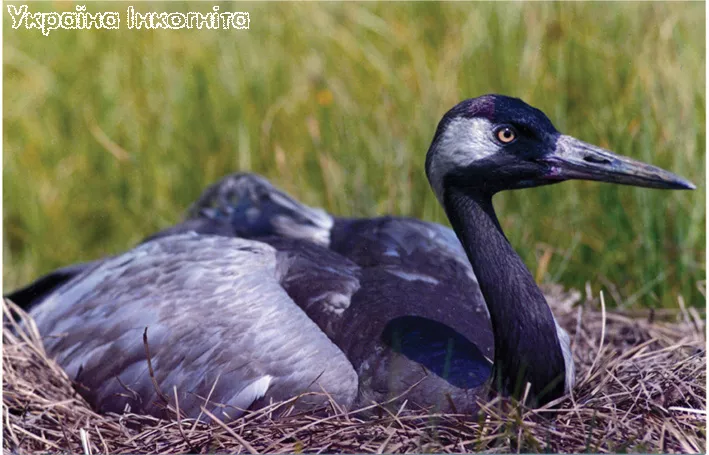
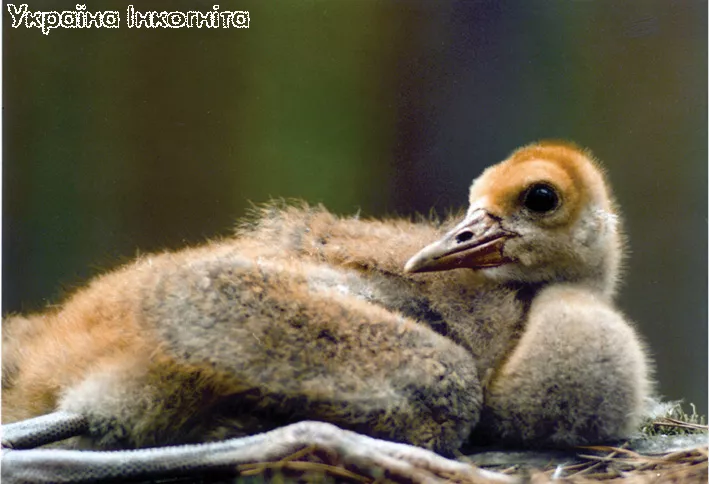
Birds are the most numerous group of vertebrates in the reserve. The grey heron, common crane, western marsh harrier, European nightjar, great grey owl, red-backed shrike, and black grouse are just some of the species commonly found here. The corncrake, listed in the European Red List, nests in the adjacent meadows. The black stork—an extremely rare bird whose population in Ukraine does not exceed 400–450 pairs—also finds refuge here.
In early summer, the reserve turns into a bird concert hall. Tits, larks, thrushes, jays, chaffinches, and woodpeckers fill the forest with sounds you will not hear in any city.
Ants: the unsung protectors of the forest
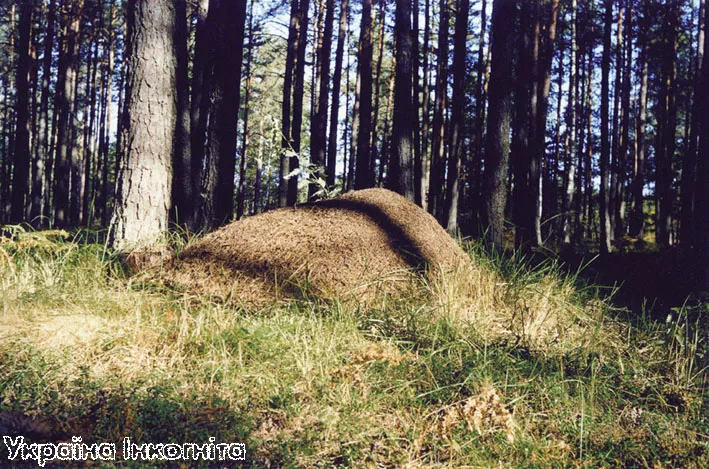
The world of insects, and particularly the red wood ant (Formica rufa), deserves special attention. Hundreds of huge anthills in the mixed forests of the reserve are the result not only of natural processes, but also of years of work by scientists. In Soviet times, large-scale artificial resettlement of ants took place here: they were propagated by layers, anthills were protected from destruction, and their role was explained to local residents.
And this role is truly impressive. A single medium-sized anthill destroys about 12 kilograms of harmful insects in 100 days. In an hour, foragers bring up to 1,500 insects to the nest, and the hunting area around the anthill exceeds 20 hectares.
The moose: a giant in the thickets
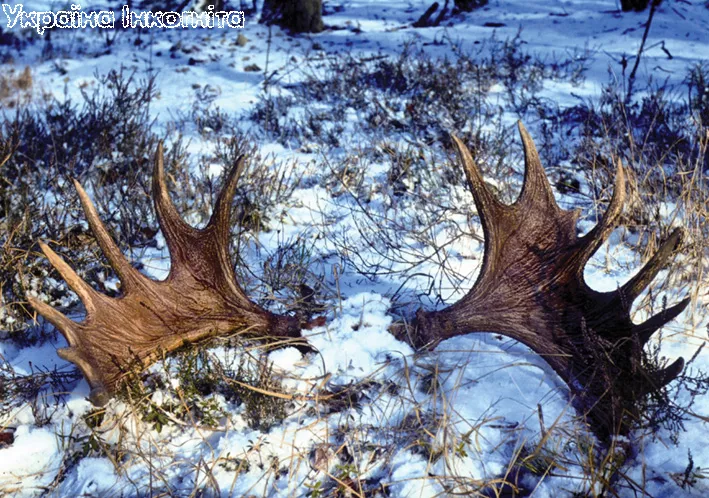
The moose is the largest inhabitant of the reserve. Its body length is up to three meters, its height at the withers is up to 2.3 meters, and its weight reaches 570 kilograms. Despite this size, it moves through the forest almost silently, even in the thickest brush. You should be especially careful with moose in September: during the rutting season, males become aggressive.
Wounds of the past and threats of the present
The territory was not always untouched. During wars and in the post-war years, forests were actively cut down here, and in the 1960s, land reclamation was carried out, which changed the water balance: canals with a total length of about 7 kilometers still remain. Despite this, the reserve has retained its uniqueness, and most of the bogs remain in their natural state.
The reserve is an island. Around it are ordinary Polissian villages, and poaching remains a chronic problem: roe deer, moose, wild boars, beavers, and waterfowl find themselves in danger as soon as they step outside the protected zone. Even in wartime, other problems have not disappeared—illegal logging, spontaneous dumps, and water pollution. Industrial interests create separate pressure: ecologists have repeatedly sounded the alarm over attempts to obtain permits for mineral extraction on the territory of the reserve.
Ecotourism: how to visit the reserve and do no harm
The Polissia Nature Reserve is not a national park with developed tourist infrastructure. Free visits to its territory are prohibited: warning signs and barriers are installed on forest roads. This is a necessary condition for preserving wildlife that is used to living without humans.
However, organized excursions are entirely possible. The reserve offers educational routes for adults and schoolchildren, which can be booked through the administration. Winter excursions have a special charm: the snow cover turns the pine forest into a fairytale, and animal tracks in the snow can be read like an open book.
What will an attentive visitor see? Gigantic anthills as tall as a person. Old-growth pine forests where tree trunks rise like cathedral columns. Sphagnum bogs with their amazing vegetation. And if you are lucky—the silhouette of a moose in the morning mist or a capercaillie taking off from the top of a pine tree.
Why this matters to all of us
The Polissia Nature Reserve is not just a "nice place for a walk." It is a living archive of evolution, preserving ecosystems that disappeared in most European countries several hundred years ago. Every species that lives here is a link in the chain. If the roe deer disappears, the lynx and wolf will have nothing to eat. If the ants disappear, the plantations will start to get sick. If the bogs are destroyed, the water balance of an entire region will vanish.
That is why the Polissia Nature Reserve protects more than just animals and plants. It preserves the very idea of what the world can be like without humans — and shows what humanity can gain if it learns to protect rather than just take.
How to get there
The reserve is located in the north of Korosten Raion, on the territory of the Ovruch and Olevsk hromadas, near the border with Belarus. The administration headquarters is located in the village of Selezivka; the nearest large towns are Ovruch and Olevsk. Visits are by prior arrangement with the reserve administration only.
Photo by Serhii Zhyla